HomeFeatures
Why Final Fantasy XIV failed, and how it recoveredAs Final Fantasy XIV Fan Fest departs London, we look at the secret to the MMO’s second chance success
As Final Fantasy XIV Fan Fest departs London, we look at the secret to the MMO’s second chance success
Image credit:Square Enix
Image credit:Square Enix
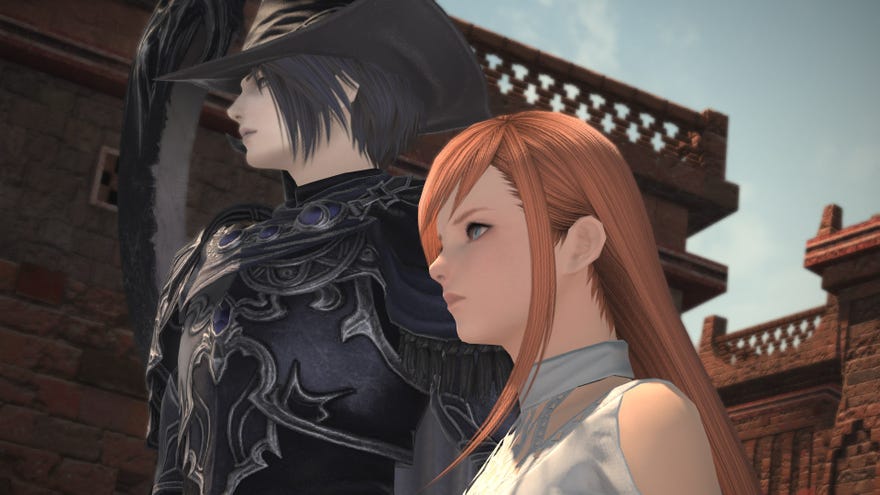
Everybody knows some version of the story aroundFinal Fantasy XIV: it came out, it wasn’t very good, it was remade as A Realm Reborn, and now it’s beloved. Over the decade since A Realm Reborn’s release, its reputation has grown with every single expansion. FFXIV’s producer and director Naoki Yoshida (more commonly known as Yoshi P) is now so synonymous with the game that it’s easy to forget he was only brought onto the project in 2010 - after XIV had been released, to overwhelmingly negative reviews.
Square Enix had built a great deal of prestige for theFinal Fantasyseries in the 2000s. The PlayStation 2 alone saw three mainline Final Fantasy instalments starting with X, and each one was a huge hit with both critics and players. This includedFinal Fantasy XI: Online, the previous MMORPG to XIV, which released in 2002 and was popular enough to havetie-in novels(that weretranslated!). If you could define Final Fantasy during this period in one word, it would be “success.” As long as you didn’t pay too much attention to whatever was going on withAdvent Children.
Speaking toNoclip in 2017, Yoshi P noted that the franchise’s reputation had led to Square Enix becoming “very arrogant” and “thinking that because they are great, they don’t need to look at other games.” This attitude laid the groundwork for what would become the original version of Final Fantasy XIV, later officially dubbed 1.0. In fact, Final Fantasy XIV wasannounced at E3 2009for the PlayStation 3, before XIII had even come out.
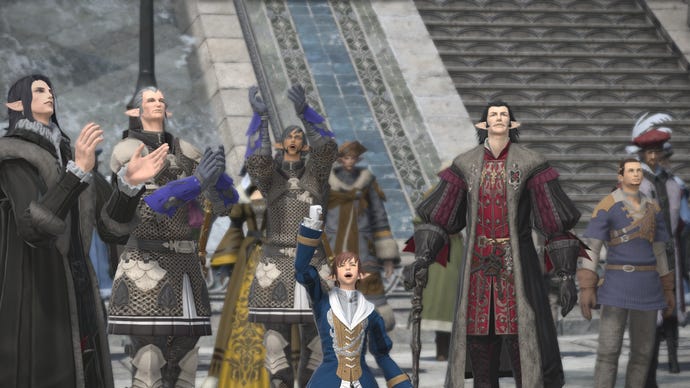
And when XIV 1.0 finally came out in September 2010, it was a complete failure.Reviewafterreviewcriticised every corner of the game’s design, from its environments to its UI to its story, and the prevailing sentiment was: don’t play the game. XIV launched with a free trial period, which wasextended twice, but it quickly became obvious that serious changes needed to be made. AsYoshi P told Famitsuin 2012, “this is never going to work unless we put our entire company’s resources into this and revamp it.” In essence, XIV 1.0 had been built using so many misplaced priorities that it was fundamentally flawed. The bespoke engine for the MMO couldn’t rendermore than 40 charactersat a time.
During development there had been a sentiment thatany issues that arose could be fixed later, despite there being no plan in place for it. As Square Enix’s former president, Yoichi Wada, laid out in the2011 Square Enix Annual Fiscal Year Report, “the release of mid-class debut titles with an intention to raise quality in future iterations can be seen as our failure.”
In December 2010, Wadapublicly announceda few major changes to the state of FFXIV: firstly that Square Enix were committed to fixing the game; secondly, that until a “concrete plan outlining Final Fantasy XIV’s future” had been secured, they would be pausing fees and delaying the PlayStation 3 version; and thirdly, there would be large changes to the development team. XIV’s former producer and director, Hiromichi Tanaka and Nobuaki Komoto, would step down immediately, with Tanaka issuing his own statement taking “full responsibility” for the state of the game. Replacing both roles would be a then-publicly-unknown staff member who had previously directed severalDragon Questgames — Naoki Yoshida.
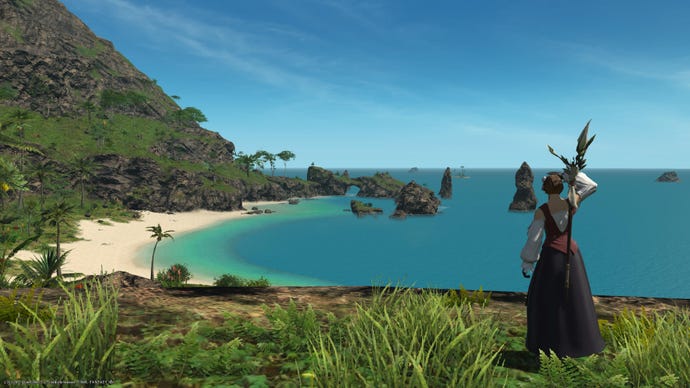
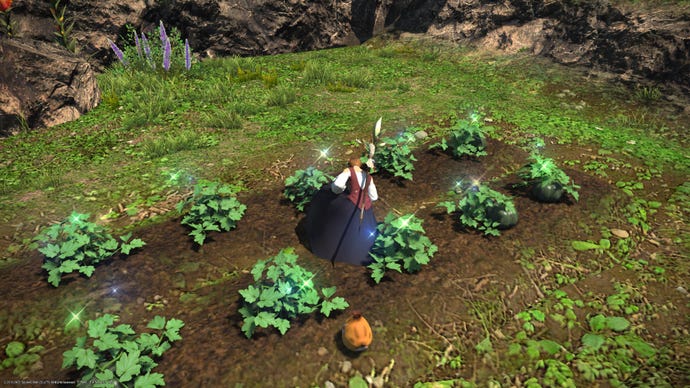
A player tending their garden in the Island Sanctuary solo mode introduced in patch 6.2
Building a game, especially an MMORPG, takes a lot of time. World Of Warcrafttook 4-5years to develop, and that was almost a decade prior to the launch of A Realm Reborn in 2013. According to Square Enix’s internal schedule, XIV’s team would have to somehow compress this workinto 2-3 years. To save time, Yoshi P made around 400 decisions on the base game design of A Realm Reborn, beginning with building out standard features most MMORPGs have. Heassigned designers he trustedto carry out these ideas, while frequently checking in.
While a lot was changing internally, the same had to be done on the outside. One of Yoshi P’s first changes was to improvehow Square Enix communicatedwith XIV’s players. Everybody was paying close attention to all of the negative feedback on 1.0, but rarely were any public statements issued saying as much. Yoshi P altered this; he gave several forthcoming interviews about the underwhelming state of the game and how committed the team were to fixing it, both tojournalistic publicationsand tofansites.
Fansites in particular were crucial because FFXIV did not have forums to begin with. Due to a fear of statementspossibly being mistranslated, the 1.0 development team used fansites and unofficial forums to gauge the temperature of the game. Community managers would have to create daily reports on how XIV was being perceived, across all regions, because there was no centralised location for this information. As you can imagine, Yoshi P added official forums.
The new Viper job |Image credit:Square Enix
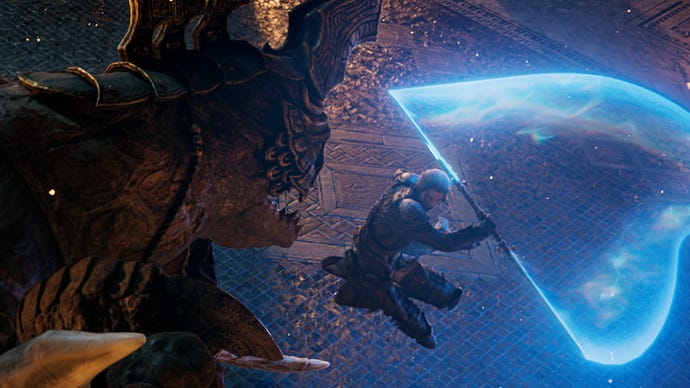
At the heart of A Realm Reborn was a huge amount of respect for the audience that continued to play 1.0. Today, the story that once made up XIV 1.0’s content is now the off-screen lore for A Realm Reborn. Somehow, despite the previous version of XIV having been unplayable for over a decade, there are still characters from 1.0 cropping up in updates for A Realm Reborn. The guy who appearedon the 2010 box artfor FFXIV is nowa major characterin the story, who even has his ownmerch. This is fantastic — it doesn’t turn off new players, while rewarding those who have an interest in the original game.
In October 2011, aroadmapwas announced for the radically new version of XIV called 2.0. Fees were reinstated atthe start of 2012, and in July of that year, 2.0 wasofficially revealedas A Realm Reborn.
Image credit:Square Enix
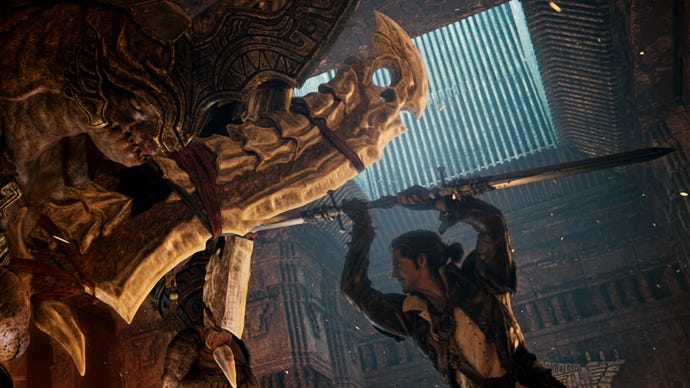
A Realm Reborn released on August 27th 2013 for both PlayStation 3 and Windows to rave reviews. It’s incredible to think the whole game was developed in two years and eight months, in secret, while patching another game. Back then I don’t think anybody saw XIV being so popular that it would have to literallystop selling copies.Twice. This year saw the fifth major Final Fantasy XIV Fan Fest, the European event having taken place in London this weekend.
The key to XIV’s longevity has been in its great communication and prioritisation of what its players want—a lesson that nobody at Square Enix is probably going to forget for a while. You do have to wonder though, withanother transformative expansionon the horizon, will Final Fantasy ever need another MMORPG?
