HomeFeatures
What’s better: Fast travel, or upgrading cards?Vote now!
Vote now!
Image credit:Rock Paper Shotgun/Mega Crit Games
Image credit:Rock Paper Shotgun/Mega Crit Games
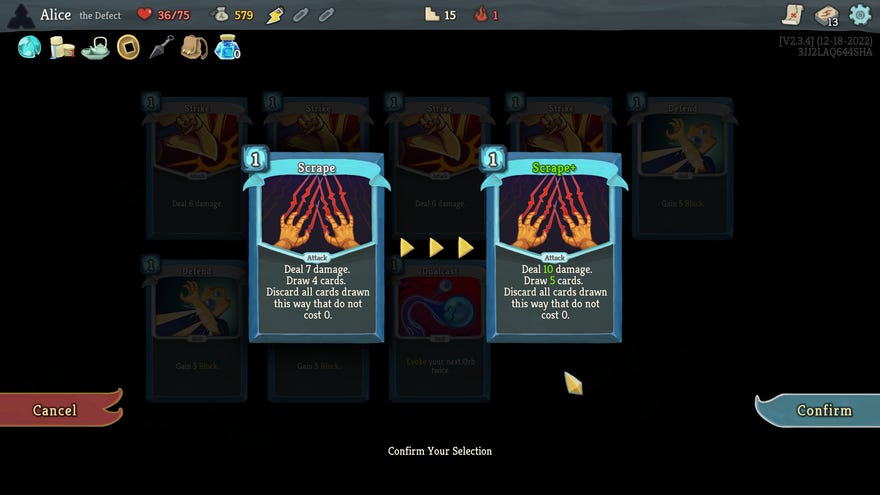
Last time, you decided thatinterrupt attacks are better than a lore codex. Sanity prevailed, and I thank you. Though I realise I am now writing a lore codex entry about a great victory in the year 2023, so sorry about that. This week, I ask you to choose between upgraded movement or upgraded cardboard. What’s better: Fast travel, or upgrading cards?
Fast travel
You’ve travelled to the far end of the open world, through unknown valleys and deep forests, discovering villages and cities and temples and dungeons and treasures along the way, and finally you are done. Your task is complete. You’ve found the doodad. And. Oh. Now you need to take it back to the starting town. No worries! Open up the map and fast-travel back.
Image credit:Rock Paper Shotgun/Bethesda
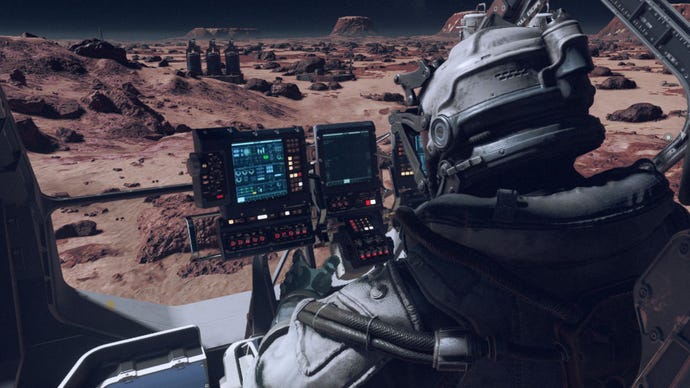
No hour spent running back. No repeat of places you’ve already seen and dungeons you’ve already rinsed. Just hand in the doodad and off you go. Fast travel: a too-rare case of video games respecting your time.
While fast travel is wildly convenient, I fear it can hollow games. A game which expects you to use fast travel is a game where it’s less important to make an interesting experience out of simply travelling the world. It’s a game that might focus on strong first impressions but have little thought for second or third visits. A game which sees the world as locations to complete tasks. This needn’t be the case, of course, but I’d swear I’ve felt that influence in too many open-world games.
On the flipside, maybe it’s fine for games to be that. Maybe fast travel means a game can appear to be a living world but be a Disneyland, thrilling and delighting then sending you home before the novelty wears thin. Not every game need be a place I want to roam endlessly. Most games are theme parks of some form, and fast travel lets an open-world game lean into that. And I understand lots of people do just want to complete checklists of menial tasks and chores around a big place (these people are monsters).
Upgrading cards
I always enjoy when digital card games do things which would be impossible, or at least fiddly, in a physical card game. One of my favourite manifestations of this is upgrading cards, which I suppose is technically possible with cardboard but would be a faff with tokens or markers or Biro or… no thank you. In video games, with but a few clicks of the mouse (my dear boy), I’ve made my card better.
Image credit:Rock Paper Shotgun/Good Shepherd Entertainment
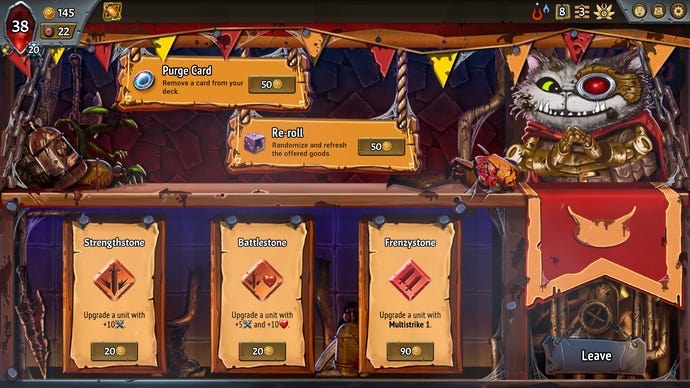
The Spire-inspiredMonster Trainhinged upon upgrades. It made upgrading freeform, taking bigger numbers and extra keywords onto cards as you pleased. This means not only is carefully building your deck important, it’s vital to figure out strong builds for individual units. Layers of planning, optimising, and fiendish plans.
I like upgrading cards more than many other types of unit upgrades partially because it feels a little wrong. You couldn’t do this so easily with cardboard. But here I am, scrawling new, bigger numbers on top. And I’m winning while doing it. Victory through defacement.
But which is better?
Fast travel is undeniably handy but I fear it’s had an insidious effect on games. Upgrading cards wins it for me. But what do you think?
