HomeFeatures
What’s better: An enemy which can’t see you but can sense you, or it only moves when you’re not looking?Vote now!
Vote now!
Image credit:Rock Paper Shotgun / Bethesda Softworks
Image credit:Rock Paper Shotgun / Bethesda Softworks
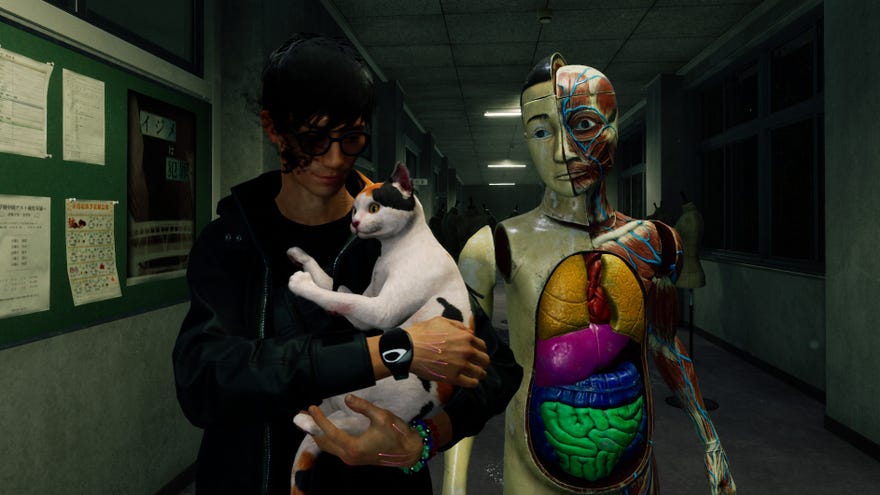
Enemy which can’t see you but can sense you
You know you’re in trouble when a game removes an enemy’s sight. This inevitably means it’s so deadly that if it could see you, it would instantly murder you. Luckily, for some reason of biology or technology, it has to rely on other senses, usually hearing or sensing vibrations. You, ah, don’t need to go anywhere, do you?
Stop screaming, idiot |Image credit:Rock Paper Shotgun / Valve
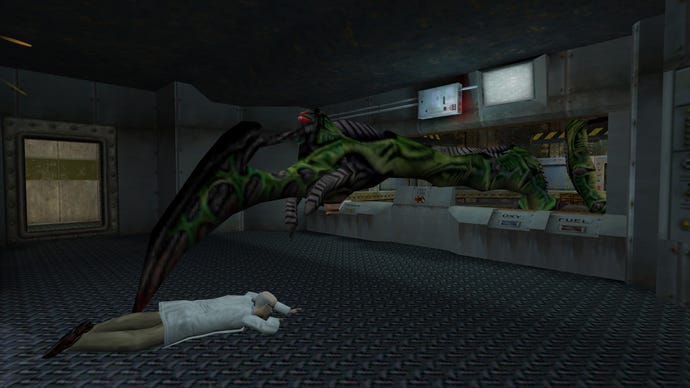
Gordon Freeman can try crawling around to evade the murderous tentacle beasts inHalf-Lifeor lob grenades to distract it. Now that I think of it, Half-Life also has those trees which stab you if you bump into them. And thenHalf-Life: Alyxhad Jeff, an invincible giant lad drawn to sound, which produced a whole deadly stealth section of lobbing bottles and holding your cybergloves to your meatface to stifle coughing. Very good. These enemies can even be frenetic combat puzzles, likeResident Evil 4’s fights with the giant Wolverine boys, where you keep switching through sneaking, shooting bells to distract them, and unloading your shotgun into their spine. And Minecraft’s Warden can not only feel your vibrations, it’ll sniff around to find you too. Rude. Which others have you enjoyed evading, gang?
The most important thing is: forget all the instincts you had developed playing the rest of the game. Do not shoot on sight. Do not sprint about. Do not jump everywhere because you like the noise. And oh mercy, please resist the urge to destroy every destructible object.
I also like how this often encourages me to doubt my understanding of a game. We’re always playing our own internal model of a game as much as we’re playing the game, testing boundaries and feeling out possibilities until we think we think we know how it works, and we play within those confines. But when an enemy who supposedly can’t see you wanders right past, maybe even turns their head in your direction, how confident are you that they truly can’t see how? Do you truly trust that the developers wouldn’t try to trick you?
I think I most enjoy when these enemies are mild puzzles, not just tests of patience. There are many reasons whyAliens: Colonial Marinesisn’t as good as Half-Life: Alyx, but that certainly is one.
Enemy which only moves when you’re not looking
It’s a horror classic: a doll, mannequin, statue, or other unmoving thing which does, in fact, move—but only when you’re not looking. Turn your back and oh, was it always in this pose? Turn again and hang on, is it closer? Yes, it is. It’s coming for you. How well can you watch it while managing everything else you need to do?
Doctor Whooo, hey! |Image credit:Playstack
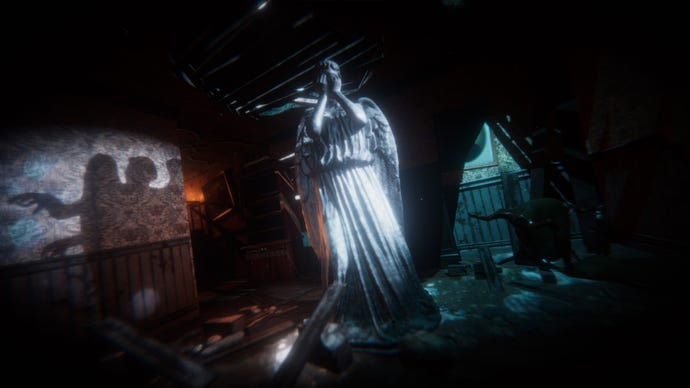
It’s a good wrinkle to throw into a game. You’re comfortable moving and looking, ready to shoot or solve puzzles or find stuff or whatever it is you do, and now you have this whole new terrible thing to factor in. Two of the most unconscious actions in games are now pieces of an ever-changing puzzle you must continuously solve to stay alive. I like when games make the unconscious very conscious.
Meeting the murderous mannequin in Ghostwire: TokyoGhostwire: Tokyo’s murdermannequin absolutely knows that I know, so why does it torment me so?Watch on YouTube
Meeting the murderous mannequin in Ghostwire: Tokyo

But which is better?
I like these moments when looking becomes my most powerful weapon and my greatest weakness. Yeah I’ve got guns and knives and magic spells, but a good hard stare, that’ll sort them out. If only I remember to keep looking. But which do you think is better, reader dear?
