HomeFeaturesElden Ring
What kind of pot is Elden Ring’s pot boy? We asked an expertPottery in motion
Pottery in motion
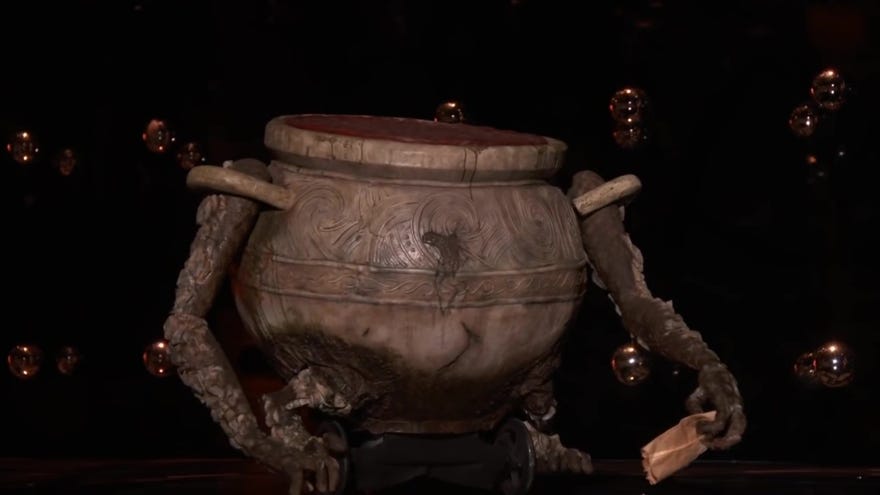
What truths await us all inside the enigma that isElden Ring’s Pot Boy? Fermented veg, most likely. Not my hypothesis, but that of Adam Sutton, Iron Age and Roman Pottery Specialist at theMuseum of London Archaeology. Do you hear me, Miyazaki? I simply will not stand for any more of your delightfully obtuse world-building, and so I’ve enlisted expert help to illuminate the shrouded past of the internet’s favourite boy whomst is also a pot (pictured aboveattending The Game Awards live and in person). Together, we will excavate his very soul. I hope you enjoy it as much as I did.
“He’s got to be a storage vessel, or used for fermenting something,” explains Sutton. Beer, grain, or fruits are all likely candidates. “He also might have some soot on him which shows he’s been heated over a fire - something you’d want to do if you were brewing.”
ELDEN RING – Gameplay PreviewWatch on YouTube
ELDEN RING – Gameplay Preview

However, there is one distinguishing feature that reveals more about the clay construct than FromSoftware might have intended.
Is this excavation playing in reverse?

Because that is an absolute dump truck.
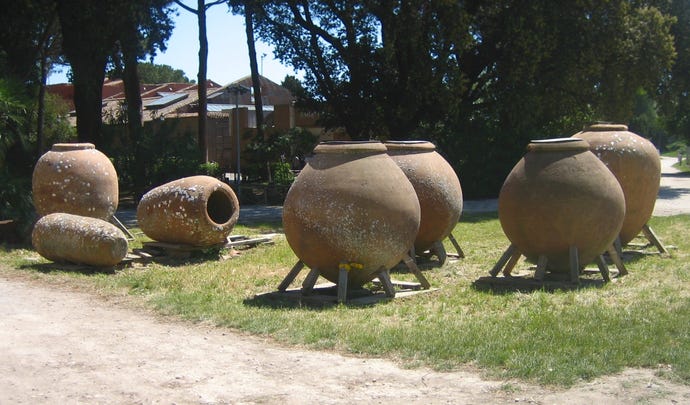
But this actually makes a lot of sense, and further clues us in to Pot Boy’s exciting past. “In Asia, some large pots (such asKorean onggi) are not dissimilar to pot boy and have been used for centuries to ferment things like soy sauce and kimchi.” But the pot reminds Sutton most ofdolium- earthenware vessels found throughout the Roman Empire. They were mainly used for food storage, or wine transportation, although there is mention of dolium being used in the theatre for their “acoustic qualities”.
“Like dolium, he might have been partially buried in order to keep his contents cool, or cemented in place to stop him rolling over. You quite often find dolia still buried as the Romans left them – there are loads at places like Pompeii.”
The more decorative aspects of the pot’s upper half - specifically the heraldry on the lid - are the first thing Sutton says are giveaways of his fantastical, rather than historical, origins. That is, after I’ve asked him to ignore Alexander’s movement, limbs, and talking for a moment. Still, even those anthropomorphic features have some historical precedent, Sutton Explains.
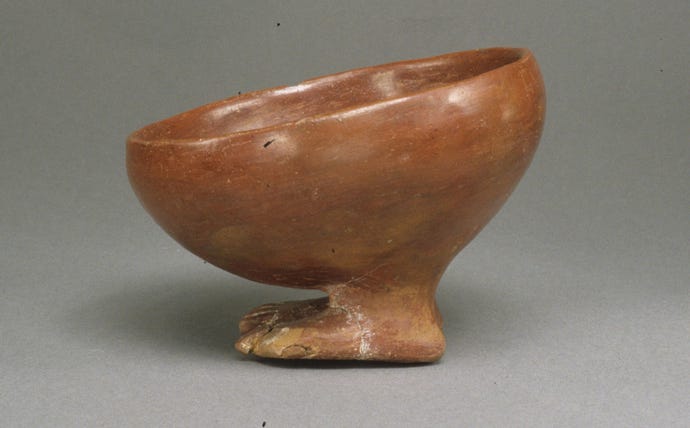
“There are examples of bowls from predynastic Egypt with feet, and these may have been used for religious offerings. The Met in New York haveat least one of these little guys in their collection.” Archaeologists, according to The Met, still haven’t worked out the original use for these befooted pots, although the article linked above does point out that the form of a bowl standing on two feet bears similarities to a hieroglyph meaning “to bring”.
I’d assumed some Shinto influence withElden Ring’s adorable living pottery, given FromSoft’s frequent exploration of traditional Japanese spiritual themes through the lens of European mediaeval fantasy. But did Sutton know of any other anthropomorphic pots popping up in world religions, myths, or folk tales? “Lots of cultures have aspects of their origin myths which involve human beings themselves being made out of clay, like pottery. Probably some of the best-known examples come from the Abrahamic religions, but lots of other belief systems from all over the world have similar stories.”
The Egyptian feet-bowl from the Metropolitan Museum of Art |Image credit:Metropolitan Museum of Art
And there are, Sutton says, archaeological finds that hint at these stories. Some “really beautiful and elaborate” anthropomorphic pots from theChimu and Moche cultures of pre-Colombian South America, depicting either humans or animal-human hybrids. Some are speculated to have spiritual significance. Others, for posterity. And the Roman Empire decorated pots with faces, too. “We don’t know if these faces were meant to be those of actual people, characters, or deities, but some, like one recentlyput on display at Colchester Museum, were used as funerary urns and so probably had significance to the people who were burying the dead in this case.”
Thinking about the internet’s love for Pot Boy, and the passion folk like Davis and Sutton hold for their work, it occurs to me that we’re likely all subconsciously aware of the unbelievably important roles such mundane objects hold in our lives. It isn’t just the novelty of a talking vessel that makes us want to protect and celebrate it, but something a little more ingrained in us. If you’ve ever dropped an inanimate object and immediately apologised to it, you probably get where I’m coming from.
“Pottery is a wonderful insight into how people lived their everyday lives,” says Sutton. “From cooking food and displaying wealth, to moving commodities over large distances, burying your loved ones, or just having a cup of something nice with mates.” These finds, says Sutton, carry traces of how people lived hundreds, or thousands, of years ago.
As for pot boy himself, Sutton is keen to find out more. As am I, obviously. “I really just want to know what pot boy keeps in that big jar. Is he mechanical? Does his soul escape if you take the lid off? Or is he just full of grain?”
I’m to let Sutton know once I find out in-game. “For research purposes.”
