HomeHardwareFeatures
WD Black P50 review: a tough SSD that’s a real bruiser on priceWatch your bank account go from black to red
Watch your bank account go from black to red
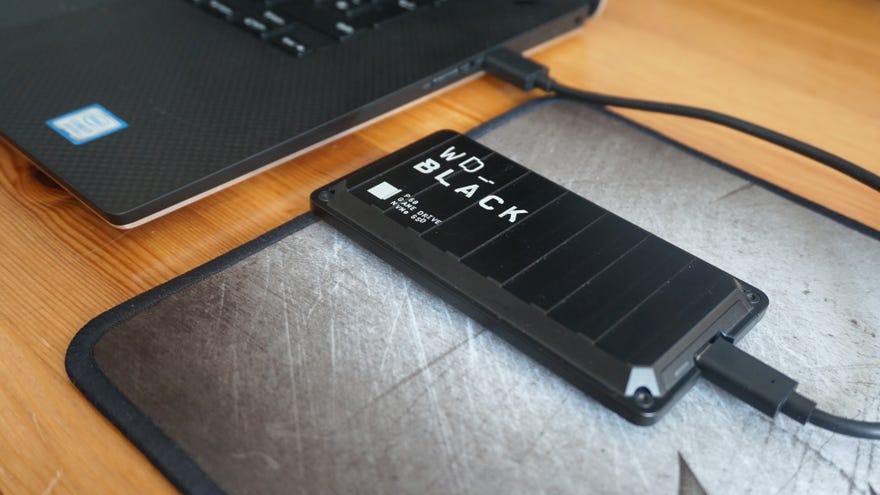
There have been more and more portable SSDs supporting the new USB 3.2 Gen 2 standard cropping up over the last couple of months. First, we had theSamsung T7 Touch, the latest, touch sensor-secured successor to theSamsung T5. Then there wasCrucial’s X8, which was a smidge faster than the T7 Touch and cheaper to boot. Now,WD’s Black P50has finally landed on my desk. Clad in the same tough, corrugated shipping container-like casing asWD’s Black P10external HDD, the P50 certainly looks the part of a high-end, no-nonsense portable SSD drive, but does it have the speed to match? Here’s wot I think.
Technically, the WD Black P50 is a bit fancier than its Samsung and Crucial rivals, as it actually supports the even newer USB 3.2 Gen 2x2 standard, rather than just the regular USB 3.2 Gen 2 speed. What’s the difference, I hear you ask? Well, whereas the normal Gen 2 supports up to 10 Gbit/s, Gen 2x2 doubles that to a maximum of 20 Gbit/s. To put that in friendlier, MB/s terms, WD claim the P50 can deliver up to a whopping 1980MB/s, making it twice as fast as current USB 3.1 devices.
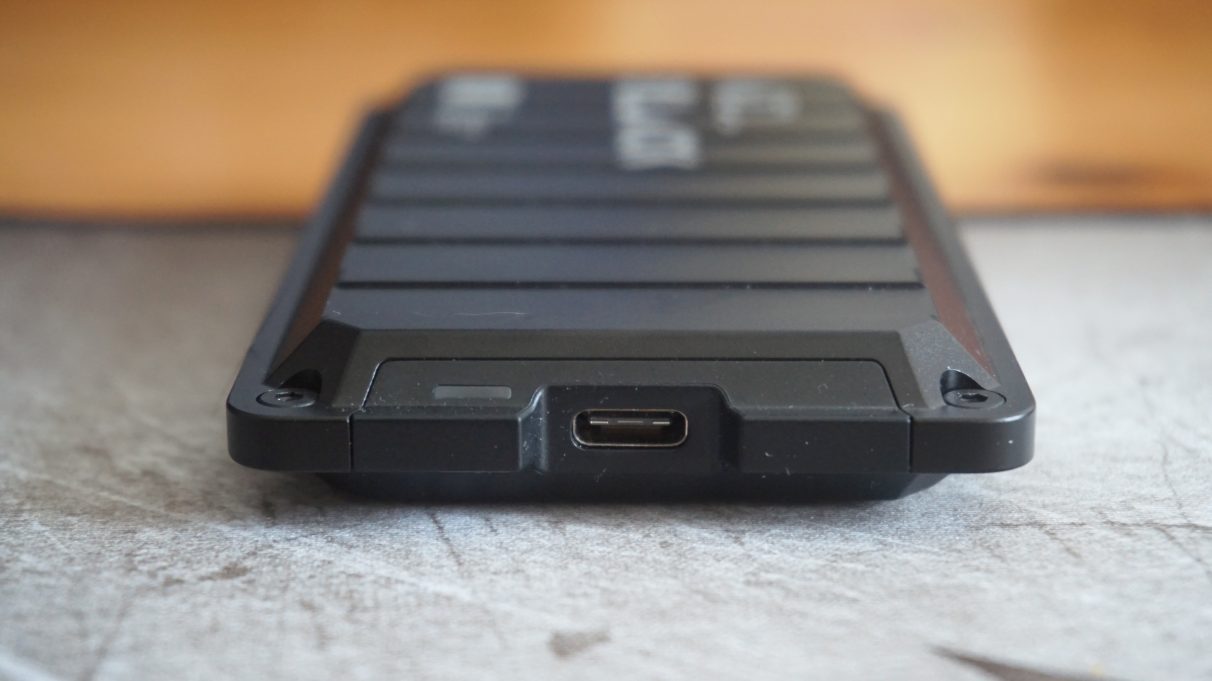
So, is it worth shelling out for the WD Black P50 now to make sure you’ve got the best future-proofing possible, or are you actually better off plumbing for a USB 3.1 device like the Samsung T5? Price-wise, the WD Black P50 is quite a tough ask. At time of writing, it’s one of the most expensive portable SSDs you can buy right now, with its 500GB model going for£150/$165, and its 1TB version setting you back an even more extortionate£240/$250. There’s also a 2TB model that costs a whopping£400/$500.
That’s quite a bit more than what you’ll pay for the Crucial X8, for example, whose 1TB model currently goes for just£150/$165- the same as WD’s 500GB drive. Heck, even the Samsung T7 Touch’s 1TB model is currently only£195/$230, which is still considerably cheaper than the WD Black P50, while the older 1TB Samsung T5 can be had for£148/$175. The price of new technology, eh?
It wouldn’t be so bad if the WD Black P50 offered a noticeably faster experience on current gen devices, but when I tested it with my Dell XPS 15 laptop and Asus Prime Z370-P motherboard, its USB 3.1 speeds were actually considerably slower than its rivals.
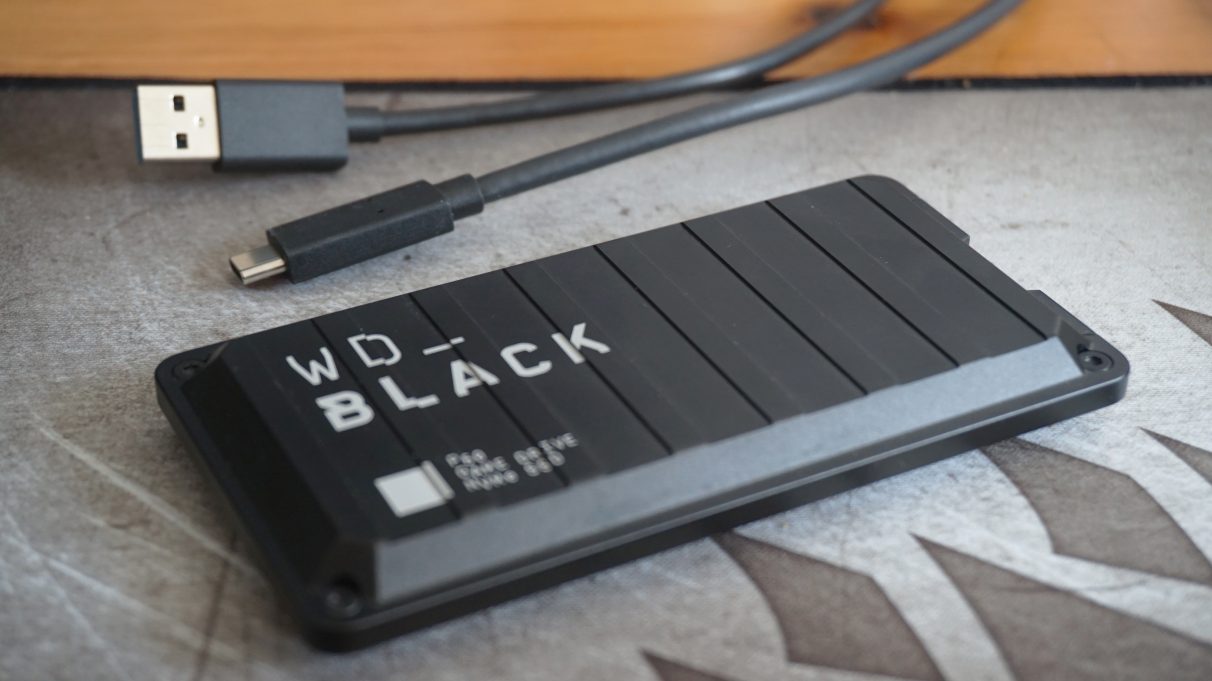
The WD Black P50 comes with two cables in the box - a USB-C to USB-C and a USB-C to USB-A.
The Crucial and Samsung, on the other hand, were up in the 420MB/s zone for their sequential read and write times over USB-A, while their random speeds came in at a much nippier 20MB/s read and around 37MB/s write.
The WD Black P50’s transfer speeds were dead slow when I ran AS SSD’s copy benchmark over USB-A as well. This involves transferring three different file types from my OS drive to the SSD – an ISO folder consisting of two large files, a programs folder with lots of little files, and finally a game folder that’s made up of both big and small files. I mean, the WD Black P50 was so sloth-like here that it even fell behind my results for WD’s Black P10 HDD, and I just couldn’t quite work out why it performed so badly.
Thankfully, the WD Black P50’s speeds greatly improved when I switched over to using its bundled USB-C cable, showing results that were much more in line with what I was expecting. However, they still weren’t fast enough to justify that massive price hike. Here, the WD Black P50 managed a random read speed of 19MB/s and a random write speed of 38MB/s. Both of these were a tad faster than the Samsung T7 Touch, which managed 18MB/s read and 37MB/s write, but the Crucial X8 just about held on to its lead thanks to its higher 23MB/s read speed, even though its random write speed was an identical 38MB/s.

It was a similar picture when I re-ran AS SSD’s copy benchmark as well. Here, the WD Black P50 managed a transfer speed of 556MB/s for the ISO test, 155MB/s for the program test, and 398MB/s for the game folder, putting it ahead of the T7 Touch but behind the Crucial X8.
WD do, at least, give you a five year warranty with the Black P50, which is much longer than the three years you get with the Samsung and Crucial, but even that isn’t really enough to make up for the huge difference in price.
As I said before, without a proper USB 3.2 Gen 2x2 device to find out what the Black P50 is really capable of, I can only assess what you get out of it on older hardware, which right now is pretty much zero compared to the£150/$1651TBCrucial X8. TheSamsung T5is still the cheapest and best value option for those after a 500GB portable drive at£82/$105(and for those whose laptops and PCs still only have USB Type-A ports), but once you move up to 1TB, the Crucial X8 is a tough act to beat, particularly if your PC or laptop has a USB-C port.
