HomeFeaturesChicory: A Colorful Tale
Wandersong dev on the challenges of trading singing for painting in ChicoryWe chat to Greg Lobanov about the origins of his latest game
We chat to Greg Lobanov about the origins of his latest game
Image credit:Finji
Image credit:Finji
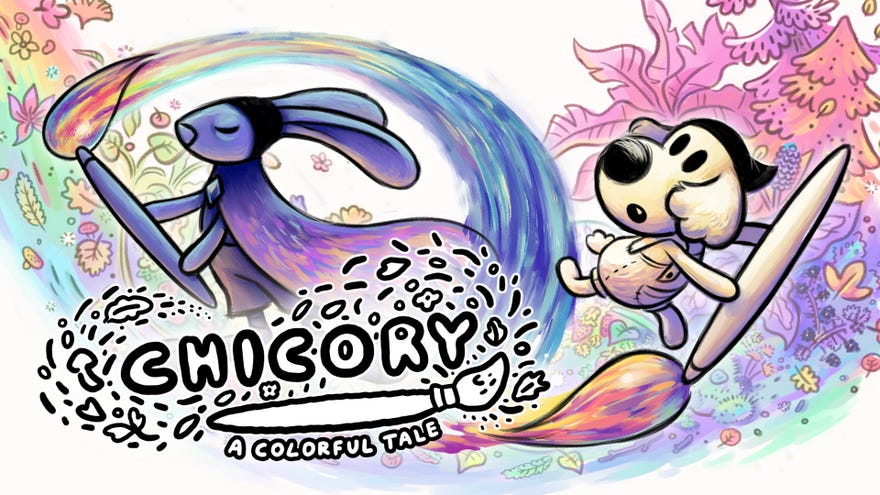
As Greg Lobanov was putting the finishing touches to his delightful singing bard adventureWandersongand waiting for it to debut in the autumn of 2018, the first threads of what would become his next project,Chicory: A Colorful Tale, started to form in his head. He wasn’t sure what it would be back then, but “a game about drawing was my first idea,” he says, “and seemed like the most natural progression from Wandersong. It took a couple of months of moving pieces around to find the game Chicory was gonna be; there were a lot of bad versions of it to sift through first.”
Chicory: A Colorful Tale Release Date TrailerWatch on YouTube
Chicory: A Colorful Tale Release Date Trailer

“I’ve always loved drawing,” says Lobanov. “I wasn’t necessarily the best at it, but it was something I did, constantly, as naturally as eating and breathing. I just really enjoy making things, and with Chicory especially I wanted the conversation in the game to explore a bit about creativity. But I don’t think it makes me that special, really; anyone in the world can have fun playing with the keys on a piano or a pack of crayons, so it’s perfectly natural to build a game on those concepts.”
Ah yes, the toughest of all the colours, salmon pink.
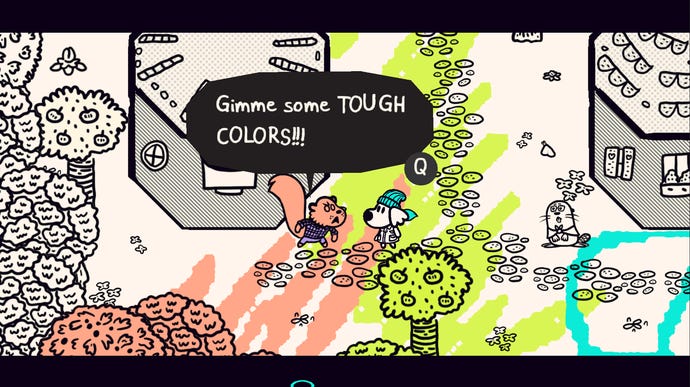
Despite being a game about drawing, though, it wasn’t until Lobanov persuaded environment artist Madeline Berger to join the project that Chicory’s big chunky art style fell into place.
“Art-direction wise, I was feeling a bit lost until I recruited my then-roommate, zine artist Madeline to draw over the environments for me,” says Lobanov. “Their art has a wonderful charming character to it, and they didn’t have a background in games, so they brought something novel to the mix. Often my role in direction was trying to balance Madeline’s wildly diverse drawings with a need for gameplay clarity, and the result is something that feels like nothing else, to me.”
I also asked Lobanov about his shift from the humans in Wandersong to the animals of Chicory, and that was all down to character artist Alexis Dean-Jones, he tells me.
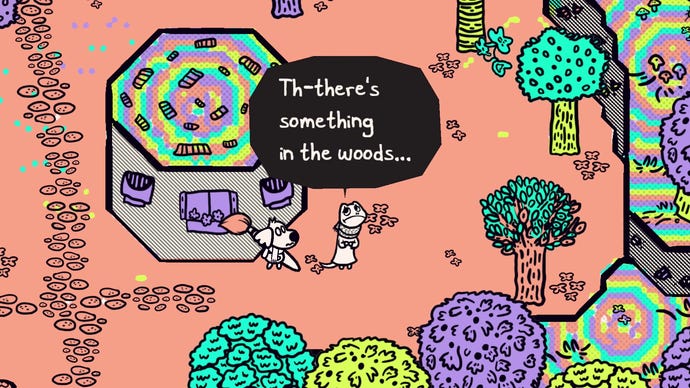
“We first met while I was making Wandersong and from the get-go I loved her work and wanted to make a game populated with her characters. I also just love the energy it brings to the world; before you even start talking to a character, you can get such a strong impression of them just from their species and design and name (which is always based on food).”
Naturally, with hundreds of different animal types and food names to consider, there was a lot of iteration involved before the team eventually decided on Chicory’s central cast of characters.
One of the first animals you meet, for example, is Blackberry, who trained the titular Chicory in the art of their magic paintbrush. At first, she was a reptile, but during the course of development shealso morphedinto an otter, a kind of wolfish-type creature and even a porcupine.
“We tried more than a dozen different species before deciding she’d be a deer,” Lobanov laughs. “It’s funny though; in hindsight I can’t imagine her any other way. A lot of the process was just trying ideas until we found something that ‘just felt right’. That was the case for the character design just as much as it was for the game design.”
You really weren’t kidding about those woods were you, lizard friend?
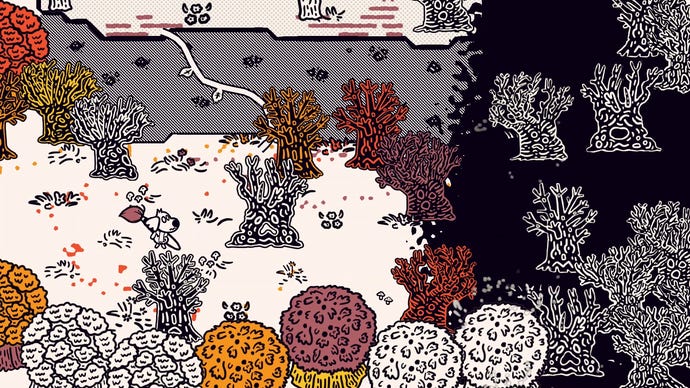
For all its whimsy and cute cast of characters, though, it quickly becomes apparent that Chicory - both the game and the rabbit who lends her name to it - is dealing with much heavier stuff than the simple, joyful act of putting brush to canvas. As with Wandersong before it, which drove right to the heart of what it means to be a ‘hero’, Chicory isn’t afraid to ask big questions. In just the opening couple of hours, Chicory touches on themes including burnout and self-care, and the toll of having to be constantly creative all the time.
Naturally, there are challenges that come with telling such a story, and walking the line between sincerity and being overbearing can be a tough one to manage. According to Lobanov, though, the secret is knowing when to shut up.
“I edit everything down like crazy,” he says. “I often approach story-critical scenes considering how it would read to somebody who was bored and genuinely doesn’t care, and look for ways to grab that person’s attention. And then yeah, just eliminating word count as much as possible. Every button press to advance a text box burns through your goodwill with the player, so I try to make each one count. It’s a good exercise for getting to the heart of what you want to say.”
In that spirit of brevity, then, I’ll end with this. Chicory: A Colorful Tale is out today onSteam, and I’m very much looking forward to tucking into the rest of Pizza’s story very soon.
