HomeReviewsVoice of Cards: The Isle Dragon Roars
Voice Of Cards: The Isle Dragon Roars review: a JRPG in card game cosplayTaro cards
Taro cards

Voice of Cards: The Isle Dragon Roars | Launch TrailerWatch on YouTube
Voice of Cards: The Isle Dragon Roars | Launch Trailer

The battle table does a nice job of making you feel like you’re playing a tabletop RPG, but calling this a ‘card game’ is pushing it.
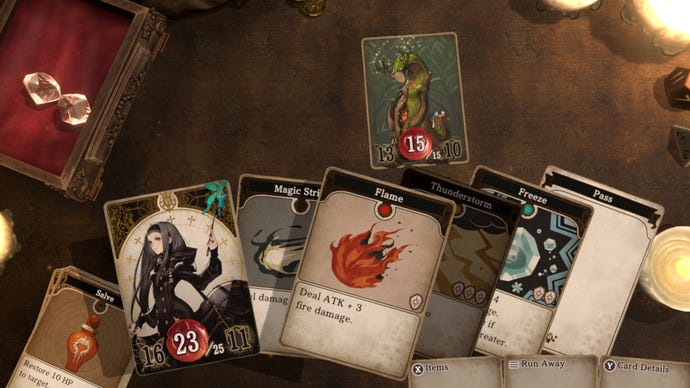
Not that you’ll ever really need any mega EXP to see you through the bulk of its combat. Despite you, the world and its monsters all being made from cards, there’s really not much of a card game to speak of here. Indeed, strip away its (quite literal) paper-thin aesthetic and you could easily mistake Voice Of Cards for a typical JRPG. Battles occur randomly as you jump and hop around the map, but they aren’t won through careful card placement or cunning strategic plays. Instead, at the beginning of each fight, your party of three - built from five possible options of your classic swordsman, a dainty mage, a woodland archer, and two muscular tanks – will shuffle onto the wooden battle board and square off against their foes in classic turn-based fashion.
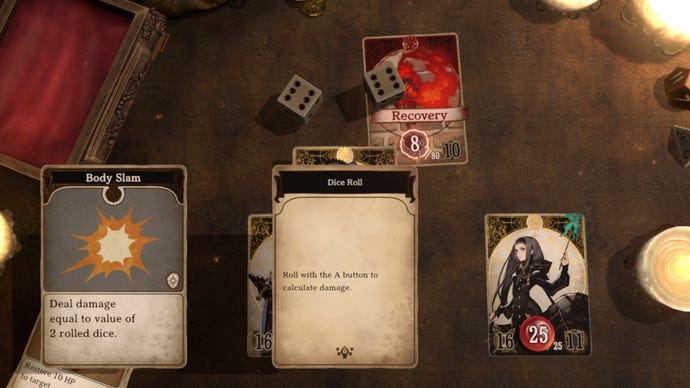
Each character has a deck of four cards to choose from, but when these attacks are fixed for the course of the battle, it’s really no different from nosing through a battle menu in aFinal Fantasygame. More powerful attacks often require the use of gemstones, which slowly accumulate at the start of each turn, but the cost of these cards is often so low that you’ll rarely need to even think about your gem count at all. There are also the usual elemental strengths and weaknesses to consider, that’s about as deep as it gets. The only nod to anything remotelytabletophere is the odd dice-roll determining whether you land a winning freeze, paralysis, burn or poison debuff.
Some attacks require the odd dice roll to determine their attack power or whether a status effect lands.
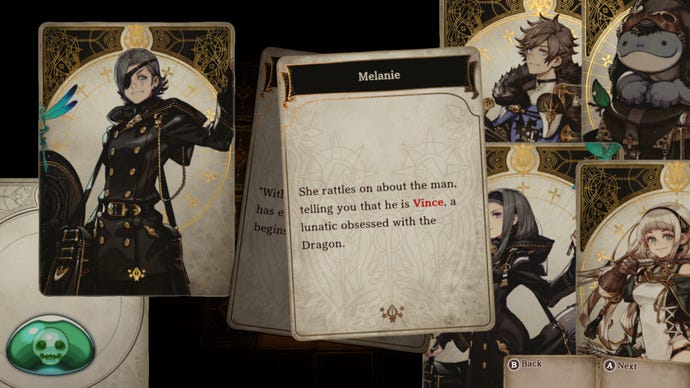
It’s always the dragon obsessed lunatics that ruin the party, isn’t it?
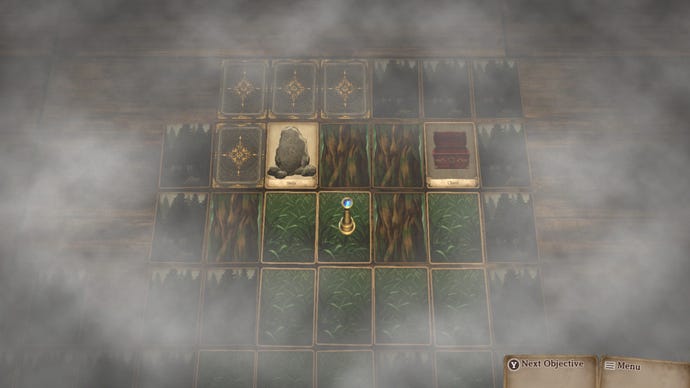
It’s a shame Taro wasn’t able to get more out of Voice Of Cards. I feel like there’s much to admire here, from its light and approachable style of battling to its enjoyable and occasionally daft story moments. Taro’s commitment to the whole card schtick is commendable, too. Deaths in battle are rendered as violent card tears, while status effects crinkle and crease them with a pleasing sense of polish. Discovering the world a clutch of cards at a time is also surprisingly moreish, even if the resulting tiles underneath are no more complicated than a retro Final Fantasy map. But there are better card games out there that are more deserving of your time than Voice Of Cards. It simply cannot match the dramatic strategic plays ofSlay The Spireor the onion-like layers of Daniel Mullins’Inscryption, and if it’s proper dungeon crawling tabletop trappings you’re after, then get thee to Defiant Development’sHand Of Fateseries. Rather than roaring triumphantly into the popular genre of the day, Voice Of Cards ends up being little more than a whimper.
