HomeReviews
Victoria 3 review: chaotic grand strategy in the age of steamDoes it build a good head of lettu…I mean steam?
Does it build a good head of lettu…I mean steam?
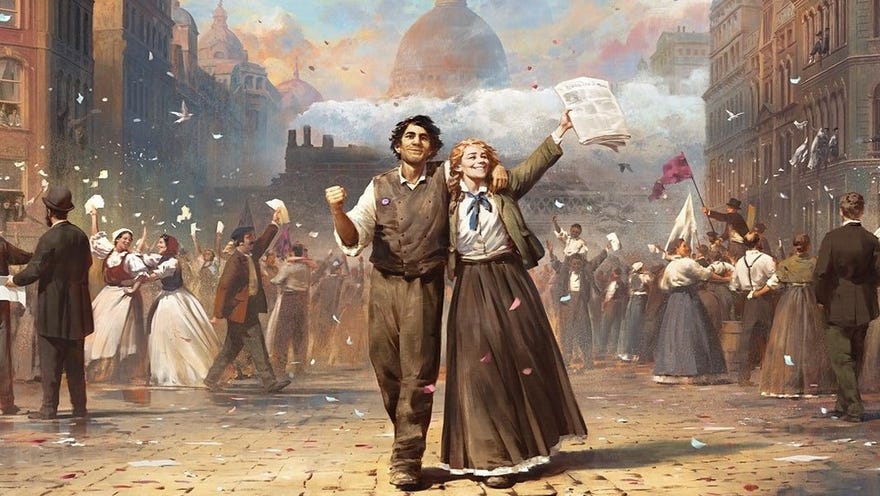
Folks, I’ve got some bad news.Victoria 3is not a game where you play the clone of the clone of Posh Spice. I was all geared up for some science fiction-tinged Spice Girls shenanigans, but I was left bitterly disappointed. However, I’d already installed it, so I decided to check it out and see what kind of game it actually is. Turns out thatVictoria 3is a grandstrategy game, just like its Paradox stablematesCrusader KingsandHearts of Iron.
Victoria 3 - Announcement TrailerWatch on YouTube
Victoria 3 - Announcement Trailer

The answer, to paraphrase my friend Pete, is that it’s a Victorian socioeconomic Rube Goldberg machine. You’re given control of a country of your choice at the start of 1836, just one year before everyone’s favourite monarch named after a Walford pub plants her bum on the UK throne, and you have a century to, well, do whatever you want.
While Victoria 3 offers several guided game modes with helpful hints at how to achieve a particular goal such as economic dominance or an egalitarian society, you’re largely left to your own devices. Thankfully, the tutorial mode is both robust and flexible, giving you the option to ask how to achieve the task it presents you with, as well as why you’d want to do it. You can let the game show you where to click in order to build and ask for an explanation of why that’s a useful thing to do and how it’ll affect your growing nation. Alternatively, if you want to work it out yourself, you can just do what you like, and the tutorial will pick up again afterward. It’s a smart way of allowing the player to engage with the depths of the game at their own pace.
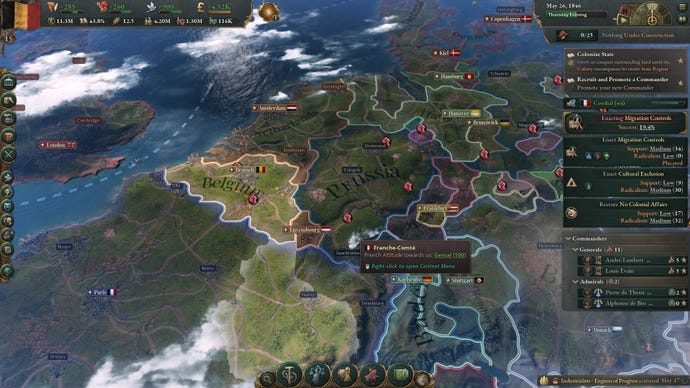
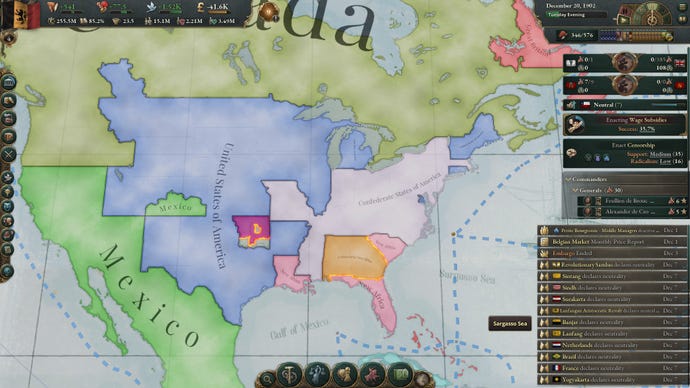
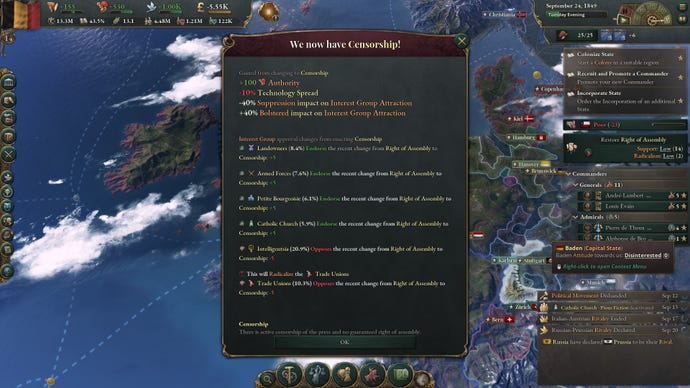
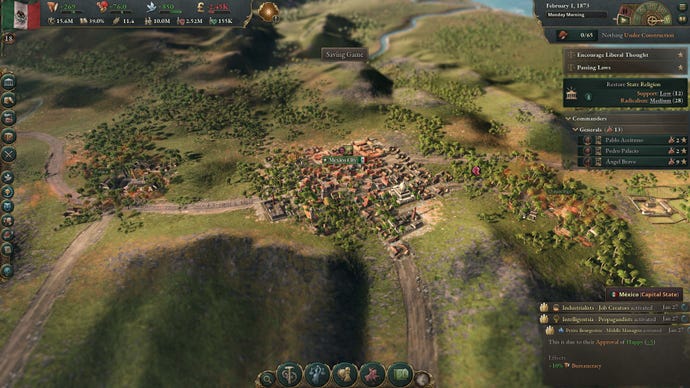
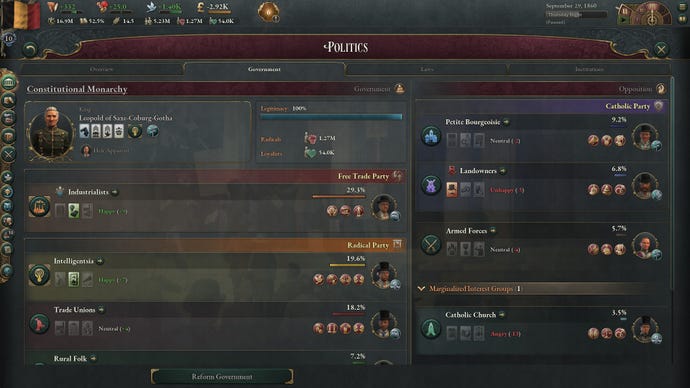
Now the subject of child labour has been broached, it’s time to address the British Empire-sized elephant in the room. Victoria 3, due to the time period it covers, deals with some unpleasant subject matter. Not only that, but the nature of the genre also means looking at them in a detached, almost clinical manner. It’s very much a numbers game, and the potential is there to reduce a lot of human suffering to points of data in an economic equation. For these reasons, I must confess that I approached the game with some trepidation.
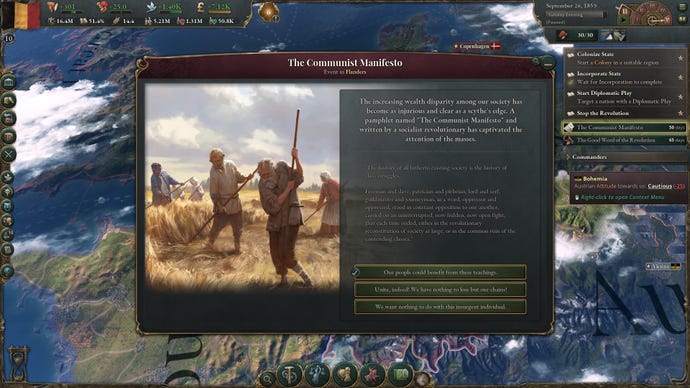
It helps that the game isn’t really about winning as much as it is experimenting and learning. The abstract and ambiguous nature of the player’s role in affairs (the disembodied spirit of the nation? A tiny goblin who appears in politicians’ bed chambers and yells “OI, YOU WITH THE HANDLEBAR MOUSTACHE, ENACT UNIVERSAL SUFFRAGE OR ELSE!” I have no idea, honestly) means that you can happily weather revolutions and regime changes, continuing to poke and prod the populace. Failure can be just as fun as success, as I discovered after leading Belgium all the way into the twentieth century before causing economic collapse and civil war with an overambitious extension of the welfare state. Oops.
Making entertainment media rooted in the recent past is never easy. The interactive nature of games makes that even trickier, and Paradox is no stranger to certain groups deciding that presenting historical reality is equal to endorsement. Victoria 3 succeeds at rendering a tumultuous chapter in world history with a straightforward grace that educates as much as it entertains, encouraging reflection and empathy in the process.
