HomeReviewsUnexplored 2: The Wayfarer’s Legacy
Unexplored 2: The Wayfarer’s Legacy review: a special, chunky roguesomethingFortune favours the knave
Fortune favours the knave
Gather round the fire, rogue likers and roguelike likers. In a moment of high folly, perhaps hubris,Unexplored 2has arrived to these lands to preach the benefits of novelty and moreish dungeon delving. This is a chonker of a roguelikeRPG, in which long-held assumptions about how the genre ought to be designed are thrown away, while others are strictly obeyed. The designers of this colourful ‘splorer have rubbed their chins and decided to see what our beloved randomly generated death tales would look like without two sacred cows: money and meters. Folks, it looks kinda good.
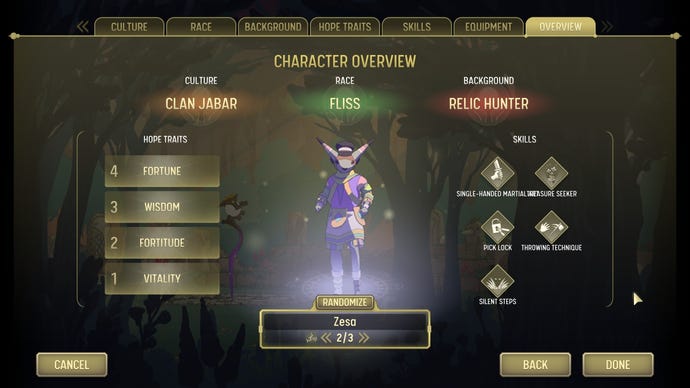
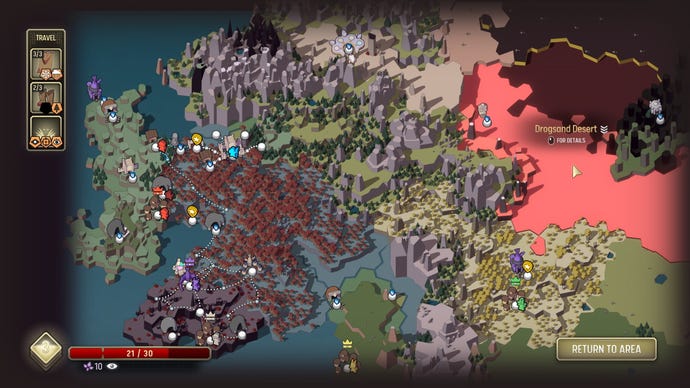
Before I get into what makes it feel special, let me sketch an idea of what’s going on. You’re a little dude on a quest to destroy an ancient staff. You’ve got to march it to a deadly region called the First Valley and find a big forge where it can get wrecked. Moment to moment that means top-down dawdling through pretty pockets of procedurally generated forest, desert, mountain, snow, badlands, and swamp, possibly fending off monsters. Then trekking across a world map as an increasingly exhausted meeple.
Unexplored 2 explained in less than 3 minutesWatch on YouTube
Unexplored 2 explained in less than 3 minutes

Journeying comes with small obstacles or encounters. You might get wet traveling through a storm, then be unable to withstand the cold of night. You might get lost and find your meeple flung sideways into another location altogether. These status modifiers (cold, wet, fatigued, wounded) stack up and reduce your level of Hope. Which eventually threatens to permanently cleave the sweet passive bonuses you built into your character at the start of a game (a quicker running speed, a buffed health pool, and so on). I recklessly dipped into a lake to see what would happen, for instance, then travelled through an autumn wood, which made my fantasy bird man so cold and soggy he lost his top-level Hope trait. In this case, extra luck in the game’s lucky dip style “fortune tests”.
A Fortune test is essentially a clever probability minigame spruced up with flavour text. Let’s say you come across a stone inscription but you can’t read it. A dialogue box appears with a pool of floating discs inside. You get limited chances to go fishing into this pool of colourful tokens until a success bauble comes out, but you might also pluck a failure bauble. All the while new tokens are getting added, increasing (or scuppering) your chances at pulling out the right green-coloured disc. This happens for all sorts of interactions, from picking locks to persuading townsfolk you’re a decent frogperson who is definitely NOT planning to kill them. When the game first explains this tabletop-inspired minigame of chance, it seems overwrought (why not do a simple skill check?) but the process soon becomes second nature. It’s an elegant, clicky little toy and it feels somehow crunchier and more satisfying than a plain-faced dice bounce.
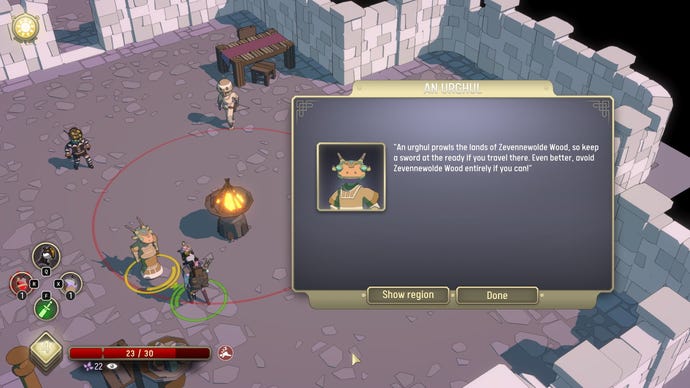
In many cases, fighting is a terrible idea anyway. You don’t gain a lot of loot from kills, and you’re often better off sneaking past with some light stealthiness, or talking your way out of a mugging with a lucky dip of small talk. The real loot is hidden in tubs at the bottom of dank dungeons, or past a few puzzlish rooms in an abandoned temple. Or even just in the pockets of a merchant in the next town. With the combat being a little fusty, it’s smart of the game not to over-reward you for getting into fisticuffs. As in all good roguelikes, your health bar becomes your economy, a personal GDP emblazoned in crimson red. Why would you invest in a start-up knife fight with four dangerous blokes when you could deposit into the savings account of sneaking round the back?
Which brings me to the thing I admire most about Unexplored 2. Money. Or rather, the complete lack of it. There are plentiful merchants, smiths, alchemists and healers, but they’re all trading on a barter system. A pair of scales weighs up the value of items for each trader, and you basically have to pile stuff onto this to see what it’ll get you. Like the look of that spear? Well, toss a ring, some boots and a bit of old bread onto the scales to see if the trader will think it fair. No? Okay, trader, fine. Take my boots, why not? It’s not as if I’ll need shoes when I’ve got a big pike, haha.
(You will need your shoes. Under no circumstances should you sell your shoes).
I like this ad-hoc means of haggling. It’s not new to video games (begrudging wave toPathologic) but it fits the roguelike format well. It forces you to think about what you truly value, to make impactful decisions about what you’re prepared to live without, and what opportunities you can’t pass up. Who knows when you’ll next see a fur-lined cloak that will keep the cold status off you in wintry climates? Is that worth an axe? It might be. This is RPG inventory tidying that encourages thinking in terms of circumstance and real worth, rather than approaching each shopkeeper with the abacus mind of a banker.
It’s not the only novel twist going either. Roguelikes love it when you die. The common trick is to grant you XP or new abilities or some limited resource that crosses the mortal divide, making you slowly more powerful even as you cark it with the recurring enthusiasm of a seasonal weed. Those principles aren’t totally discarded here (there are “legacy” items for example, that you keep from character to character) but Unexplored 2’s design cares less about inheritance and more about how history layers itself after each kick of the bucket.
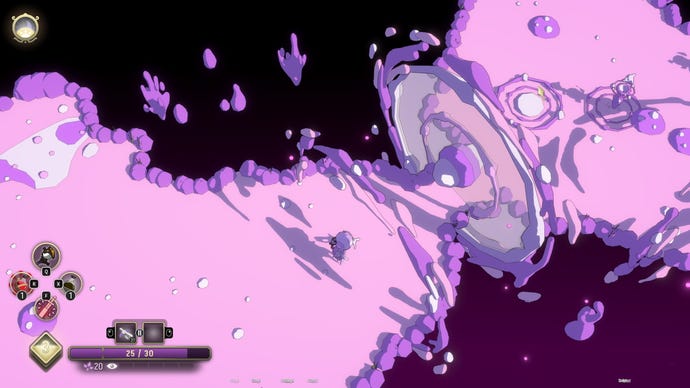
It’s only a pity that tall trees, rocks and other objects can obscure your view while exploring or talking to local weirdos. You can slap the Shift key to change perspective but I never found a perfect camera setting that balanced a good overview with total clarity. I ended up swapping between the different zoom options quite often. That might be the intended solution but I have crap hands. My poor, strained pinky.
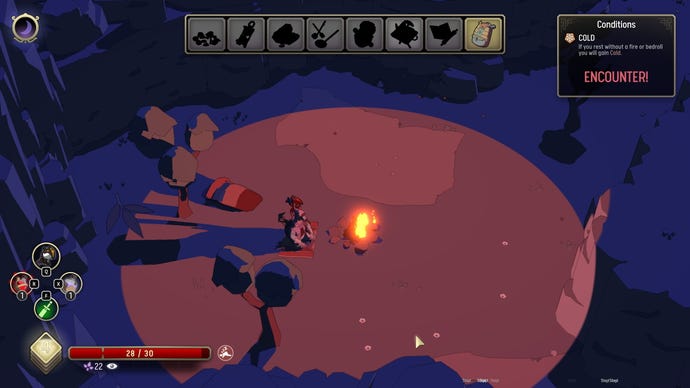
You’re likely to have similar dust-ups and shakedowns, of course, given the component parts of any procedural machine. But vitally, Unexplored 2 makes the player feel adventurous and special. Even when you’ve got no money, no XP, and no shoes.
