HomeReviewsTwo Point Campus
Two Point Campus review: a relaxed management sim bursting with silliness and seminarsI predict a strong turnout on Open Day
I predict a strong turnout on Open Day
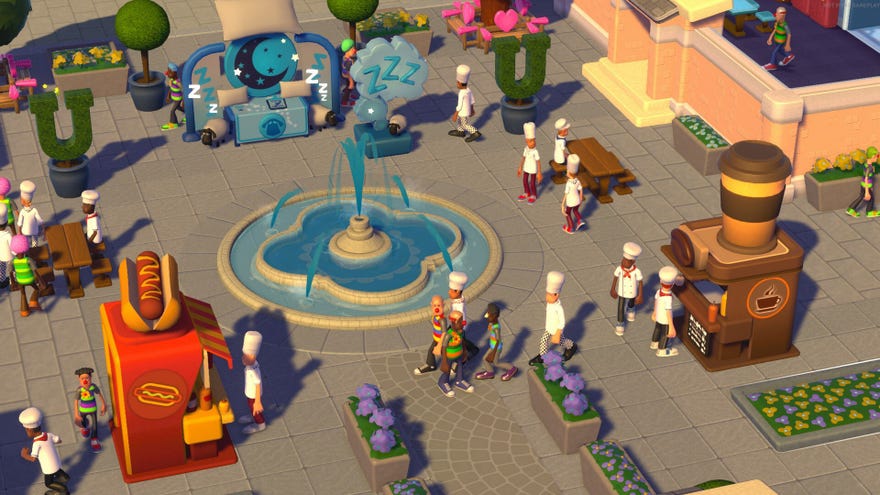
Two Point Campustrades the operating rooms of its predecessorTwo Point Hospitalfor lecture theatres and decrepit dorms. But its foundations remain the same: you’re a manager with a budget and you’ve got to turn the fortunes of increasingly prestigious – and in some cases, bonkers – institutions around. Of course, this time you’re not dealing with injured mummies and lazy surgeons, you’re in charge of running university campuses (campi?) and ensuring they deliver a solid education.
The job of a university president is a pretty relaxed affair, which means you’re able to soak in the joys of watching your oddball students grow. But this leniency means it struggles to reward you for constructing a campus that’s uniquely yours.
Two Point Campus - A+ Management Game Is Best In ClassWatch on YouTube
Two Point Campus - A+ Management Game Is Best In Class

For those who aren’t well-versed inmanagement games, Two Point Campus is the perfect springboard into the genre. Often games of this ilk suffer from a lack of direction, with mediocre tips that let you off the leash before you’ve even understood the basics. There’s none of that here, as the game steers you through the basics of building facilities and recruiting staff, highlighting useful bits of the user interface like they’re colourful bookmarks jutting out of a file. This lends the game an immediate sense of gratification, as before you know it, you’re running a campus! More importantly, you understandhowit’s running.
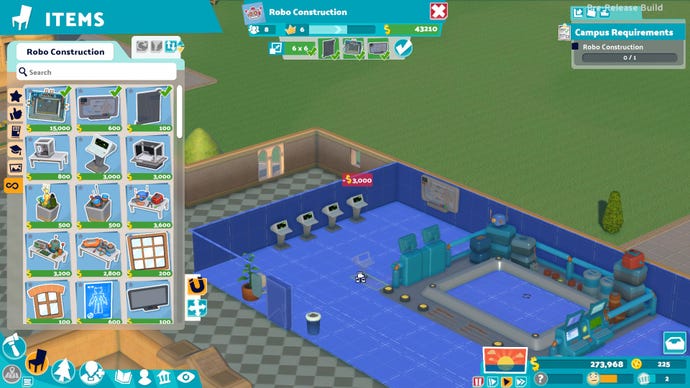
And the cogs of your academic machine aren’t only designed with simplicity in mind, but also to give you much needed space. Jump into a new campus and you’re the one who decides when the academic year starts, which means that you get all the time in the world to lay the foundations. Each course, whether that’s General Studies or Archaeology, lasts for a total of three years and at the end of each year you’ll get a summer break to invest your profits, tinker with your campus layout, expand the number of courses on offer (or not, depending on your finances), and meet the tougher conditions of returning students. Again, the game provides ample chances to amend with zero pressure.
To hire staff, you bang open a menu and the information is equally clear and crisp: everything’s bundled up in nice icons you hover over for hints and personality traits that offer amusing insights. Those with better traits come with greater salary demands, but financing is rarely an issue. Jenny Enzyme is an excellent librarian who will help students keep upbeat but has an unhinged side that means she’s allergic to using the bin, for instance. Bionicle Johnson is a Robotics teacher who gets jobs done quickly and has a profound urge to piss. They are worth hiring for the names alone.
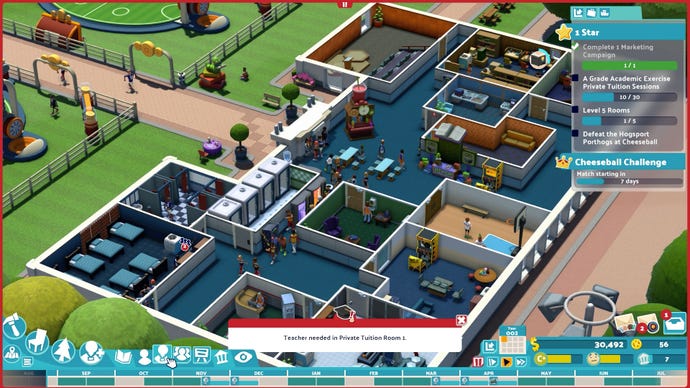
The game does a grand job of adding layers to your building flow. Move between campuses and you’ll take what you learn from one into another, perhaps adding a multitude of courses instead of just one. You’ll learn that students get cold in chilly climates, so you pop radiators down. Students need entertainment, so you pre-emptively craft a suitably miserable student’s union. Before you know it, you’re assigning people to undertake research projects that’ll let you build special items like Dragon Towers for your students undertaking a Knight course, or training existing members of staff, or upgrading your original lecture theatre to be more efficient.
And you’re able to tinker with outdoor spaces too, buying plots of land and repurposing them to further your academic empire. You can mess about with trees and paths, stick benches in nice spots, and ramen stands to catch hungry students between private tuition classes. It’s really neat.
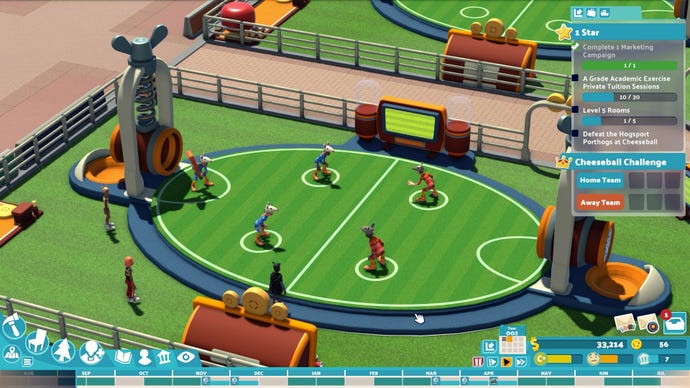
But “hitting the right notes” is where the game starts to show some cracks. Less in the sense that it’s revealing something awful or bad, and more in the sense that you view your students as walking ones and zeros. Your students might demand more entertainment, so you build them a thoughtfully constructed lounge with a boombox and arcade machine, tastefully decorated with sofas that match the rugs. But it might not be enough. So, in desperation, you stick eight arcade machines against a wall and bam! Their happiness skyrockets.
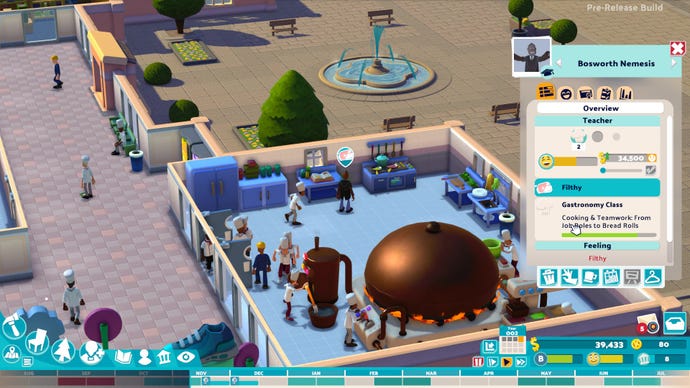
In being so lenient and chill, the game is guilty of shooting itself in the foot. It’s up to you whether you bother creating a beautiful campus that makes cohesive sense. Where dorms and situated in a separate outhouse, with beds and nice windows. Where corridors are bright and airy. Where the medical centre sits alongside the battlegrounds, so injured Knights can patch up their wounds in a jiffy. To some extent, yes, doing these things may increase your chances of a successful university anyway, but I’ve managed to create one that’s raking in profits and top grades and looks like an establishment I wouldn’t step foot in, even if I was as desperate for a piss as Bionicle Johnson.
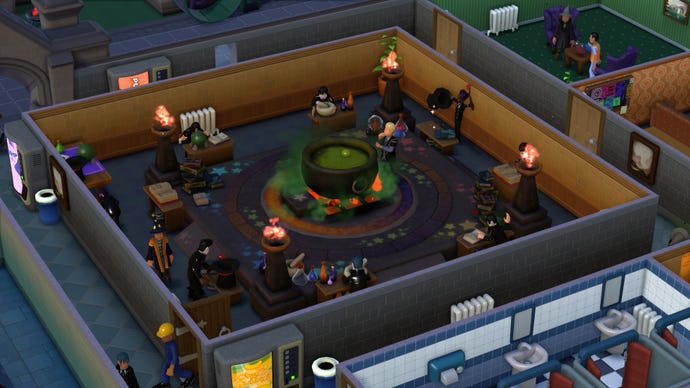
Ultimately, the game’s relaxed nature means that it’s incapable of acknowledging any truly meaningful decisions you make. You can create a campus that’s aesthetically pleasing or release a deep sigh and slap one together that’s more reminiscent of a prison that reeks of Febreze. Either one will satisfy the inspectors.
And yet, you simply can’t knock the game too hard for its chilled out nature, as it’s the main reason you’re able to approach the game however you want. You get to decide how challenging it is and the pace at which you’d like to chase those star ratings. And it’s rare to find a game that’s as much of a pleasure to soak in as this one. It has a jolly atmosphere, with fun radio stations and students who look like the spawn of Wallace from Wallace And Gromit. It doesn’t take itself too seriously either, with wacky courses and surprising twists that aren’t just about hitting monetary goals. You’d be wise to enroll, I reckon.
