HomeHardwareDeals
The super-fast WD Black SN850 NVMe SSD is going cheap at Best Buy$150 for a 1TB PCIe 4.0 SSD with a built-in heatsink, ideal for PC or PS5.
$150 for a 1TB PCIe 4.0 SSD with a built-in heatsink, ideal for PC or PS5.
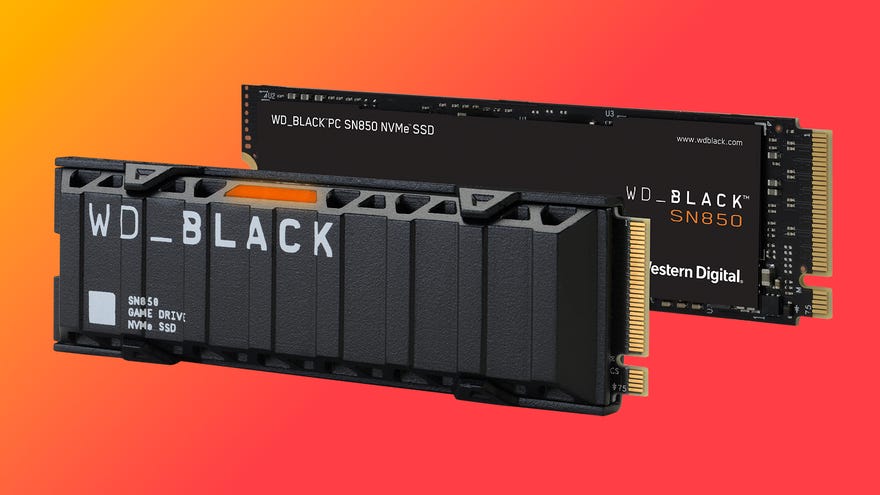
The WD Black SN850 is a fast PCIe 4.0 solid state drive, and the 1TB model with an integrated heatsink is going for $150 at Best Buy today - some $120 off the MSRP and a historic low price.
This is one of thevery fastest SSDs you can buy, with great sequential and random speeds, so it’s a great choice for running your OS and loading games faster than ever before. It’s also fully compatible with the PS5 thanks to its high speeds and integrated heatsink, making it a great plug-and-play solution for exanding your game storage on the Sony console. Either way, you should expect bleeding-edge performance thanks to high-end components and that extra cooling potential.
Get a WD Black SN850 1TB for $150 (was $270)
If you’re in the UK, then the cheapest price we found for the SN850 1TB is£140 with heatsinkor£119 without.
The SN850 1TB is rated at up to 7000MB/s reads and 5300MB/s writes, making it one of the fastest PCIe 4.0 drives available. Katharinetested the SN850 for RPSand found its real-world speeds were impressive too, on par with the more expensive Samsung 980 Pro in random read speeds and significantly faster in random writes. The heatsink should help keep sustained speeds high, but if you don’t need the heatsink then you can find the same 1TB WD SN850 on Amazon for slightly cheaper -$138.
To take advantage of those speeds, you’ll need a motherboard that supports PCIe 4.0 or 5.0, such as AMD’s B550 and X570 boards, or Intel’s 500-series and later motherboards. This includes most computers built in the last two or three years, but it’s well worth checking which PCIe version you have available before hitting the purchase button. Thankfully, this drive will work on older machines with PCIe 3.0 slots, but you’ll be limited to around 3000MB/s - so it’s only really sensible if you’re planning to upgrade to a PCIe 4.0 or 5.0 system in the near future, I’d say.
