HomeFeaturesTimberborn
The Rally Point: Timberborn breaks the boring “village vs winter” mouldI want to le beave
I want to le beave
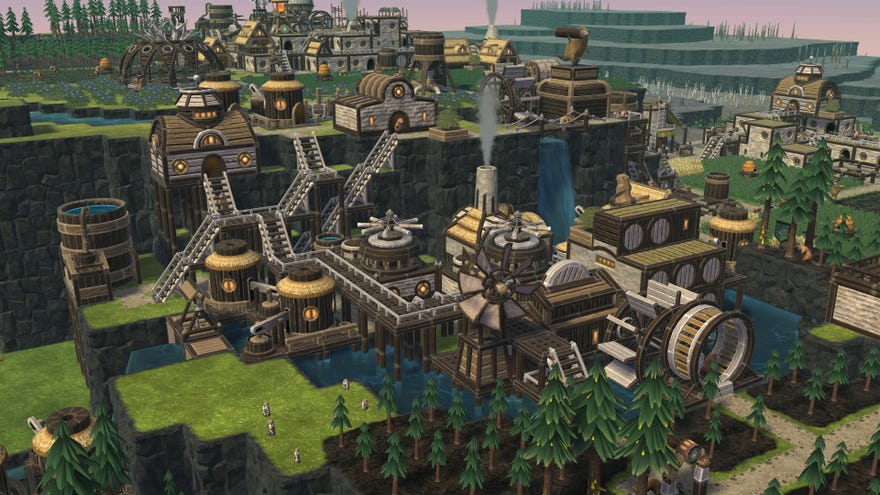
I think I’m tired of winter.
It’s not the cold. It’s not even the lack of anything to do. It’s that when your main threat is starvation and hypothermia, and your only real tool is stockpiling, it often feels like your fate is already sealed come October, and waiting around to see if you survived or not carries the same sense of slow inevitability that the average RTS or 4X game does past the opening act.
My first village inTimberborngave me that feeling. Even though its dry season is the opposite of Winter, the ultimate effect was the same. I’ve played this before, I thought. This is the villagers vs winter game again.
I was a fool. A big, wrong fool.
Timberborn Early Access OUT NOWWatch on YouTube
Timberborn Early Access OUT NOW

My initial complaint comes up often in survival-based building games. The ones where you settle in a wilderness and have to quickly gather enough wood and food to last through winter, and that’s typically all the game’s about. The issue I have isn’t when they’re difficult, but when there’s no leeway. When you reach a point where you need three wood to build the last granary, but you only have two wood, and therefore your entire settlement is now mathematically doomed. Does nobody in this village want to live? Faced with the starvation of your entire family, wouldyoustare at the woodcutter’s hut with the big sign reading “3 / 3 workers”, and the fields full of crops, and the two-thirds of a building to store them in, and simply resign yourself to death?
It’s a tricky feeling to elucidate but you know it’s happening when you have no option but to watch your game slowly fall apart and your society die out because of a technicality. It’s not even about “difficulty”, but degree of entertainment. When your hands are tied in a way that feels artificial and dissatisfying, and when there’s no amusement or awe to be had from watching the tower collapse. Losing, essentially, is not fun.
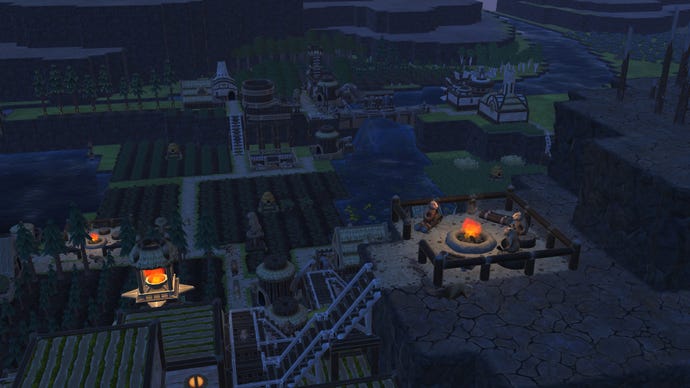
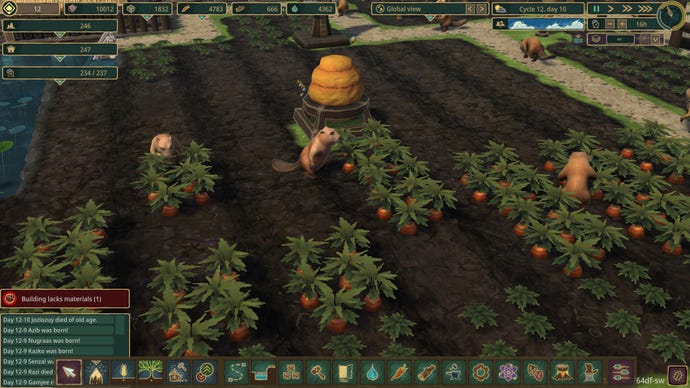
But I think that’s the key: those games had more to do than watching to see who would survive the cold. Or considerOstriv, where the watching itselfwas a delight. They all have things todelightin, and that’s where Timberborn really shines once you realise what it’s doing.
Droughts never overtake wet seasons the wayEndless Legend’s ice gradually consumed the game, but without large stockpiles you will fail. Although simple in theory, providing that storage will likely hit that dynamic I mentioned earlier for your first couple of games, because every building requires wood, and wood takes a very long time to grow. Fundamentally, it is wood, not water or food that your future is built on. And the key to it is water.
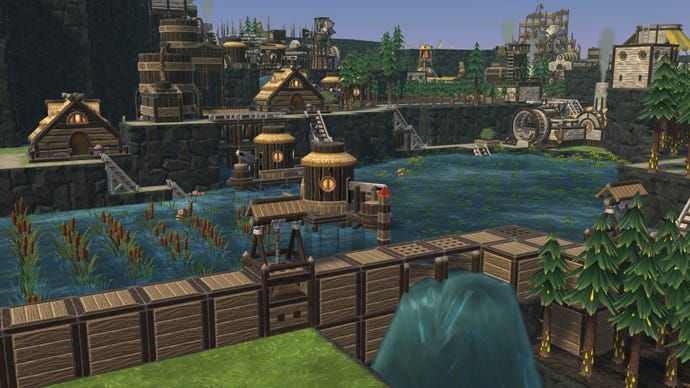
For that is the second thing that defines why Timberborn is special. The fact that your people are beavers is largely immaterial, and yet it’s critical thematically. What do beavers do? They build dams. And so must you. Water, you see, does not simply disappear come the drought. Water sources dry up, but those sources are blocks like the ones inDwarf Fortress. And once it leaves a source, the water flows. It spreads to neighbouring squares, falls downhill, slows when obstructed, and rushes when compressed through a narrow channel.
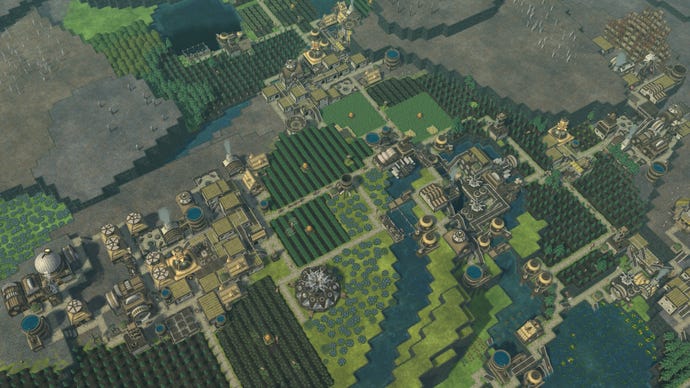
Timberborn, you see, is not just about surviving the drought. It’s about how the drought teaches you what you’re capable of if you learn how to look at what’s around you. My biggest obstacle is choosing between the multiple possibilities I see, like when I find a new area in Minecraft and immediately feel my ideas fighting over which gets to snatch the next month of my life, despite this game’s fixed maps and far fewer parts. When you can keep building over so many layers, the sky is almost literally the limit. And any time you feel satisfied with an area, there’s no reason not to let it spore into a new, self-sufficient district.
I sometimes fear that I’ve moved on from building games, but I think I was merely held up in a mire of slight variations on the same idea. I feel like a fool for not even recognising how different Timberborn was at first, but I’m glad it opened the floodgate to let me out.
