HomeFeaturesThe Battle For Polytopia
The Rally Point: The Battle For Polytopia is this summer’s low-intensity strategy gameThe Many sings to us
The Many sings to us
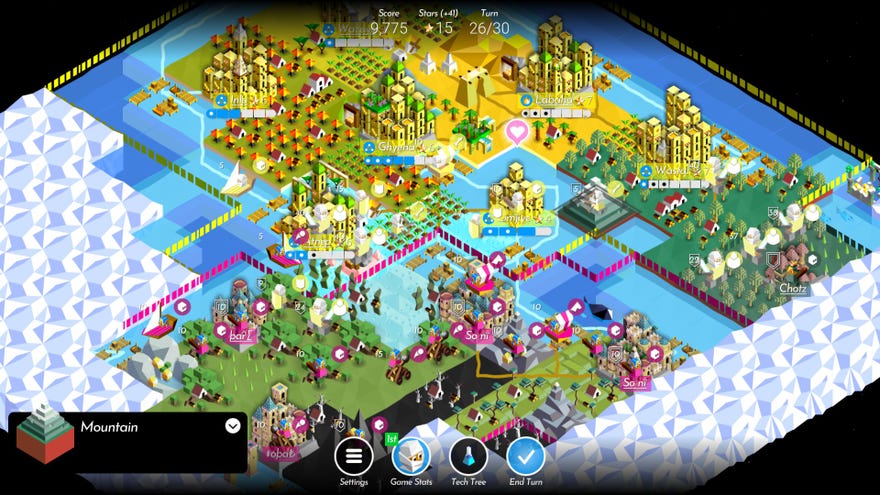
Strategy gamesare the go-to option when you’re looking for something to really get your brain working. But they can seem unreachable when your synapses are being melted from without rather than through overuse. Happily, we found an excellent solutionlast summer, and being a wily fox, I had a plan ready for this year. 2022’s now-traditional Low-Intensity Strategy Game For When Burny Light Make Think Hard is, of course,The Battle For Polytopia.
Polytopia happens to have a fair bit in common withLegion War, which perhaps suggests that the predictable, momentum-based nature of the 4X will make them an LISGFWBLMTH fixture. 12 civilisations are vying for control of a colourful little 3D pixel world, starting out with a humble village and solitary warrior for capturing rival villagers with which to produce more and better soldiers. Each village produces stars every turn, which are swapped for technology and the buildings you place on the map. Most of the latter are various flavours of harvesting resources, which adds population to the nearest settlement. There’s no automatic growth (technically barring a few buildings that develop over time), so improving your holdings is entirely your job.
The Battle of Polytopia - Moonrise Features (Steam Trailer)Watch on YouTube
The Battle of Polytopia - Moonrise Features (Steam Trailer)

Increase the population enough, and a village will level up, allowing it to support more soldiers, and offering a choice of boon, the attractiveness of which will often depend on the map and circumstance. It’s all pretty standard 4X, essentially, but it’s almost an ideal form of 4X. WhereLegion Warpaced its complications, Polytopia largely removes them. It distills the concept, but retains just enough detail and strategic options to still feel somewhat meaningful.
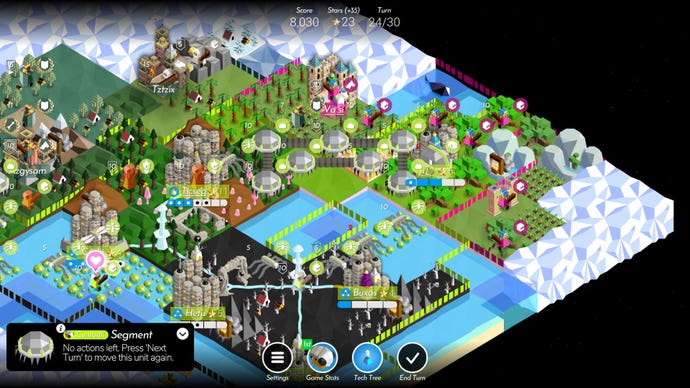

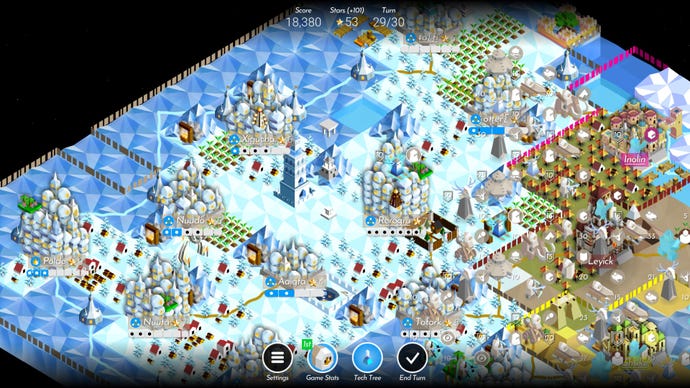
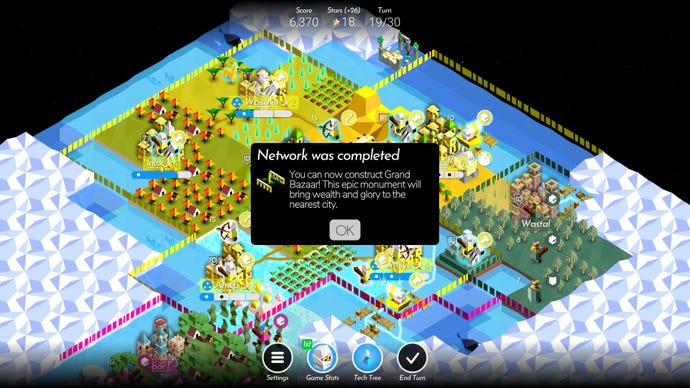
There is a more traditional Highlander mode, of course, which also offers bigger maps that are better tailored to fit the full roster of civilisations. I’ve had plenty of fun with that too, but the standard mode really highlights that this works best when matches are over in, oh, half an hour, maybe 45 minutes. I’m rarely a fan of score attacks, and being declared the best in the universe because of some arbitrary point system has particularly bothered me in 4X games, but this one’s all about low pressure, disposable campaigns where losing is never crushing and winning never becomes a chore you have to grimly see through to the end. Except on the largest of maps, but some people may enjoy those large scale, light wargame operations about complex manoeuvres and shifting loads of units to the front. It helps that the points system rarely grants victory to a side that wasn’t very likely to crush it either way, although an option to take, say, five more turns to settle a photo finish might be entertaining. But perhaps it would merely water it down.
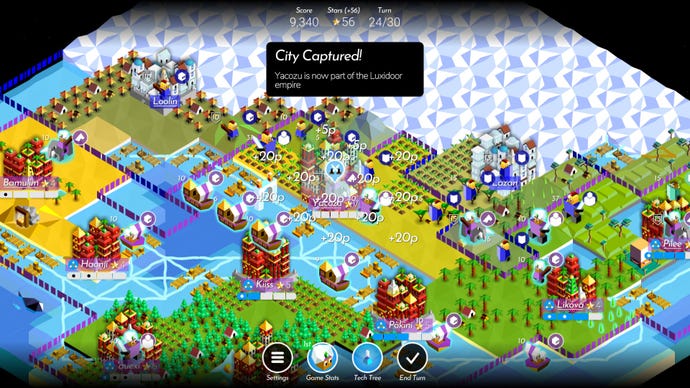
Combat itself is straightforward. Beyond your unit choice, strategy generally comes down to prioritising your rivals so you can overpower them in turn rather than get caught on too many fronts. Tactics, meanwhile, is largely about working out your attack order. Each unit counterattacks any attacker if it survives, barring natural exceptions like lacking a ranged response. Most melee units automatically occupy the enemy’s square if they kill it, so you’ll often want to wear targets down with strong attacks then have a good defensive unit push in for the kill. But there are wrinkles. Riders can withdraw after an attack, mind benders can convert a target, and spies can incite rebellions at a city that summon several dissidents who can’t be counterattacked.
Everything does one or two simple things, and statistics are kept to basic 1-4 scales for attack, range, movement and defence, plus a few simple special abilities. It means that turns are never very long, and fights take a little thinking over but no strain or advanced calculation. When you select a unit, any target in range that it’s guaranteed to kill in an attack plays a little sweating animation to help prioritise and keep things moving.
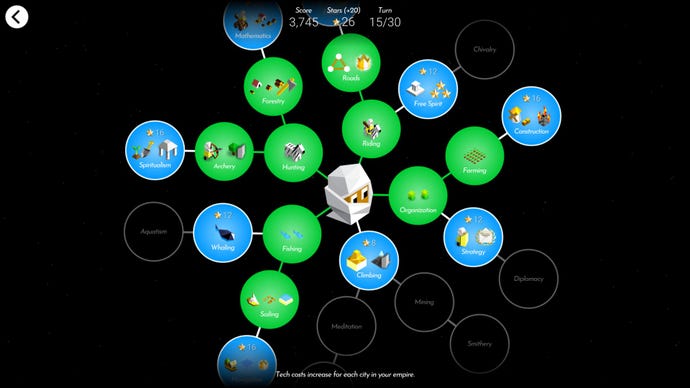
Every unit - every tile, in fact - looks excellent, too. Each faction is themed after a real world / fictional but familiar group or region, and all their cities and units look unique to fit their theme, even when their stats are identical to another faction’s. The very terrain flips over to your home biome when conquered, giving loads of visual variety and colour as well as an immediate representation of who’s doing well.
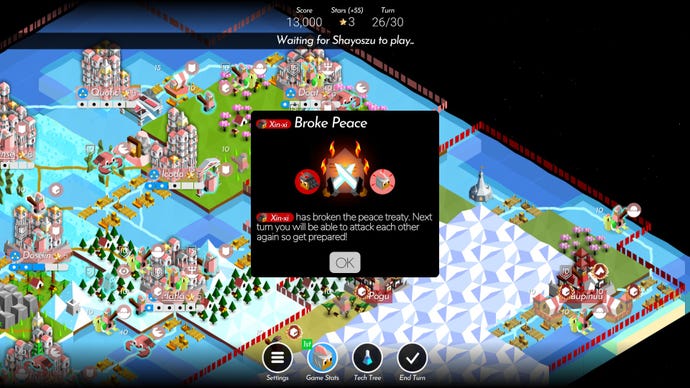
With all that said, mega-optimisation isn’t necessary outside fierce multiplayer matches, and unless you’re going for high scores, the points don’t matter much as long as you’re leading. Above all, Polytopia feels unstressful. There’s never too much to think about, never too many chores, and between the cheerful cartoony atmosphere and low-stakes matches, any disappointment or frustration is quickly forgotten.
It’s enough, I think, and the additions are welcome, but I don’t think the repetition is a fatal problem. Most games get wearying if overplayed, and strategy games setting you all the way back to the beginning can feel particularly exhausting. Polytopia isn’t meant to be mainlined, though, and at worst you’re still looking at under an hour to go from hamlet to Hammurabi. Analysis paralysis just hasn’t been a thing for me here, and I’ve not hesitated to go back in for another quick go all week. Contrast that to the anticipatory exhaustion I’ve felt when looking at multiple alternatives, and it’s clear that the Battle for Polytopia is the only strategy game that stands a chance of carrying us through to the floods.
