HomeFeatures
The Rally Point: The 25 year patch of Emperor Of The Fading Suns proved me wrongTwilight all
Twilight all
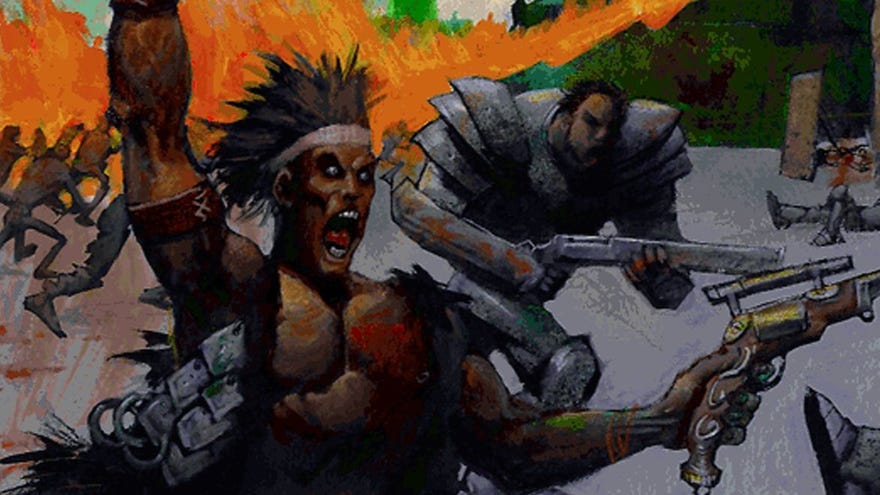
We’ve all worn the rose-coloured glasses when it comes to old games. It’s a real hazard of the job when you started out covering stuff from the 90s. It’s less common though, to fall afoul of whatever its opposite is. The uh, yellow-tinted glasses, maybe? My point is that I did you all a disservice when I described Emperor Of The Fading Suns as “an intriguing, ambitious, crap mega 4X"last year.It was a remarkable game, and more remarkably still, its developers Holistic Design Inc. recently updated it with a major patch, 25 years after its original release.
It’s a lot better than I remember. And only some of that is down to the patch.
Top 12 Best Strategy Games to Play on PCCheck out or list ofbest strategy gamesto play on PCWatch on YouTube
Top 12 Best Strategy Games to Play on PC
Imagine Civilization crossed with a traditional hex-grid wargame. Your research is almost entirely military, and built infrastructure is geared towards harvesting resources and smushing them together into more advanced ones, in order to manufacture better unit types. Now imagine that instead of one planet, you’re fighting over dozens. But where your typical space 4X treats each planet as a single tile, in EOFS every planet is a full hex map of its own. Your rivals are on different planets altogether, so you’ll be simultaneously sending armies across planet surfaces, and spacefleets out to get a foothold on more worlds.
Each planet is linked in a fixed pattern, a bit like AI War, so a lot can change depending on where everything is. All this is, I think, where I misjudged EOFS. The prospect of conducting multiple simultaneous games of Civ over 40 planets sounds exhausting. But it’s not actually necessary. There’s no need to grind out a conquest of every last planet, because the goal here is to get everyone else toacknowledgethat you’ve won via an election system very similar to Machiavelli’s.
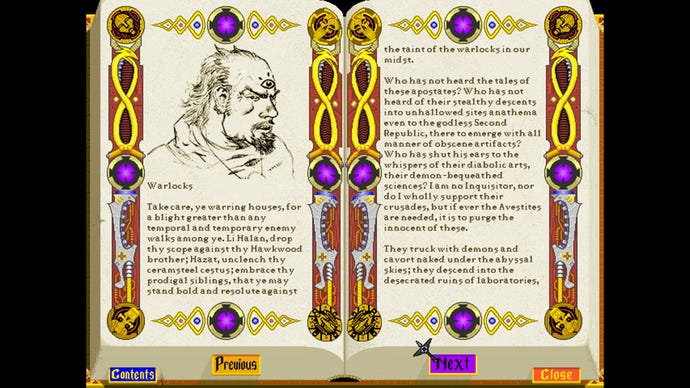
Each of your rivals is another noble house contesting the vacant Imperial throne in a neofeudal system with a “high tech, high ignorance” style theocratic culture. Each house can vote, and whoever wins becomes the regent, who can appoint three other houses to positions of influence over leftover Imperial fleets and forts. At first everyone votes for themself, but it’s rarely long before someone is strongarmed or bribed into tipping the scales. Hold the regency for long enough and you can declare yourself Emperor, triggering everyone to take you down or admit they can’t.
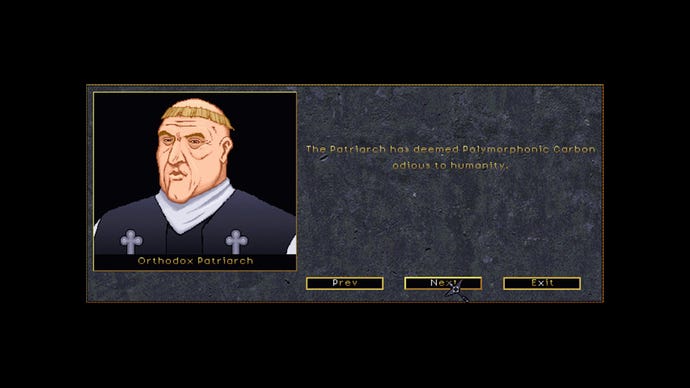
But if the League ever make enough money, they’ll immediately close up shop and try to seize the empire for themselves. Suddenly those merchant fleets are a threat, and those guards on your homeworld are invaders. Then there’s the Church, whose goals are rooting out heresy and retaining theocratic authority over the throne. They don’t directly fight for it, but they pressure any potential leader to sign the Holy Writ, acknowledging their supreme status so that even if you win, you don’t quite win. Players ofSolium Infernumhave probably spotted a few parallels.
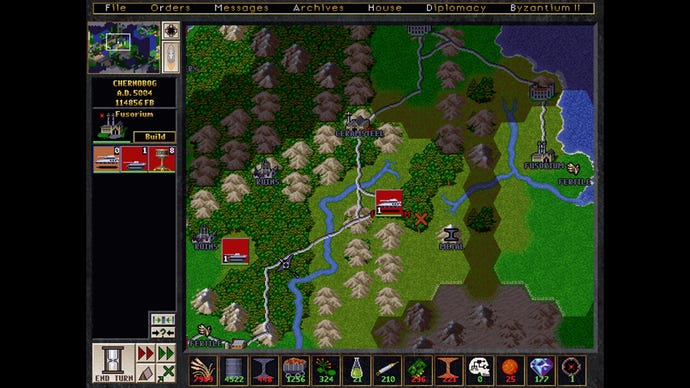

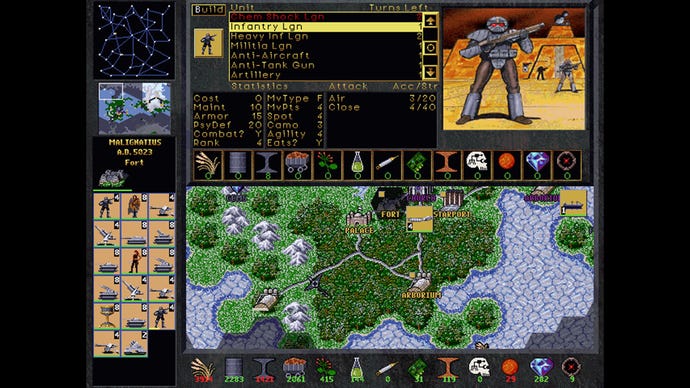
The wargame part is also much less complex than usual. There are multiple combat phases, but they resolve quickly, roughly midway between the ancient Civ-style “push unit A into unit B” andShadow Empire’s full complications. It’s small fry to a wargame veteran, but there’s enough there to make unit choices interesting and colourful, particularly as each requires different resources. A basic tank just takes metal, but advanced units might be chemically enhanced super soldiers, or circuitry-laden cyborgs. One option even requiries you to ship resources between planets to fuel manufacturing, though the AI never has to worry about that, and I’d advise against it until you know the game well enough to want more challenge.
Almost inevitably, that’s where EOFS falters. AI is still the biggest bottleneck for strategy game development, and although the recent patch has made improvements, all these possibilities remain mere possibilities a lot of the time. For all its design cleverness, the AI really can’t take advantage of it, being too passive and direct to really lean into its themes. You can, interestingly, get some good deals and friendly relations out of people, as they’re not prone to fanatical player-loathing, and one of the options in its then-advanced (and now still quite robust) diplomatic screen is to trade for a “future favour”, or even pay for something with “I’ll appreciate it”.
The AI has few of the economic restrictions you do, so will spread factories across nearly every surface. They generally fill them with cannon fodder, but the sheer numbers distort military analysis, and lead to some grindy invasions and occasionally severe, game-ruining bugs. Fortunately the patch emphasises modability, and a common fan fix (limit where the factory-building Engineer units can be trained to contain their spread) is easy. There’s a very user-friendly map editor too.
It’s that kind of game. You’ll drastically outsmart the AI with even the simplest of gambits, but play it as a story for yourself and it really comes into its own. Maybe that’s overgenerous, but if overstating the appeal of its ambition and intrigue is what it takes to correct how unfair I was to it before, I’ll take it, and any other game that wants to reach for the stars again.
