HomeFeaturesHardwar
The most interesting space trader is still one from 1998Fly me to the moon moth
Fly me to the moon moth
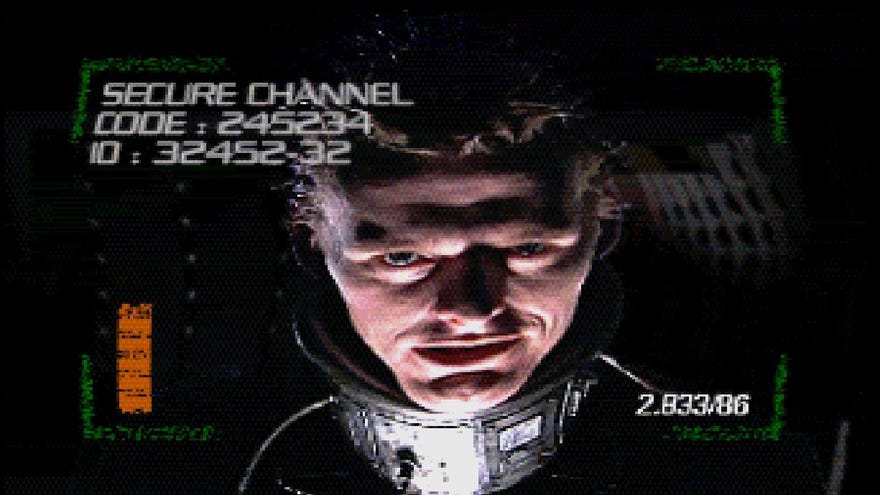
It’s been back for over a year, in fact, viaZoom Platform, who’ve just made the interesting choice to publish it on Steam too,promisingthat their own store will remain resolutely DRM-free, and that this aims “to help fund additional signings and improvements for our DRM-Free preservation efforts”. I’ll brush aside analysing this strategy, because the immediate upshot is that, hopefully, Hardwar might finally get its due. In a better world, we’d already be playing its modern descendants.
The 14 Biggest Games Coming To PC In 2023Watch on YouTube
The 14 Biggest Games Coming To PC In 2023

I’m not naive enough to think it will suddenly take off. Hardwar had its shortcomings even in 1998. But after discovering it in 2006, replaying it in 2012, and loving it again these last few weeks, I think my vague dissatisfaction with the genre today might actually be disappointment that Hardwar is still so singular. It’s abitnostalgia, sure, but not the “what I actually miss is feeling young” variety. It takes me not to the past, but to a promised future long overdue.
So. Humanity reached the stars, built the mining colony of Optimism on Titan, and then promptly abandoned it when it was no longer profitable. Centuries later, Misplaced Optimism is a hellish lost world of inbred, cloned, mercifully drunk and high people under the thumb of two deadlocked gangs. But you’re one of the lucky few to own a ship. Or rather, a “moth”. All aircraft on Titan are solar-powered hovercraft who must cluster around big glowing lightwells when the power runs low, lest they fall out of the sky. They can’t climb beyond the handful of craters and connecting tunnels that comprise the colony. The smaller engines can’t even reach some high altitude docks.
It’s unclear if anyone even still qualifies as human, and nobody knows what happened to Earth, but everyone’s sure that it can’t be worse than this, so when a strange craft drops out of the sky and crashes, it rapidly escalates the local factions to a destructive arms race, offering you the opportunity to make a lot of money and, maybe if you’re lucky, a way off Titan.
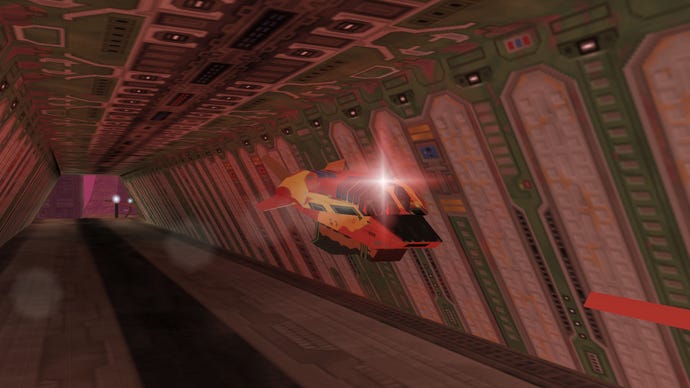
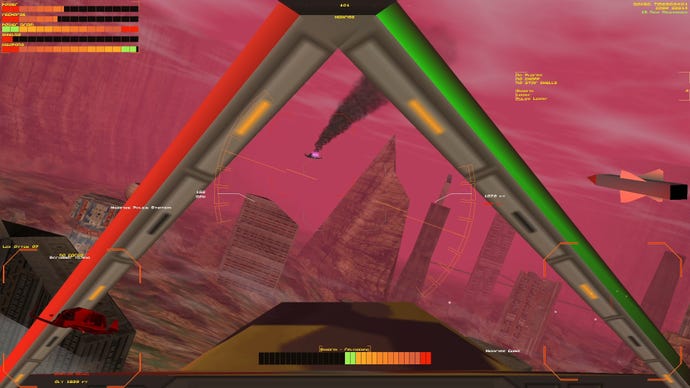
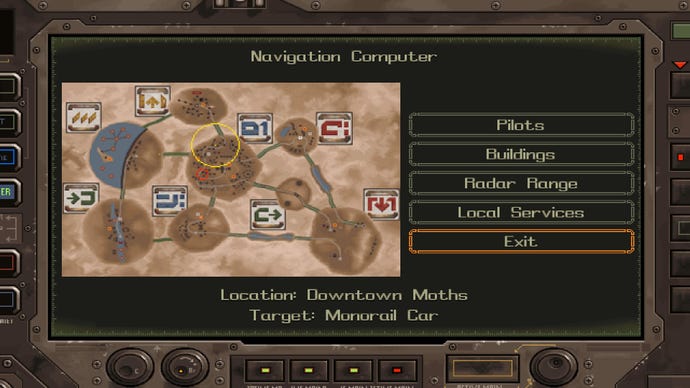
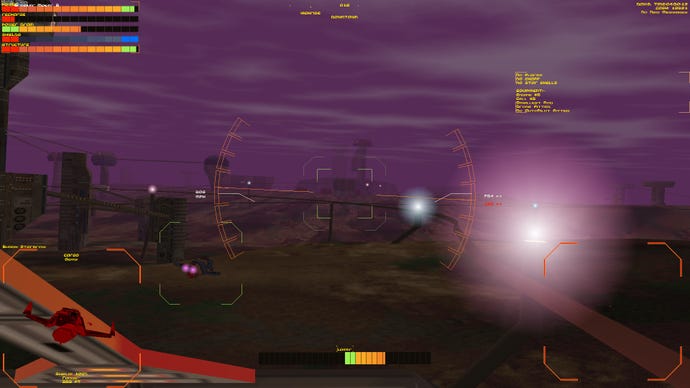
It’s an easy system to break. The AI in particular is still robust for decision making, but struggles with avoiding collisions. Playing it now requires a kind of honour system in not exploiting the not-uncommon conditions under which NPC moths become near helpless. It’s easy to game a lot of its systems, you’ll likely chance into a very powerful combination of weapons pretty early and never need to change them, and the addition of ownable manufacturing facilities (and cloning, making you basically immortal) and plot-unlocked advanced technology turns the difficulty from “opaque and unforgiving” to “farcically one-sided”. The controls take some rejigging, and its menus are very cumbersome.
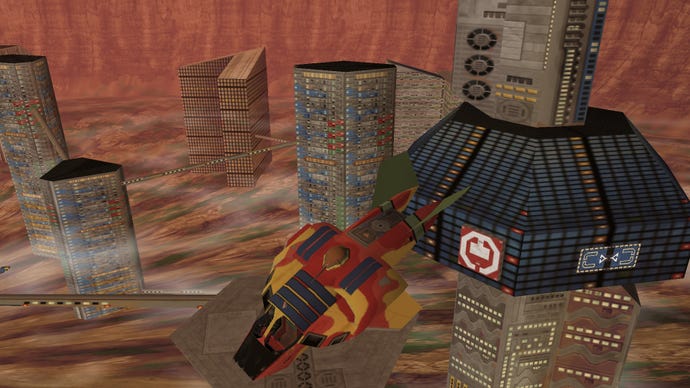
I love Hardwar. I can’t say it holds up as timeless, nor recommend it without insisting you go back and read about those flaws again and consider that I really meant them. I recommend it now to anyone who read this far and thought “this sounds wonky and old but kind of neat?”. We deserve a modern version, but I don’t mean a remake. I mean an inheritor. A direct sequel, maybe, or the same ideas with modern advances in an all new, equally offbeat setting. Or god help me, even an MMO, if we dare dream of a world where it wouldn’t just turn into a boring efficient optimisation race.
Playing it today instills a sense of mourning not because I want to go back, but because in its day, Hardwar tried to take us forwards. It had the imagination not to just copy theElite-esque open world trading model, but to do something strange and novel with it. Where the original hobbles a bit and a remake would walk, a true successor could run away with the whole genre.
