HomeReviewsThe Last Worker
The Last Worker review: this dystopian satire on automated jobs rather labours its pointBad company
Bad company
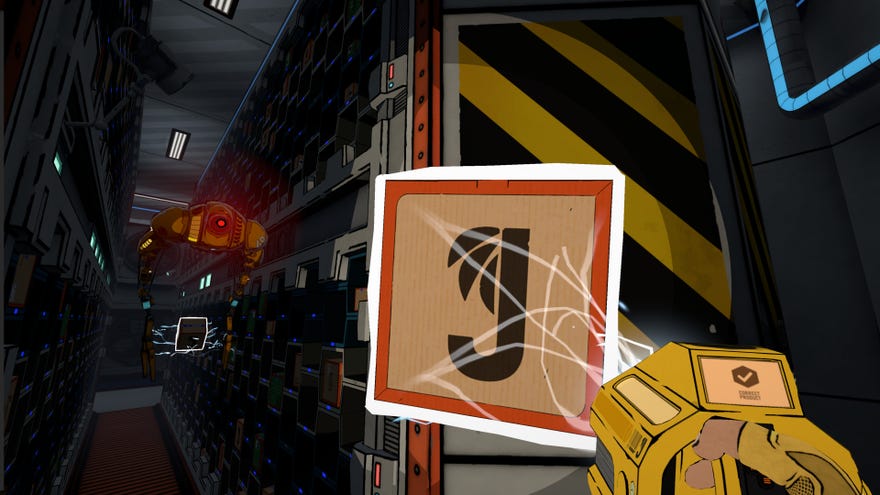
A short animated sequence kicksThe Last Workerinto gear, reeling off the game’s backstory with breezy efficiency. It’s an apt start for this first-person satire set in a fully-automated dystopia, in that it underlines a very human aptitude for artistic communication. It’s surprising, then, that as The Last Worker continues its story, it takes less graceful turns, electing for verbosity over economy. For a game that takes critical aim at the future of work, frankly, it’s all a bit laboured.
The Last Worker | Don’t be a Robot | Release Date TrailerWatch on YouTube
The Last Worker | Don’t be a Robot | Release Date Trailer

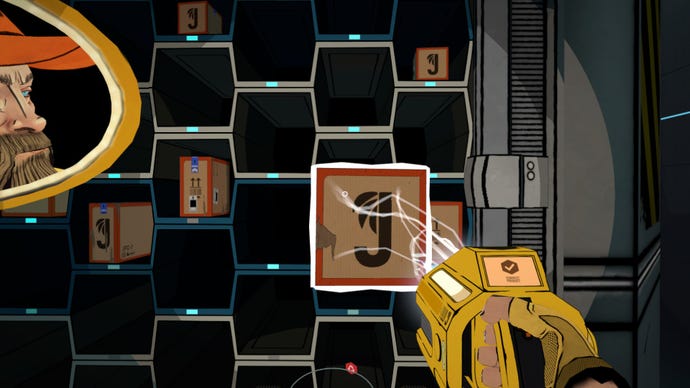
As one character points out, all you’re really doing here is playing fetch in a tedious routine. Yet because your efforts are evaluated and rated at the end of a shift, the task is oddly compelling. Reaching each parcel becomes a race against time. Launching them towards the chute from distance is a risk-reward challenge, since dropped boxes incur penalties. Plus, you have to check each box isn’t labelled incorrectly or damaged, and if so, take it to the recycling chute instead. There’s guilty pleasure in playing the diligent corporate drone, extracting satisfaction when you gain a coveted ‘J’ rank.
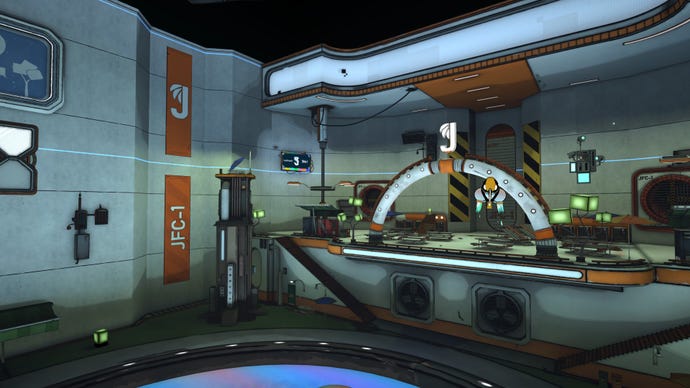
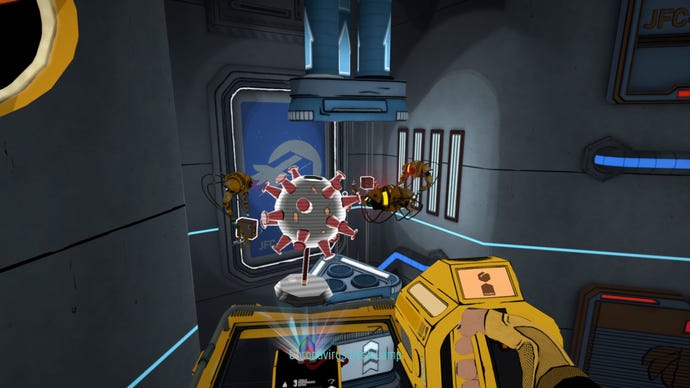
The blurred line between work and game turns this process into a double-pronged criticism too, poking at rote mission design in AAA titles as much as the gamified incentivisation of meaningless jobs. The icing on the cake comes when you successfully dispatch a package and as a reward its contents are displayed in holographic form, like opening a loot box. Now you can take pride in knowing you’ve been breathlessly scurrying around to make sure someone gets their manta ray shaped guitar, or Christmas themed dustbin, or Coronavirus desk lamp – precisely the kind of plastic tat that fuels our gift economy, or comes bundled with so-called collector’s editions.
At this point, The Last Worker could almost be an expandedMolleindustriagame, delivering sharply concise social commentary through repetition likeEvery Day the Same DreamorTo Build a Better Mousetrap. But rather than continue down this path, it breaks the cycle to usher in a plot in which Kurt gets entangled in the schemes of a group of revolutionaries. They want to find out what’s going on in the facility and bring Jüngle down, so they need the last inside man to break into off-limits sectors. Now each day brings with it not a new shift, but a new mission.
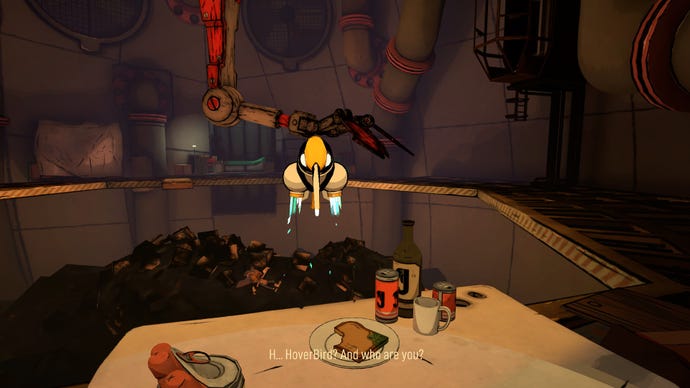
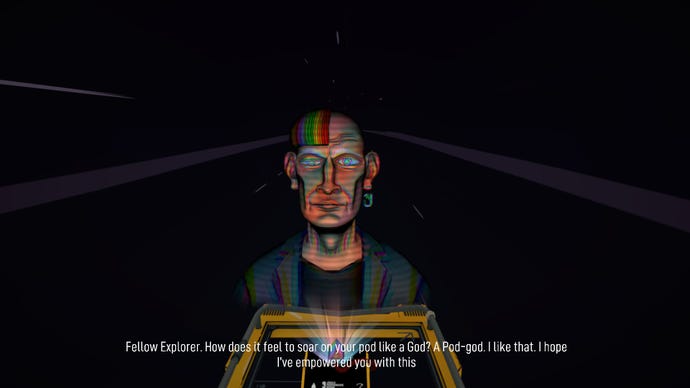
As thrilling as this sounds, though, Kurt’s off-the-clock adventure is often less engaging to play than his warehouse work. Instead, it feels more like a mechanism to allow the game’s core trio of characters – Kurt, his malfunctioning robot helper Skew, and a remote resistance member who speaks to Kurt through a ‘Hoverbird’ drone – to take centre stage. Between bouts of chatting, you mostly complete vague instant-fail stealth sequences to steer clear of patrolling robots, and the occasional lock-breaking puzzle. Frustratingly, the nuts and bolts of these sections are often left half-explained as the script seems more concerned with where its next witty exchange is coming from. But what really flattens them is that they don’t feel exciting or liberating in contrast to the work sections. They feel like more work.
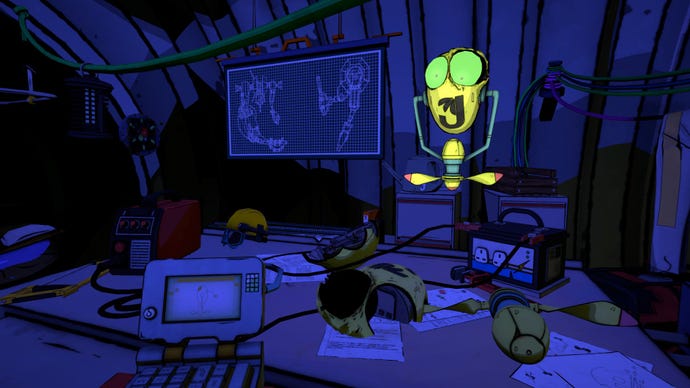
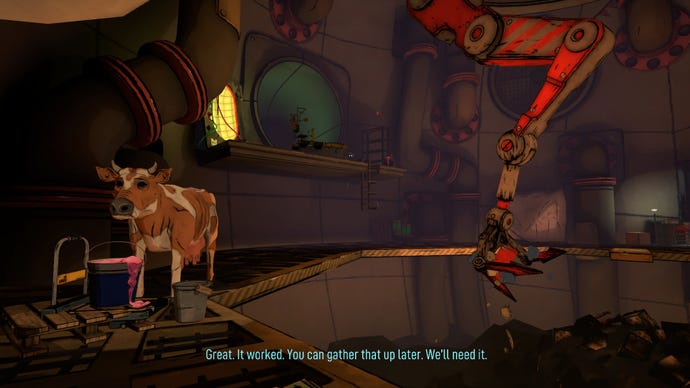
In the end, you might also wonder whether you’ve really taken much from The Last Worker’s excoriating social critique, as laudable as it may be. As missions take you to different parts of the warehouse and factory, it becomes apparent that this near-future setting is one in which the environment is collapsing, the majority of people are worse off, healthcare is the preserve of a privileged few, and intensive farming methods are more horrific than ever. But there’s no real connective tissue here, other than to say it’s all Jüngle’s fault, and not quite enough worldbuilding to make it make sense. For instance, how does a fully automated capitalism maintain an economy reliant on wage labour and excess consumerism of mass-produced inessential goods? Or in other words, who’s still buying all the crap you’re sending out?
The satisfaction of The Last Worker, then, comes from roleplaying the sabotage of an exploitative major corporation, and if you crave the sense of catharsis that comes from sticking a finger up to the man, it may well fill a hole. But that’s not quite the same as marshalling the human capacity to serve up real food for thought, or prompt us to imagine a better future.
