HomeReviewsThe Invincible
The Invincible review: missteps hold back this (space)walking simIt has one key weakness
It has one key weakness
Image credit:Rock Paper Shotgun/11 bit studios
Image credit:Rock Paper Shotgun/11 bit studios
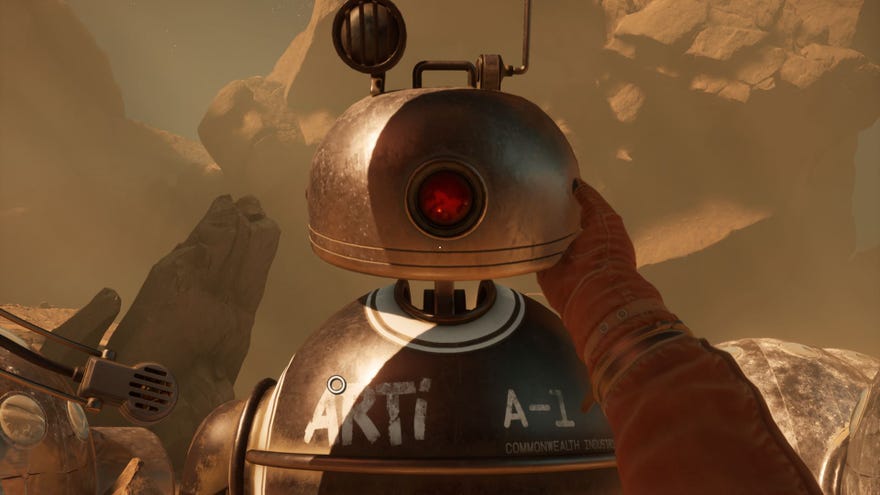
The android is unresponsive, standing frozen mid-step with one foot off the ground. I hold its metal head in my hands, tilting it this way and that as I stare into its cold red eye. It offers no resistance to my pushes and pulls, as though I was a hairdresser directing a patron’s head. Based on Stanisław Lem’s 1964 novel of the same name,The Invincible’sFirewatch-like first-person adventure is intent on exploring how machines will come to shape humanity’s future. Over the course of its ten-hour story, where you step into the Soviet-styled space boots of biologist Yasna, you will take on her desperate search for the missing crew of her research ship, The Dragonfly, lost somewhere on the rocky, sandstorm-whipped world of Regis III.
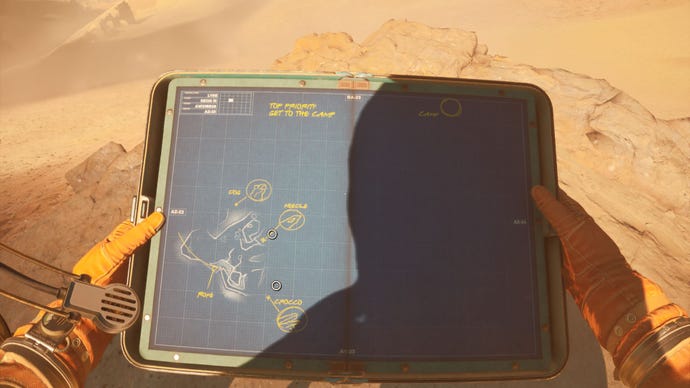
Using a logbook filled with hand-drawn maps and scrawled notes, I’ve tracked Yasna’s crew to a makeshift game to the east of where they originally landed. Instead of humans, I find the lifeless robot. I want the android to give me answers, to tell me where my crew mates are, to explain what happened on Regis III, and why I can’t remember anything before I woke up in the desert with my possessions scattered around me.
As far as I can make out from Yasna’s pre-amnesiac notes, the Dragonfly’s crew of scientists landed on the planet’s surface, visited the ocean to take samples, and headed inland to explore some strange readings taken from orbit. How she was left alone, lost her memory, and the crew’s whereabouts are a mystery that unravels as you progress through The Invincible’s first-person mystery.
Image credit:Rock Paper Shotgun/11 bit studios
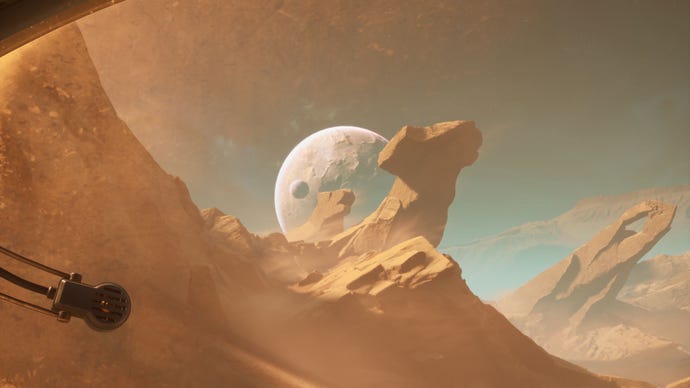
It helps, too, that developer Starward Industries have poured so much care into Yasna’s interactions with the world, which are all viewed up close and in the first-person. Her hands and feet forever come into view as she climbs rocks, flicks switches on machines, and inspects strange objects she discovers. While the technology you encounter has taken a crew of scientists into space, it’s all activated with chunky dials, buttons, and punch cards. There’s a blunt physicality to almost everything you do.
Image credit:Rock Paper Shotgun/11 bit studios
However, the weakness of The Invincible lives in its strengths, and it’s not unique to this game; it often breaks the spell of first-personadventure games: anytime I didn’t know where to go, what to do, or how to do it, I felt clumsy, and all of its boundaries came into focus.
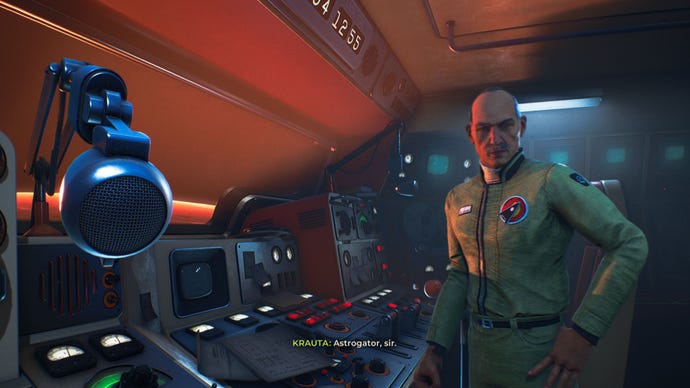
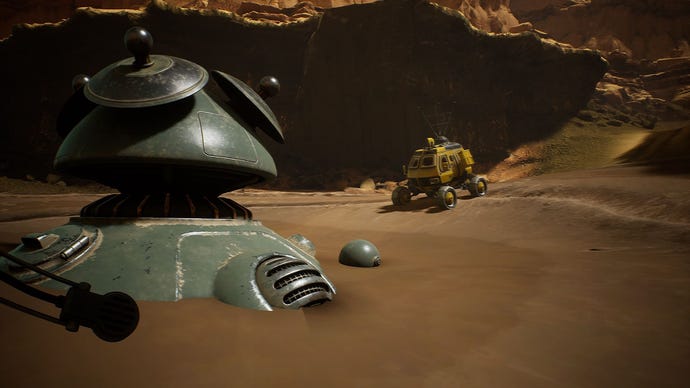
Frustrations can also seep into how you might handle objects. From the moment you start the game, it trains you to interact with things using a left click of the mouse, but any time it deviates from this template it can leave you feeling awkward as you work out what to do. This is worse when most interactions are more basic than you anticipate. When I first entered a moon buggy, I looked at the dashboard with no clear idea of how to turn it on (you press D). You can left-click on the ignition, but Yasna doesn’t turn the key, so spent a few seconds holding the starter without knowing how to make the Ph.D.-wielding space scientist turn it. It feels obvious the moment you work it out, and there are unobtrusive prompts that appear in the corner of the screen at times. But, for a game that holds your hand tight almost all the way through from start to finish, it is disorientating any time the grip slackens.
Image credit:Rock Paper Shotgun/11 bit studios
That same discomfort arose in the last hour of the game, where Yasna delivered long speeches on the nature of the Regis III and its history that felt unearned, containing theories and speculations that were great leaps from what I had discovered. I had been in her head every step of the way, so to hear my character spout knowledge I didn’t have access to was discordant.
Oddly, The Invincible is at its best when you are like its simple automatons, following instructions to complete a clear objective. However, as soon as your instructions become unclear, you can find yourself walking in loops or frozen part-way through an action, unsure of what to do. The game is a great example of how engaging first-person narratives can be, but also how any missteps or unearned moments can eject you from the head of the narrator, leaving you cold and confused.
