HomeFeaturesThrough the Darkest of Times
The Flare Path: Through the Darkest of TimesTalk to the monsters
Talk to the monsters
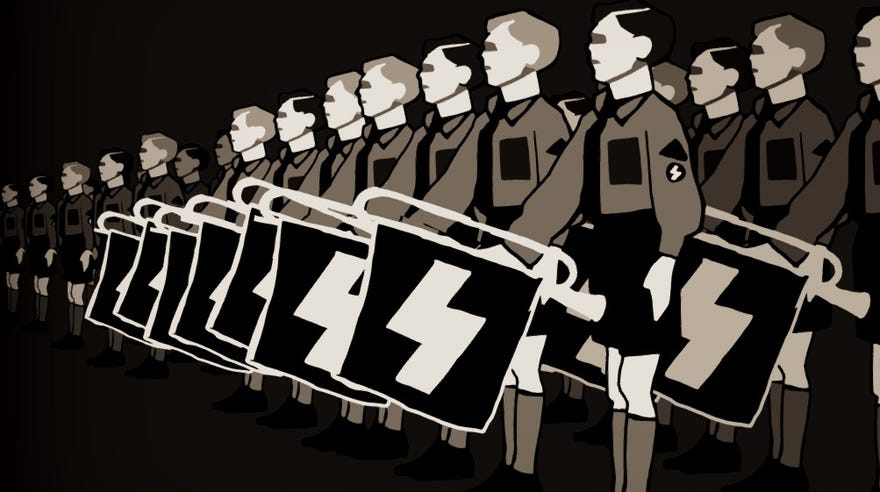
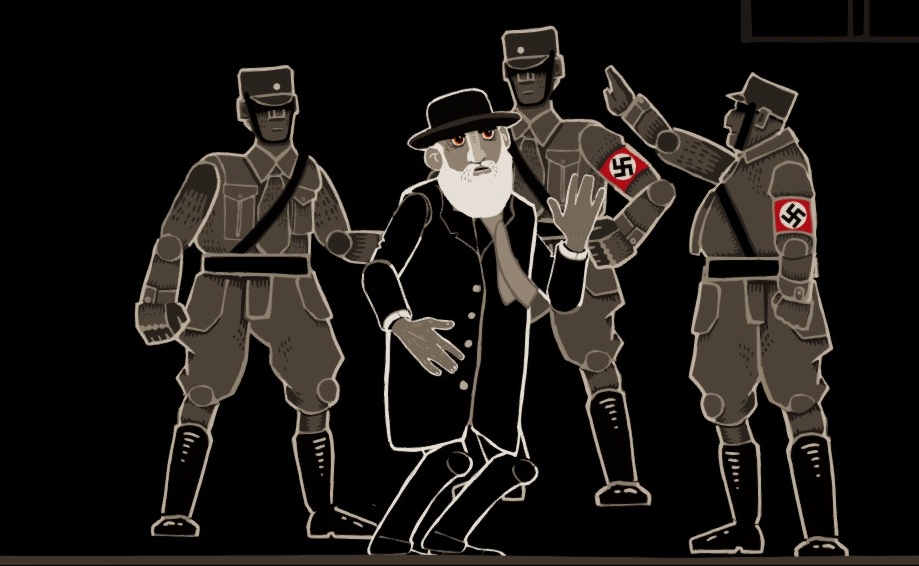
Käthe Schnee, my randomly generated avatar, leads a small cell of Berlin malcontents that specialises in minor acts of defiance and disruption. The group would, of course, love to strike mightier blows against the fascist regime that has turned Germany into a war-mongering, minority-murdering totalitarian state, but thus far (1944) a bit of leaflet distributing, graffiti scrawling, and fugitive assisting is basically all that they’ve managed.
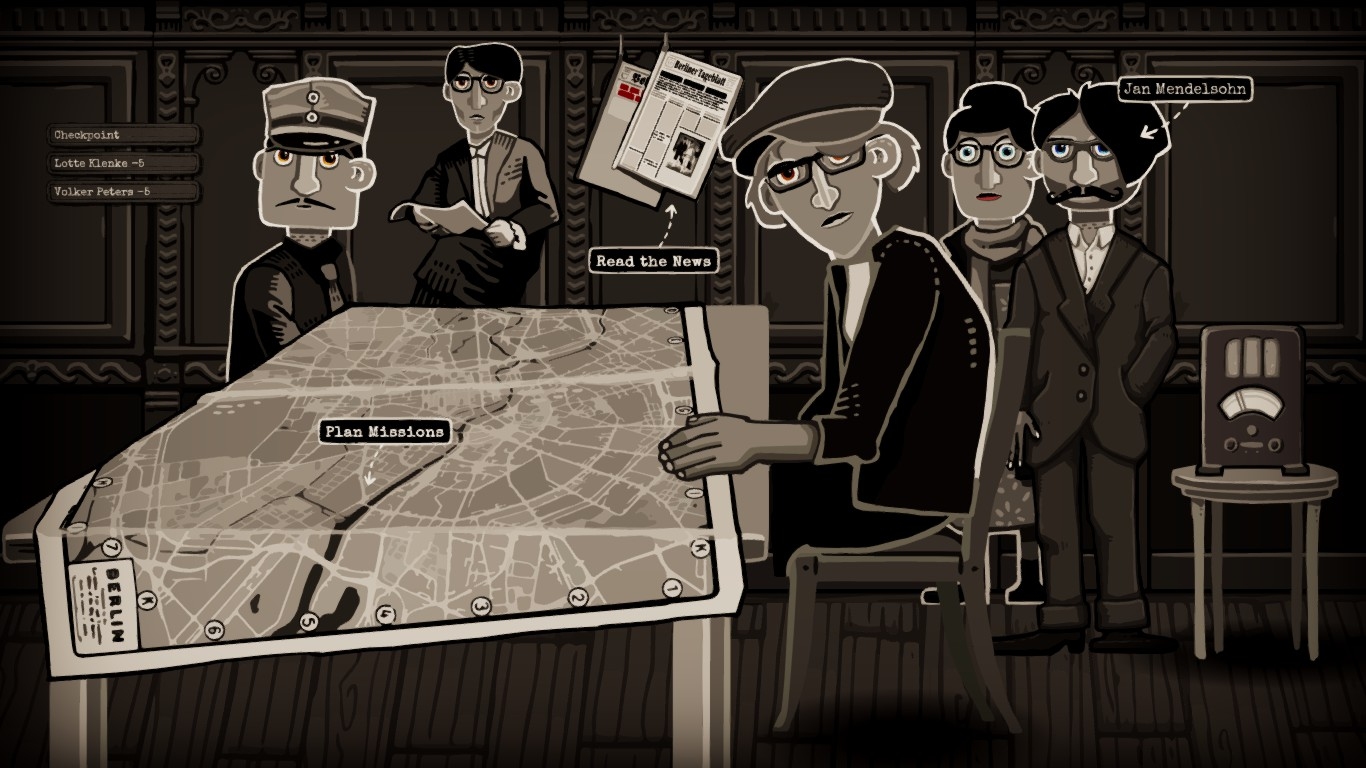
Roughly three-quarters of the way through the game’s four chapters (1933, 1936, 1941, 1944/1945), Käthe is still a little unsure whether she’s a rubbish resistance leader or a wise one. The game seems reluctant to judge my performance, and that reticence is actually rather refreshing. In Through the Darkest of Times you find yourself striving to achieve more not because you know there is some arbitrary victory reward waiting for you if you do, but because that’s so very obviouslythe right thing to do.
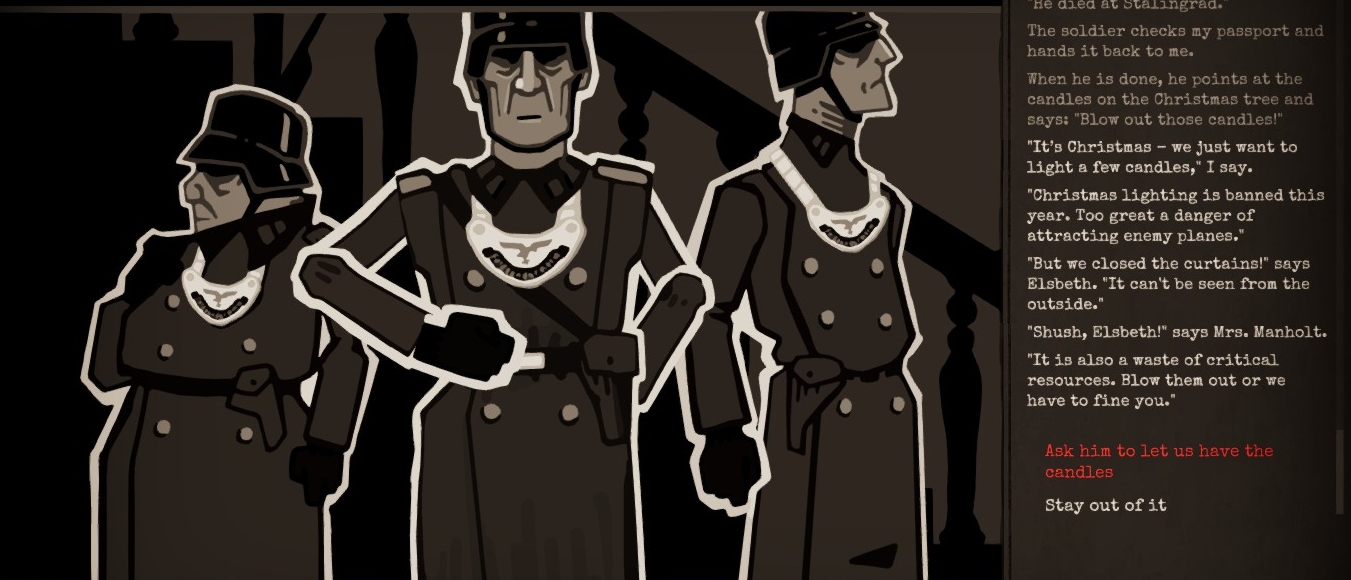
I embarked on Käthe’s journey fearing lashings of leaden, predictable story and precious little tactical depth. Happily, I found something quite different. Although you do spend a considerable portion of your time watching cutscenes and clicking through conversations, the narrative passages invariably engross, and there’s an engaging strategy game here too.
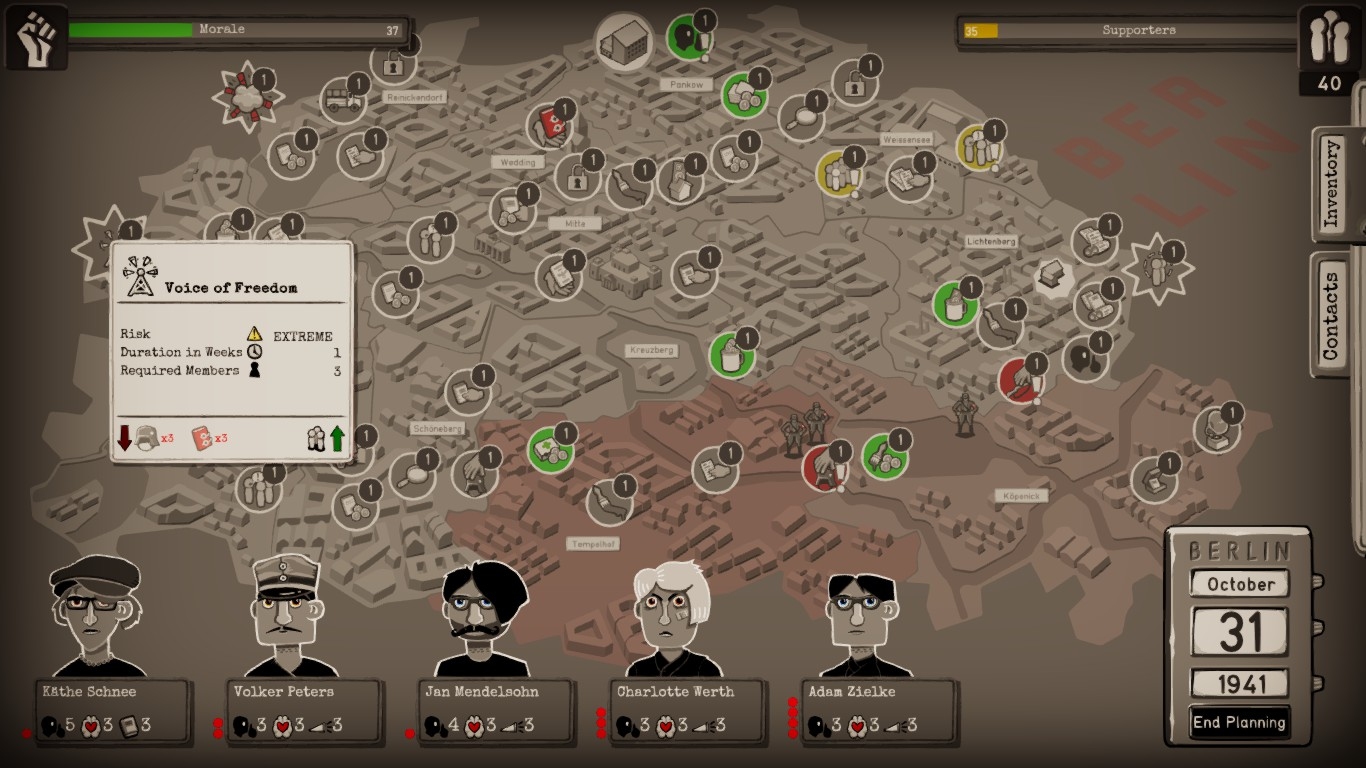
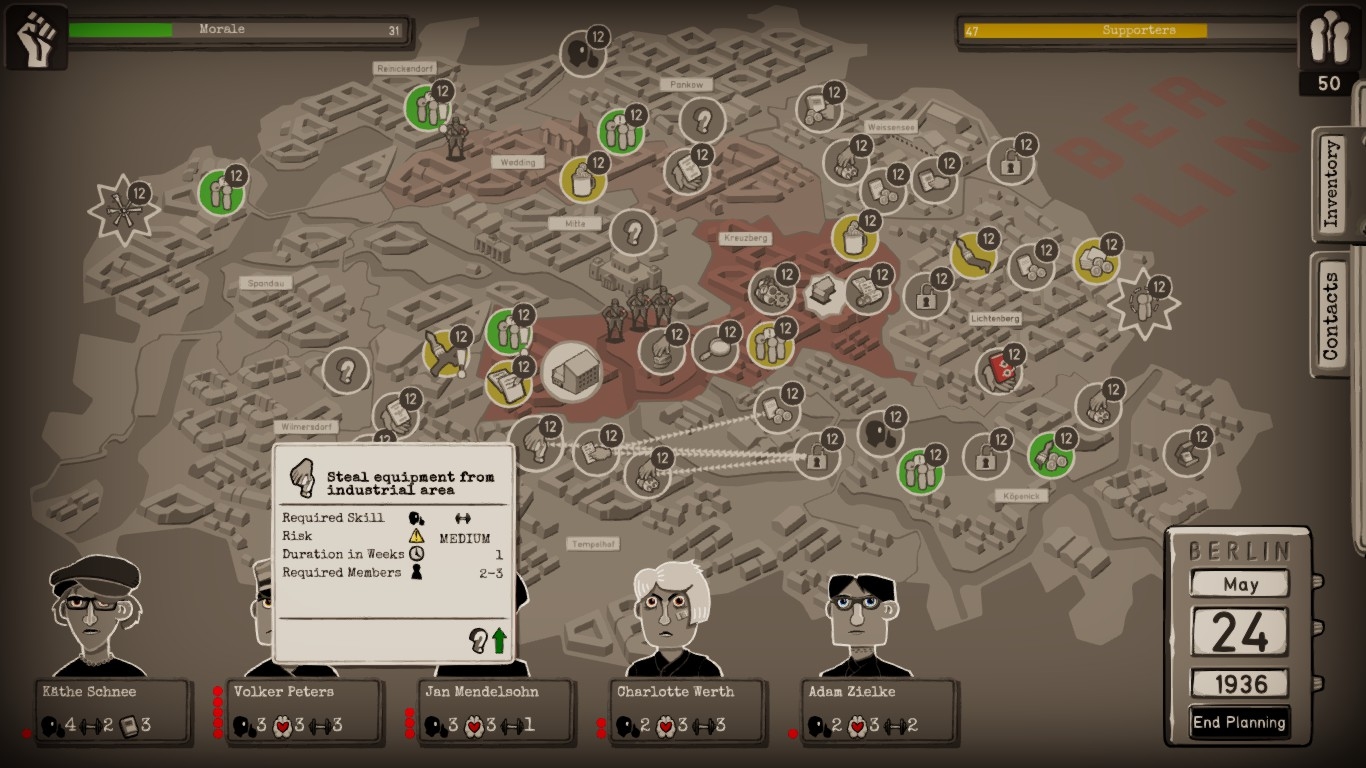
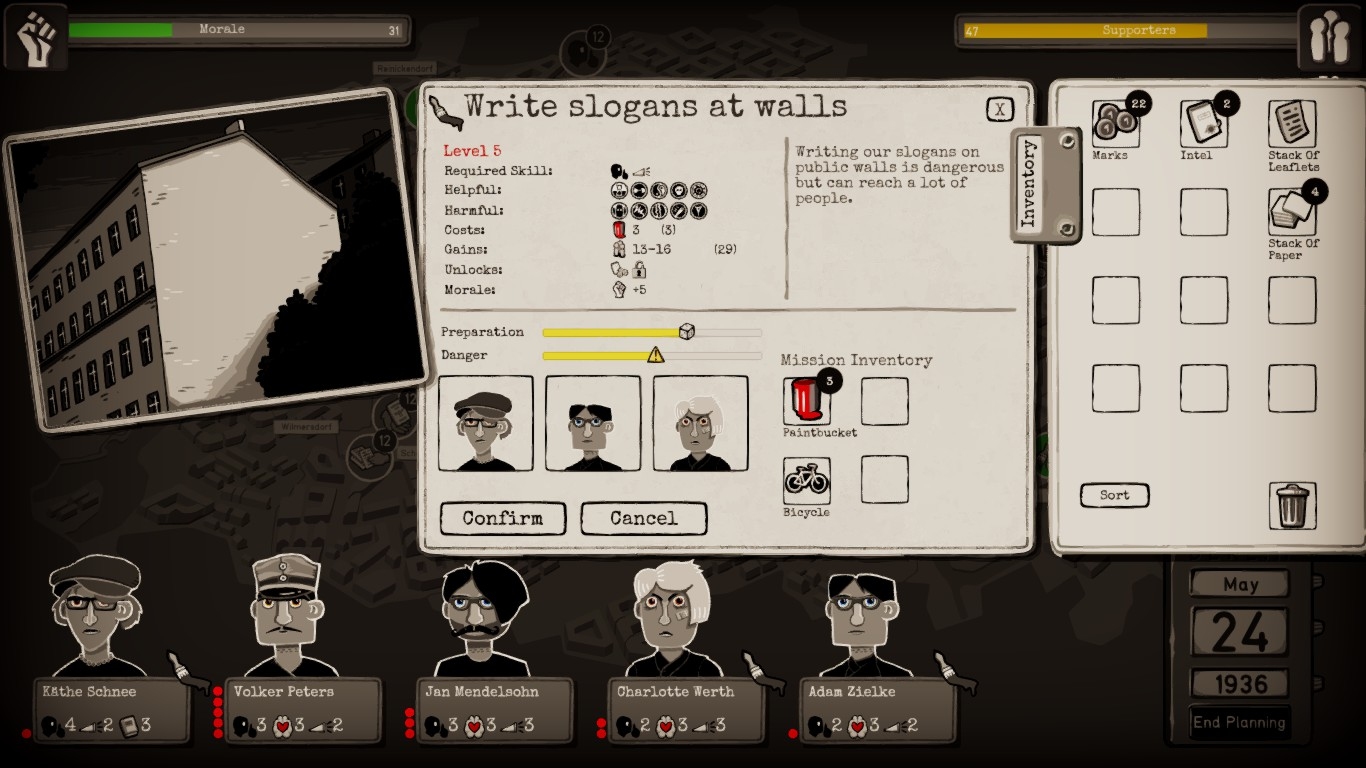
Once a week (turns span seven days) you get to ponder a city map, choosing missions then assigning operatives to them. Some outings have the potential to boost the group’s morale*, funds, or support level. Others open up new opportunities or furnish resources (paint, paper, intel, bikes, uniforms…) beneficial to or necessary for future activities.
- If morale drops to zero it’s game over.
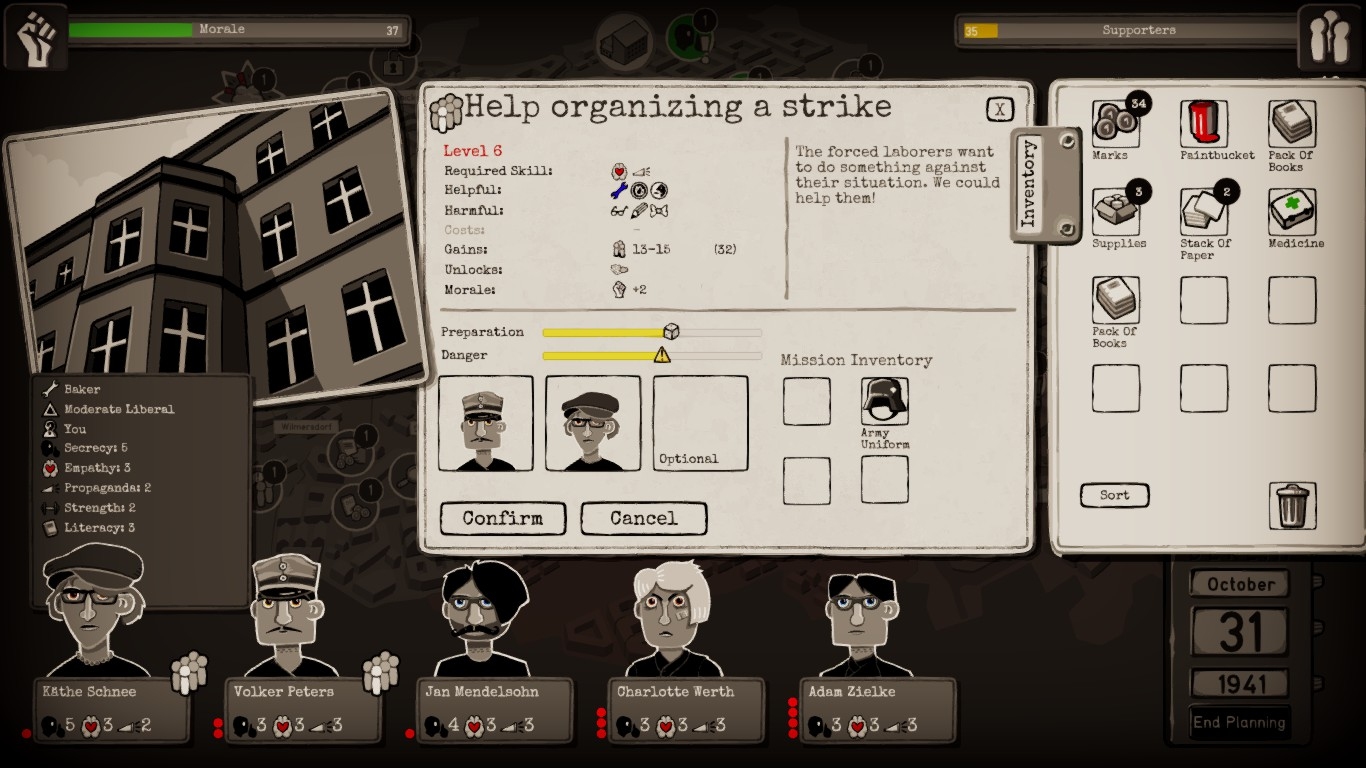
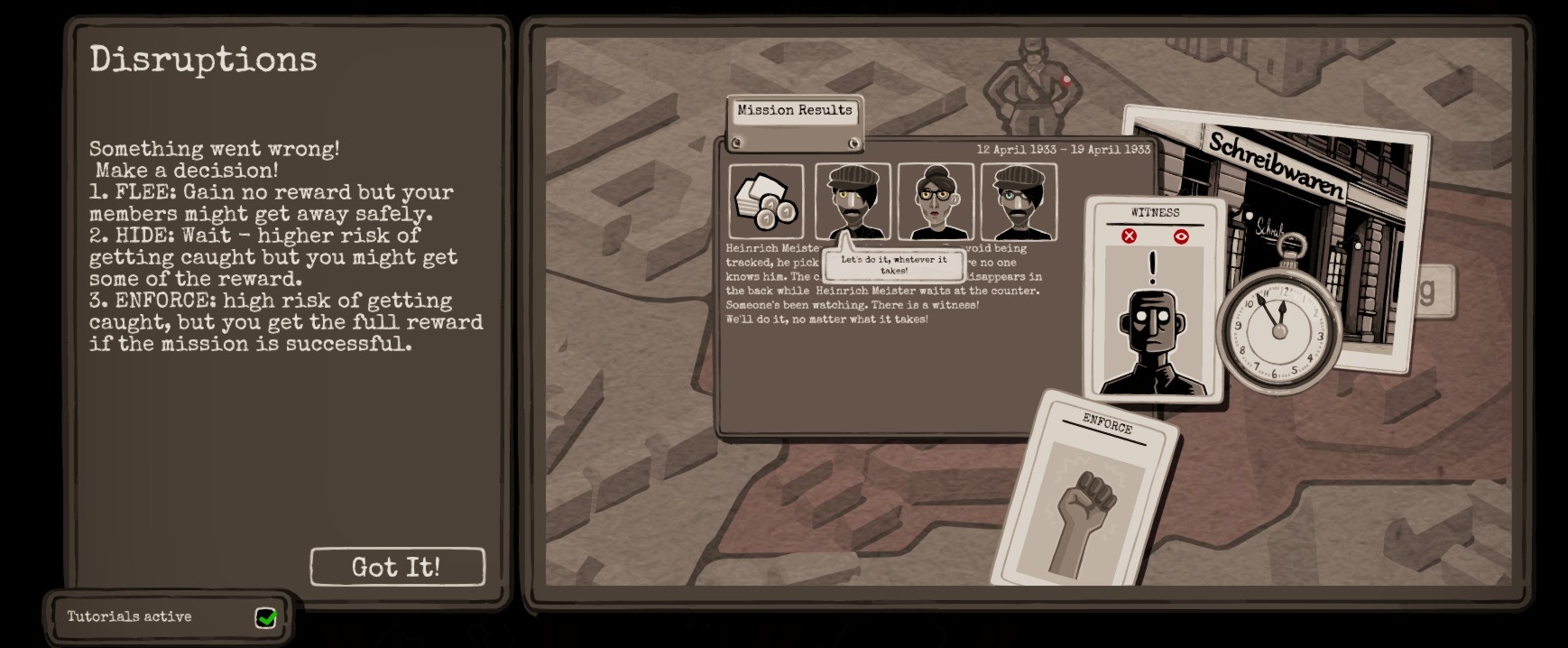
Assuming your operatives aren’t spotted (in which case you’re asked to choose between fleeing, hiding, and attempting to fight your way out) then you have no further involvement in missions. Invisible dice are rolled and the resultsbaldly presented.
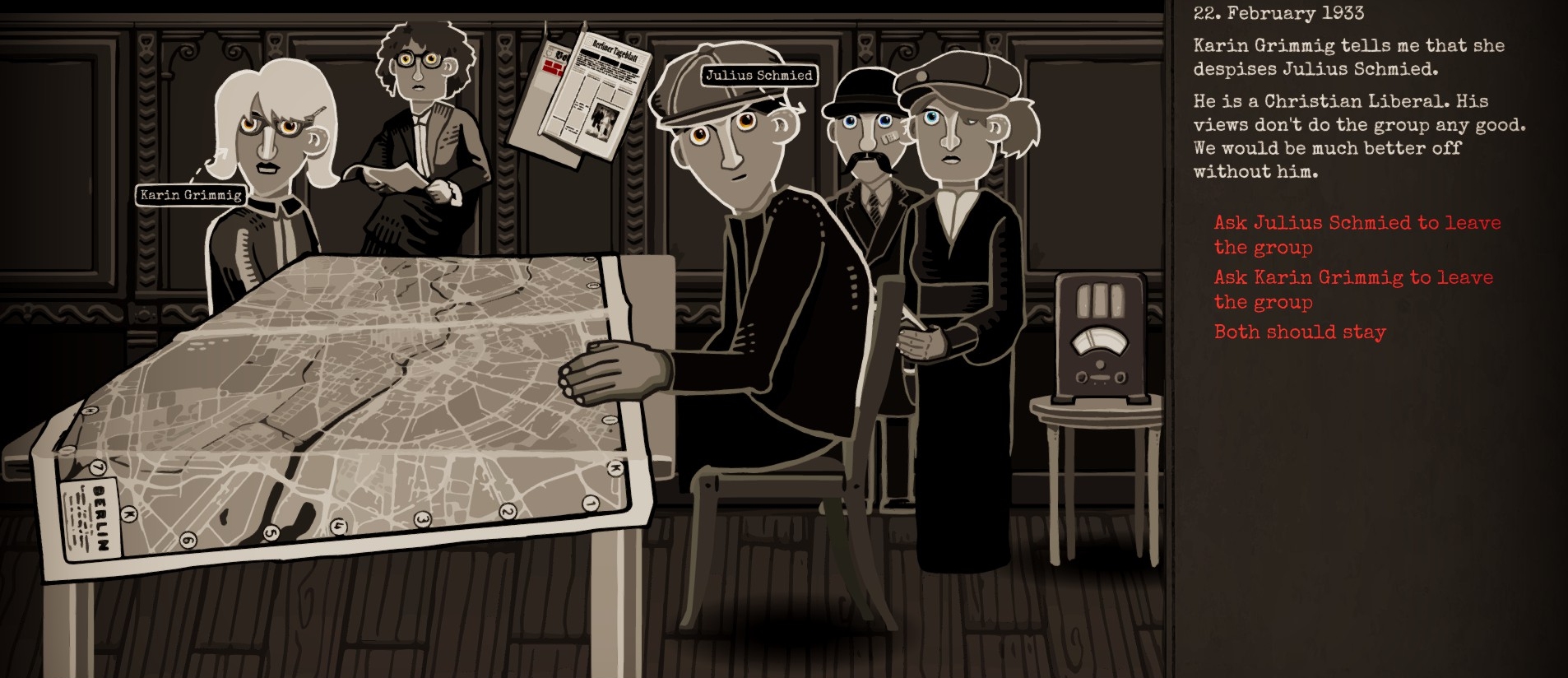
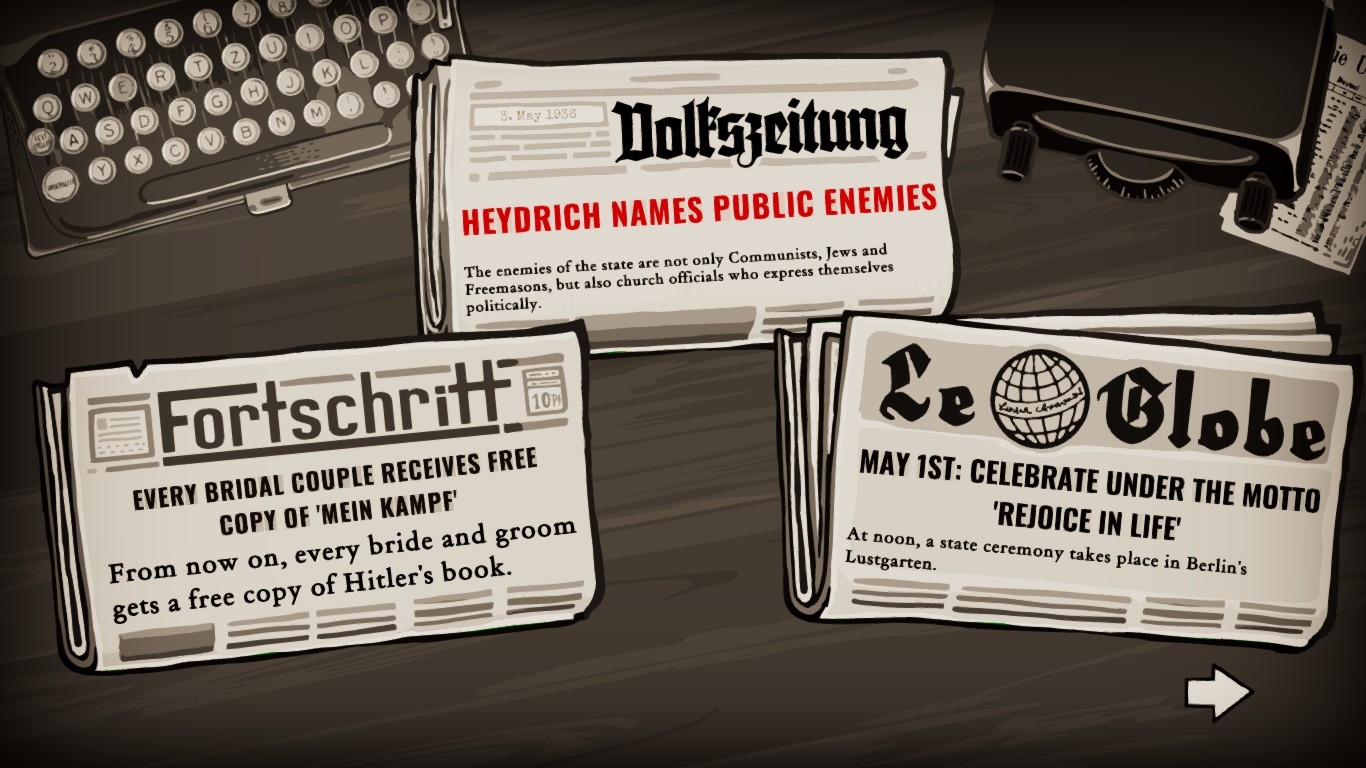
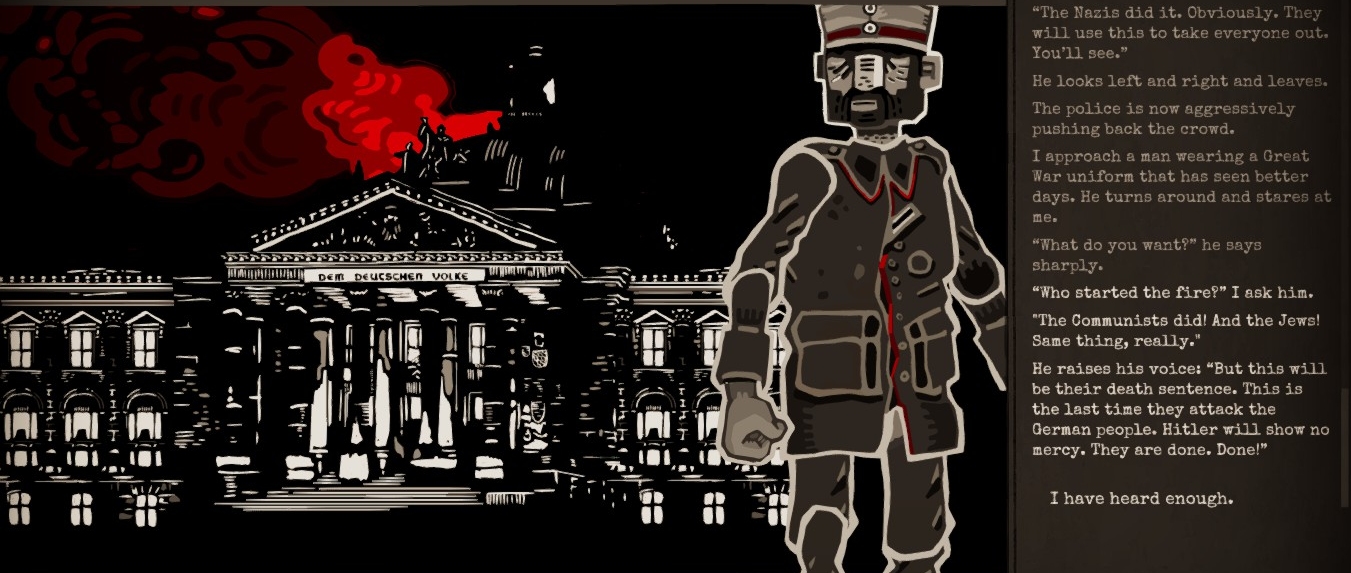
Credibility is the watchword in the narrative too. So far Käthe has encountered no absurd coincidences, pantomime villains ormagical pets. Yes, she happened to witness first-hand several pivotal events in pre-war history - the Reichstag fire, the Bebelplatz book-burning, the opening ceremony of the 1936 Olympics… - but these serendipitous conjunctions never feel forced.
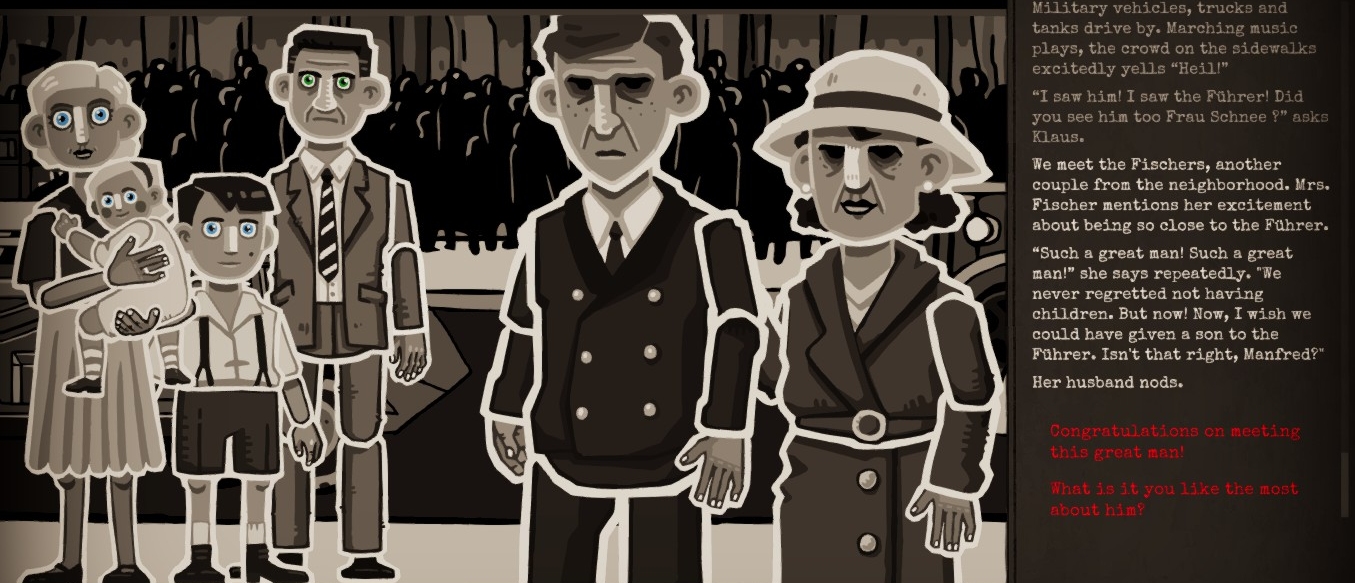
In the hands of less capable, less subtle storytellers, we might have ended up with a clumsy retelling of historical episodes familiar to many of us. Paintbucket manage to avoid the crass and the obvious most of the time, serving up instead a cast of nuanced recurring characters and a series of unexpected situations that regularly surprised and moved me.
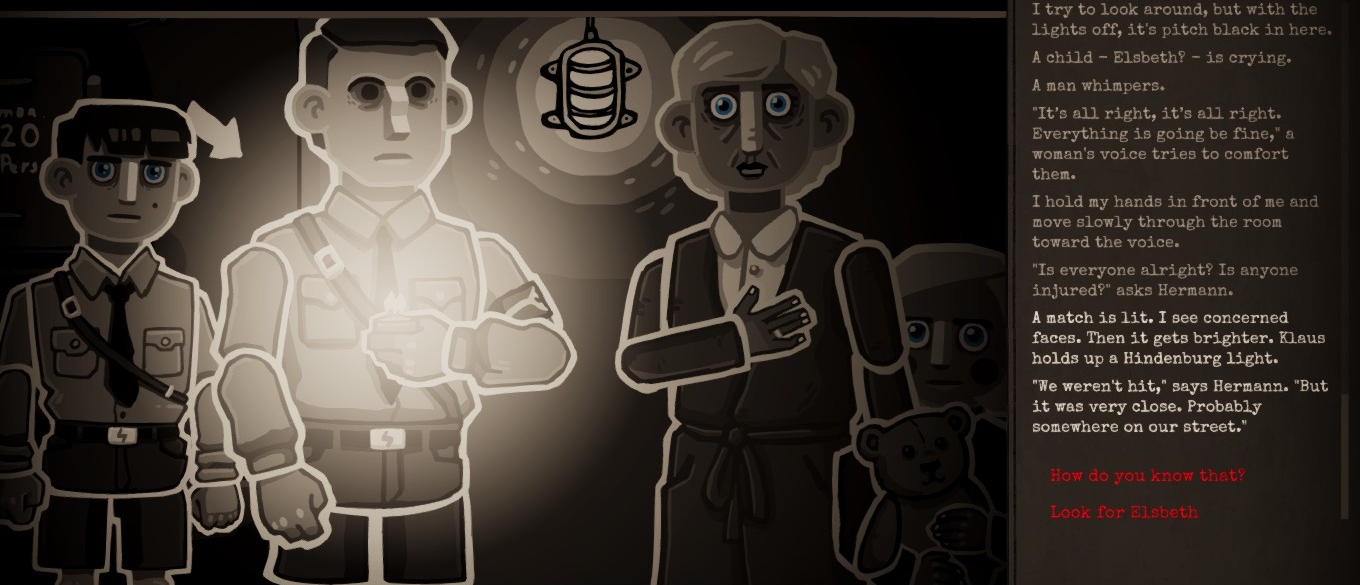
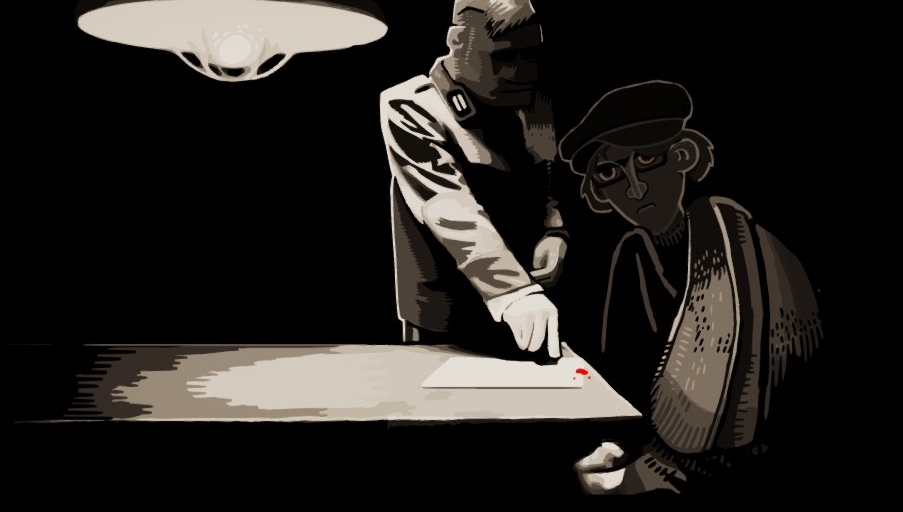
If it flinches at all it’s in its representations of arrests and interrogations. A recent misclick (I accidentally ordered her to fight rather than flee on her bike) landed Käthe in a Gestapo facility for a second time. Her refusal to furnish her brutal interrogator with the information he was after really should have resulted in a trip to a concentration camp or an appointment with a firing squad. In fact she was set free – in effect allowed to restart her resistance career as if nothing had happened.Way of Defectorwas less merciful and tenser as a result.
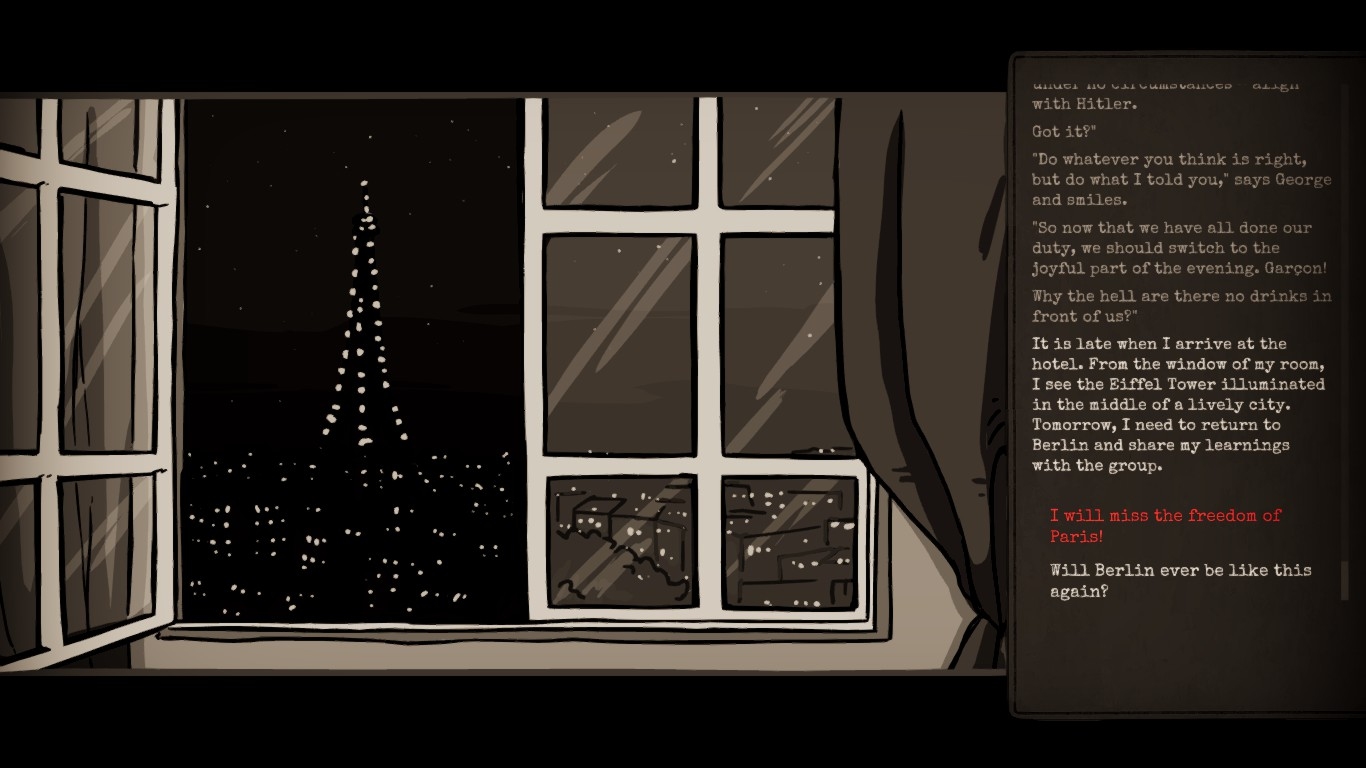
My reservations regarding the translation (not perfect) and the tooltips and tutorial (inadequate) are almost too minor to mention, and there are doubtless many who will disagree with me when I say that the artwork isn’t wholly successful. The noticeably different styles employed for landscapes/backgrounds, cutscene figures, and group members, clash rather than complement each other, in my opinion. I found some of the backdrops disappointingly crude (above is one of the worst) and the unapologetically modern portrayal of the resistance fighters a poor fit for the game’s period setting and gritty themes.
The fact that TTDOT’s soundtrack is so superb only emphasises the visual shortcomings. Evocative popular songs of the period, haunting bespoke compositions, and moody ambient sounds frequently enhance the narrative in a way the graphics do not.