HomeFeatures
The Flare Path Talks to a Test PilotA life aloft
A life aloft
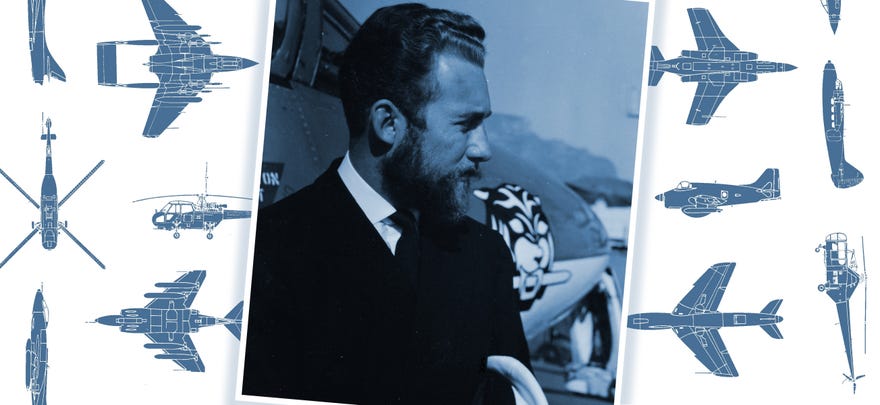


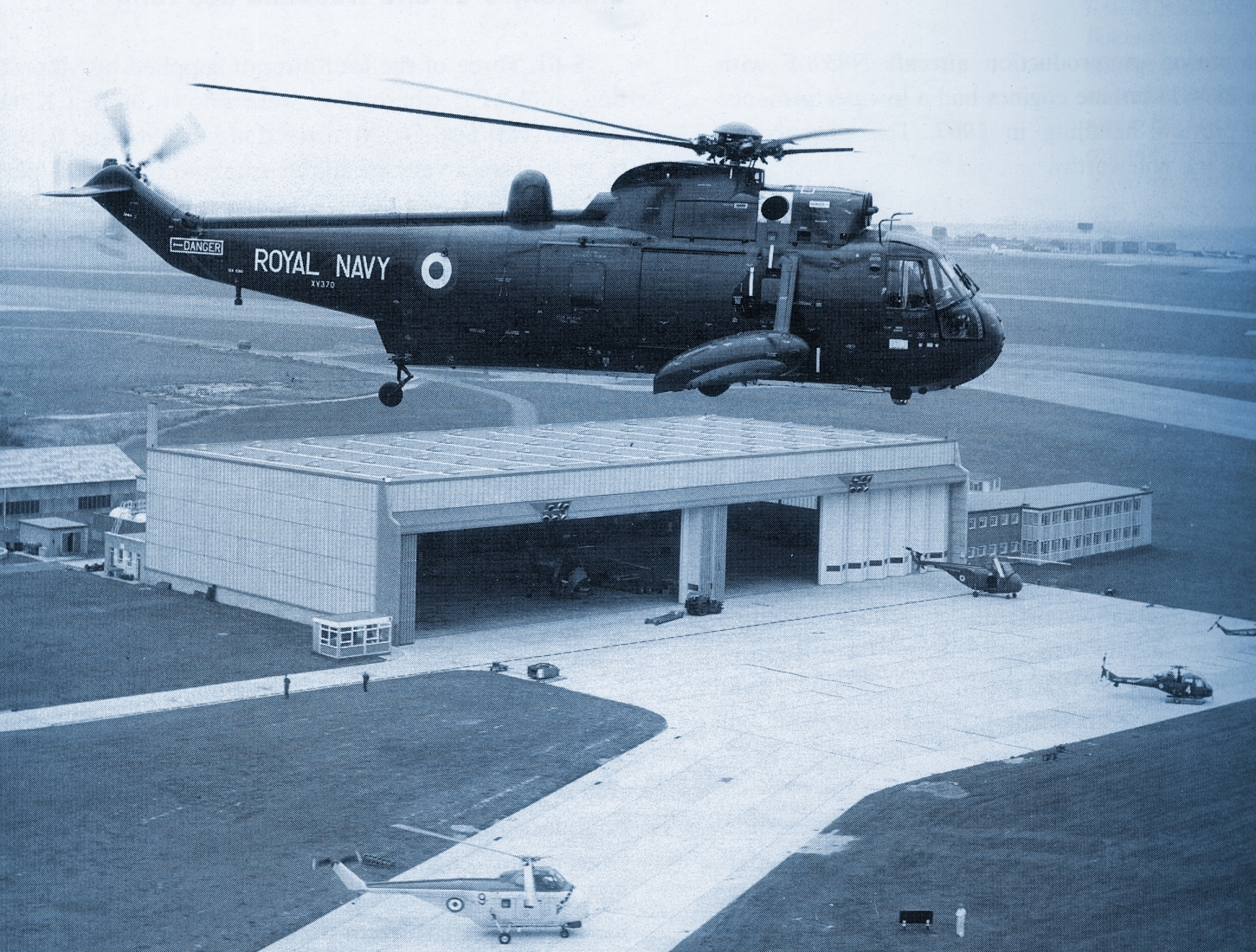
His relationship with whirlybirds began atFarnboroughin 1962, as did as his move into test flying. Appointed to the Royal Aircraft Establishment at Bedford as the naval test pilot, he was involved in a series of catapult launch, arresting, autothrottle and head-up deck landing approach trials before packing his duffel bag for Singapore and a new role as a V.I.P. helicopter pilot and maintenance test pilot on fixed and rotary wing aircraft.

His appetite for aviation as keen as ever, John took a post as Project Manager with Edgely, the Wiltshire company behind the distinctiveOptica, after leaving the Navy. For two memorable years he was involved in customer support, and ferry and demonstration flying in the U.K., Belgium, Egypt, Jordan, Dubai and Spain.
RPS: How many aircraft types have you have flown in total? (A list would be lovely)

John:I’ve flown a total of 46 types of powered machines, fixed wing and rotary, starting in 1950, and a similar number of types of glider, starting at E.T.P.S in 1962. The list of powered machines:
Aérospatiale Gazelle(1 & 2),Aérospatiale SA 330 Puma,American Champion Citabria,Bell H-13 Sioux,Blackburn Buccaneer(1 & 2),Boulton Paul Sea Balliol,Bristol Sycamore,Cessna 172,de Havilland Canada DHC-1 Chipmunk,de Havilland Dragon Rapide,de Havilland Sea Devon,de Havilland Sea Venom21,de Havilland Sea Vixen(1 & 2),de Havilland Tiger Moth,de Havilland Vampire(T.11, T.22, F.5 & 9),Edgley Optica,English Electric Canberra,Fairey Gannet(3, 4, & 5),Fournier RF-5,Gloster MeteorT.7,Handley Page HP.115,Hawker HunterT.8,Hawker Sea Hawk(2, 3, 4, 5, 6),Hiller HT Mk 1,Miles Magister/Hawk,NAC Fieldmaster,North AmericanT-6 Texan/Harvard,Percival Provost T.1,Percival Sea Prince,Piper PA-18 Super Cub,Robin DR400,Saunders-Roe Skeeter,Scottish Aviation Bulldog,Stampe-Vertongen SV.4,Supermarine Scimitar,Taylorcraft AusterV,Trago Mills SAH-1,Vickers Varsity,Vickers Viscount,Westland Dragonfly,Westland Lynx(1 & 2),Westland Scout,Westland Sea King(1, 2, 3, & 5),Westland Wasp,Westland Wessex(1, 2, 3 & 5),Westland Whirlwind(7,& 10).
And the gliders:
RPS: In terms of flight characteristics and/or pilot workload, which of those was the most demanding?
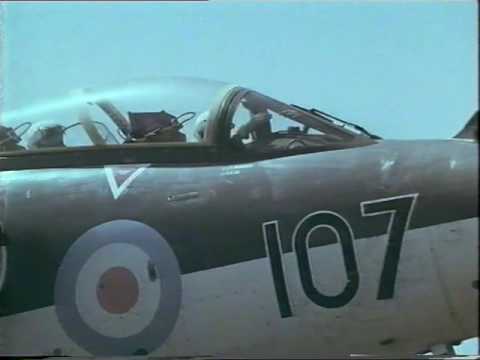
John:I was lucky enough, through fortuitous timing, to have two spells in804 Squadron, the first a full commission flying theSea Hawk, approaching obsolescence, then seven months on theScimitar.

Although I enjoyed every minute of my 103 hours flying Supermarine’s exciting machine*, it has to be my choice in response to this question because it is only when embarked that the full range of aircraft operational options come into play in parallel with the full range of aircraft and ship limitations. The only single seater with this level of complexity and performance prior to the Sea Harrier, which I never flew, it also had a tendency to “pitch up” if handled carelessly; stalling and intentional spinning were forbidden.
- Interviewer’s note: 39 of the 76 Scimitars built were lost in accidents
RPS: And the most forgiving/pleasant to fly?

John:Staying with fixed wing for the moment, I have to choose the newHunter8s we all flew to convert to swept wing, in my case just prior to flying the Scimitar at Lossiemouth. The word “smooth” springs immediately to mind – the axial compressorAvonengine, a huge step forward from the centrifugalGoblinandNene, really good powered pitch and roll controls (the rudder was “manual”, more properly “pedal”), with excellent manual reversion. It “looked right and felt right” with an excellent cockpit layout and exterior view.

Among helicopters, I have to go for theGazelle, a “smoothy” like the Hunter, and capable of 150 knots I.A.S.

RPS: What, do you think today’sMerlinandWildcatpilots would make of pioneering FAA helicopters like theDragonflyandSycamore?
John:I think they might be surprised that such rudimentary machines were ever employed in the operational roles assigned to them. Gas turbines, multi-engined configurations, autopilots and computerised engine controls have so improved life in the cockpit. A point on the Sycamore – my limited experience on it served to impress how the Bristol company were well up with the others in many respects, but how the Australian navy came to select it for use aboard ship baffled me, simply because the main rotor blade tips looked dangerously near the deck.
RPS: Do you remember your first close encounter with an aircraft?
Watch on YouTube
Watch on YouTube

RPS: They say no-one forgets their first ‘solo’. How did yours go?

RPS: How many carriers landings have you made?

John:248 (Sea Hawk 170D, 5N; Scimitar 50D;Sea Vixen23), plus an unrecorded number in helicopters.
RPS: Which was the most memorable?
John:My 17th, on the 15th of July 1958, in a Sea Hawk aboardHMS Albionduring work-up off the coast of Northern Ireland. I allowed the final approach speed (110 knots) to decay on final approach and sank on to the round-down, leaving a dent. The port main undercarriage leg collapsed and my hook engaged No.1 arrester wire. The aircraft flew again later that day. I was very embarrassed, of course, my C.O. recorded my misdemeanour in my log book, I was not punished, flew again the following day, and never made the same mistake again!
RPS: What’s the secret of a good carrier landing?

John:Getting into the landing configuration in good time, carefully check the aircraft weight and decide on the correct final approach speed, then hold it all the way down to hook-on. The wind should be “down the angle”, so no drift, keep the power on until arrested to enable a climb-out in the event of missing a wire, or a wire failure, when full power should be applied until circuit height is resumed, then repeat above.
RPS: Have you ever had to eject?
RPS: Did simulators play any part in the life of a Fleet Air Arm pilot in the Fifties and Sixties?
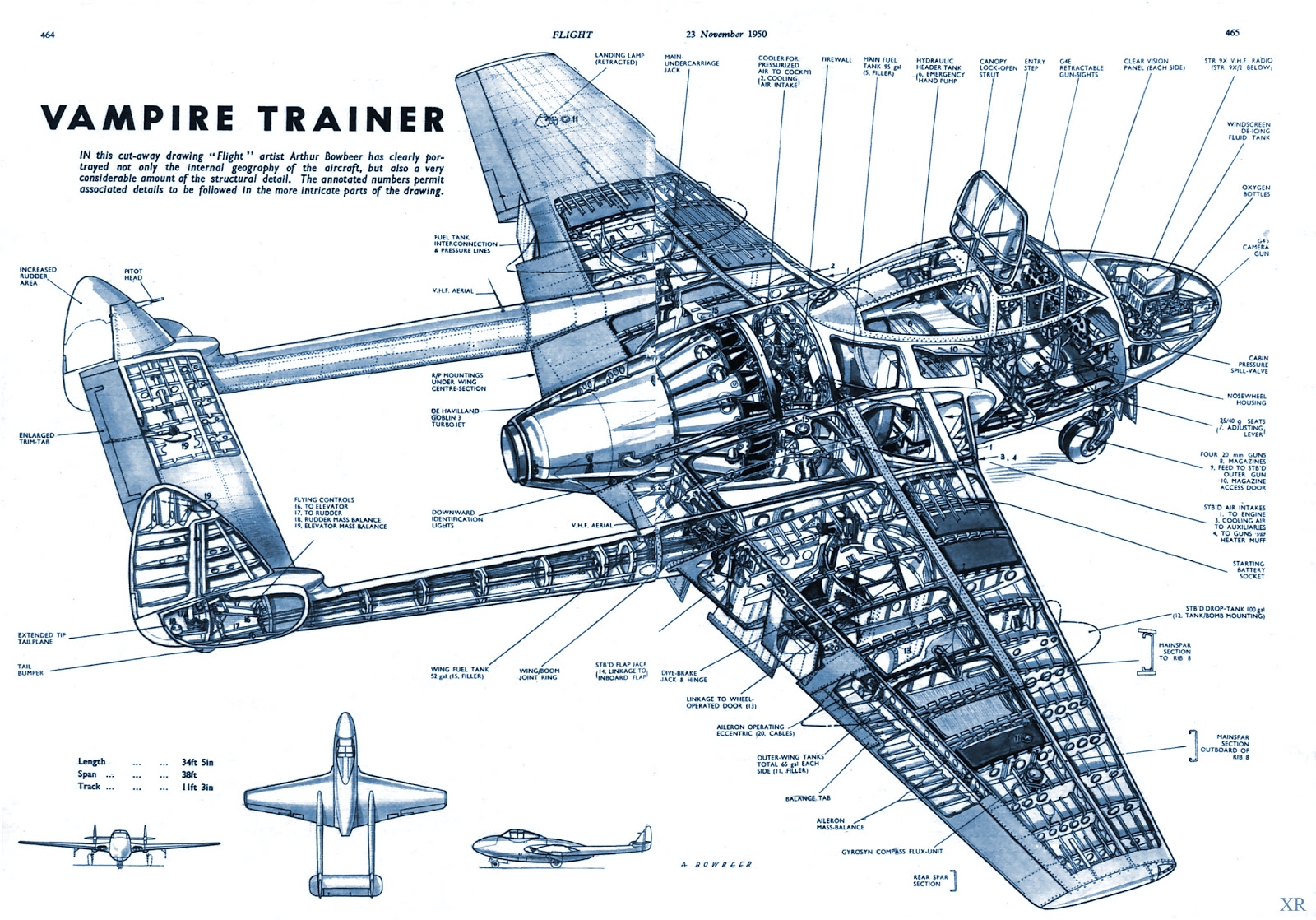
John:My first simulator, other than theLink trainerat R.A.F. Syerston, was the static one based on the Scimitar, at Lossiemouth, in 1960, really a high quality procedure trainer in which I spent four and a half hours. I flew the Buccaneer before the simulator was installed and converted on to Sea Vixens at R.A.E. Bedford without visiting the simulator at Yeovilton. The simulator on which I spent most time was the Sea King one at Culdrose. In the 70’s.
RPS: Was your move into flight testing in the early 60s the realisation of a long-harboured ambition or the result of more prosaic factors?

RPS: Of the various flight trials you were involved in, which had the most significant repercussions?
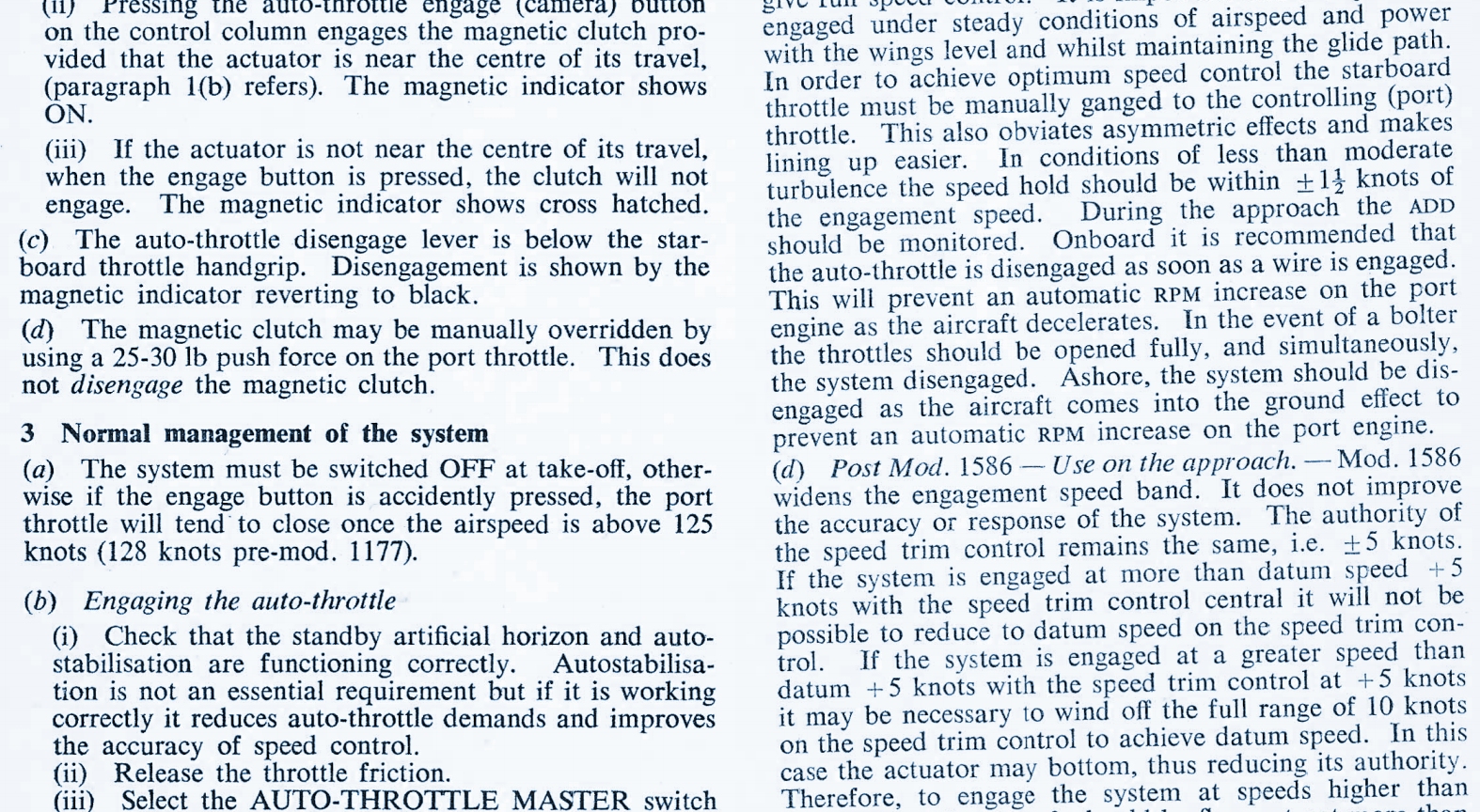
John:Hard to say because I didn’t stay in a single aspect of development flying, and moved on before the final outcome of trials in which I participated was achieved. I like to think lives might have been saved in Sea Vixen squadrons after the introduction of the deck landing autothrottle system, in which I had a hand, and likewise the head-up deck approach sight, with which I was involved at a rather earlier stage of its development. I’m not sure how far that one went, but I think it might have got into the Sea Harrier as an aid to approaching a safe hover beside the ship before moving over the deck to land on. At a very different level, the short burst of work in the far east in support of small ships’ Wasp flights having difficulty with torquemeter settings was important in its own way.
RPS: You must have looked down on some spectacular scenery while “seeing the world” with the RN. Have certain vistas stayed with you?

John:Skye in winter on a beautiful sunny day from a Lossiemouth Vampire T.22 in 1959, the Lofoten Islands from my P.R. Scimitar in September, 1960 and the Southern Alps from my glider at 21,000 feet 14/12/1991.
RPS: Do you miss the exhilaration and challenge of flying fast jets?
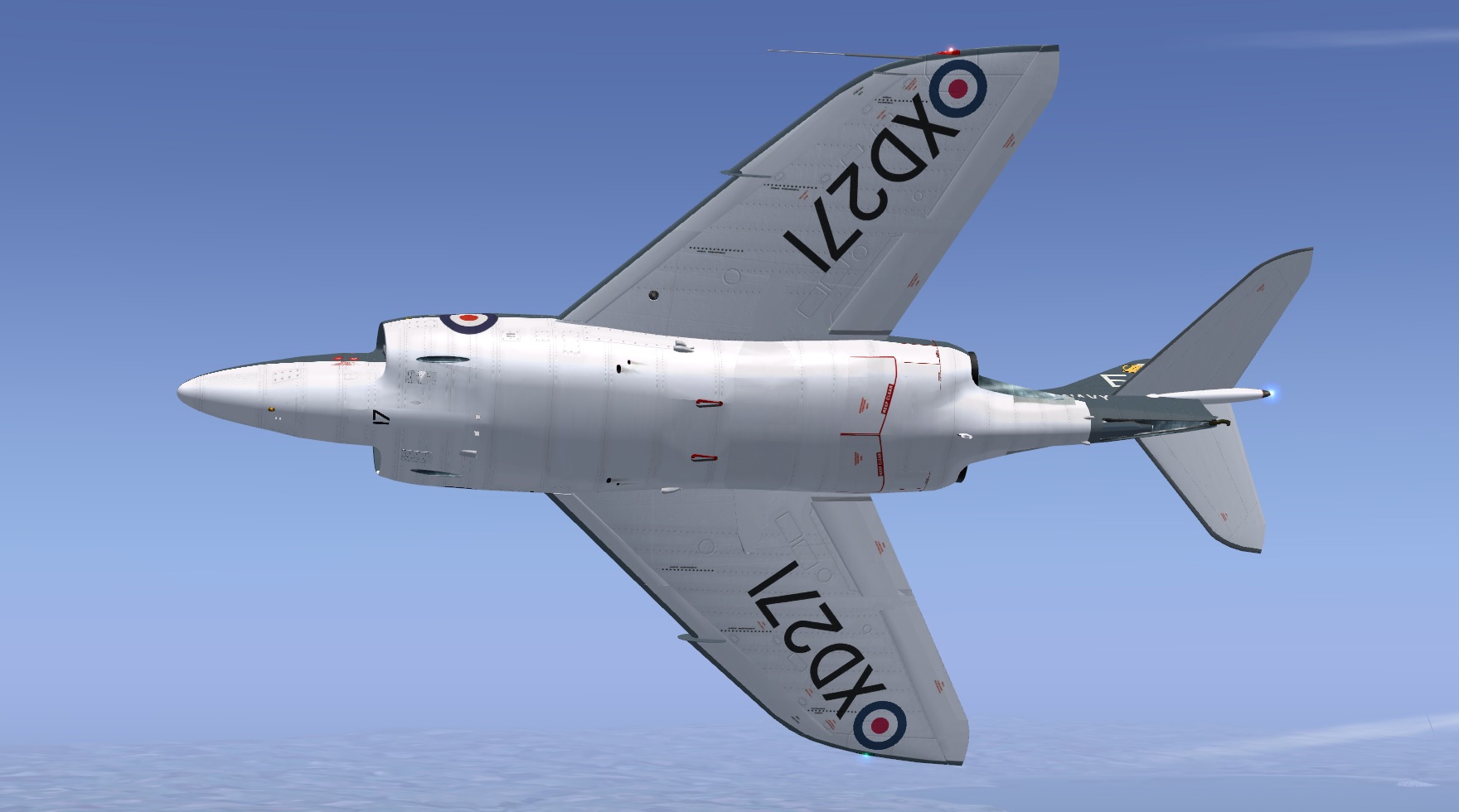
RPS: Given a magic wand capable of conjuring up a flight-ready example of any flying machine, what aircraft would you choose to take for a spin?

John:A difficult one! I’m torn between renewing my passport and soaring to even greater altitude in South Island, or revisiting Feshie Bridge in Strathspey to soar on a perfect Cairngorm day, again to great altitude, or finding a Hunter 8 for a final transonic blast in southern England. On balance, I think I’d probably go for Feshie.
RPS: Thank you for talking to the Flare Path
Watch on YouTube
Watch on YouTube

Watch on YouTube
Watch on YouTube

Watch on YouTube
Watch on YouTube

Watch on YouTube
Watch on YouTube