HomeFeaturesImmortality
The femme creatives who built Immortality, and how they did itNot a one-man act
Not a one-man act
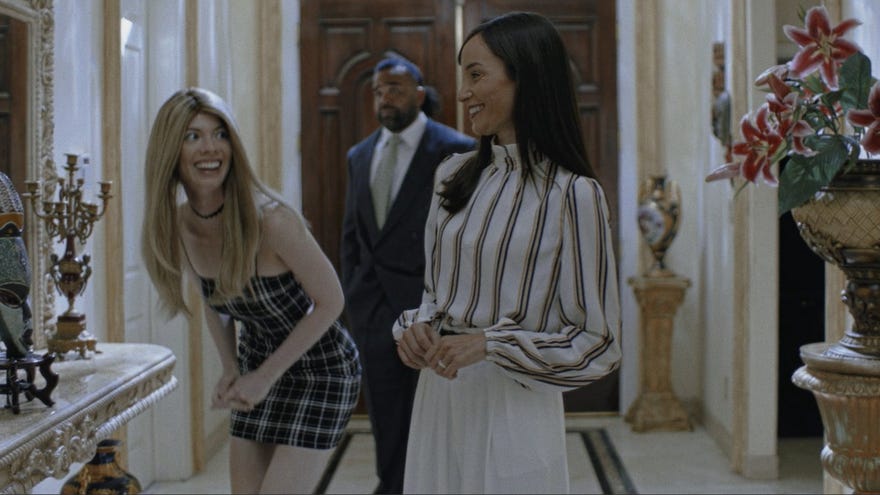
The glue that held everything together was Immortality’s producer Natalie Watson, who in many ways went above and beyond that title. “I’m definitely very holistically minded when I approach a project,” she says. “A lot of my role has been very creative-oriented and not just the traditional producer kind of team manager role. It’s been on research and development, I worked on set as the script supervisor, and also as Sam’s other assistant director in just communicating between departments, making sure his vision and decisions were being communicated across departments and were being realised.”
IMMORTALITY Release TrailerWatch on YouTube
IMMORTALITY Release Trailer
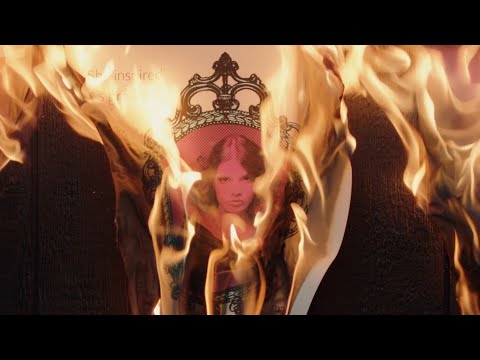
Then, of course, lead actor Gage is also in her debut role, fresh out of graduating from the prestigious Juilliard School performing arts conservatory. She shares some remarkably uncanny similarities with Marissa, a new star-in-the-making with French origins - the latter a detail Gage tells me was not added after casting, adding that “Originally, one of the last names they had played with for Marissa was Gage, my last name!”
In a way, having that fresh blood mixed in, who could also take command of the work in what Gage described as a non-hierarchical set, gave production a refreshing energy, not to mention the heightened circumstances of shooting Immortality over the summer of 2021. “Making three back-to-back movies in the middle of a pandemic is not easy from any department’s perspective,” says Watson. “But everyone on set was doing everything in their power to make this the Immortality we knew it could be. The passion for the story and Sam’s vision really drove what we ended up seeing on our screens.”
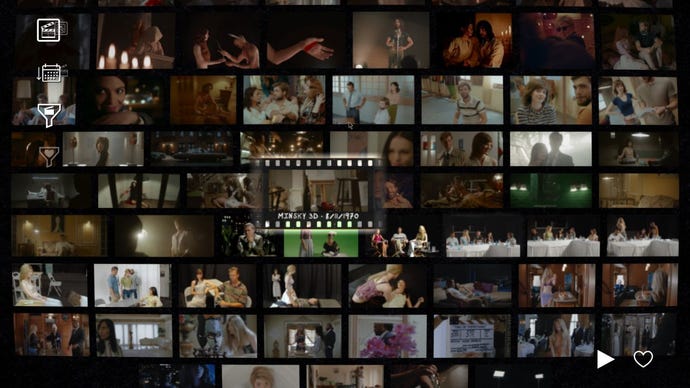
More importantly, the writers were not told about the overall meta narrative and were left to write complete scripts of the film in question. Which scenes would become table reads, rehearsals, or raw takes in the actual footage we get in the game was left up to Barlow and Watson to figure out - although presumably someone else was scripting the moments in between takes and behind the scenes? “That’s something Sam and I talked about,” Watson explains. “A lot of these movies within movies are for laughs or it’s not really taken that seriously. Our number one priority is that everything felt like it could stand on its own and be its own piece of art essentially.”
The scope of Immortality’s films in both genre and time period, as well as its secret supernatural elements, also presented unique challenges. In terms of the score, Desai, who also composes for film, says it was logistically impossible to score the whole game - accounting for around ten hours of material - while also taking into account its non-linear nature, where players can jump from one film, time, and setting to another.
“What we did was distill the essence of the music into three musical themes, and each theme would represent the heart of each of the films in the game,” explains Desai, who also wrote a subverted and supernatural version of the theme, taking inspiration from the parallel worlds ofStranger Things. “It’s a bit like when someone dies, and you’ve got 150 words to sum up their life in an obituary. That’s what I had to do, sum up the idea of each film into a single piece of music that lasted seven minutes.”
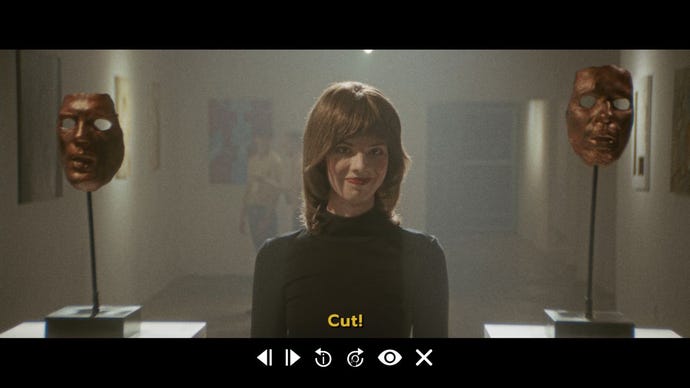
Getting the magic of the match-cut mechanic of interacting with different objects to work was another challenge, which Carson says involved “writing a bunch of code that knew how to read that data, and creating the right moments for players to jump to so, for example, clicking on a tea cup doesn’t fade to another tea cup that just looks like a blurry blob because someone is moving it.” Within that is the balance of deliberate symbolic and thematic mise-en-scene objects with more incidental objects that could be clicked on, and a rather opaque and at-times random algorithm that determines which scene you would jump to next. But the biggest programming challenge besides that was how to unlock those supernatural scenes hiding just beneath the surface of the footage you’re seeing.
Charlotta Mohlin, the actor whose performance should be one of the most talked about but, frustratingly, isn’t for fear of spoilers, had her own doubts on whether anyone would even find her character. “I’m not a gamer, so I had no idea; I was like, I bet people won’t find me,” she says. “And then [the developers] are like, ‘But the point is to find you!’”
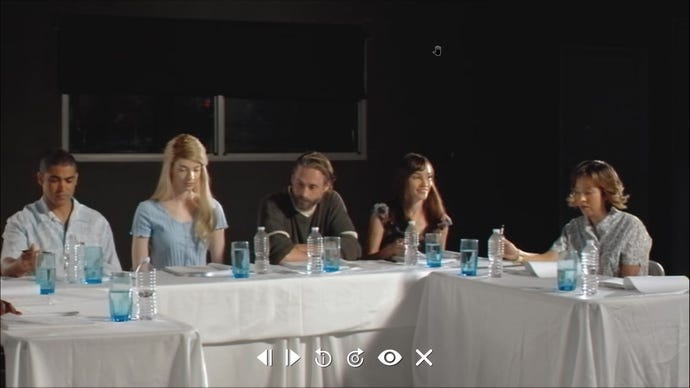
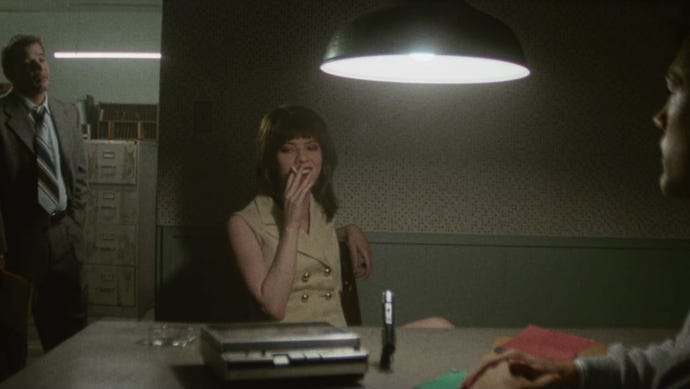
It’s impossible to get this far without addressing the elephant in the room that is the sex and nudity in Immortality. It was something Gage was heavily conscious and wary of, and she mentions how the original script actually did contain more sex and nudity. “I had always said I don’t want to do nudity, and then this came through, and I loved the script so much, but I was like, ‘Oh my god, this is a lot’,” she recalls. “You don’t want to contribute to imagery that’s like porn. But also there’s something to making artful films where there is nudity involved where on some level you’re not demystifying it, but it’s sort of like, okay, so what? Kind of how I feel now, which is like, okay, I did it. So what? You sort of feel like it’s not that big of a deal, but it is that weird thing of, some people will still use it as porn or see it as porn - but the intention behind it is sort of what matters, for me personally.”
While Mohlin’s scenes are predominantly shot as close-ups of her face, her character is also often scantily clad. As the films were shot back-to-back in chronological order, there’s one very early table-read scene that includes a very explicit hidden scene that she still finds mortifying. “It was the second day we shot, and that scene was horrifying, I almost didn’t show up,” she laughs. “But we had the intimacy coordinator, everybody was so respectful of each other. So it was like tearing off the band-aid, and then everything after that was sort of, ‘Okay! This is alright!’”
As well as having long conversations with Barlow before being cast, Gage also credits the intimacy coordinator Jean Franzblau as being essential on set. “[Jean] and I had a very long conversation before we started shooting where we just went through every single sex scene, every single nudity moment, and she was like, ‘Just tell me what you’re comfortable with, what you’re not comfortable with’,” she explains. “Scenes we didn’t cut, there were a lot of conversations about lighting, angles, how long we see nudity. The fact that there were women in positions of power, like Natalie [Watson], who knew Marissa inside out and really helped shape that character both in the script and in my performance, meant I always felt safe.”
But there are also the darker aspects when the script gets into sexual violence and assault, specifically in Two Of Everything, for which Gray says she was channeling not only seedy 90s thrillers with “ultra rich scumbags abuser” vibes like Eyes Wide Shut and Showgirls, but was also writing the script at the time news was coming out about Jeffrey Epstein and Ghislaine Maxwell.
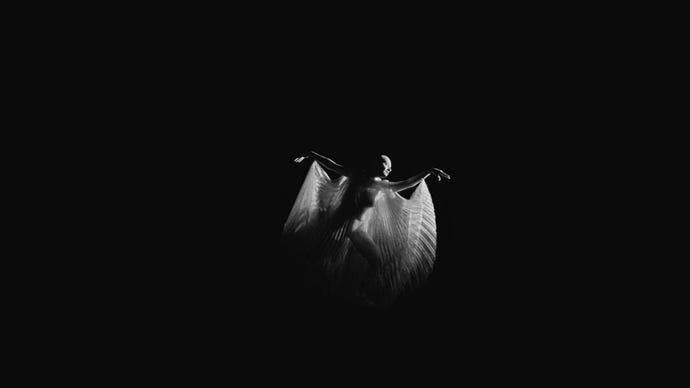
“It’s about trying to create art and trying to be true to myself as a writer, which often means setting aside the audience for as long as I can, because I want to be able to tell the story that I want to tell, as well as I can tell it, without pulling back or changing it to fit a sensibility,” she says, when I ask about how some of the depictions might be perceived or critiqued. “When it comes to screenwriting, there’s so many filters between the artist and the completed product, so from the writing part, I just want to go for it - I want to write as real as I can, as strange and as gross as I can! Whatever it feels like it needs, I want to go towards that idea.”
It seems there was the freedom to do that, despite this being seen as a Sam Barlow project. Watson describes Barlow as “a very collaborative director” who often invited her and other department heads to work with him on what on what their versions of an idea might look like. “We would all talk together about how a scene could be pre-production, on the day as we’re blocking things out, or even after. He’s very invested in the actor’s perspective on a character,” she says. “Sam wanted and trusted me to put my own experience into Marissa and shape her as much as he or Natalie had shaped her, so my voice was not only heard but actively asked for,” Gage adds, who is credited as a producer as well as the star of Immortality.
But when it comes to who should have the final word, it feels apt to give it to Mohlin, not just to compensate for how the secret nature of her role means she’s likely to be unfairly overlooked come awards season, but how the experience has changed her perception of games. “I haven’t liked video games where it’s just violence and everybody’s shooting each other,” she says. “But this kind of video game, and I know there are many more out there that are really telling a story, where you search to find pieces of the story, I find that really fascinating. So both Manon and I are like, ‘I think we have to become gamers!’”
