HomeReviewsSystem Shock
System Shock remake review: Nightdive rebuilds the immersive sim mothership just as it wasSHO-damn good
SHO-damn good
Image credit:Rock Paper Shotgun / Prime Matter
Image credit:Rock Paper Shotgun / Prime Matter
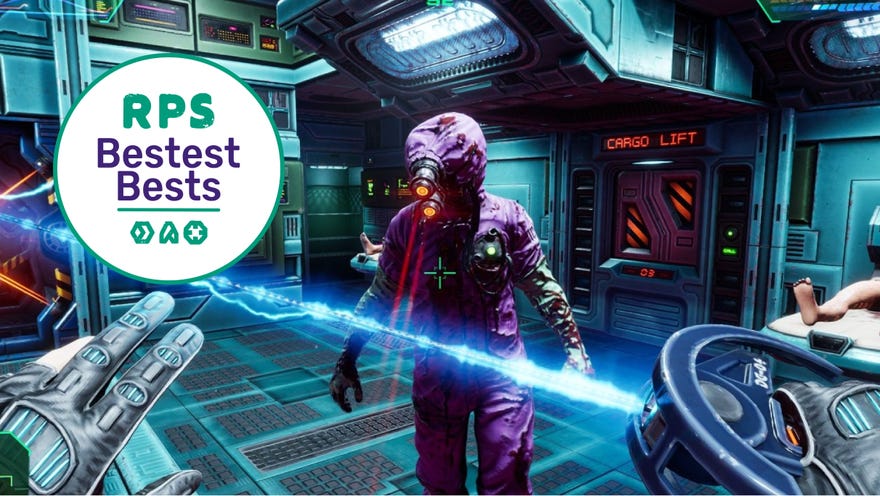
Sometime before SHODAN’s ethical constraints were removed and the rogue AI set about converting the people of Citadel Station into cyborgs, a researcher named Stacy Everson found a smoking gun hidden among the blinking servers of the spaceship’s library. Not an assault rifle or mini-pistol, but a decades-old email chain between her TriOptimum bosses and a psychologist named Jeffrey Hammer. In the early stages of Citadel’s construction, Hammer suggested that each level of the station be designed in such a way as to induce stress and anxiety, so that experts could study their impact on the human psyche during space travel.
“I always knew something was off about this place!”, wrote Stacy to a colleague. “We are just rats in a maze.”
System Shock Official Teaser Trailer - Nightdive StudiosWatch on YouTube
System Shock Official Teaser Trailer - Nightdive Studios
What Hammer calls stress and anxiety, I would callSystem Shock’s tension and atmosphere. And while I’d dispute Stacy’s characterisation of Citadel’s residents as rodents, I can’t deny I’ve spent more than a dozen hours skulking, scurrying between holes in the walls, and pulling away at the station’s wires without a full understanding of the consequences. What Hammer probably didn’t predict is how much fun it would all be. That I’d love my new life lived in the gaps between radioactive storage facilities and robot repair rooms. Stick that in your dataset and print it, corporate evil.
Image credit:Rock Paper Shotgun / Prime Matter
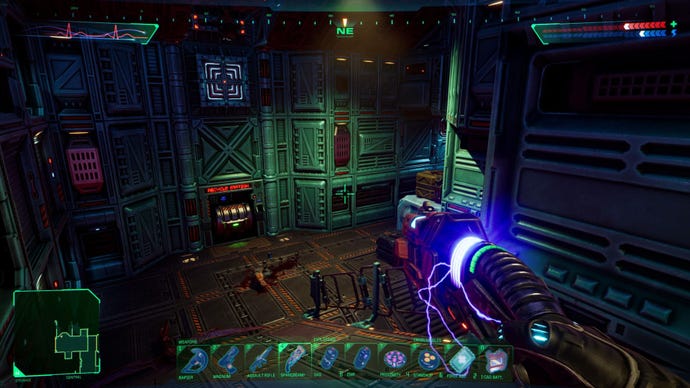
Image credit:Rock Paper Shotgun / Prime MatterImage credit:Rock Paper Shotgun / Prime Matter
Image credit:Rock Paper Shotgun / Prime Matter
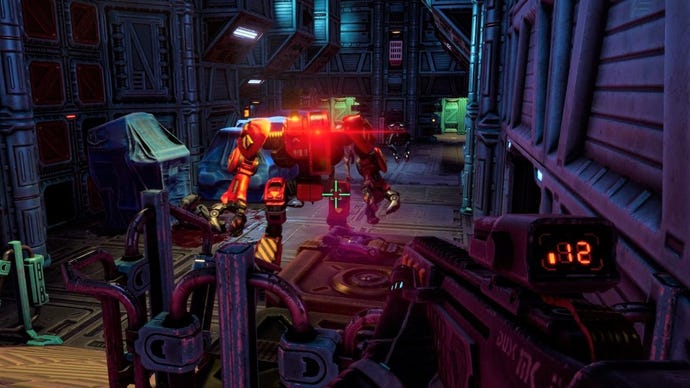
Image credit:Rock Paper Shotgun / Prime Matter
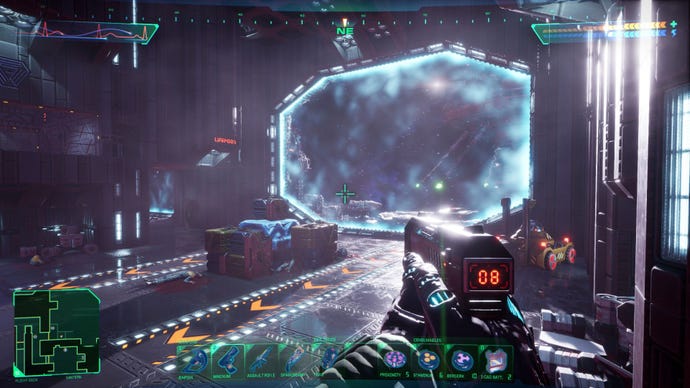
No, this is not a remake in the loose,Final FantasyorResident Evilsense of the term. The original System Shock is not merely a jumping-off point here, nor a prompt for some grand reimagining. Instead, Nightdive has placed faith in the game as it was first constructed, despite the three decades of change that has unfolded since. It’s a faith that’s been rewarded, leaving the studio with a play experience that sits somewhere between a hardcoreBioShockand an inventive indie dungeon crawler likeLegend of Grimrock. One that eschews objective markers and even quest logs in favour of asking you to keep track of your own progress.
At times, you’re left to scour recent audio diaries for pin codes and clues concerning SHODAN’s plans and how you might counter them; to scan the minimap for unopened doors which might allow further exploration. It’s a shock to the system, in an age of AAA player-pampering, but you soon find that all the breadcrumbs are there. And that there’s a thrill to self-sufficiency; in feeling the weight of the odds against you and lifting it with your own hands. It’s an old-fashioned sort of power fantasy that requires few fireworks to impress.
Yet this new System Shock is also unmistakably modern. For one thing, it has a contemporary beauty about it that makes a virtue of Looking Glass’s palette, which starts with turquoise and orange and goes bolder from there. In the wrong hands, this station would be a garish mish-mash. Instead - with the input of returning artist Robb Waters - it’s less lurid than vivid. The anti-grav lifts burble with a kinetic yellow haze, and the cyberspace sequences are mesmerisingly strange, setting you adrift inside a mercurial motherboard. There, the golden walls move woozily, like waves on the ocean, and primary-coloured masks fire projectiles in abstract, bullet hell waves. When visiting, I can’t help but fire the screenshot key more often than my own weapons.
Image credit:Rock Paper Shotgun / Prime Matter
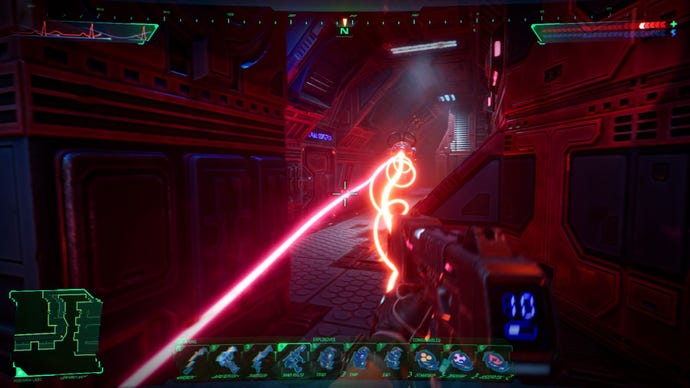
Then there are the elements that have been lifted from the games Looking Glass inspired. The soothing hiss-and-snap of the medipatch was first heard inSystem Shock 2and made its way to the BioShock series before coming here, to the homeland it never knew. The Tetris-esque inventory has made a similar journey back from the future in order to force you into difficult choices while managing your gear. And the recycler, first seen in System Shock’s sequel, becomes the basis for a tight resource economy in this remake. Any junk item can be broken down and exchanged for credits, which in turn can be pumped into vending machines, every so often, for desperately needed consumables and upgrades.
This tactility extends to System Shock’s rewiring puzzles, too, which ask you to reach into Citadel’s innards to open certain locked doors or restore glowing laser bridges across chasms. In principle, they’re not so different to BioShock’s pipe puzzles - merely much more demanding in their variety and complexity. But it’s funny how a minigame ceases to feel like one when it’s integrated seamlessly into the world - as if SHODAN refuses to let you have even one brief moment of escape from her station-wide oppression.
Image credit:Rock Paper Shotgun / Prime Matter
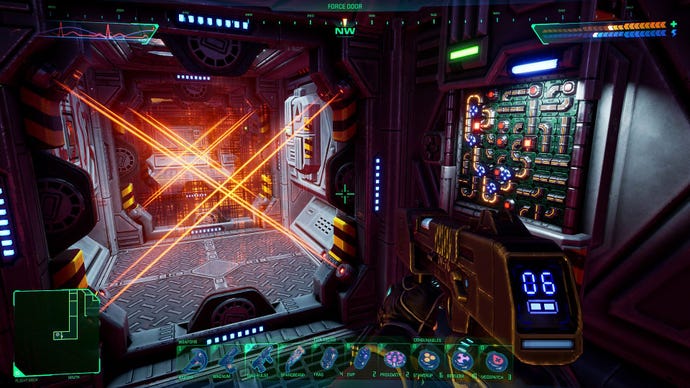
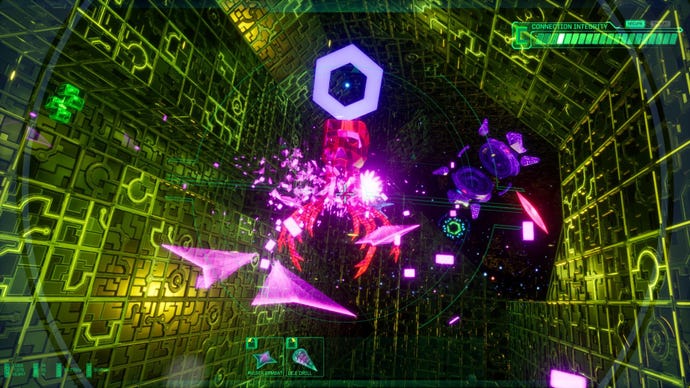
Image credit:Rock Paper Shotgun / Prime Matter
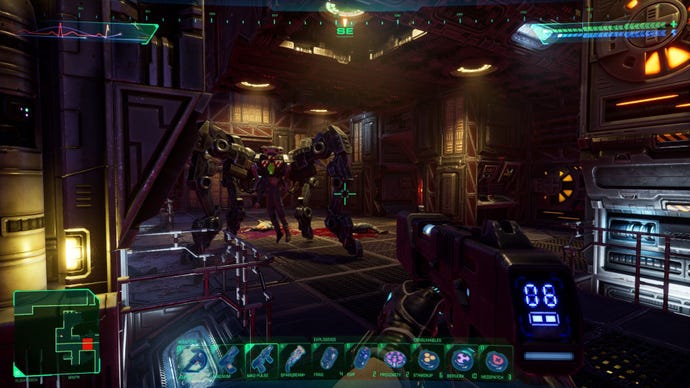
Combat is fought in the mind as much as with the fingers. While you’ll unlock some endearingly daft jet-boots midway through the game, Nightdive wisely rejects the mobility of today’s dominant first-person shooters in order to preserve a steadier pace. There’ll be no sliding or mantling in the corridors, and the deadeye accuracy of SHODAN’s cyborgs ensures you won’t be outmanoeuvring your opponents. Instead, leaning around corners remains important - as does knowing when to stand still and take aim. More than anything you’re encouraged to know your enemy, matching the right weapon or ammo type to your target, and wasting as few shots as possible. A double tap to the head will fell a mutant, and the spare bullets are a gift to your future self. Everywhere and at all times, System Shock is a resource game.
It’s not necessarily all as you’d hope: whether melee or ballistic, hits don’t quite deliver a true sense of force. And those weaned on the creative problem-solving ofDeus ExandDishonoredmay not find all they’re looking for in the original immersive sim. Shock has always been less yielding and more punishing than its children, and has a distinct double-strength flavour as a result.
But if you’ve an appetite for space dungeoneering in the company of one of gaming’s most iconic and influential villains, you’ll find the remake cleaves close to that original pitch. This is the product of a team which, to its credit, believed in the 1994 proposition of System Shock and trusted it would still stand up today, in spite of a 30-year shift towards smoothing the player’s path. The result has proved them right. It transpires that our creepy, manipulative robot mother knows best.
