HomeHardwareNews
Samsung’s 990 Pro SSD promises fastest-ever PCIe 4.0 read speedsUltra-quick NVMe with DRAM and a gaming focus, but it won’t come cheap
Ultra-quick NVMe with DRAM and a gaming focus, but it won’t come cheap
Two Point Campus - A+ Management Game Is Best In ClassWatch on YouTube
Two Point Campus - A+ Management Game Is Best In Class

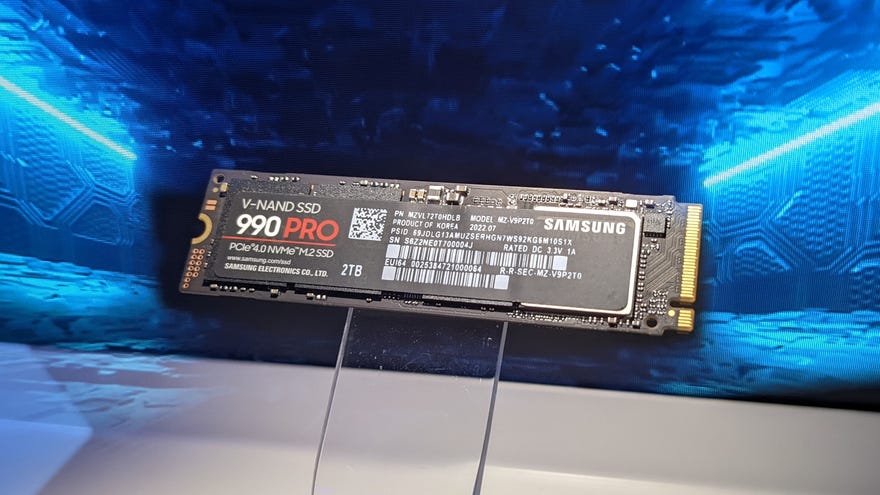
It’s read speeds that are more useful for games, and although game loading and data streaming are tricky tasks that can slow your storage down, higher maximum speeds still often represent faster real-world performance – something thebest gaming SSDswill demonstrate. The 990 Pro’s 7450MB/s rating (an upgrade on theSamsung 980 Pro’s 7000MB/s) should therefore put it in good stead against other speed freaks like theWD Black SN850and theKingston Fury Renegade, even if the latter has a slightly nippier write speed limit.
At the same time, Samsung might be taking a risk with the 990 Pro’s pricing: £155 for the 1TB model and £284 for the 2TB model (a 4TB version is also coming next year, price TBC). Compared to the Black SN850 that’s £45 more for 1TB and an eye-widening £100 more for 2TB. It will also have to compete with the handful of relatively budget-friendly PCIe 4.0 drives that have appeared in recent months, like the impressively nimble Crucial P3 and the WD Black SN750 SE. That’s a lot of good SSDs to fend off, even with such an ornately gilded stick as that maximum read speed.
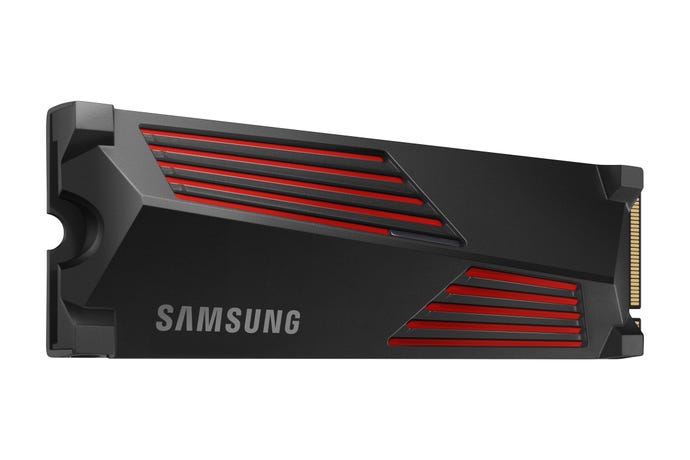
There’s also an RGB(!) heatsink accessory for the 990 Pro. No pricing yet, but expect to pay even more for it.
The Gamescom launch didn’t make the 990 Pro available for testing, but I should have one to slot into the RPS test rig back home very soon. Even if it doesn’t end up being the best option for most PC owners/builders to actually buy, I’m intrigued to see whether it really can hit new highs for PCIe 4.0 – even withPCIe 5.0 SSDs on the way, we’ve yet to max out what the 4.0 standard can really do.
