HomeHardwareFeatures
Samsung 980 Pro reviewA PCIe 4.0 SSD speed demon
A PCIe 4.0 SSD speed demon
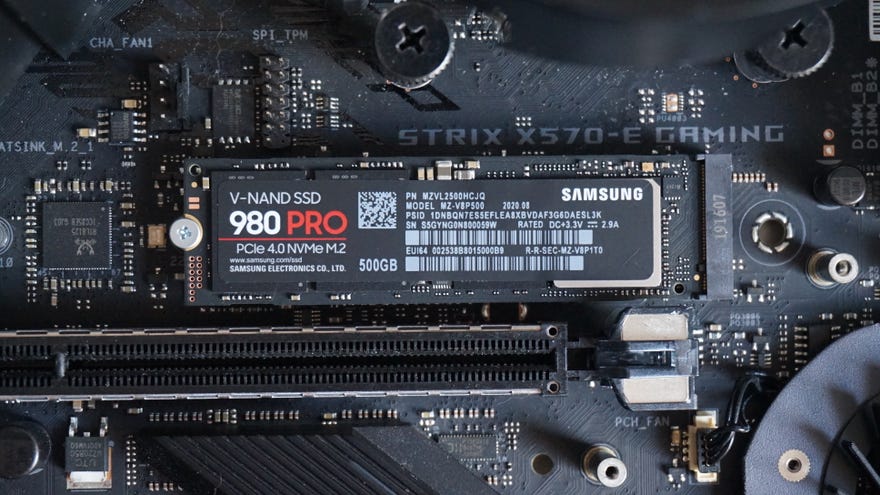
Samsung’s 980 Pro NVMe SSDis the company’s first foray into the world of PCIe Gen 4, the new super fast storage standard that’s set to become the baseline for all modern gaming PCs going forward. It’s still relatively early days for PCIe 4.0 at the moment, though, and you do need a compatible motherboard to get the most from it. As a result, the 980 Pro’s appeal may be rather limited at this point, especially if you’re not planning on upgrading your PC any time soon. However, as a sign of things to come, the Samsung 980 Pro sets a high bar, offering best in class random read and write speeds compared to its other PCIe 4.0 rivals, and best of all, it doesn’t require a chunky heatsink to get the most from it, either.
Thankfully, prices for the Aorus have dropped to £165 / $200 in the intervening year, but it’s still quite expensive compared to other 1TB NVMe drives, and you’ve still got that chunky heatsink to deal with. It’s a similar problem you’ll find on Corsair’s MP600 SSD and Sabrent’s Rocket NVMe 4.0 drives, too.
Samsung 980 Pro review in a nutshell
The good…Best in class random read and write speedsDoesn’t need a heatsink
The good…
The bad…You need an AMD X570 or B550 motherboard and 3rd Gen Ryzen CPU to make the most of it right nowQuite expensive
The bad…
Happily, the Samsung 980 Pro is both more flexible and more practical than its rivals when it comes to cost and installation. The heatsink simply isn’t an issue, for starters, so you can slot it into any M.2 slot without worrying whether it’s going to fit or not. It also comes in a wider range of size capacities starting from 250GB. A larger 2TB version is also due to arrive before the end of the year.
That said, in typical Samsung fashion, the 980 Pro is still quite a bit more expensive than what we’re used to seeing with NVMe drives, as even the 250GB version starts at£83/$90. This rises to£139/$150if you want the 500GB model, and an eye-watering£208/$230for the 1TB version.
That’s quite a bit more than my current favourite NVMe SSD recommendation, the £48 / $40 250GBWD Blue SN550, and it’s quite a big step up from Samsung’s own 250GB970 Evo Plus, which can currently be had for £64 / $70. Both of these drives only support the existing (and slowly outgoing) PCIe 3.0 standard, of course, but right now it still feels like you’re paying quite the premium for that extra bit of future-proofing.
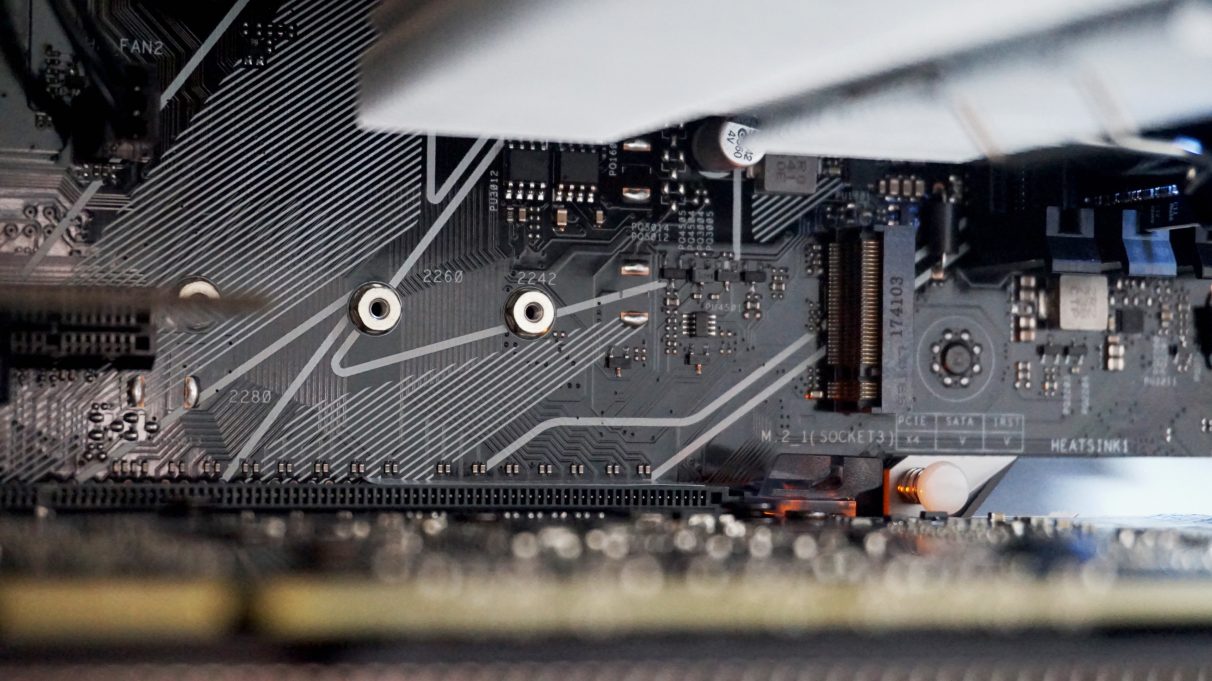
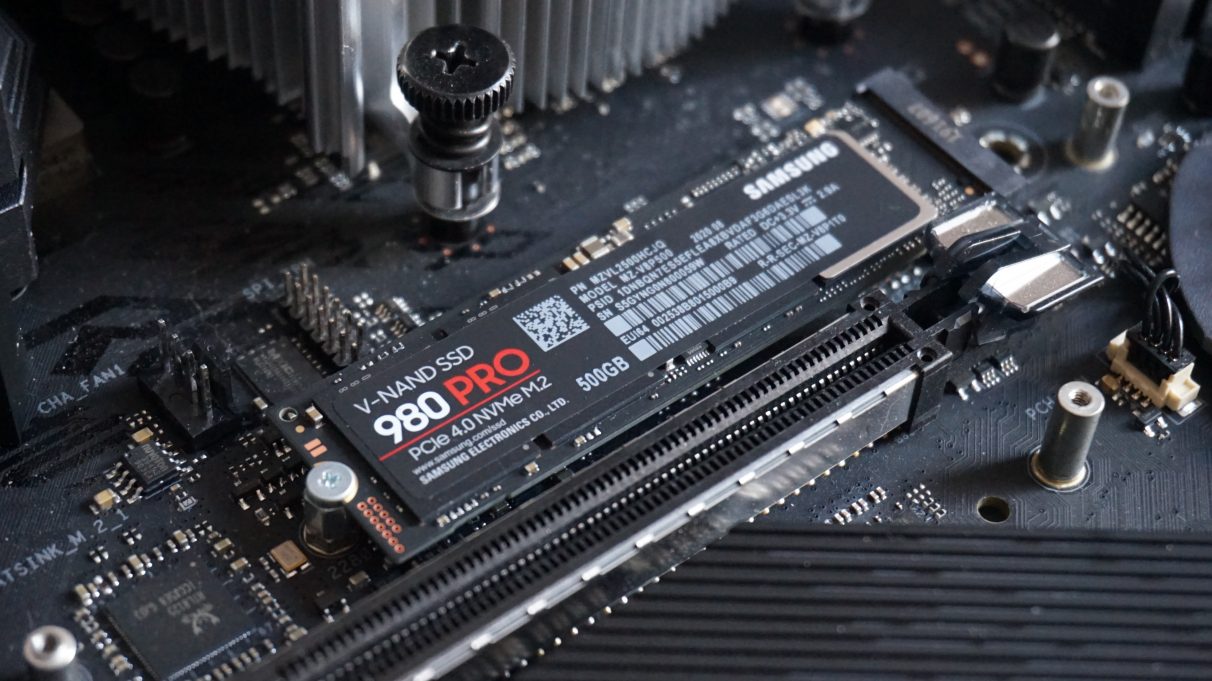
NVMe SSDs require an M.2 slot (above) on your motherboard.
Of course, sequential speeds aren’t really the best indicator of everyday read and write performance, as most of the time your SSD is fetching and chucking bits of data all over the shop rather than looking at things in nice neat lines. Instead, it’s an SSD’s random read and write speeds that are more in line with what you’ll see day to day, but even here the 980 Pro continues to excel.
The gap widens even further when you compare it to Samsung’s older, PCIe 3.0-based 970 Evo Plus, too, which topped out at 55.2MB/s read and 132.3MB/s write. This makes the 980 Pro 43% faster when it comes to random read speed, and 35% faster on random write. That’s quite the jump - a bigger one, in fact, than the leap you get from Samsung’s SATA-based 860 Evo SSD to the 970 Evo Plus (which gives you random read and write increases of 37% and 35% respectively).
When viewed in those terms, the 980 Pro’s higher price is a bit more understandable. After all, it’s the same kind of hike you still see today between the SATA and PCIe 3 NVMe drives. It might sound like a lot at first glance, but it also reflects the jump in performance you get as a result.
At the moment, it looks like Intel will be introducing PCIe 4.0 support in their next crop of11th Gen Core CPUs, but you never know if they’ll suddenly change their minds again like they did with their recently released10th Gen Comet Lake CPUs, which had their PCIe 4.0 support pulled from the platform shortly before launch. AMD, on the other hand, have offered PCIe 4.0 compatible CPUs, motherboards and graphics cards ever since the launch of their 3rd Gen Ryzen chips and RX 5000 Radeon GPUs last year.
As a result, while the Samsung 980 Pro is an absolutely barnstorming SSD when it comes to read and write performance, I also wouldn’t advise making the jump just yet unless you’ve already got a recent AMD-based PC and are absolutely desperate for the latest and greatest. It’s one of thebest gaming SSDsyou can buy right now, don’t get me wrong, but there’s a very strong chance its inevitable Evo sibling will end up being the better buy overall.
