HomeGuidesLegends of Runeterra
Runeterra keywords guide: definitions of all the abilitiesKeyword interactions explained
Keyword interactions explained
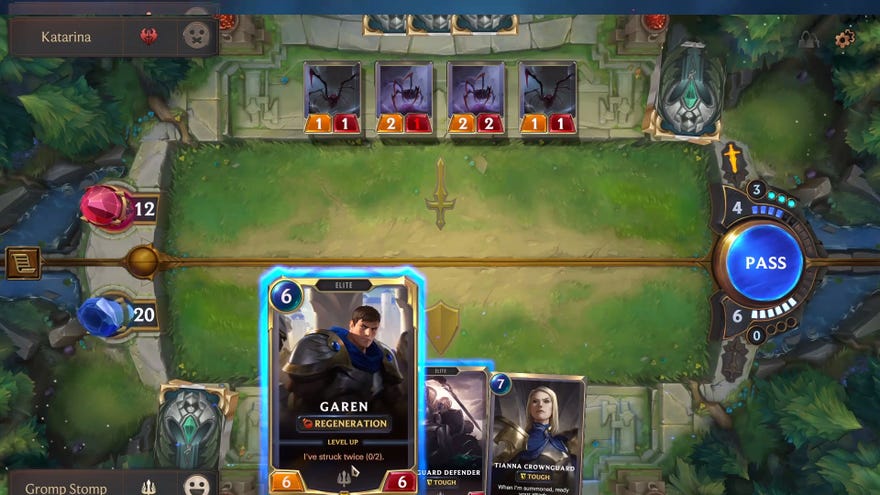
Legends of Runeterrahas a lot of skills and abilities hidden on each of their cards via the use of keywords. They range from being able to prevent damage to a unit, to ensuring an enemy can’t block your attackers. With so many keywords though, there are some interactions that are not obvious to those who haven’t played much of the game, with the consequence being that you could lose the game due to a misunderstanding of what an ability does.
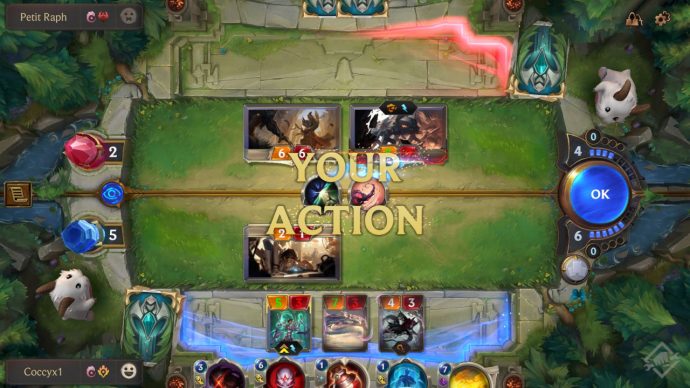
Legends of Runeterra keywords guide
Keywords in Runeterra are single word terms that appear on cards. Some indicate the speed at which a spell is cast, while others grant that unit an ability to use in battle, or when an ability is triggered. OurRuneterra keywordsguide will go over all of them,including the new ones introduced during the full game release, explaining what they do and detail any interesting interactions that you should be aware of.
They appear on lots of cards in Runeterra and they can make all the difference inRuneterra best decks. They can also help with making informed choices during the drafting phase of craftingRuneterra Expeditionsdecks.
Runeterra keywords guide contents
New Runeterra keywords
With the full release of Runeterra comes six new keywords. Some are associated with regions that were seen as a little underpowered, while others are for the new region of Bilgewater that was introduced as the game came out of open beta. Below are all the new keywords and some tips for each of them:
With Scout, make sure you only commit to attacking with Scout units to get its effect. Having just one non-Scout unit attacking alongside them will negate the Scout ability and will make it a regular attacking phase. Meanwhile, using Plunder alongside Nexus Strike abilities is a brutal combination for increasing your tempo.
Vulnerable is an interesting keyword. It sort of works like a reverse Challenger, in that any attacking unit can force the affected unit to block it. This can be effective removal for certain followers like The Undying. Note that it is the enemy player that chooses the blocks, so you can’t force your own units to block enemy ones.
Attune is pretty good when combined with spell heavy decks. You can only refill your spell mana back up to a total of three, but if you then spend spell mana, you can potentially keep refunding a spell mana. This is only in theory however as you’ll need lots of spells and mana to keep refunding yourself, but the potential is there.
Toss and Deep are very well placed to become a key combo. Toss will bin cards from the bottom of your deck, filtering down until you can reach the goal of having 15 or fewer cards in your deck. Running out of cards in your deck is always a risky thing to do in collectable card games, but since champion cards can turn into spells that shuffle a copy of the champion back into your deck, this can give you a game-winning situation.
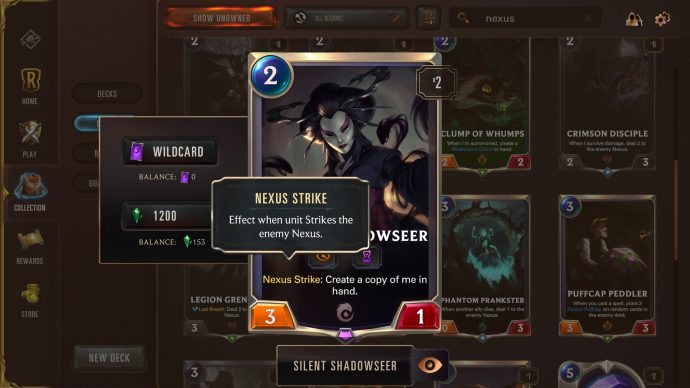
Strike and Nexus Strike
With Nexus Strike, the effect only happens when that unit specifically deals damage to the enemy Nexus. However, regular strikes to enemy units can happen either through combat damage or certain spells that say the unit “strikes” a target. In the case of the spellJudgment, it says that the target “battling ally strikes all battling enemies”. This means you’ll get the strike trigger for every unit the target of Judgment strikes. This can potentially create a lot of Spinning Axes for Draven, or draw a lot of spells for Rivershaper.
How Overwhelm interacts with Barrier and Tough
With combat damage, there are three abilities that affect each other in ways that are not obvious. Overwhelm is an ability that affects attacking units, while Barrier and Tough are defensive abilities that are always active.
Overwhelm has some interactions that need to be addressed. If you block a unit with a chump blocker, then cast a spell like Absorb Soul to drain that blocker for health after committing the blocker, the attacking unit will not deal damage to your Nexus. This is because the game still considers it to be blocked.If that attacking unit has Overwhelm, it will still deal the remaining damage to the defending player’s Nexus.
There’s one other thing you should be aware of when it comes to using the Tough ability. If any abilities or level up conditions rely on damage being dealt to that unit, that potential damage would not count towards that progress as it has been prevented. So if Braum has a spell that gives it Tough cast on it, then is blocked for two damage, it will only count as one towards the progress of his level up ability.
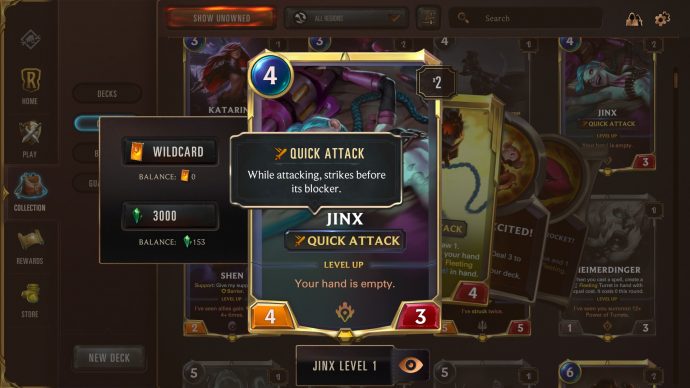
Quick Attack and Double Attack
First thing’s first, here’s what these combat abilities do:
It’s mostly a safe bet that the unit with Quick Attack will deal enough damage to eliminate a defending unit without Quick Attack/Double Attack. Barrier and Tough can be used to prevent damage in the normal way.
Double Attack can be used to kill any unit with a Barrier, provided it has more attack than they have defence. This is because the Barrier is removed via the first attack and the defending player can’t cast spells in-between the Quick Attack damage and normal combat damage.
However, there are some instances where a Quick Attack unit will find itself getting killed. Let’s use Nimble Poro and Unscarred Reaver as an example. Nimble Poro is a one mana 1/1 follower unit with Quick Attack, while Unscarred Reaver is a 1 mana 0/3 follower with an ability. This ability reads “When I survive damage, grant me +3/+0”. If a Nimble Poro would attack, it deals its combat damage first.
In the very niche case of a levelled up Lucian against an Unscarred Reaver that has a barrier cast on it, the Double Attack will damage it first, buffing up the Unscarred Reaver to a 3/3. They will then deal normal strike damage to each other, killing each other off in the process.
Recalling and Reviving
These two keywords refer to removing a unit from the battlefield temporarily.
What is worth noting in this particular case is what happens to damage sustained, as well as buffs and debuffs that were cast on that unit. Let’s say a 4/4 The Undying is the target of a spell with recall. Since its base stats are 2/2, it returns to being a 2/2 unit when it is recast. Revive also ensures that the unit comes back with its own base stats.
There is one notable exception here though. If the 4/4 The Undying is the target of Chronicler of Ruin’s revive effect, it will come back as a 2/2 unit, though because the original The Undying is killed first, you will get a 5/5 The Undying at the beginning of the next round thanks to its Last Breath ability. This leads us nicely to…
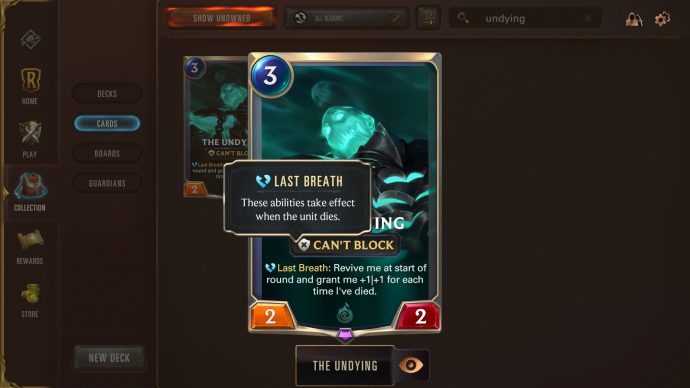
How Last Breath interacts with Capture and Obliterate
Removing Last Breath units normally means they get a triggered ability, but not in the case of Detain and Obliterate.
Frostbite and buff spells
Another short but interesting ability to discuss here. Frostbite is an exclusive ability to the Freljord region.
There are a few things to unpack about Frostbite. Firstly, if a unit has zero attack power, it will not deal damage. So enemies with Barriers will retain their barrier. Some effects may also trigger as the Frostbitten unit now has below a certain amount of attack power.
The effect isn’t permanent though and any buff spells that increase attack power will still happen normally. Their normal attack is restored when the round ends.
Fearsome
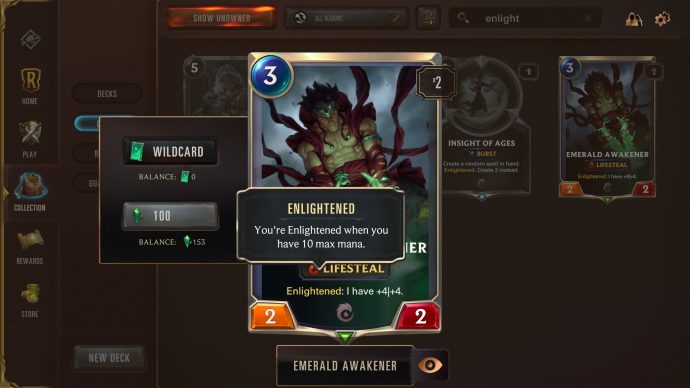
When is a player Enlightened?
Enlightened can give certain cards an extra bit of power or abilities that make them more powerful in the late-game, as you reach 10 base mana.
Note that I said “base mana”. This means thatEnlightened does not take spell mana into account.
The difference between Drain and Lifesteal
Essentially, both Drain and Lifesteal have the same effect, they deal damage to something to gain Nexus health.
The key difference is where those effects are found.Drain is found on spells, while Lifesteal is found on units. Lifesteal additionally heals for the amount that you attacked for, not the health of that unit’s target. So if you have a 3/7 Soulgorger hit a 1/1 Affectionate Poro, you will still heal your Nexus for three life.
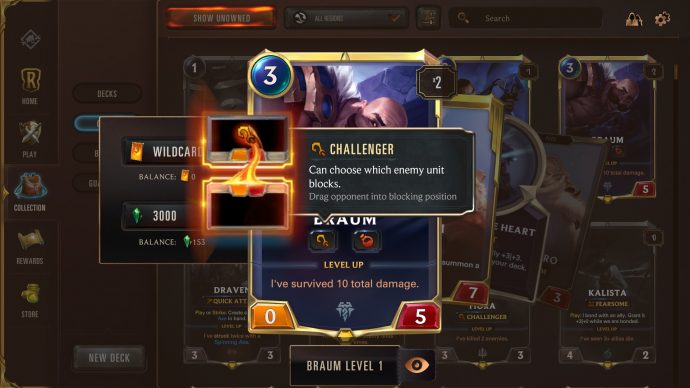
Challenger and Elusive
With Challenger, it’s important to know thatyou need to click and drag enemy unitsto defend against a unit with Challengerbeforeyou click to declare attackers. You do not get another opportunity if you click to commit your attackers.
Both of these abilities can be scary to deal with, particularly if an aggro deck is heavy on the Elusive units to begin with. That doesn’t mean though that these Elusive units still have the ability while that player is defending. If you have a 4/3 Elise with the Challenger ability and attack with her, you can still lure in a 1/1 Elusive unit to block Elise’s attack.
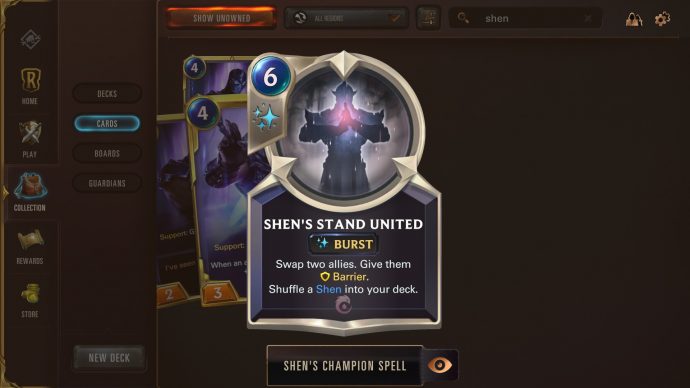
Shen’s swap ability
This ability is part of Shen’s unique spell “Shen’s Stand United”. It’s a burst spell that swaps two allies, then gives both of them Barrier. Swap isn’t a keyword as only Shen’s spell has this ability, but it is an interaction with some consequences. You can only swap units if you’ve declared your attackers/blockers for that combat phase.
You can swap between any two units, even if one of them is not a declared attacker/blocker. If an opponent has cast a spell to deal damage to it,the swap ability will make that spell affect the new attacker/blocker, rather than the one that you originally declared as attacking/blocking.

Commander Ledros
Other Runeterra keywords
Finally, here are the rest of the keywords in the game and what they do. None of these have especially complicated interactions, but they’re worth mentioning as they have very different effects.
Watch on YouTube
Watch on YouTube

