HomeFeatures
RPG experts on why we love Baldur’s Gate 3, and the future of the genre"Fidelity is a death cult," says Mark Darrah
“Fidelity is a death cult,” says Mark Darrah
Image credit:Larian Studios
Image credit:Larian Studios
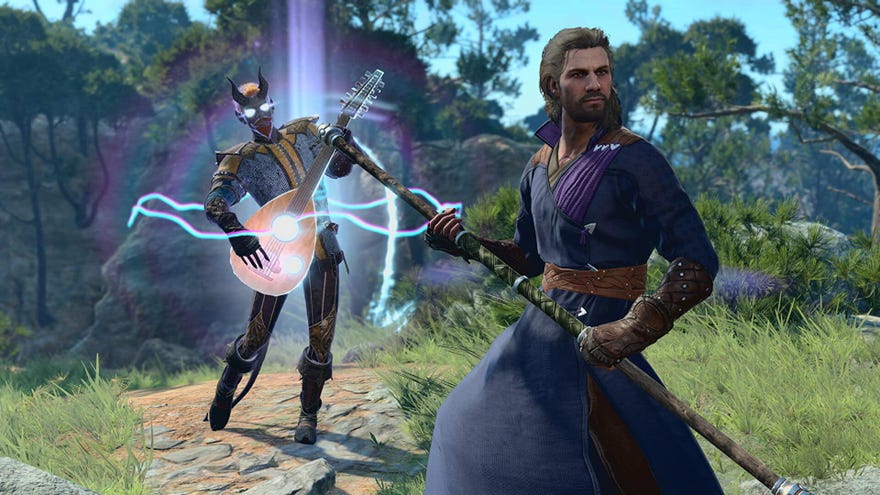
Often when we talk about “hype” surrounding a release, it’s in anticipation of shared cultural euphoria more than that of a great gaming experience. Either way, agreat RPGgame hits different. Recently,Elden RingandBaldur’s Gate 3have both been landmarks. Not to mention the enduring sweep ofThe Witcher 3: Wild Huntand theMinesweeper-esque ubiquity ofSkyrim. When studios get the RPG right, the end result inspires excitement and devotion in ways that feel utterly unique to the genre.
To this end I chatted toDragon Age,Baldur’s Gate, andMass Effectmaestro Mark Darrah, some of the folks at Studio ZA/UM, and the minds behind the two definitive tomes on CRPG history: Matt Barton ofDungeons And Desktops, and Felipe Pepe ofThe CRPG Book. I wanted to ask these genere experts about all things choice and consequence, player freedom, and Baldur’s Gate 3’s phenomenal success. What turns a niche into a phenomenon? What goes into creating a great RPG? And what makes the genre so special to people? Turns out that last one is a big question to ask.
“The beauty of a great CRPG is that it’s the closest a computer-mediated experience gets to making you feel like you’re engaging with another consciousness on the other side of your computer screen,” says Justin Keenan, writer and narrative designer at ZA/UM, and a big part of whyDisco Elysium’s writing is so singular. “It’s that magical power at the player’s fingertips that allows them to approach a story from so many different angles with so many different pairs of eyes the RPG elements provide,” adds Kaspar Tamsalu, ZA/UM’s lead artist.
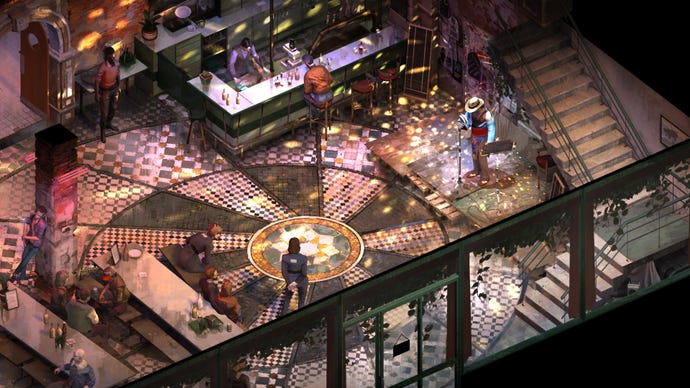
Disco Elysium, 2019’s CRPG darling |Image credit:Rock Paper Shotgun/ZA/UM
Pepe, who recently put out the expanded edition of his gorgeous non-profit tome with Bitmap Books, tells a story of playing the very first Baldur’s Gate with his brother years ago. A certain quest lets you craft armour from human skin, but only wear it if you roll an evil alligned character. “I could do the quest, but I couldn’t wear it, and that made me almost drop my save and start a new one,” he says. He recently learned how BG3 lets druids in cat form hop through cell doors, while I just found out I can have Karlach yeet my gnomes up ledges they can’t reach. “See, even between us, talking about the things we’re finding. You don’t get that in any other genre,” he points out.
“It’s kind of weird this is a genre,” says Darrah. “You’ve got aDragon Age, which is all about characters. A Zelda, which is all about exploration. You’ve got a Skyrim, more about my own personal identity, building the character I want to play. Trying to draw a thread between all these games, I think it’s maybe about people. About how each RPG is approaching what ‘people’ means.”
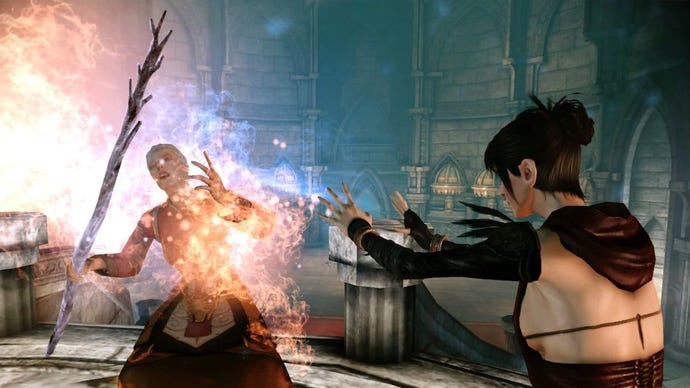
Image credit:Bethesda SoftworksImage credit:BioWareLeft: Riverwood in Skryim; Right: Morrigan attacking an ogre in Dragon Age: Origins
Image credit:Bethesda Softworks
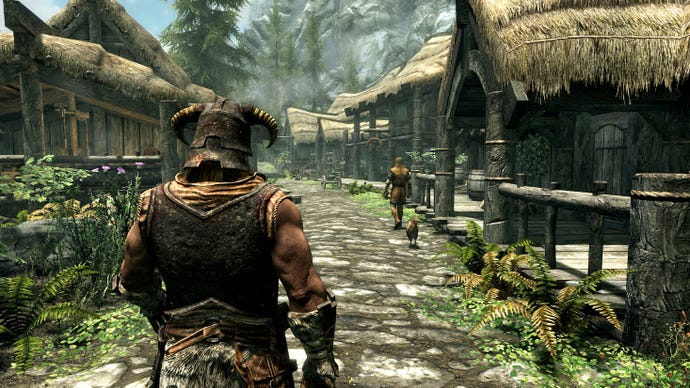
Image credit:BioWare
That’s quite a task. For good or ill, there’s been afair amount of discussionabout the material aspects and feasibility of producing huge RPGs in recent months. No matter how reactive or personal-feeling an RPG is, they all rely on some level of illusion to maintain that feeling. Creating and sustaining that illusion, says Keenan, is “monumentally difficult. You have to create a lot of material and assets that any given player probably won’t see. What gives the genre that little frisson of magic is the illusion that there’s infinite possibility, where in fact there’s merely an abundance of carefully scripted and designed possibilities.”
Darrah describes part of this magic as an approach to design sometimes called campfires in the dark, via a Failbetter Games design philosophy, where the fires are explicit parts of a games story and the player is navigating darkness between them. The story in BG3, says Darrah, is mostly reacting to where you are, not how you got there; “This is how you can see Matt Mercerpiling up a bunch of boxesand teleporting. And the game doesn’t literally crap its pants as a result.” But this kind of design does come with drawbacks. “You can’t weave things together as tightly,” Darrah says, “but it’s so much more robust of a philosophy. It allows for more actions to be taken because the design holds together. That’s how things in BG1 are done for the most part.”
Being turned into a cheese in Baldur’s Gate 3 |Image credit:Rock Paper Shotgun/Larian Studios
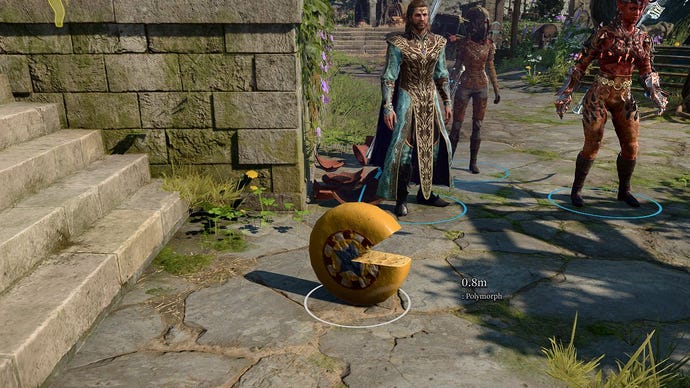
“Fidelity,” continues Darrah, “is a death cult. Allowing the individual pieces of the narrative to be self contained is just more open ended, more robust. Because if I tie the narrative together really tightly, then I need you to go through all the pieces along the way. I need to railroad you through the story, because that’s all the story understands.” Like a DM that’s a bit too in love with their own planning, then? “Arguably, that’s what most modern RPGs are… a bit too in love with their own story.”
For Pepe, BG3’s presentation is what’s allowed it to catch on in such a huge way. “We were playing and loving Pathfinder: Wrath Of The Righteous. It’s a similar ruleset. In terms of reactivity and crazy things that can happen, they’re basically the same game,” he says. “The difference is that presentation. It combines the complexity from traditional CRPGs with the presentation of a Witcher 3 or Dragon Age. It wouldn’t work if it was isometric. We have very well written isometric games, but they don’t land the same way.”
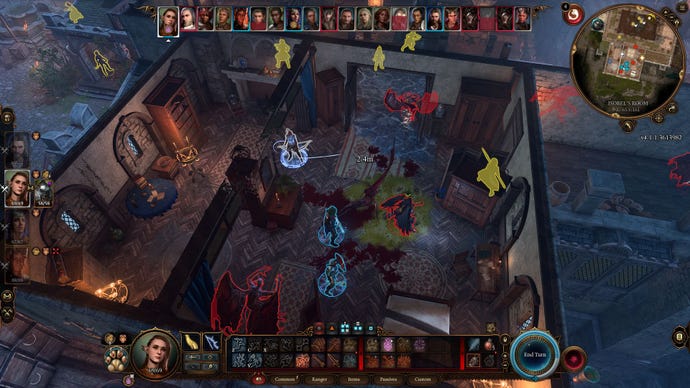
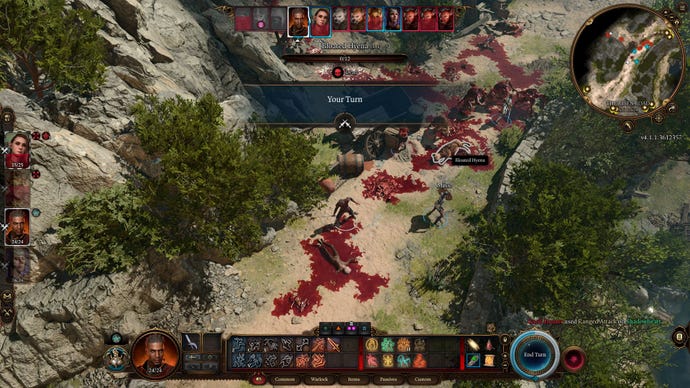
“In the years we’ve been discussing RPGs, there was always an example: you take a very traditional roguelike and compare it to Mass Effect, you have freedom, but you basically don’t have graphics,” Pepe continues, “and I think it was a BioWare developer who said the graphical fidelity in those games prevented, say, a grapple maneuver. But then you see Larian pulling this off. You can literally grab a man and hit an enemy with it, and you have animations for it! It’s just something we didn’t think was viable. So it really feels like you’re combining lineages, and bringing together the two audiences.”
As a huge fan of the originals, it’s been easy to get tunnel vision - of course BG3 was going to be a huge hit, BG2 is an all-time classic. But Darrah brings up something easy to overlook from a nostalgia bubble. “It’s a real testament to what Larian believes in that they would even try and get the rights to a sequel from a game from 2001 in 2023,” he says, “because they’re not really getting much lift, in name recognition, from Baldur’s Gate. I think Larian was expecting modest success. Instead they got a massive break out. That’s not from the title. It might be because it’s DnD, but it’s not because it’s called Baldur’s Gate 3.” Barton agrees with this, saying, “I think the great Dungeons & Dragons movie that came out recently did more to get people excited for BG3 than the old games did.”
Image credit:Rock Paper Shotgun/Larian Studios
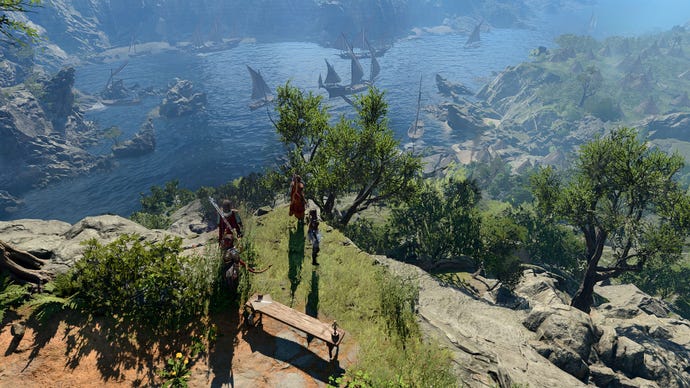
Image credit:Rock Paper Shotgun/Larian Studios
No matter their takes on why BG3 - and RPGs in general - are experiencing such a boom, everyone I spoke to feels optimistic about the future of the genre. “Larian has shown definitively that there’s a huge demand for really deep, crunchy CRPGs, anything is possible,” says Barton. “It seems like we’re always hearing that CRPGs are a niche market with a relatively low ceiling in terms of how many players they can reach,” says Keenan, “then something comes along – whether it’s Disco or Baldur’s Gate 3 or something else – that absolutely blows a hole through that ceiling.”
