HomeFeatures
Roguebook might just become your new favourite deckbuilderBattle: toads
Battle: toads
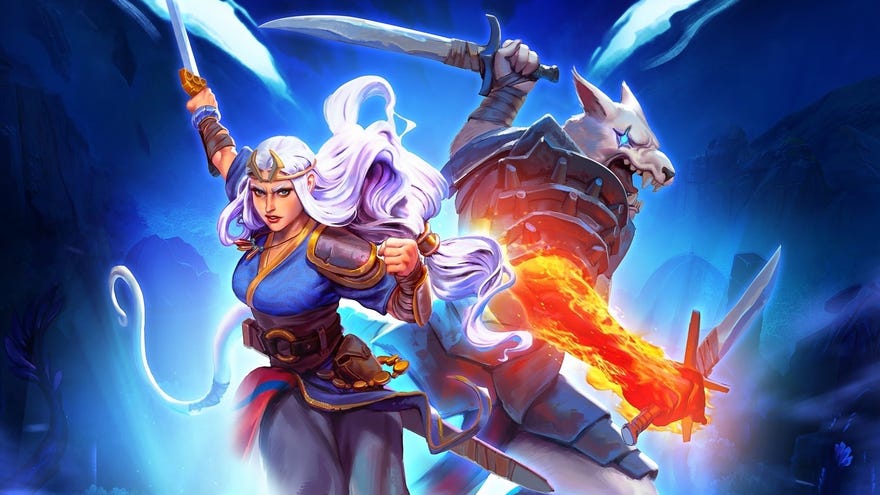
That’s a real shame, in my opinion. Because Roguebook is great. I know this, because in the three days I have spent with it, I have not touchedHearthstoneonce. I have had neither the desire, nor the compulsion which usually subs in for it, to even get so far as opening the launcher. And when a card game gets me to the extent where I’ll tear that IV drop of poisoned ambrosia from my veins, I know it’s the real deal.
Roguebook - Launch TrailerWatch on YouTube
Roguebook - Launch Trailer

That big geezer on the left is Sirocco, your battletoad. I think he’s some kind of amphibian, anyway.
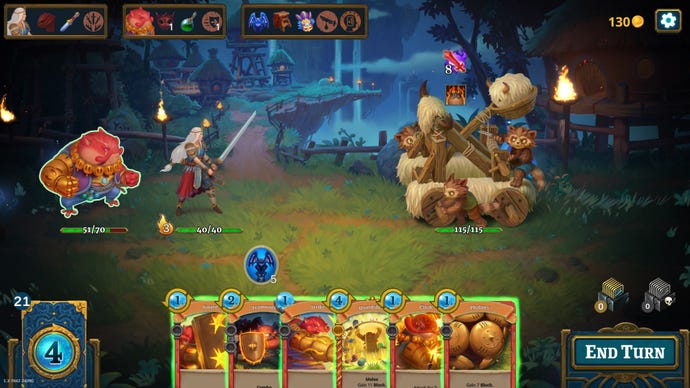
It’s beautiful to look at, too. And while that might seem irrelevant in a subgenre of products that feel more like drugs than games - as if you’d rate disco biscuits according to how uncannily Donald Duck had been printed on each tabs - I’m surprised how much it mattered. Games like Roguebook, after all, are games you play over and over again. And if you’ve ever been stuck in a lift, you’ll know how important small details become, once you reach a certain level of familiarity.
The point at which Slay The Spire tipped over my mental break-even point from “must play again” to “don’t really feel like it” took a long time coming. But it might have been postponed, at least a little, if I hadn’t found its weird, slightly MS-Painty aesthetic so bleak and pared-down. You might feel totally differently, of course. But I suspect that for me, Roguebook’s good looks will pay dividends.
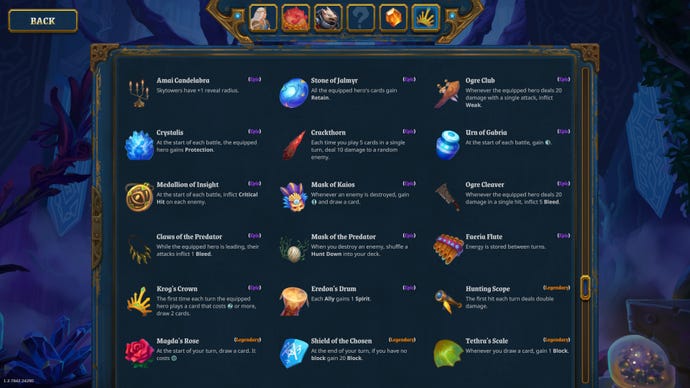
There are tons of unlockable trinkets to play with, as there should be with any good spire-‘em-up.
There are two big factors which set Roguebook out as a winner for me. The first is that, on each run, you control a duo of heroes chosen from a roster of four. Each has their own library of cards, reminiscent of the tribal system from Monster Train, but with way more emphasis on the way you blend the flavours during play. Some cards get cheaper after you play another hero’s, for example, while others offer benefits if they’re played from a hand comprising only their stablemates. There’s a little bit ofDarkest Dungeonto it, at times.
Proper success in the game comes about as a result of working out how to build synergies between the different sets (like in Magic, innit), and doing so requires a surprising amount of lateral thought. It helps that the four characters on offer aren’t entirely shoehorned into archetypes, either. While they’ve definitely got defined roles - your tortoise lady does healing and card draw, your big frog bloke is a tank with loads of area-of-effect abilities - they’ve each got a wide array of more subtle specialties, whose full power you only realise once you experiment with them.
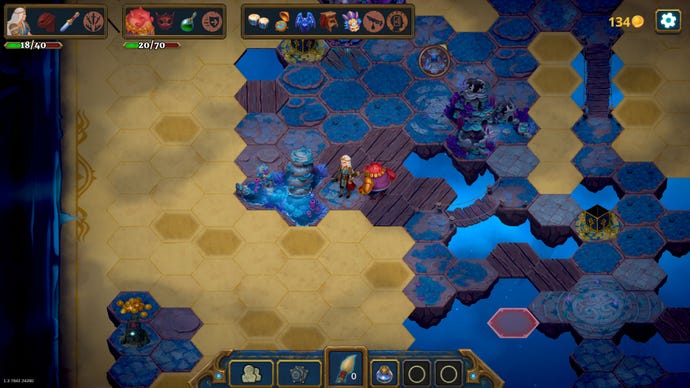
As in most roguelikes, the more fights you can have before reaching a boss, and the more loot you can find, the higher your chances of progression. Roguebook is fair to you in this regard: every single chapter map, no matter how it generates, will hold everything you need to sail through its final boss with ease. The trick is in getting it all uncovered.
So, as uncomplicated a verdict as it might be, I urge you to get stuck in. Obviously, this is a much younger game than Slay The Spire, so don’t expect anything like as many hours out of it at this point. But if it gets the pickup it deserves, as well as some less fraught DLC later down the line, I’m really excited to see what it will become.
