HomeFeaturesValorant
Riot’s first-person shooter Valorant aims to take Counter-Strike’s crownWith a handful of Overwatch abilities
With a handful of Overwatch abilities
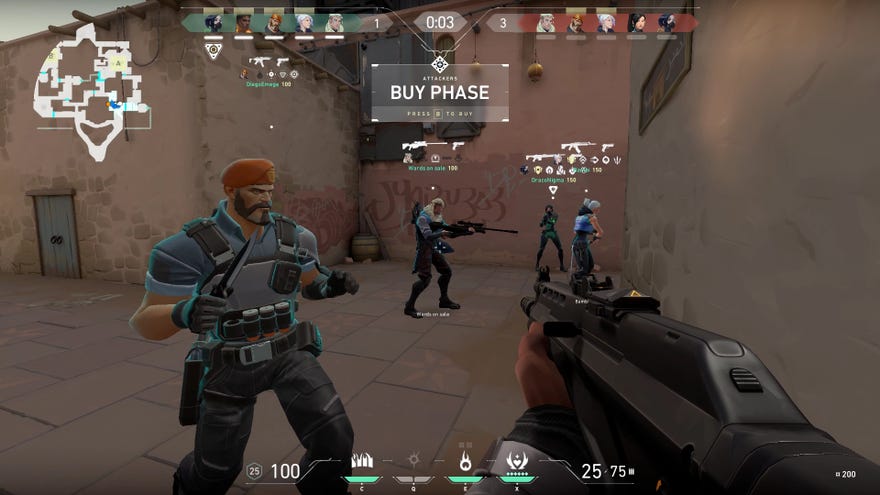
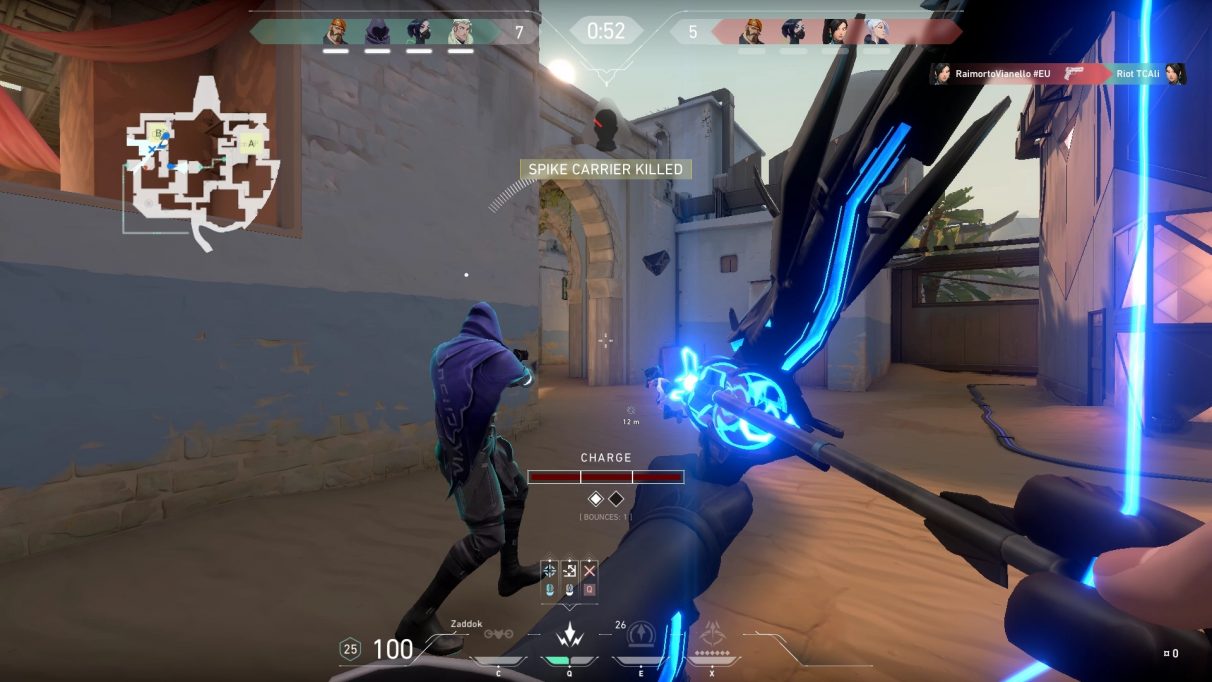
I skulk through a bottleneck boulevard before pausing to launch my newly-charged sonar arrow at a wall. Its my signature ability, and reveals the locations of all enemies within a small radius. As the timer winds down, I decide it’s time for a last-ditch effort to plant the spike. I launch myself around the corner and ru-
Bang! I don’t see where it comes from, but one shot from the Vandal, aka AK-47, and I’m reacquainted with the dirt for the third round on the trot. I hear a cacophony of tuts from my disappointed teammates who knew exactly where the assailant was. This all feels vaguely familiar.
Some ofValorant’s familiarity is less vague. Omen, its roguish, hooded misanthrope, resembles one specific edgelord from another hero shooter, Overwatch’s Reaper. His Ultimate ability, “From The Shadows,” even shares its name with one of his voice lines.
“Making Agents in a game like this was difficult,,” Valorant senior game designer Trevor Romleski tells me via email. “Exhaustive playtesting and aligning as a team was critical for us to find the right way to execute on characters in a tactical shooter. We had plenty of hilarious moments along the way where we tried an ability that sounded great in theory, but turned out to totally not work for our game.”
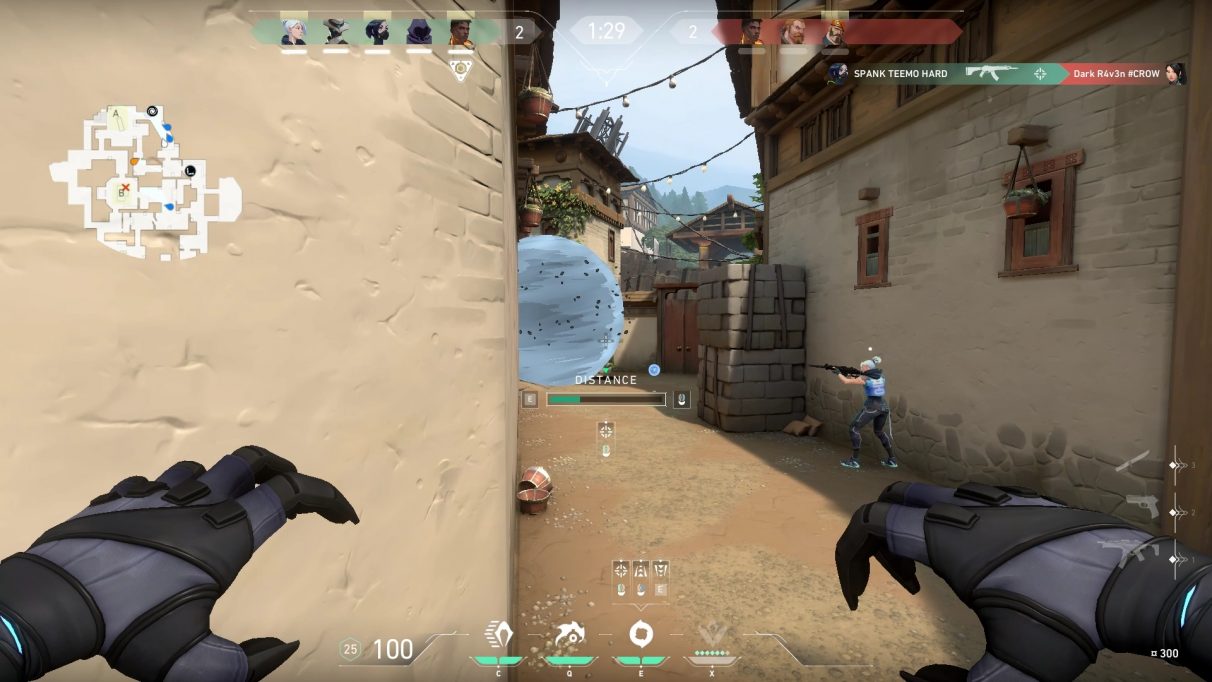
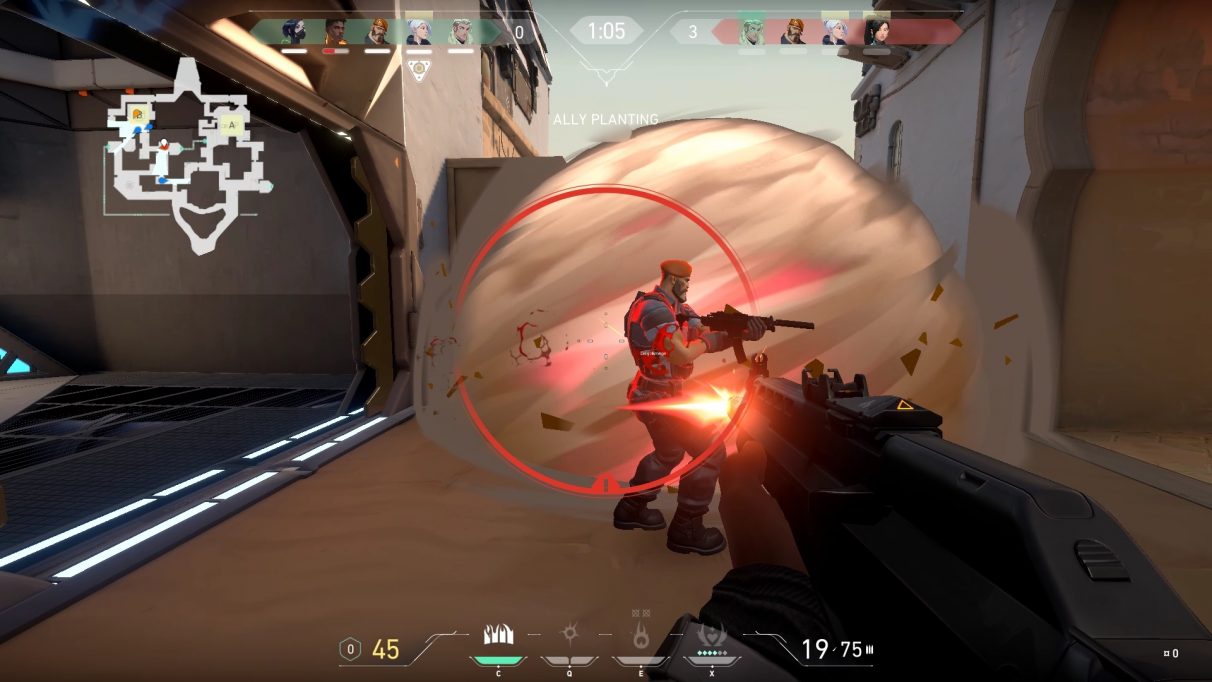
Valorant matches are 5v5, and you can only have one of each hero on your team. Although I played for all of last weekend, I couldn’t for the life of me recognize a need to have a mix of the different character types (Duelists, Controllers, Initiators, and Defenders). However, I did notice that most of the good players were either Phoenix or Brimstone mains. (Brimstone is your typical “I used to be an army man but now I’m not anymore but I still wear the beret tho” guy.) At the moment it seems the meta is based on individual heroes’ capabilities, as opposed to focusing on team compositions.
However, the more I played Valorant, the more I started to doubt whether it even needed character abilities in the first place. They’re largely inconsequential compared to the guns, in that aside from a few completely broken ones—Omen’s Ultimate allows him to teleport behind the entire enemy team immediately after the round begins—they seem to be usable only in highly specific circumstances. They seem to have more in common with, say, a Counter-Strike smoke grenade than Overwatch’s fundamental character abilities.
Romleski says that Riot intends to run Valorant as a live service, meaning that overly powerful abilities without sufficient counters will be patched as necessary. It can be assumed that this will apply to less momentous signature abilities, too. But aside from some round-winners, there’s just not a huge amount of diversity in what appears to be a relatively shallow move pool. That’s not necessarily a bad thing, but it is a surprise.
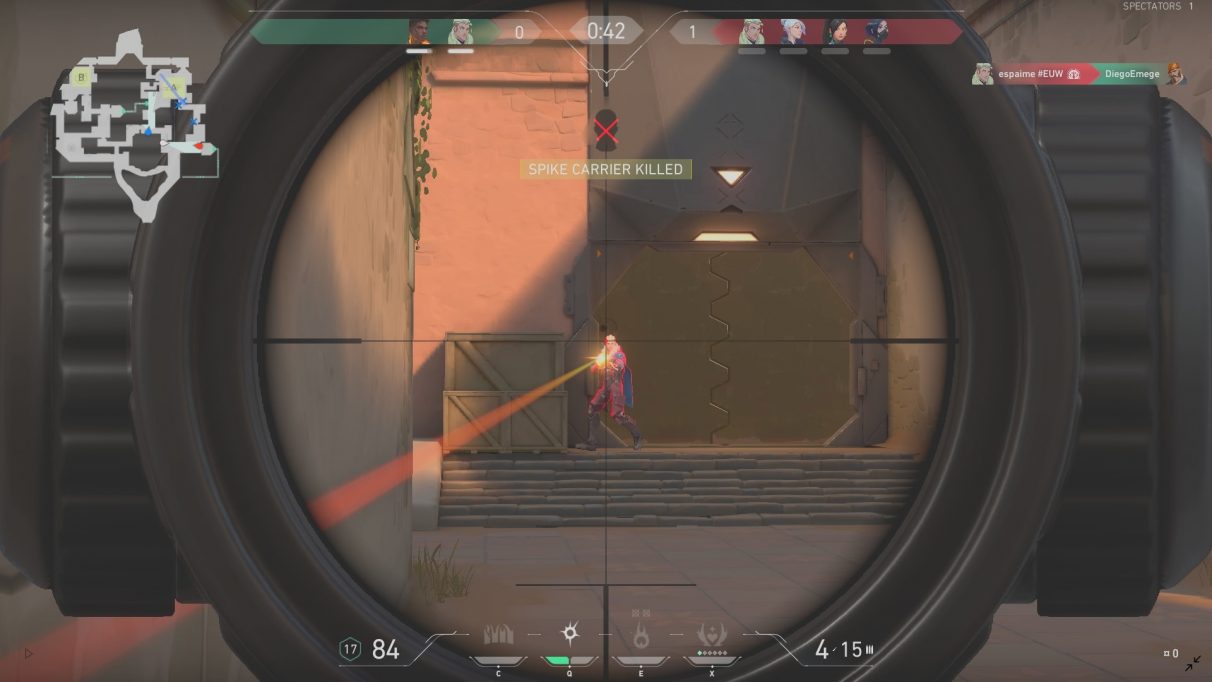
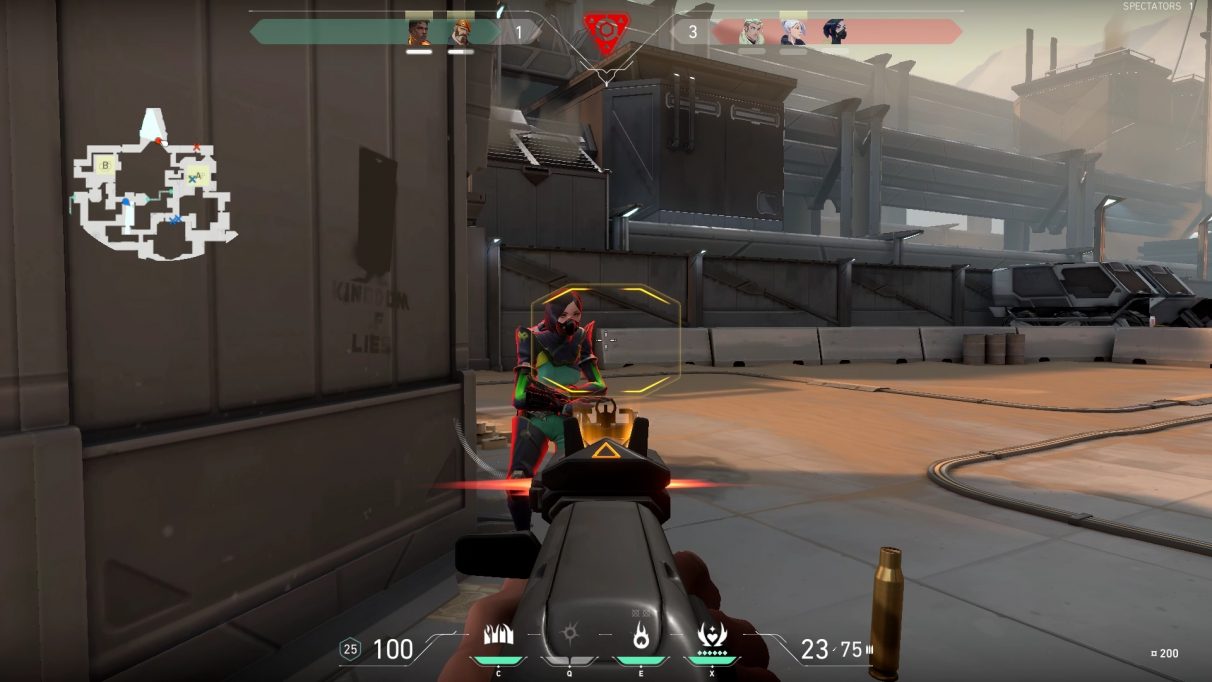
You don’t have a whole lot of vigor, either. Although you can buy shields at the beginning of each round, one or two headshots from almost any weapon will still kill you. As a result, it’s mostly about who clicks heads fastest, so abilities don’t add as much dimension to moment-to-moment play as I expected. At least not in their current state - or for someone like me, who is used to playing shooters that are emphatically ability-based, as opposed to more hardcore shooter-first variants.
“When setting out to build a tactical shooter, we wanted to address some of the common issues that plague the genre,” Romleski explains. He lists these as poor hit registration, peeker’s advantage, and a lack of updates and developer support.
“We saw the opportunity to inject abilities into the space,” he continues. “Abilities increase variability in gameplay. Our goal for abilities is that they complement the gunplay, and do not undermine it. Abilities are not the primary method for dealing damage and killing enemies in combat.”
“We spent a lot of time iterating to find the right number of rounds for Valorant,” Romleski explains. He tells me that it was important to implement “texture” over the halves, allowing for teams to swap strategies on the fly. “We chose swapping teams at the halfway point so that you have the opportunity to iterate on what you’re seeing in each round, picking up on your opponent’s behaviors and strategies to react to them,” he continues. “For those who don’t have the time to commit to playing a full match of Valorant, we’re exploring alternative modes that require less time investment and will differ from the core game mode experience.”
With only the core mode intact, however, Valorant seems like a well-designed esport that could attract viewers but alienate casual players. Romleski says that one of Riot’s goals for Valorant is competitive integrity. “While not an explicit focus, [it] can lend nicely to the making of an esports title,” he says. “In regard to designing for a pro versus casual player base, our priority is to ensure the game is great at the highest levels of competition for players who invest the most commitment to the game. Once we’re confident this is the case, we seek to cascade this experience to all other levels of play as well.”
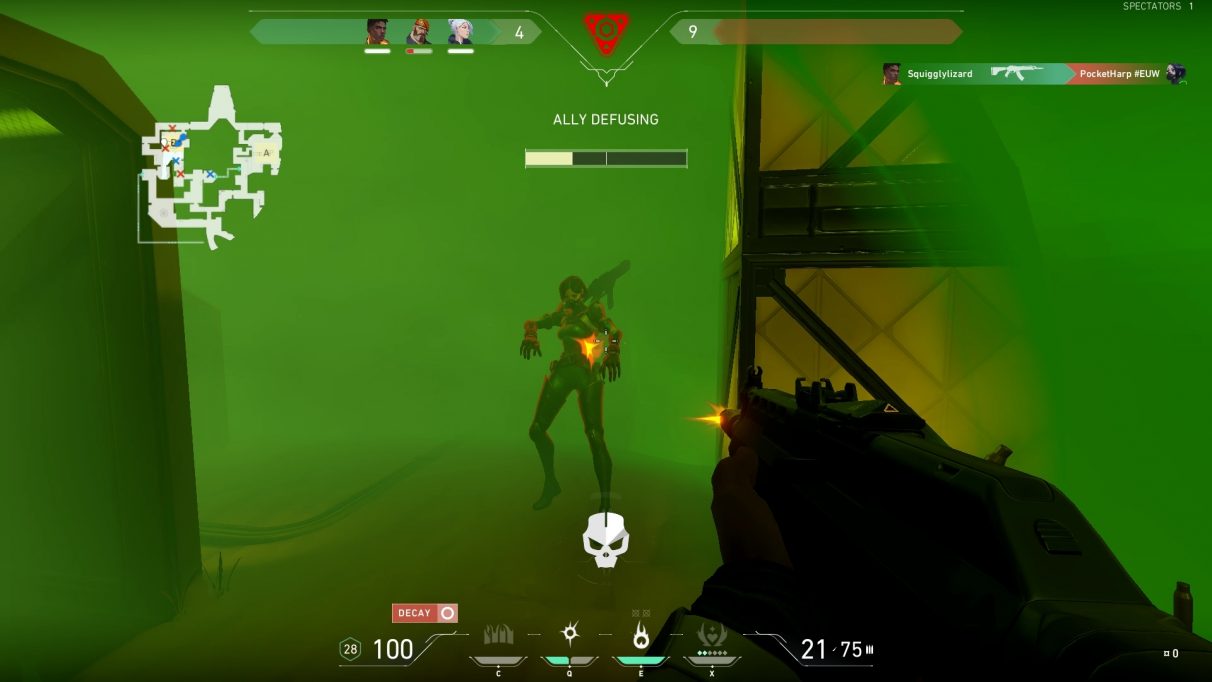
It’s important to qualify all of the above. This, after all, was a closed beta designed to show a snapshot of what’s to come. As a result, it’s unlikely Valorant proper will launch with everything I experienced intact. Additionally, my criticisms are born of having high hopes for Valorant, provided it can find its own identity outside its obvious inspirations, and Riot work on adding consequence to actions other than clicking heads.
As it stands, it is a perfectly acceptable shooter with tense gunfights and cleverly-shaped arenas, but it really does feel likeCS:GOwith an Overwatch reskin. It needs to be far more distinct, because at the moment it’s not as good at doing what either of those games specialise in, and it’s certainly not making a case for a hybrid entity drawing from both.
