HomeFeaturesRadio General
Radio General reviewFug of war
Fug of war
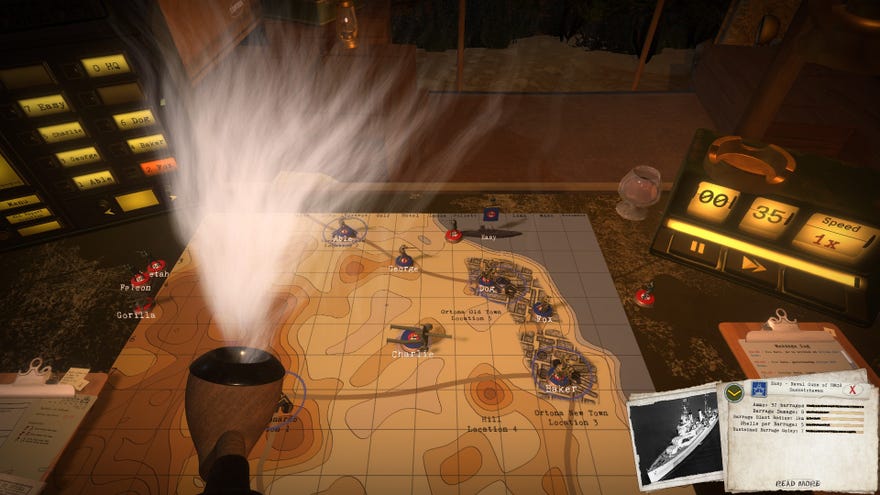
Is now the moment to commit my reserve? Should I send my infantry down the road or through the forest? Do I have sufficient resources to take both villages or should I settle for just one? Many of the questionsRadio Generalasks are as old as the Apennines. You will have encountered them countless times before. It’s novel noggin warmers like “Where on earth is Easy Company?”, “Do I have time for a quick puff on my pipe?” and “How do you tell a mother that she’ll never see her son again?” that mark out designerMichael Longas a revolutionary not a reiterator.
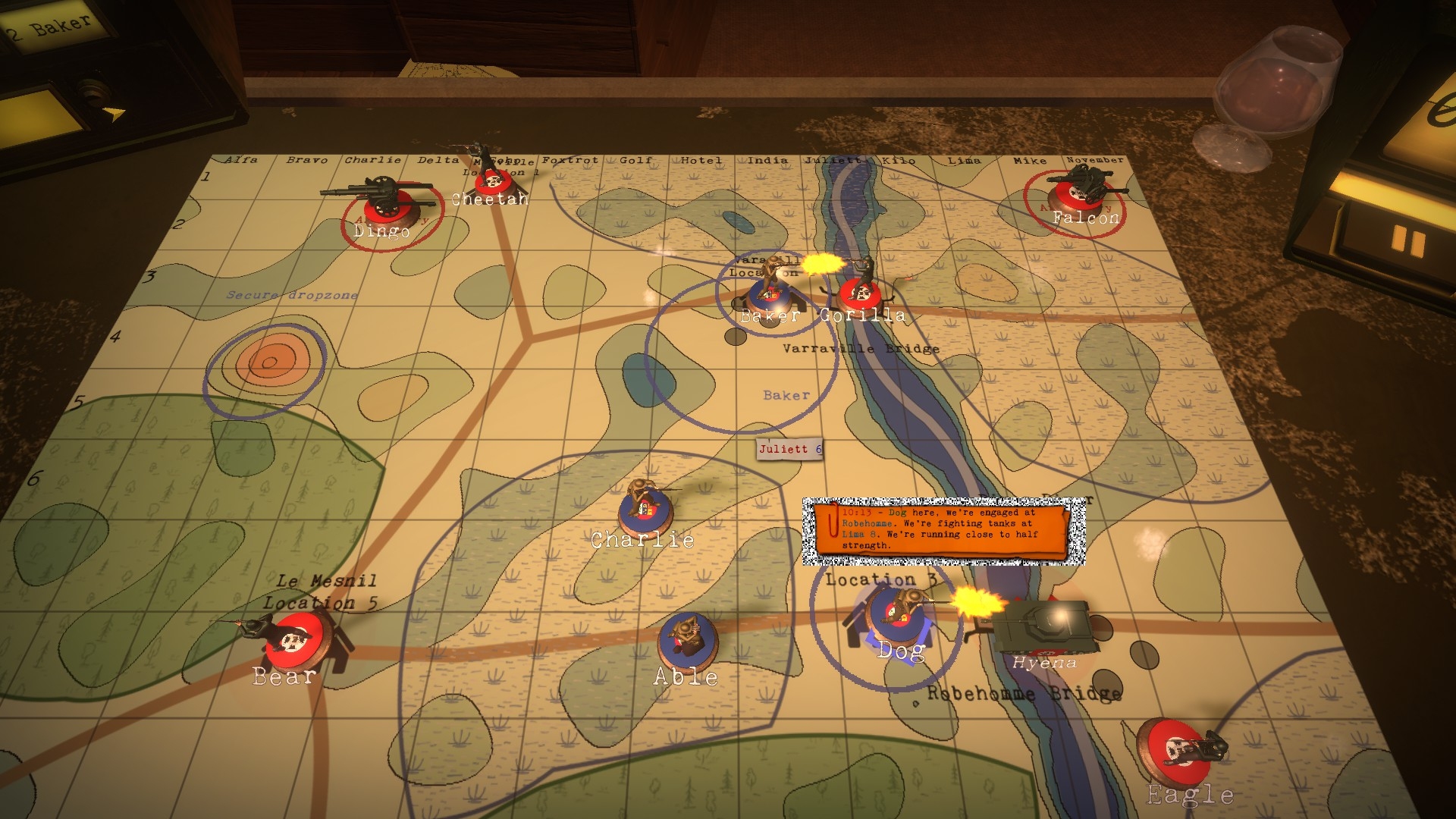
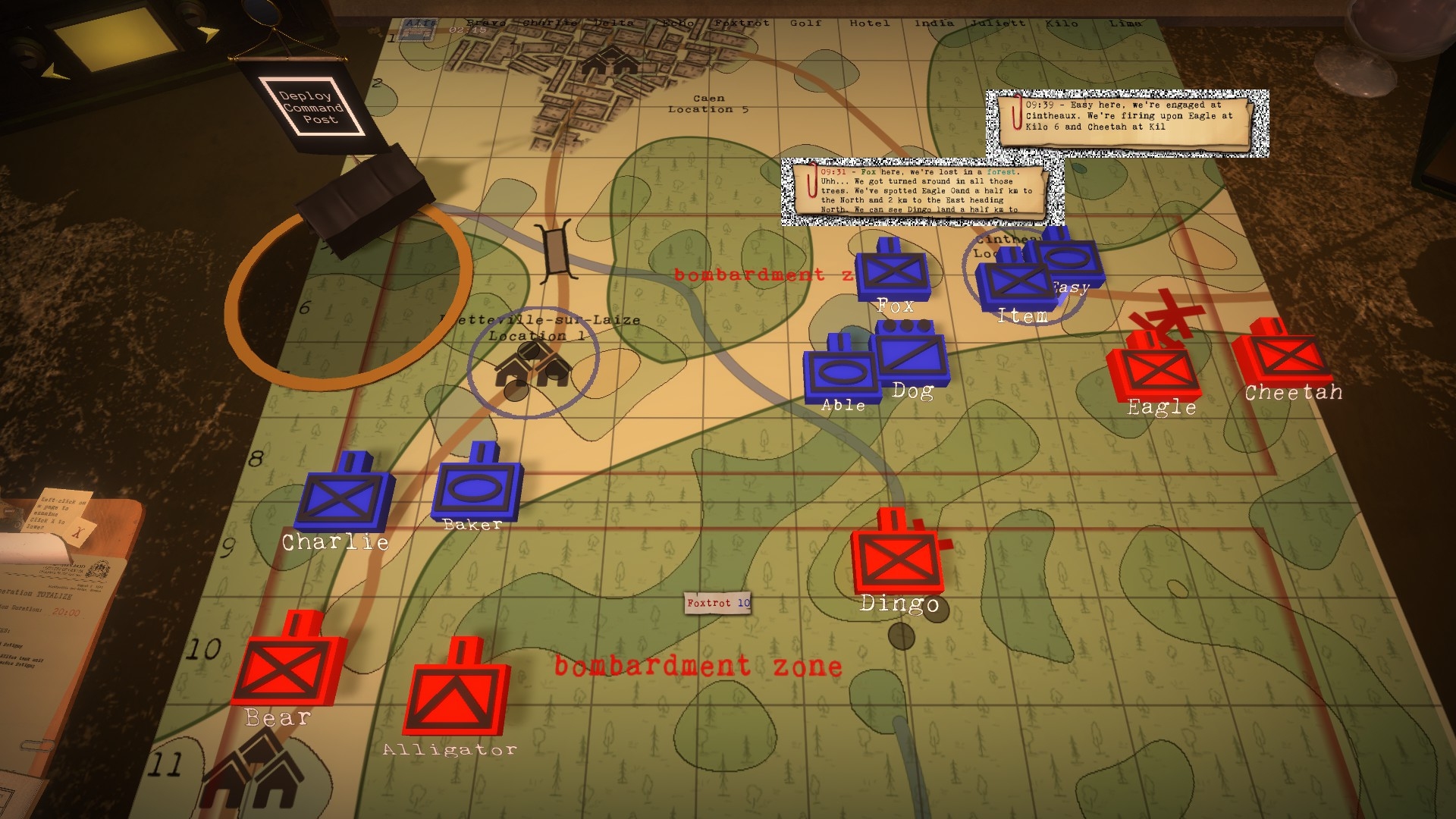
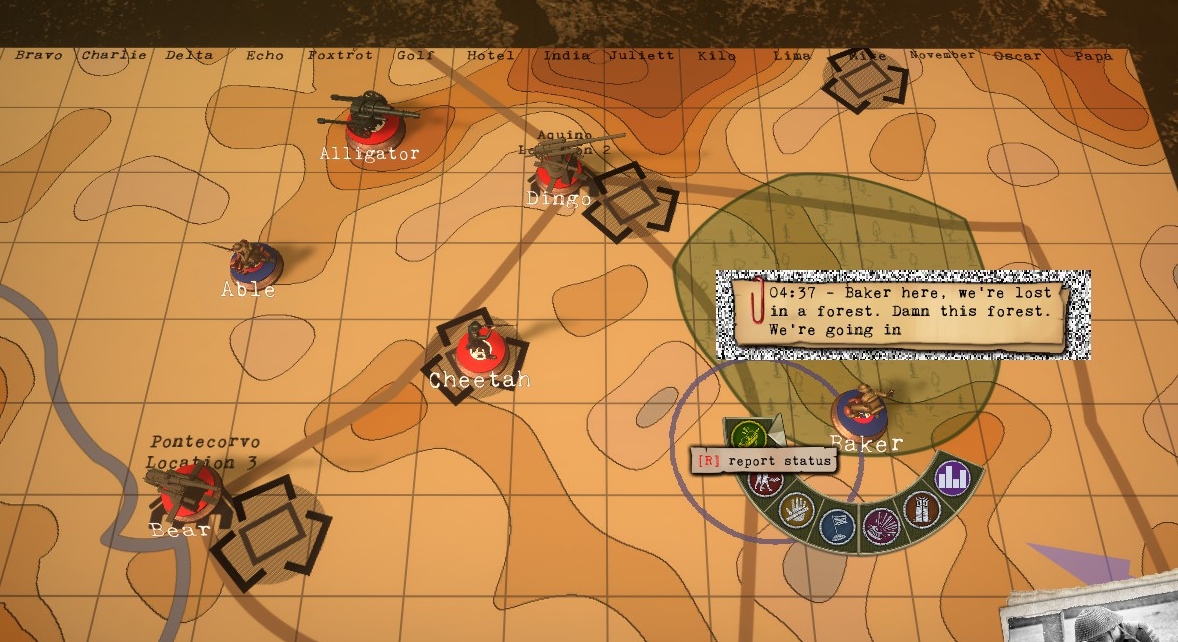

Unsurprisingly, Foolish Mortals don’t shroud the battlefield in 15-tog Fog of War only to cut helpful holes in it with health and morale bars later. The glowing box of valves in your HQ tent is not only your sole source of positional information, it’s also how you find out how bruised and disenchanted your charges are. The dearth of bald numbers (status reports tend to be couched in general terms like “Any more fighting and we’ll be completely wiped out!” and “Too much heat! Getting out of Dodge”) help maintain a pleasingly fuzzy air. Unlike the subject of the last Flare Path review, this is a wargame that’s meant to be played instinctively. Aggro accountants are tolerated but not fawned over.

While the setting isn’t quite as mould-breaking as the mechanics, Michael Long’s decision to base the thirteen-mission campaign on the WW2 experiences of his countrymen does endow RG with extra character. The Canadian sequence starts onthe bullet-swept beaches of Dieppe, and, after adventures on Sicily and the Italian mainland, moves to Normandy. Allied offensives predominate but there are also scenarios in which beachheads must be safeguarded and counterattacks blunted. Soft-edged victory conditions, persistent units with character traits, and a likeable AI add to the campaign’s appeal.

The game seems reluctant to wield its red “DEFEAT” clipboard stamp, preferring to reduce “Veterancy” awards* for poor performances than insist you repeat a battle. Given that I galloped through the campaign in about ten hours and only sipped sour vin de vanquishment once or twice, you’ll understand why I’m hoping additional difficulty customisation options arrive in patches. As things stand the only way to increase challenge is to play without aids like “combat bonuses for accurately positioned figurines” (not a significant handicap). A tougher mode that rationed order issuing, degraded radio reliability, and made resting of core forces more important, would help RG upholdThe Difficulty Compact.
- The XP that allows units to ‘level up’ gaining slightly dubious specialisms in the process
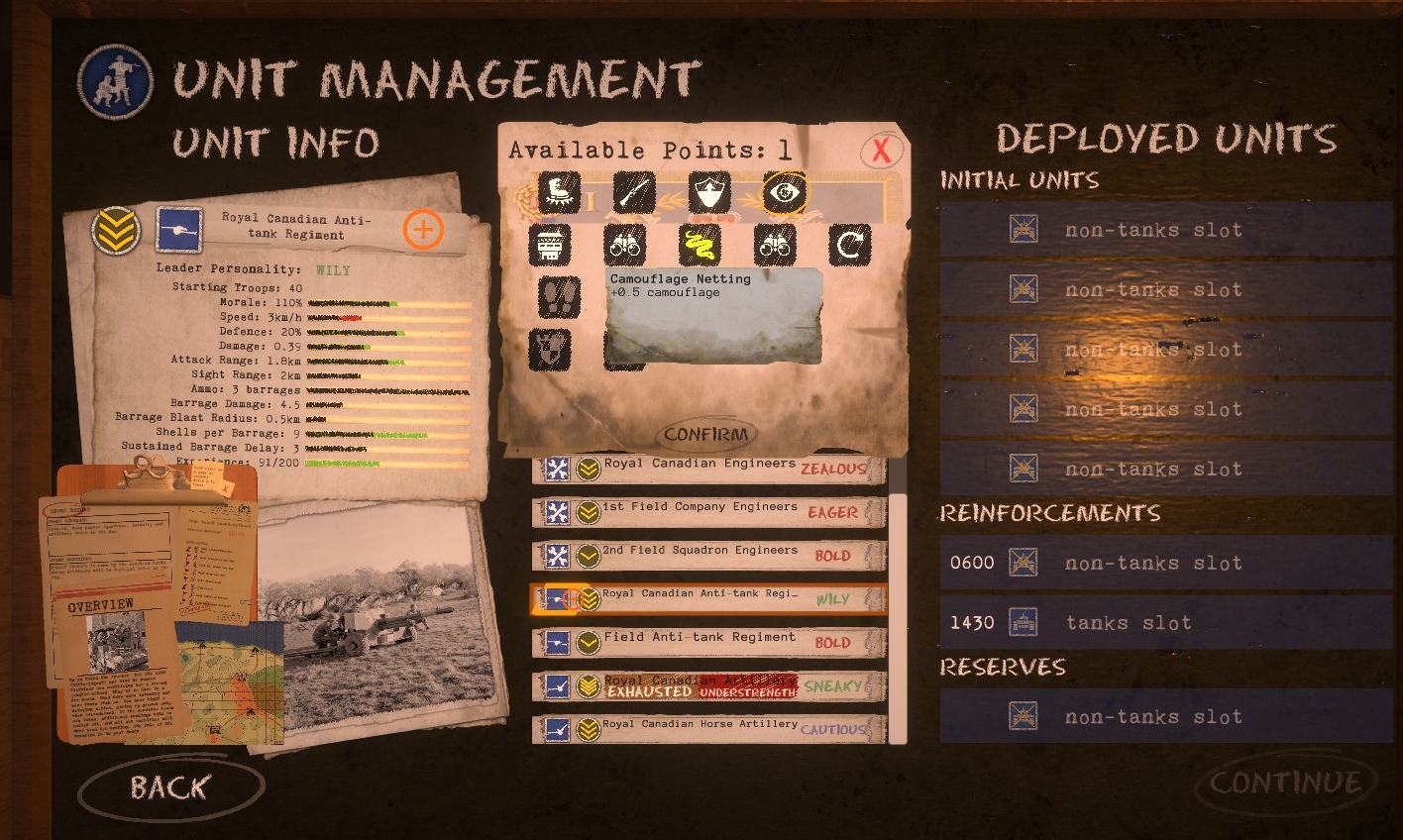
I applaud Foolish Mortals' unfashionable lack of interest in military hardware. The roughly company-sized units (tank units seem to represent squadrons) are differentiated with stat and behaviour-impacting leader traits like “BOLD”, “WILY”, and “TRIGGER-HAPPY”, experience levels, and those specialisms; weaponry is glossed over. You choose theGrenadier Guardsto tip your armoured spear rather than theFort Garry Horsenot because they’ve got the Sherman Fireflies but because they’ve got the aggressive CO.
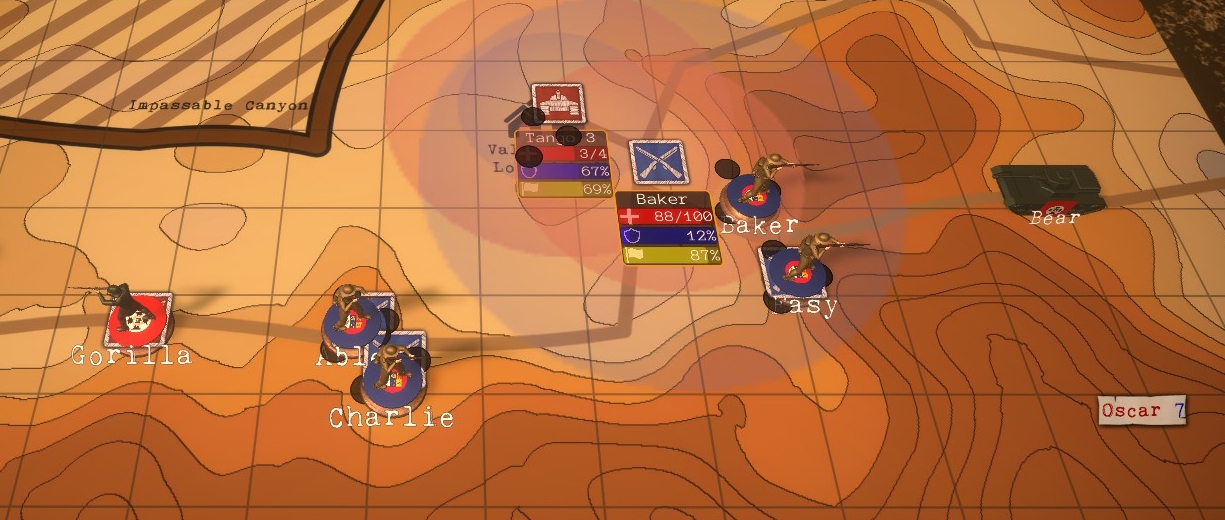
Fascinating full battle replays that show the sometimes substantial differences between assumed unit positions and actual ones, also shed light on a resourceful/rubbery artificial adversary who, finding one path to an objective disagreeable, will happily try another. Visually, the replays remind me a little ofCommand Opsplayed at high tempo – an evocation not to be sniffed at.
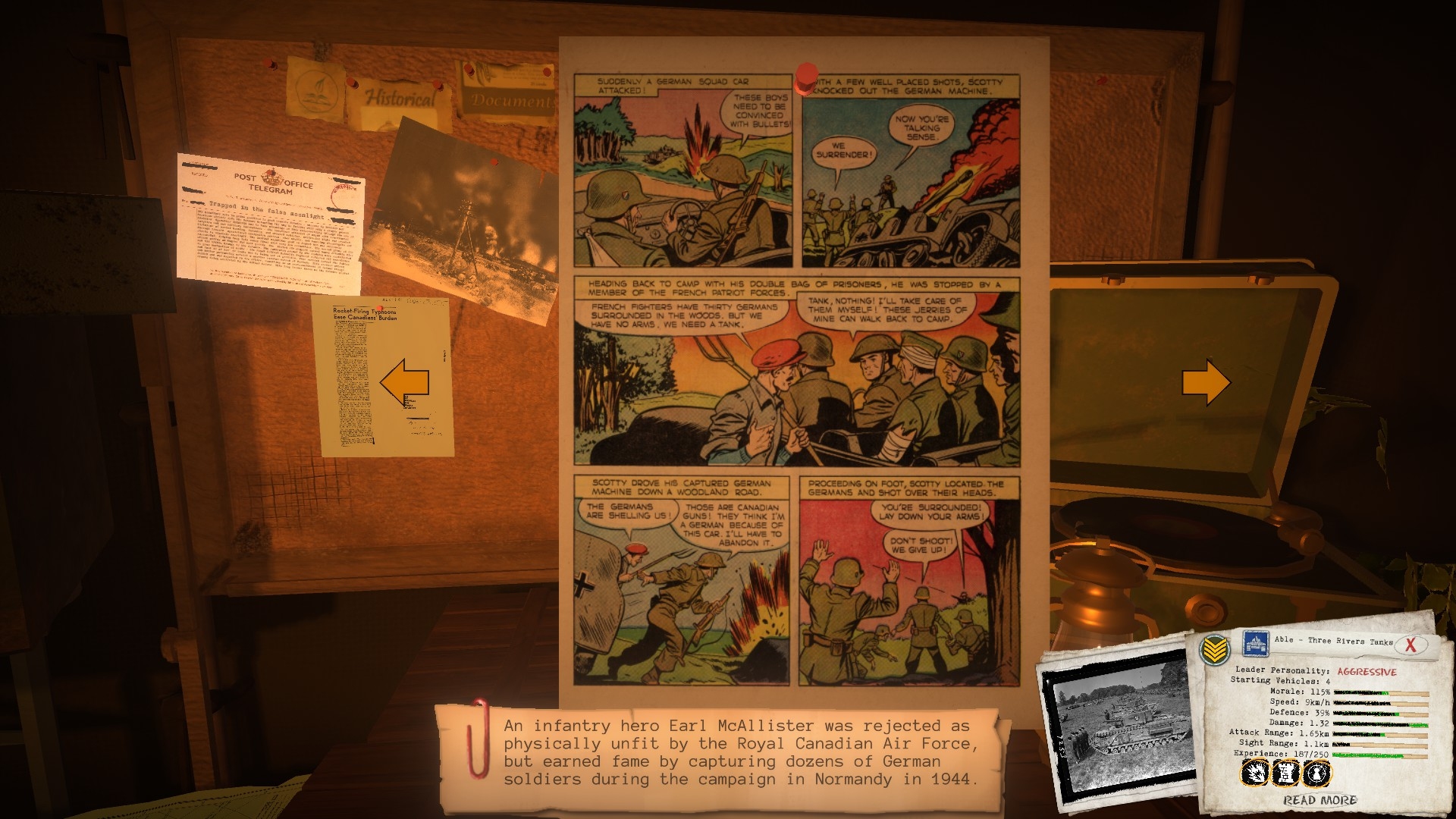
Radio Commander relied on characters and dialogue to humanise history. In RG the men you lead and the events you recreate are brought alive with help from a pinboard and a projector. Before every scrap you’re encouraged to peruse a quirky selection of period docs and photos, and a short Canadian Army newsreel. Together with complacency banishers like the one I’m about to describe, these relics do a marvellous job of offsetting the tactical stolidity that, supplied without a counterweight, can leave serious wargames feeling clinical… callous even.

It would be easy to dismiss the game’s KIA telegrams as gimmicks. However, because you are asked to type them relatively infrequently (I’m not entirely sure what prompts them. Obviously you lose troops in all engagements) and they cut to the chase so neatly, I feel they earn their place. The first time I was asked to compose one I found myself genuinely tongue-tied. How do you tell a parent that a beloved child has ceased to be? Even composing the first sentence is hard.
“I regret to inform you…”?“It is my painful duty…”?“It is with a heavy heart…”?

Some of RG’s novelties are designed to amuse rather than prompt reflection. Obscuring the map with swirled brandy or clouds of tobacco smoke serves no tactical purpose whatsoever, but you’d have to be an extremely sodden blanket to never reach for pipe or glass for that reason.

Like RC, the newcomer lets you draw directly onto maps and issue commands vocally if you prefer. At the moment the latter option unintentionally doubles as a difficulty magnifier; the voice recognition code struggled to distinguish some of my utterances so I fairly quickly reverted to keyboard shortcuts and GUI buttons.

Buy immediately and you’ll probably encounter the odd bug on your way to the Falaise Pocket. From time to time, my replays featured strange unit substitutions and incoming radio transmissions repeated unnecessarily. Minor stuff, hopefully easily fixed.
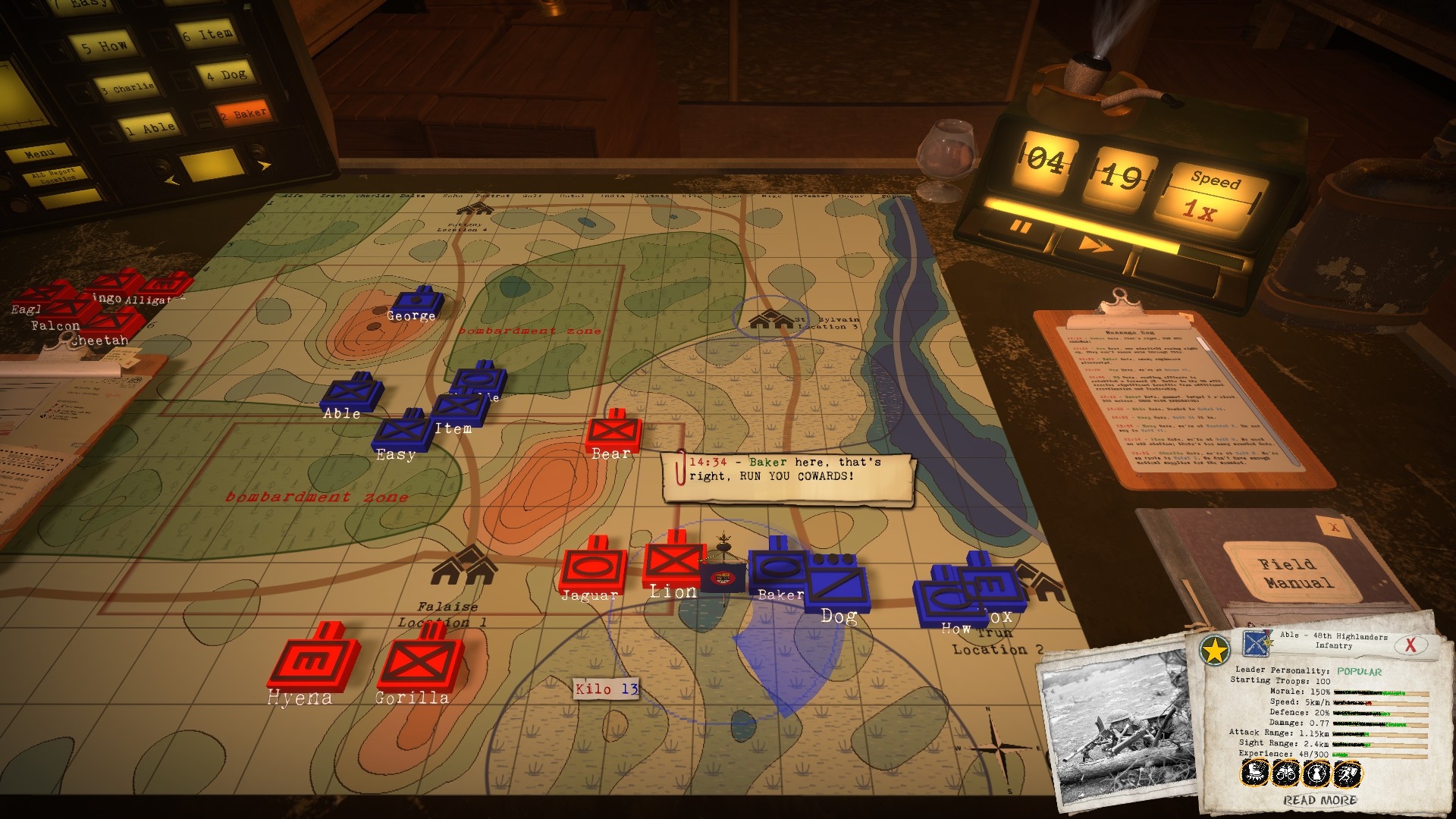
Not a bug, but, in my opinion, just as deserving of prompt attention is the game’s default pacing. At present one of the least wargamey aspects of RG is its haste. Units scamper about battlefields and suffer losses in combat, surprisingly quickly. I frequently found myself wishing there was a half-speed button. You can temporarily halt the clock to catch your breath and issue orders, but shun immersion fracturing pauses and the clicking can get pretty frenetic at times.

Watch on YouTube
Watch on YouTube

