HomeReviewsGood Company
Premature Evaluation: Good CompanyBuild a better roomba
Build a better roomba

Developer:Chasing CarrotsPublisher:The Irregular Corporation
Release:Out nowOn:WindowsFrom:SteamFor:£20, $25, €23
Good Companyis a tycoon factory builder in which you play the role of lead architect, CEO and engineer of a series of growing electronics startups. It’s vaguely set somewhere in the golden age of American innovation, back in the mid 20th century when General Electric wasn’t the slowly desiccating corporate megalith it is today, but rather was at the bleeding edge of invention, its research and development departments attracting the brightest engineers from around the world to come up with brand new ways to make toast.

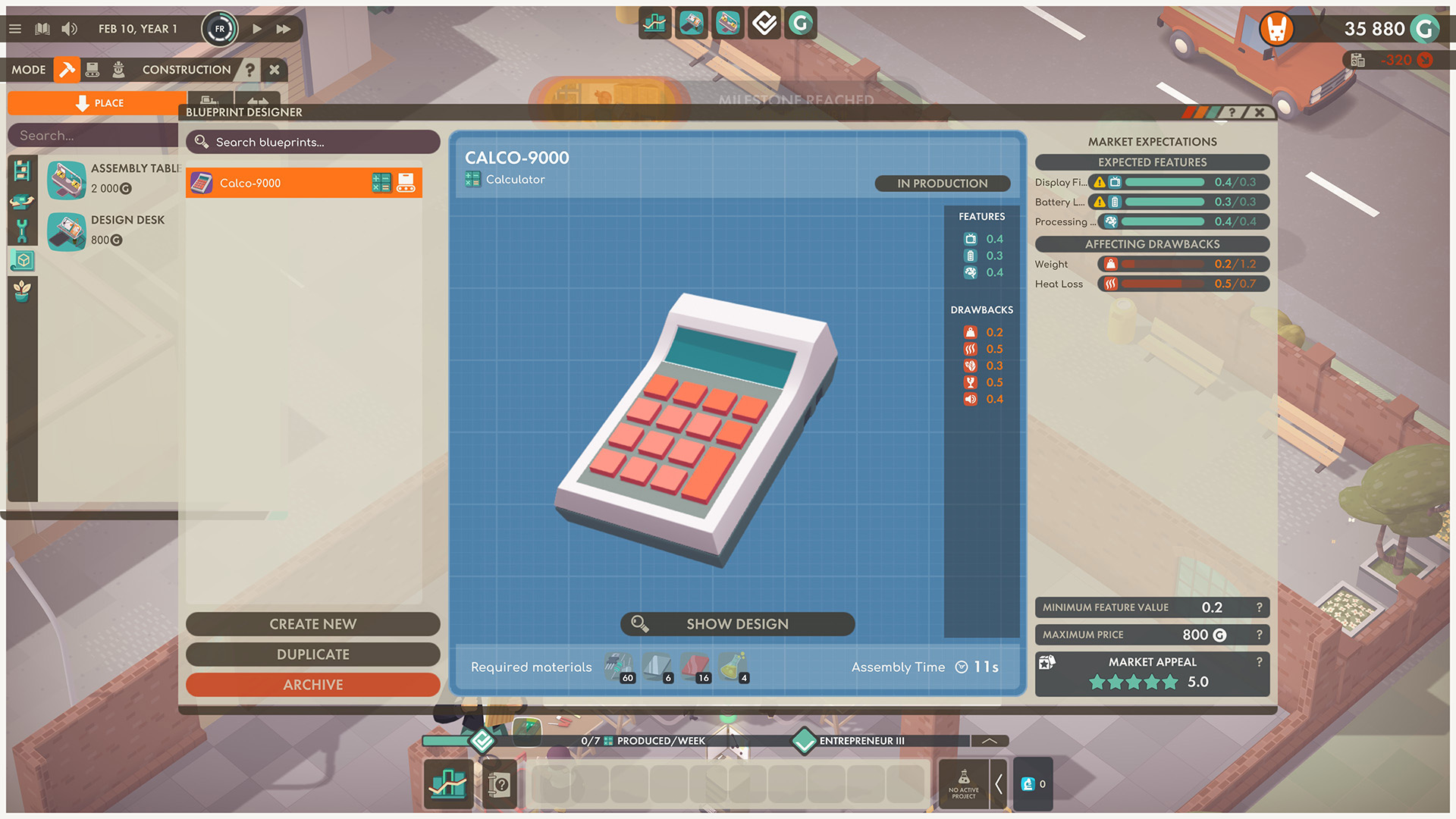

As far as I can tell there’s no fail state to speak of – or if one exists it’s pretty difficult to reach – and so trial and error can be used to get a sense of how different setups affect your factory’s efficiency. Unpicking any problems with your increasingly spaghetti-like logistics linkages isn’t so much a speed bump to progressing through the game, as it is the entire point of it. You are a Kerplunk player, swapping in desks and modules as you design new and improved versions of existing products with different requirements. Making new gadgets is a game unto itself, as you slot Tetris-shaped modules into a grid to meet the demands of today’s discerning consumers, balancing battery life, fidelity, weight and so on.
As you play you’ll realise useful side applications of your logistics tree. For example, have a workbench output to two shelves but prioritise only one of them, and the other will naturally begin to act as an overflow for those components that are being produced faster than they’re being consumed. Check the inventory levels on that shelf and you’ll see at a glance where wastage is happening, and then consider where efficiencies could be made.

Which I imagine is how Jeff Bezos does it, whizzing up and down the aisles of an Amazon warehouse on his Segway, gold coins spilling from his pockets as he turns sharply, before pausing at one rack, demanding to know why there are too many copies of Dean Koontz’s The Eye Of Darkness, and then firing everybody in his eye line.
