HomeHardwareReviews
Playdate review: a handheld indie curio that goes hand in hand with the spirit of PCCrank up the feel good
Crank up the feel good
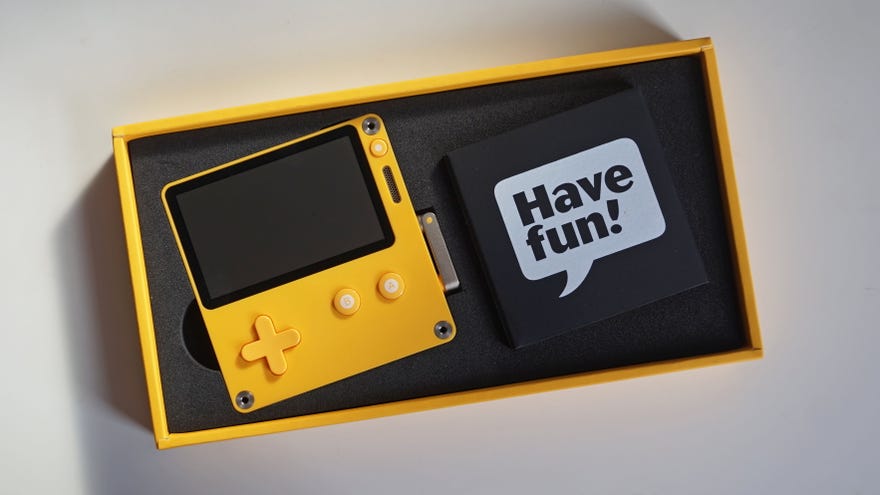
On paper, Panic’s Playdate doesn’t have a lot to do with PC. It’s a standalone handheld console that fits into the palm of your hand (yes, even palms as small as mine), and is controlled via a d-pad, two face buttons and its unique, standout feature, the crank. But inside this dinky yellow wafer, the spirit of PC gaming has never been stronger. It’s there in its eclectic first season of indie games, a series of 24 titles that not only delight in the minutiae of its hardware but are delivered weekly for free in batches of two direct to your console over Wi-Fi. It’s there in the openness of the Playdate ecosystem, too, where you can make your own Playdate games in its browser-basedPulpcreation tool, download the source code, share it with friends (or sell it) and sideload it onto your Playdate all in a matter of minutes. Heck, Panic have even added the ability to stream from it, capture video and screenshots from it, and hook it up to an external monitor, keyboard or controller via itsPlaydate Mirrorapp.
It’s a surprisingly versatile bit of kit, the Playdate, and one I feel will enchant and enthral anyone who has a deep and inherent love of all things games. Sure, there’s every possibility it may end up as another Ouya-style disaster show, but if you’ve ever longed for something like Lexaloffle’sPico-8platform to be more than just a ‘fantasy console’, then the Playdate is exactly what you’ve been waiting for.
Say Hello to Playdate!!Watch on YouTube
Say Hello to Playdate!!

Before we dig into the nitty gritty of the hardware itself, there is just a distinct thrill of having new gamesappearin your library. My review unit had a slightly accelerated version of its Season One roll-out, with those 24 games arriving over the course of 12 days rather than weeks, but seeing that flashing purple light on its lock button and little note on the homescreen everyday never got old. It doesn’t stop there, either. You get to unwrap each one individually in the main menu with a joyous flourish of confetti and ribbon tearing that makes each new arrival feel special and exciting. It starts from when you first turn on your Playdate, too, so anyone still waiting for their pre-order to arrive won’t miss out on all the fun - an important consideration when those buying one now won’t be getting theirs until sometime in 2023.
Playdate’s first season of games will arrive in batches of two every week as long as it’s connected to Wi-Fi. Unwrapping them in the menu isjoyous.
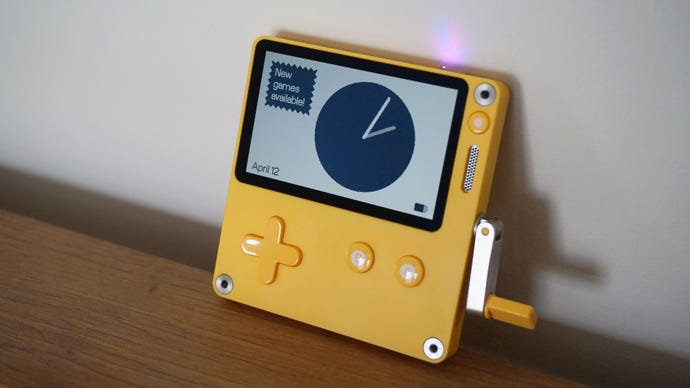
Playdate Specs:
I must admit, when the Playdate’sfirst round of previewsstarted appearing in the middle of last year, I was a little worried. There were concerns over its cheap-feeling, plasticky build quality, its long-term comfort, and whether its 1-bit display’s lack of backlight would prove unusable in low lighting conditions. I never saw or held those early preview units, but after tinkering with a final consumer version of the Playdate for the past couple of weeks, many of those early fears have been allayed. Admittedly, no backlight does still feel a bit antiquated in this day and age. It’s been so long since I’ve had to tilt the screen to get the best angle on a device that it cast me back to the days of playing my old original Game Boy as a kid - albeit without the accompanying magnifier and twirly, attachable light that plugged into its link cable port.
Luckily, the Playdate’s display has the kind of contrast and deep, pin-sharp blacks that the Game Boy could only dream about, making it much easier on the eyes in everyday use. The screen is also super reflective, meaning it really catches the light regardless of whether you’re playing it in bright sunshine or cosied up under your duvet next to a bedside table lamp. Yes, this isn’t a console for playing in the dead of night or (as was often the case when playing my old Game Boy) while you’re driving through tunnels in the backseat of the car, but if you can get over those limitations, then the Playdate really is a stunning thing to behold.
The metal crank feels reassuringly sturdy, but it can always be docked for safe-keeping so it lies flush against the rest of the console.
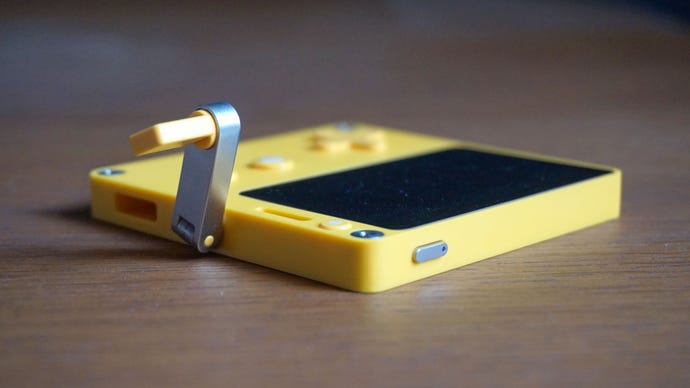
Yes, the Playdate’s hard edges aren’t necessarily built for hours and hours of play, but then neither are most of its games. For the most part, the Playdate was comfortable to hold for the 30-odd minute sessions I tended to play for, but I also have smaller hands than most. Indeed, there were moments when even I found myself adjusting my grip or rearranging my fingers slightly so they weren’t pressing quite so hard against its corners. As such, folks with bigger hands may have some problems here. Instead of harking back to the days of the Game Boy, you may end up with flashbacks to the dreaded PSP Monster Hunter claw instead.
Obviously, bringing another control scheme into the mix does mean you lose that joyous little crank motion somewhat. Twirling an analog stick on a controller just doesn’t offer quite the same level of precision or fine motor control as the Playdate’s native crank, for example, and in the version of Mirror I was using for review there wasn’t an option to assign the crank function to anything on my keyboard either (not even my mouse wheel), rendering many of the games unplayable with that particular input. I should note that Mirror is still in development at the moment, so this kind of functionality may well exist further down the line. And, of course, you can still just use the default Playdate controls if you prefer, even when it’s plugged into your PC.
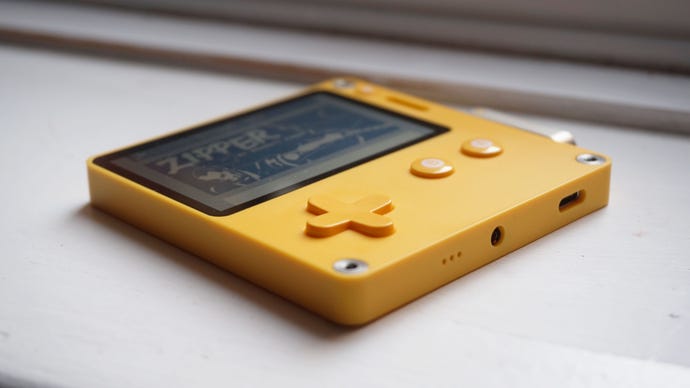
The quality and volume of Playdate’s built-in mono speaker is excellent, but it’s always good to see a headphone jack in case you’re in the company of others. Its bottom USB-C port is also where you charge the Playdate, and connect it to your PC.
To demonstrate this, press were provided with the PDX file for a game called Bloom, a real-time life sim in the vein ofAnimal Crossingthat’s all about growing plants on an apartment rooftop. The whole process, from downloading the source file to getting it on my Playdate, took maybe about five minutes, internet speeds notwithstanding, and once there it appeared under a separate ‘My Games’ tab to what’s included in Season One. Easy peasy. All that’s really missing is some kind of central, Itch-like repository where people can browse, download and buy these non-Season One games, because current methods such as wading through itsdev forumorchancing across things on Twittercannot be the way forward.
As I mentioned earlier, though, even if the Playdate’s wider indie scene doesn’t end up materialising, the first season of games alone offers a strong argument for the price of admission - and I say this as someone who’s currently only had around half of those 24 games actually delivered to her Playdate. I was a bit late turning on my review unit, you see (whoops), so I’ve only seen and played 14 of them rather than the whole set. I have, however, played those 14 games in the same order they’ll arrive on your own Playdate, and at least half of them are games I want to return to and play more of.

Under normal circumstances, that’s just under two months' worth of interesting curios to dig into, which, when you really get down and think about it, is arguably a much higher hit-rate than your average new console launch. Heck, I don’t think there are even eight PS5 games to even buy right now (and I mean proper exclusive PS5 games, not upgraded PS4 ones) although maybe that’s an unfair comparison. Instead, perhaps a better way to think about it is like an upfront, ultra indie version of Game Pass, only you get to keep these games forever and add new ones to the mix whenever you like.
So, if you enjoy the thrill of seeing what comes down the digital pipes and are willing to approach said games with an open mind, then the Playdate is an easy (if mildly indulgent) no brainer. Both the hardware and its surrounding ecosystem seem sound and well-supported, and I’m confident the foundations are there to hopefully support this strange yellow square well into the future. It will be a shame if it flops, but even if it does, what a mad, lovable little experiment it’s been all the same. I for one am now a full-on crank convert, and I will eat my hat if its impact doesn’t eventually ripple out into other spheres of game development. It’s the closest a handheld has come to capturing the same kind of magic that comes so effortlessly to Nintendo consoles, and the fact it works so beautifully with PC is just an added bonus. There’s still a bit of work to be done, to be sure, but if you love indie games and what they stand for, I think you’ll find a lot to love in Panic’s Playdate.
