HomeHardwareFeatures
Nvidia GeForce RTX 3080 Ti reviewNvidia’s new flagship RTX card is a big disappointment
Nvidia’s new flagship RTX card is a big disappointment
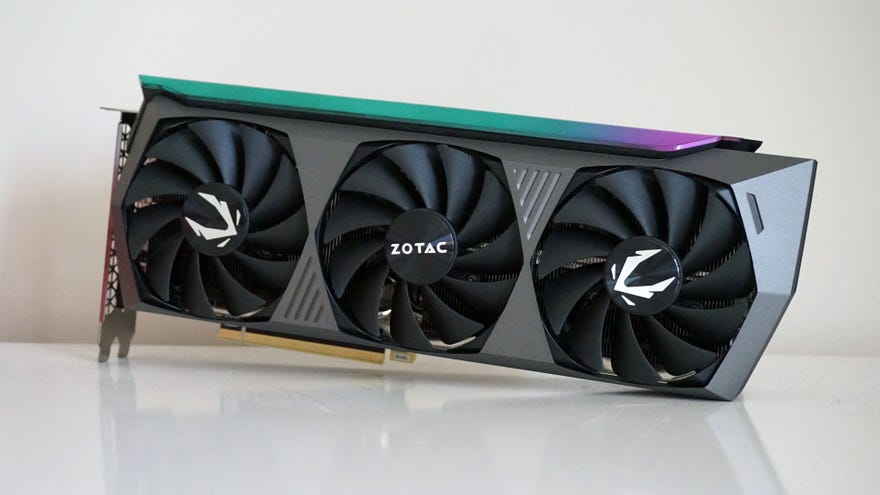
It’s been almost nine months since Nvidia kicked off theirRTX 30 serieswith theRTX 3080, and longer still since anyone has actually been able to buy a graphics card at its normal price. Indeed, as the great graphics card shortage of 2020 rumbles on, the solution doesn’t seem to be simply making more of what’s already available out in the wild, but introducing newer, more expensive ones to stretch that GPU pool even further. Indeed, despite the RTX 3080 being plenty powerful enough for 60fps 4K gaming on max settings in pretty much every game going (and well into the 100s at 1440p and below), Nvidia now have a new flagship RTX card in town, theRTX 3080 Ti.
On paper, it’s received a sizable spec bump. Instead of 10GB of GDDR6X memory, the RTX 3080 Ti now has 12GB of the stuff. It also has substantially more CUDA cores than before, putting it closer to Nvidia’s more creator-focusedRTX 3090than its non-Ti sibling. With a GPU power of 350W, it’s a little more power hungry than the regular RTX 3080, but Nvidia still recommend having the same 750W power supply as the rest of their high-end RTX 30 family. Unfortunately, all that’s going to cost you another £400 / $400 on top of the original RTX 3080, as Nvidia have given it an eye-watering starting price of £1049 / $1199.
GeForce RTX 3080 Ti | The New Gaming FlagshipWatch on YouTube
GeForce RTX 3080 Ti | The New Gaming Flagship

Nvidia RTX 3080 Ti benchmarks
My card also ran incredibly loudly under load, too, even when the actual card temperature wasn’t that hot. I have a feeling this issue isn’t exclusive to Zotac’s AMP Holo edition, though, as our friends atDigital Foundry reported similar findingswith Nvidia’s Founders Edition of the RTX 3080 Ti as well, putting yet another black mark against it compared to its considerably quieter vanilla RTX 3080 sibling.
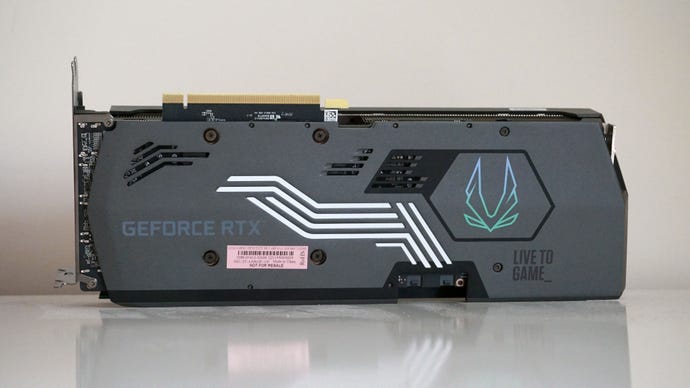
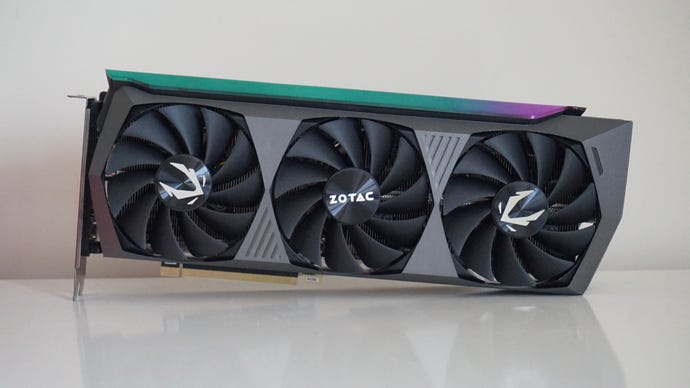
Zotac’s AMP Holo edition is also very long - if I hadn’t already removed the HDD cages from the far side of my case, I definitely would have been forced to do so to fit this in.
I’m also aware that my testing components aren’t as ‘premium’, perhaps, as the graphics card in question. I use anIntel Core i5-10600Kto give an accurate representation of what an ordinary, mid-range gaming PC might be able to achieve with these cards, but I do also test these cards with faster processors as well - and on both the RTX 3080 and RTX 3080 Ti, very little changed at 4K when I swapped out my trusty Core i5-10600K for a faster Core i9 (as is, perhaps, more befitting for a graphics card of this calibre). After all, you’re still GPU-bound at 4K, and I’ve tested enough CPUs to know it makes surprisingly little difference to your overall frame rate when playing at higher resolutions.
Fundamentally, though, even if there are marginally faster versions of the RTX 3080 Ti out there, I’m still not convinced it would be worth all that extra cash over the regular RTX 3080. Indeed, as before, the RTX 3080 Ti is more than capable of playing most games at 60fps on max settings at 4K, with a couple of the same exceptions where you’ll have to drop down to High settings to keep that 60fps frame rate. Those exceptions include a lot of the big games from last year, including Assassin’s Creed Valhalla andCyberpunk 2077, meaning it offers little in the way of additional future-proofing against future blockbuster games, as well as perennial favourite, Total War: Three Kingdoms, so it’s not like older demanding games are suddenly going to improve loads either.
InAssassin’s Creed Valhalla, for example, I only saw an average increase of 2fps on Ultra High settings at 4K with the RTX 3080 Ti, rising from the RTX 3080’s average of 51fps in its built-in benchmark to just 53fps - which to my eyes is pretty much the same thing. Likewise, when I knocked the settings down to High, the RTX 3080 Ti only managed an average of 79fps at 4K, up from the 75fps average I got on the regular RTX 3080.
Total War: Three Kingdomswas a similar story as well. After all, when the normal RTX 3080 is capable of playing at an average of 47fps on Ultra settings at 4K, what difference is the RTX 3080 Ti’s average of 50fps actually going to make to your moment-to-moment gameplay? I wasn’t able to tell the difference between the two cards inForza Horizon 4, either, as both managed the same average of 139fps on Ultra settings at 4K. That’s a lot of games with little to no improvement.
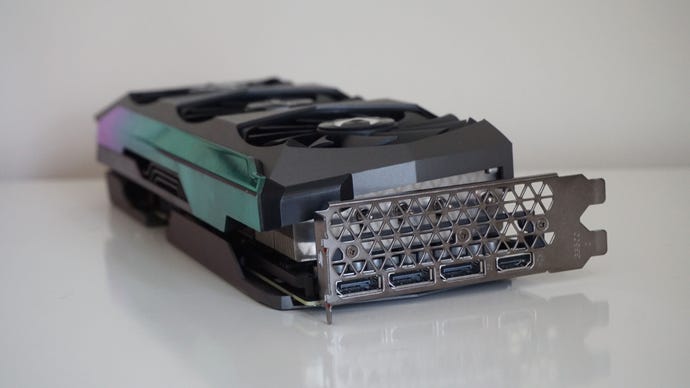
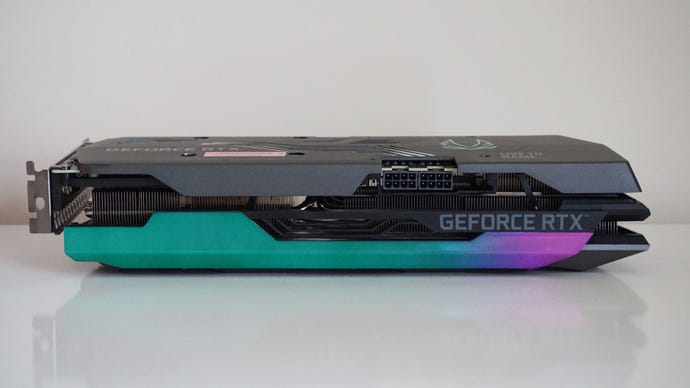
Like the RTX 3080 before it, the RTX 3080 Ti is a real chunky GPU. Thankfully, Zotac’s AMP Holo edition still only requires two 8-pin power connectors, rather than three like some RTX 3080 models.
Even in the games where the RTX 3080 Ti did pull ahead, you’re still paying an awful lot for what you’re actually getting. InShadow Of The Tomb Raider, for example, the RTX 3080’s average of 58fps on Highest with its top anti-aliasing setting switched on was already more than smooth enough for my tastes, and I’m not sure the 3080 Ti’s average of 64fps is going to feel tangibly different in practice. The same goes for its ray tracing and DLSS performance, too. With its ray traced shadows on Ultra, the RTX 3080 Ti’s average of 80fps isn’t going to look or feel any different if you’ve only got a regular 60Hz 4K monitor, and even if you do have a fancy, all-singing, all-dancing high refresh rate one, my eyes simply aren’t sensitive enough to tell one from the other at these kinds of frame rates.
Sure, it was nice to playMonster Hunter: Worldat 4K Highest without dipping below 60fps on the RTX 3080 Ti - it averaged 65fps running around the dense undergrowth of its Ancient Forest map, mimicking the kinds of speeds I saw on the RTX 3090 - but I’m not gonna lie. I also didn’t feel like the regular RTX 3080’s average of 58fps needed a huge amount of improvement.
The same goes forMetro Exodusas well. In the game’s regular edition, the RTX 3080 was already capable of producing an excellent average of 68fps in its tough, demanding benchmark tool, as well as 61fps with Ultra ray tracing and DLSS thrown in. The RTX 3080 Ti pushed this a bit further to an average of 74fps and 66fps with ray tracing and DLSS (again, edging closer to what you’ll get on the RTX 3090), but let’s get real. That’s not worth paying at least another £400 / $400 for.
Admittedly, it’s not like RTX 3080 prices are anywhere near normal at the moment, either, and if you end up finding one for the same price as the RTX 3080 Ti, then sure, it probably goes without saying that you should go for the Ti. The real test will come when pre-built RTX 3080 Ti desktop PCs start getting priced up, because when an RTX 3080 PC will currently set you backat least £2000at some UK retailers, you may feel that spending another couple of hundred quid to get one with a Ti isn’t that much of an extra stretch. I’ll be keeping a close eye on these when they go on sale tomorrow.
In my gut, though, I just can’t recommend anyone spend over £1000 / $1000 on a graphics card for playing games, either now or in the future - especially if you don’t have a 4K monitor. The RTX 3080 Ti is massive overkill for anyone with a 1080p or 1440p screen, and there are plenty of cards that will still get you amazing performance for a heck of a lot less. If you’ve been thinking about upgrading recently, you should look out forNvidia’s RTX 3060if you’ve got a 1080p screen (or anRTX 3060 Tiif you really want to push into those high refresh rates), while those after maxed out 1440p performance should consider anRTX 3070orAMD’s Radeon RX 6700 XT. With today’s games, there’s simply no need for anything more powerful right now - especially not when Nvidia’s performance-boosting DLSS tech can often turn even an RTX 3060 into a viable 4K powerhouse in supported games.
And if you do own a 4K monitor and find your current graphics card is struggling to maintain a steady frame rate (and you aren’t satisfied with simply knocking down the resolution to 1440p), then I also feel like there are better, more appropriate cards you should be on the lookout for instead, such as the vanilla RTX 3080 for playing games at their native resolution (or indeed one of the RTX 30 cards mentioned above if it supports DLSS). Although, with prices as they are right now, you should just do yourself a favour and just turn the resolution down. It might take another six months before the great graphics card shortage resolves itself, but honestly, just think about whether you really need to upgrade right now. It’s easy to get swept up in the excitement of shiny new things, but if none of the current or futureray tracing gamestake your fancy, you’re almost certainly going to be better off sticking with what you’ve got for the time being. When prices return to normal (and assuming there hasn’t been another entire generation of graphics cards announced in the interim), the vanilla RTX 3080 will be the much better buy for 4K gamers in the long run.
