HomeHardwareFeatures
Nvidia GeForce RTX 3070 reviewWe put Zotac’s GeForce RTX 3070 Twin Edge to the test
We put Zotac’s GeForce RTX 3070 Twin Edge to the test
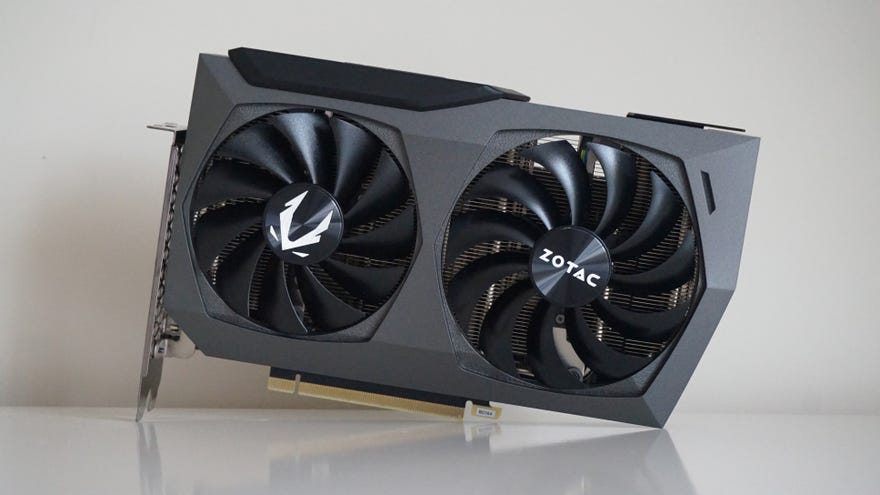
If you’d told me back in 2018 that I’d be able to get the same amount of graphics performance as Nvidia’s $1100 / $1200RTX 2080 Tiin a card that cost less than half of that in just two years time, I’d have straight up laughed in your face. Impossible, I would have said. It cannot be done. Yet here we are with the £469 / $499 RTX 3070, the thirdNvidia AmpereGPU to have been released so far that’s effectively an RTX 2080 Ti in all but name, and the soon-to-be rival of AMD’s just announcedBig NaviGPU, the RX 6800.
It’s an eyebrow raising feat, to be sure, and I bet there are a fair few RTX 2080 Ti owners out there who are biting their knuckles in remorse right now as a result. It’s also probably the most compelling upgrade option out of all Nvidia’s RTX 30 cards released so far, too. Its 1080p and 1440p performance are well into the 80s and 90fps zone on max settings in today’s big blockbuster games, and it’s also perfectly equipped for Medium to High gaming at 4K and ultrawide, too. Unless you’re adamant about playing at Ultra 4K with theRTX 3080, the RTX 3070 offers more than enough power for everything else. The only question remaining is whether it’s a better buy than AMD’s Radeon RX 6800, which is also meant to offer faster than RTX 2080 Ti speeds for a similar price.
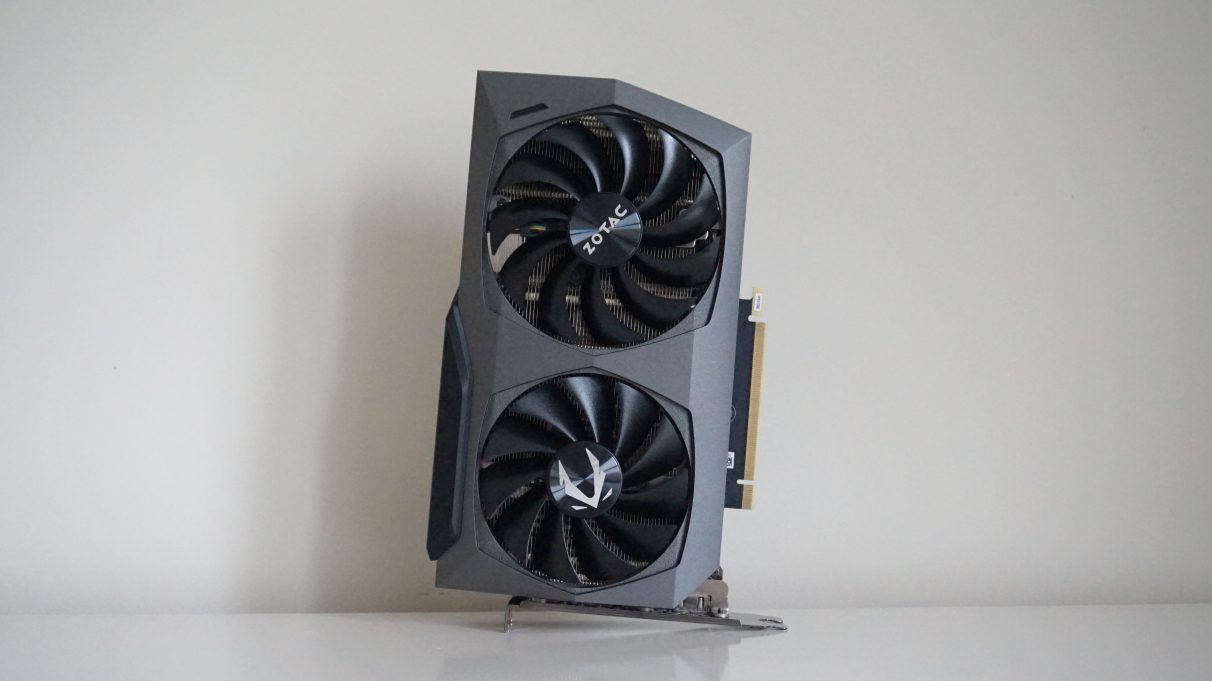
To test the RTX 3070, I’ve been sentZotac’s GeForce RTX 3070 Twin EdgeGPU, a£530card (US pricing TBC) card that goes for a little more than the £469 price of the Nvidia Founders Edition but it one of the cheaper third party models currently available for it. As its name suggests, this is a dual-fan graphics card so it should actually fit in the vast majority of cases without issue - which is something I cannot say is true of all RTX 3080 and RTX 3090 cards.
Zotac GeForce RTX 3070 Twin Edge review in a nutshell
The good…Sets a new benchmark for 1440p speeds in its price range with 80fps+ on max settings4K 60fps performance on High quality settings in all of today’s big blockbustersMore or less doubles the performance of the GTX 1070
The good…
The bad…Not much of an upgrade from the RTX 2070 Super at 1440pThird party cards are quite a bit more expensive than the Nvidia Founders Edition
The bad…
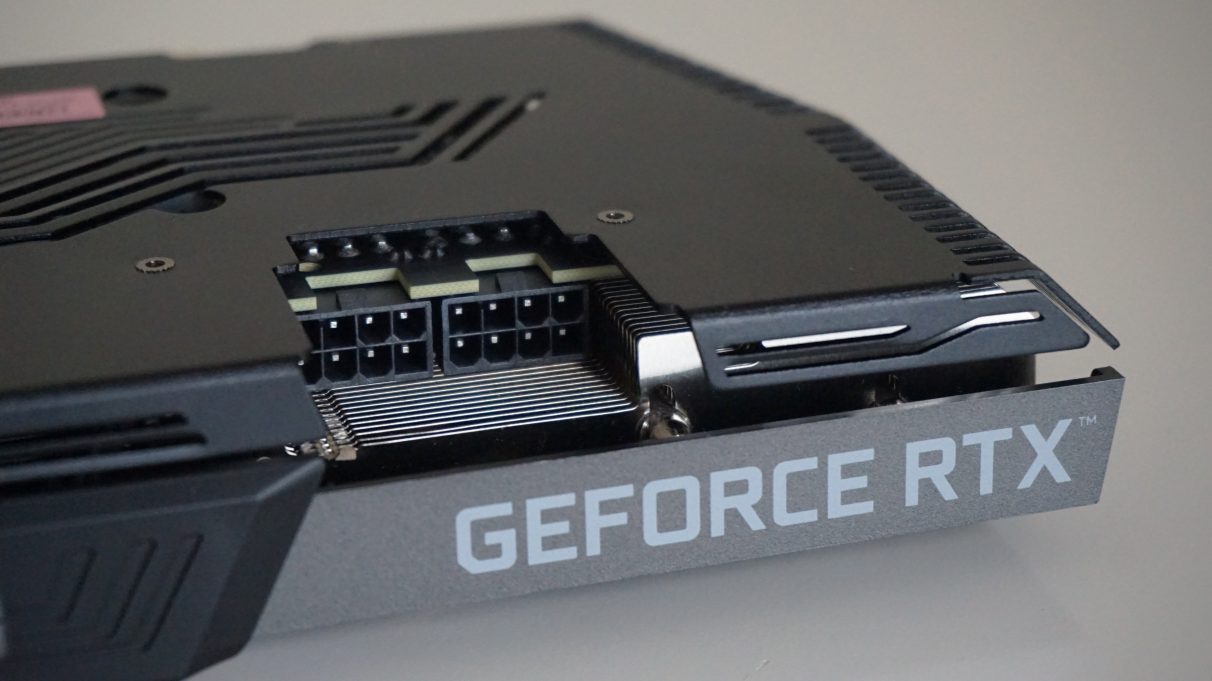
It also has a lower PSU requirement than the rest of its RTX 30 siblings - just 650W, rather than 750W. Combine that with the fact it only needs two 8-pin power connectors rather than three, and this particular RTX 3070 should be dead easy as a slot-in, no-fuss upgrade. Yes, the slightly recessed location of said power connectors can be a little fiddly to connect up when you first install it, but it’s definitely a lot easier than having to potentially buy and / or fit a whole new power supply like I did for theRTX 3080andRTX 3090because I didn’t have the necessary number of power cables.
Unlike some models of Nvidia’s RTX 3080 and RTX 3090, Zotac’s RTX 3070 only requires two 8-pin power connectors, although their recessed design does make them a bit fiddly to connect initially.
You’re not missing out on any fancy double-sided fan design, either, as even Nvidia’s Founders Edition of the RTX 3070 only has fans on one side this time - unlike its more powerful RTX 30 siblings. Instead, Nvidia have opted for a large vent on the RTX 3070 Founders Edition, and while the Zotac has vents in a couple of locations, they’re much smaller and more discrete than Nvidia’s RTX 3070 FE model. Alas, I wasn’t sent an FE card to test to see how their heat and noise levels compare to other third party cards, but Zotac’s Twin Edge still runs relatively quietly regardless, albeit not quite as whisper-like as the Asus and MSI RTX 3080 cards I’ve tested.
Zotac GeForce RTX 3070 Twin Edge 4K benchmarks
Still, as a showcase for what’s possible at the cheaper end of the RTX 3070 pool, the Zotac Twin Edge certainly puts in a very impressive performance across all resolutions. Starting at 4K, the RTX 3070 offers pretty much identical performance here to the RTX 2080 Ti before it.
The RTX 3080 makes its presence felt a bit more in games such asMonster Hunter: Worldand Total War: Three Kingdoms, admittedly, but you’re still only looking at a difference of a single Quality setting in most cases, if that. In Monster Hunter, for instance, the RTX 3070 managed a steady average of 45fps on Highest at 4K, which once again goes toe-to-toe with the RTX 2080 Ti and offers big gains over both the RTX 2070 Super’s 31fps average and the literally unplayable speeds on the GTX 1070. The RTX 3080 bumps this up to a smoother 59fps, but when the RTX 3070 can also produce a very smooth 65fps when you enable DLSS, the RTX 3080’s gains become nil and void.
Zotac’s GeForce RTX 3070 Twin Edge has several small vents on the back of the graphics card, but they’re nowhere near as large as the one found on the Nvidia Founders Edition.

It was a similar picture in Shadow Of The Tomb Raider. Here, the RTX 3070 managed an average of 62fps on Highest at 4K with its regular SMAA anti-aliasing option available (which is exactly the same as my RTX 2080 Ti result), as well as a very agreeable 52fps average with Ultra ray tracing and DLSS switched on. The RTX 2070 Super, meanwhile, is still scrabbling around the 34fps mark with these settings, and the GTX 1070 isn’t even in the same ballpark once you take ray tracing out of the equation.
Final Fantasy XVwasn’t playable at 4K on the GTX 1070, either, but here the RTX 3070 can sail through it with a very smooth average of 54fps on Highest with all of the extra Nvidia effects turned off, which is much better than the choppy average of 40fps you’ll get with the RTX 2070 Super. Things get a bit hairy when you start adding in TurfEffects and Hairworks, all told, but whack on DLSS and you’ll be back up to frame rates in the high 50s in no time - which once again isn’t actually that far off from the low 60s speeds you’ll get with the RTX 3080 at the same settings.
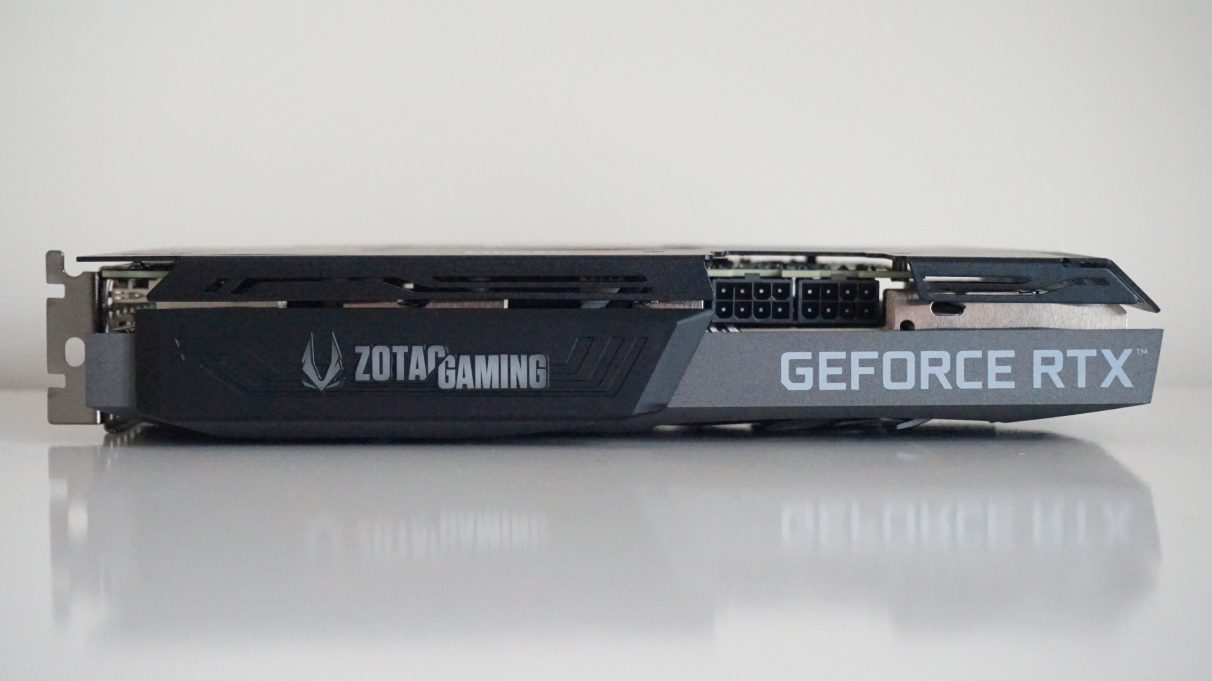
Unlike the RTX 3080 and RTX 3090, the RTX 3070 is (thankfully) a much more sensible size, weight and width, making it easier to fit in a wider variety of cases.
Zotac GeForce RTX 3070 Twin Edge 1440p benchmarks
Really, though, the RTX 3070’s biggest strengths lie at 2560x1440. With its 80-90fps speeds on max settings, it sets a new benchmark for flawless 1440p gaming in this particular price range, making it an ideal companion for the increasing number of high refresh rate monitors available at this resolution. Indeed, thanks to those already high frame rate numbers, the difference between the RTX 3070 and RTX 3080 is much less pronounced here than it was at 4K - unless of course you’re the kind of person who can legitimately tell the difference between 73fps and 80fps, in which case your eyes are clearly superior to mine.
But that’s the kind of difference we’re talking about here, as those were the respective scores I recorded for both cards when I re-ran Assassin’s Creed Odyssey’s internal benchmark on Ultra High at 1440p. The RTX 3070 came in with the former, while the RTX 3080 added another whole 7fps to proceedings. There was a similar gap on Very High, too, with the RTX 3080 coming in just 6fps in front of its RTX 3070 sibling, finishing with 91fps vs 85fps.
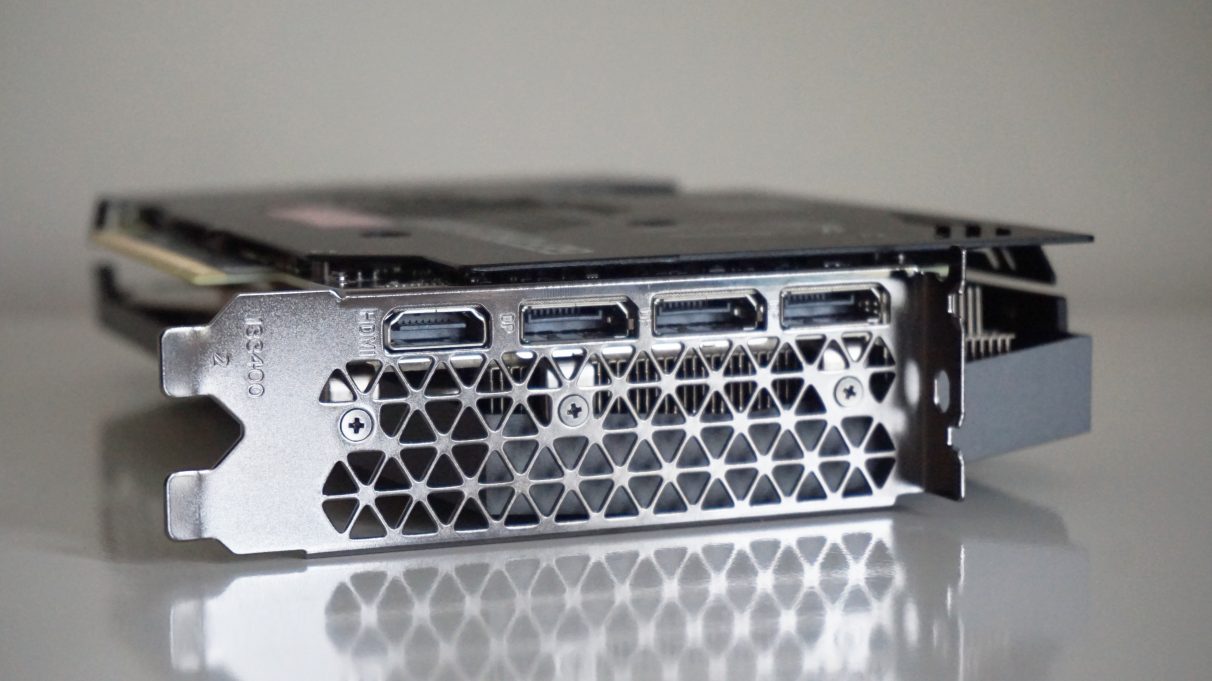
Zotac’s GeForce RTX 3070 Twin Edge comes with three DisplayPort 1.4a outputs and one HDMI 2.1 output.
Admittedly, the jump between the RTX 3070 and the RTX 2070 Super is also going to be smaller at this resolution, as the latter was already a highly capable card for 1440p gaming, hitting at least 60fps+ on max settings in all of the games mentioned above. If you’re coming from a GTX 1070, however, which can barely muster much more than 30-40fps on max settings at 1440p in those same games, the difference is palpable - and once again, offers a tangible upgrade for anyone looking to get more out of their 1440p monitor.
I’ll be doing a separate comparison article comparing the GTX 1070, RTX 2070 Super and RTX 3070’s respective 1440p scores very soon, but the numbers speak for themselves, really. Whereas the best benchmark result I have for the GTX 1070 never reaches beyond 45fps on max settings at 1440p, the RTX 3070 pretty much doubles that figure and then some.
For instance, it managed a very agreeable 83fps average in Monster Hunter: World on Highest, as well as 61fps with all of Final Fantasy XV’s extra bells and whistles enabled on Highest (not to mention an average of 92fps with them all turned off). The RTX 3070 also made mincemeat of Total War: Three Kingdoms on Ultra, averaging 71fps overall, and I barely felt the need to switch on DLSS when I tested it with Metro Exodus, too, as it averaged 81fps on Ultra without Ultra ray tracing switched on and 57fps with. The same goes for Shadow Of The Tomb Raider, where it averaged 83fps on Highest and 51fps with Ultra ray tracing through in.
Even older games such as The Witcher III still give the GTX 1070 trouble on Ultra at 1440p, averaging just 43fps according to my testing, but the RTX 3070 can finally do Geralt justice with a super smooth average of 102fps. 102fps! That should be more than enough for the game’s eventual ray tracing update, too, and indeed any other retrospective ray tracing updates we might see as developers look to stuff the holes in the Xbox Series X and PS5’s rather sparse launch line-up.
Should I buy an RTX 3070?
Needless to say, the RTX 3070 is also very well equipped for superb 1080p performance, too, offering at least 100fps on max settings in nearly every game in my benchmarking suite. However, there will no doubt be cheaper graphics cards on the way that are almost, if not just as nippy at this resolution as the RTX 3070 - such as the inevitable RTX 3060, for example - so if you’re looking to get a card for high refresh rate gaming at 1920x1080, then I’d strongly recommend waiting for those lower-end GPUs before spending upwards of £500 / $500 on something like this.
RTX 3070 vs RX 6800: which is best?At first glance, AMD’s Radeon RX 6800 looks like it might be quite a bit faster than the RTX 3070 (click to enlarge the benchmark graph they unveiled last night during theirBig Navievent, but we won’t know for sure until review samples are available closer to the card’s launch on November 18th.

Still, as we’ve seen from my benchmark tests, the RTX 3070 is still a great graphics card in its own right. Prices will likely be a bit cheaper than its AMD rival (if stock levels don’t immediately disappear, of course), and its lower TDP figure of 220W vs AMD’s 250W make it slightly more energy efficient, too. You’ll probably be happy with either.
Similarly, AMD haven’t talked about any kind of competing DLSS technology, either, which may well seal the deal for a lot of would-be 1440p and 4K gamers out there who want to get the best ray tracing speeds possible. It’s possible that AMD’s implementation ofMicrosoft’s DirectX 12 Ultimatetech has something akin to DLSS built-in, but we won’t know for sure until I’m able start testing it out for myself - which will be some weeks away yet given the RX 6800 doesn’t launch until November 18th. Then again, with AMD hardware powering both of the next-gen consoles, it’s equally possible that DLSS will become an increasingly niche feature in future games (a bit like yer Nvidia HairWorks, for example) if everyone’s busy making games to comply with DirectX 12 Ultimate. We just don’t know.
In all likelihood, both the RTX 3070 and RX 6800 will be fine choices for 1440p and 4K gaming regardless of what happens with DLSS, and you’ll probably be happy with either of them. At£469 / $499, Nvidia has the advantage of being slightly cheaper than the RX 6800’s starting price of $579 - although how long this will last for if it continues to suffer similar stock shortages as the RTX 3080 and RTX 3090 remains to be seen - and it also has a slightly lower TDP of 220W versus the RX 6800’s 250W, arguably making it a better fit for smaller builds. The RX 6800 does have double the amount of GDDR6 memory, admittedly, coming in with a massive 16GB versus the RTX 3070’s 8GB, but as we’ve just seen, it certainly doesn’t seem to be hindering the RTX 3070’s performance in any significant way when it comes to those all-important gaming speeds.
In short, the RTX 3070 is almost certainly going to be a very safe bet for the foreseeable future if you want to jump in early before stock levels completely disappear, but if you can afford to hang on for a bit, then I think AMD could bring something very interesting indeed to the 1440p and 4K gaming table - especially with the promise of extra performance boosts from itsSmart Access Memorytech if you pair it with one of theirRyzen 5000processors. It’s an exciting time, to be sure, even if it may be some time before we get the full picture of what the best upgrades are. In the meantime, the RTX 3070 is a fine graphics card in its own right, and an excellent upgrade option for current GTX 1070 owners.
