HomeReviewsNaheulbeuk’s Dungeon Master
Naheulbeuk’s Dungeon Master review: a valiant parody of a satire-proof genreDig up, stupid
Dig up, stupid
Image credit:Rock Paper Shotgun/Raw Fury
Image credit:Rock Paper Shotgun/Raw Fury
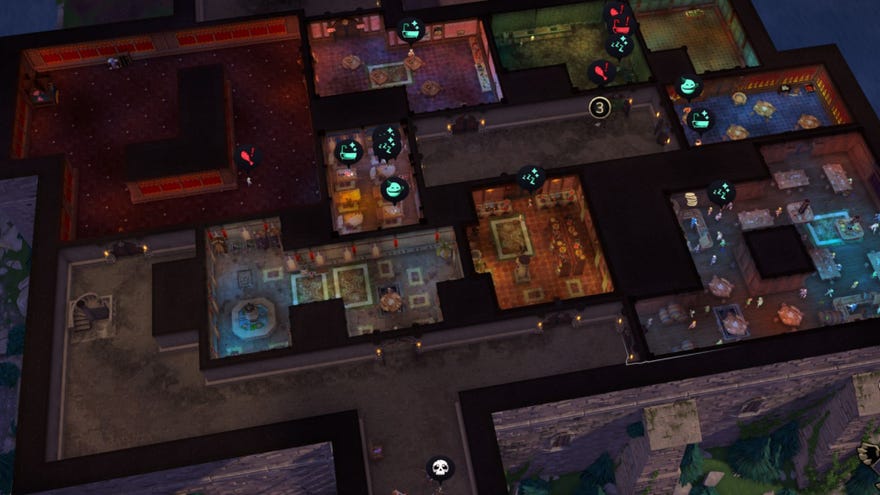
Naheulbeuk’s Dungeon Masteris a staff management game disguised as a dungeon management game. At the start of each week, your minions might choose to go on strike, demanding everything from more cells in the prison to fewer dwarves in the workplace. If that second example elicited a startled little “yikes”, then good, you’re paying attention. Your minions are also occasional racists – which at least makes some of the more brutal options at hand for dealing with striking workers more palatable.
You can sacrifice the entire picket line to your in-house demon lord, or terminate their employment without tribunal. You can also lock them up in those prisons they repeatedly claim are so lacking in cells. Or you can agree to their terms to expand the canteen and sack all of their shortest colleagues. But no matter which option you choose, minion strikes are inconsequential, only ever amounting to a comedy aside. Just as the turn-based Dungeon Of Naheulbeuk set out to skewer D&D, Naheulbeuk’s Dungeon Master is a brave and self-aware parody of dungeonmanagement games. But it’s far too barebones to invest in seriously.
Image credit:Rock Paper Shotgun/Raw Fury
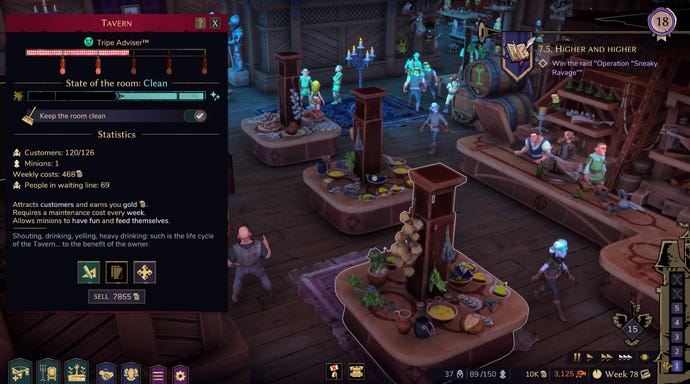
It’s a perfectly good angle of attack, but underneath the paperwork gags is a fairly rudimentary dungeon simulator with just the trappings of something more complex. Here’s how it shakes down. You carve out rooms in your castle for the various functions of your dungeoning business, such as kitchens, canteens, guard rooms and dormitories. Each of these fulfils the basic needs of your minions, who grow in rank as they work, and become more demanding of high-quality rooms as they gain experience.
Image credit:Rock Paper Shotgun/Raw Fury
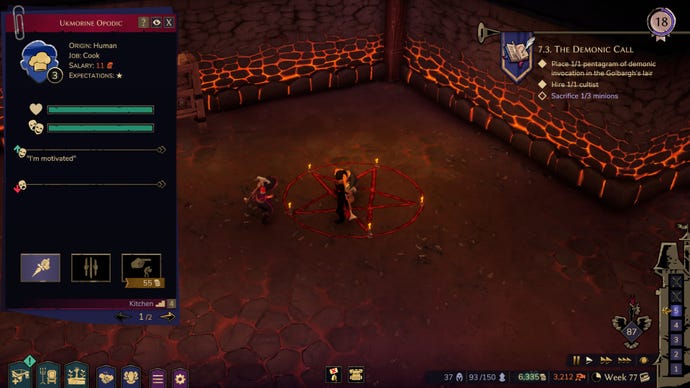
In isolation, all of these aspects of the game work just fine. But Naheulbeuk’s Dungeon Master never coheres into anything more than the sum of its ideas. Maxing out your rooms is trivial once your tavern starts generating enough income, for example, leaving you with very little to actually manage around the dungeon.
Image credit:Rock Paper Shotgun/Raw Fury
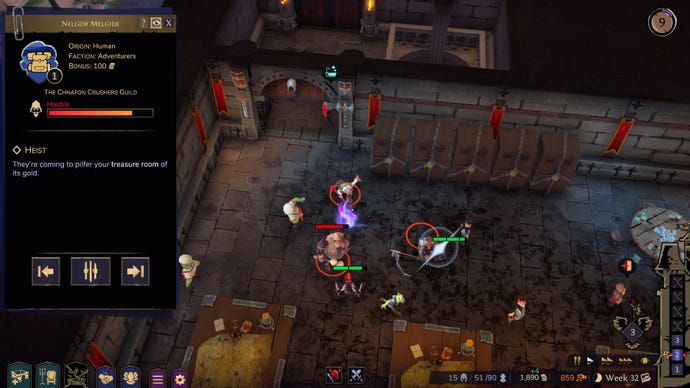
There are lots of little details to love. The game looks and sounds great. Setting the dungeon in a high-rise castle rather than several storeys below the earth means you get a bucolic landscape as your constant backdrop, instead of miles of plain dirt. There’s a fun accounting menu that shows you graphs of your dungeon’s profits and losses, which made me gasp in delight when I discovered it, until I slowly realised that the screen mostly serves as a superficial extension of the game’s running bureaucracy gag. I also then realised the game’s economy is so sparsely simulated that there’s no useful function to any of its charts and reports.
