HomeReviewsMythForce
Mythforce review: Saturday morning skeletons and familiar roguelike comfortsAre we the goodies?
Are we the goodies?
Image credit:Rock Paper Shotgun/Aspyr
Image credit:Rock Paper Shotgun/Aspyr

Image credit:Rock Paper Shotgun/Aspyr
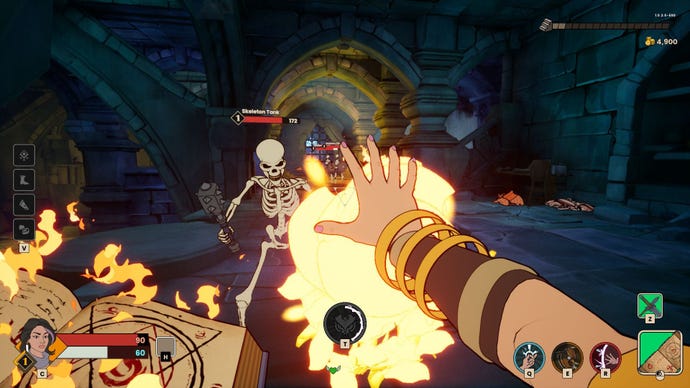
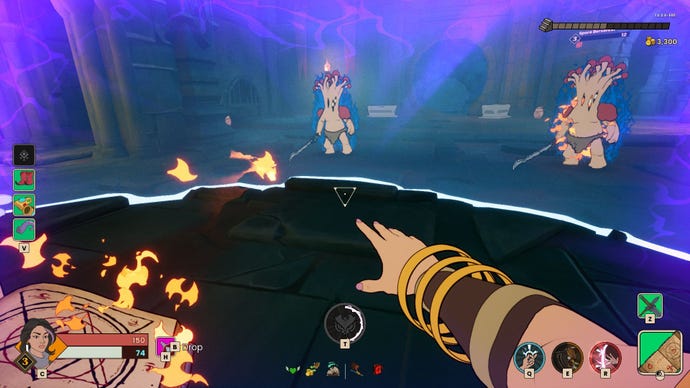
The final character is a spellcaster called Maggie (imagine if Aliya Elasra fromHeaven’s Vaultgot really into belts) who brings a combo of fireball yeeting and bubble-shield conjuring that is nice and distinct from the other characters, if a little slower on the damage-dealing side. For me, she’s the most interesting and challenging to play with (though she could probably do without shouting voice lines for every single heavy attack).
These characters look the part when it comes to the He-Man-inspired pastiche, but otherwise they don’t have the same colour when it comes to in-game voice lines or end-of-episode dialogue. Like I say, the focus of the marketing seems to be “relive your childhood!” but the game’s moving parts are all focused on making a dungeon-runningco-oproguelike that conforms to player expectations. That’s not necessarily a bad thing, it just means that you quickly forget about the theme and get to pulverizing skellingtons, incinerating bosses, and hoovering up gold.
To see this content please enable targeting cookies.Manage cookie settings
To see this content please enable targeting cookies.Manage cookie settings
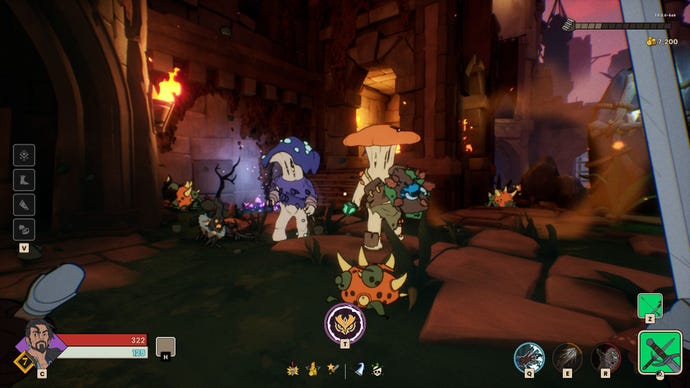
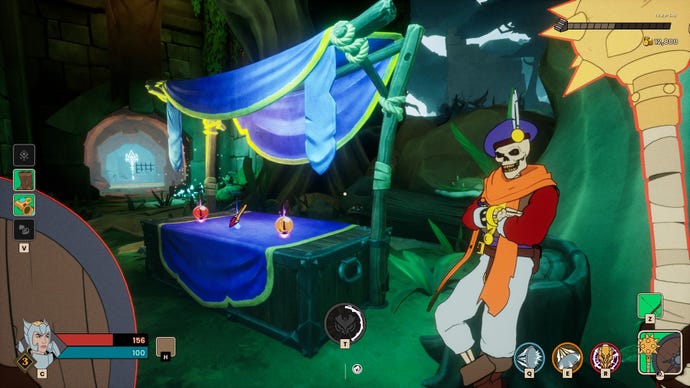
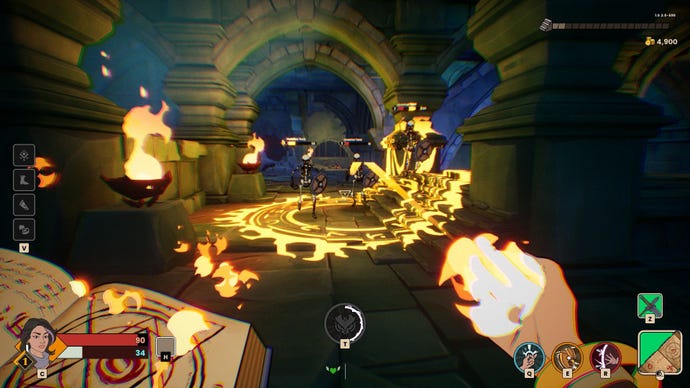
The procedurally generated crypts and courtyards are full of the stuff. Barfing out from chests and spilling out of smashed pots. The general loop is this: enter a room, do a lot of good murder, slurp up loot, claim a perk, move onto the next room. Alongside glittering currency you’ll also find ability-empowering orbs and wearable buffs, like a pair of shoes that nets you 20% more gold wherever it appears, or a risk-reward do-hickey that decreases fire damage while increasing ice damage. There are a bunch of classic roguelike gizmos that stack and build upon one another until your character is a beefy gold-gobbling weirdo.
As for the rooms and corridors themselves, there’s some noticeable repetition of memorable segments. But that’s part of the whole deal with this sort of game. You learn these patterns as you go, becoming more familiar with the geometric language of the dungeon’s possible configurations. Overall, the tempo and combat make it sometimes feel like a slower, more modularRisk of Rain 2, without ever quite hitting the frantic overpoweredness or sheer variety of that sci-fi lunacy. (Perhaps the thing these games have most in common is the joyfully synthy 1980s soundtrack).
Image credit:Rock Paper Shotgun/Aspyr
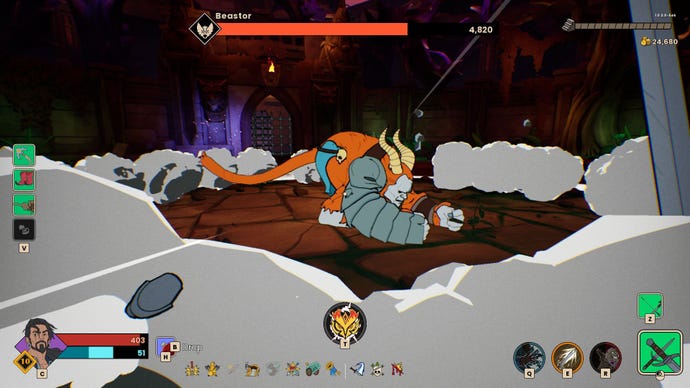
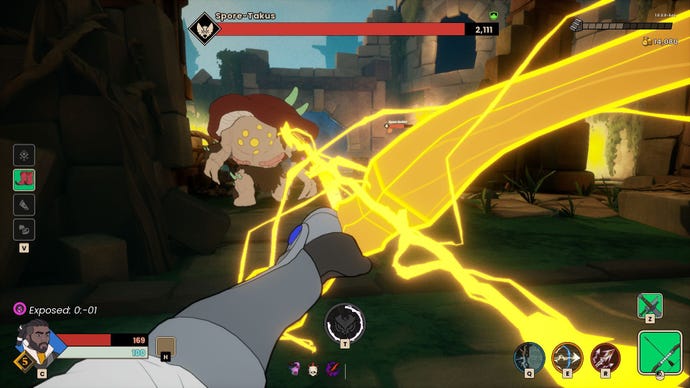
In other words, it’s grand. But it could use a bit more pizazz of its own. Mythforce follows a template that has been long-defined and it feels hesitant to put something of its own into the genre, even though it feels perfectly capable. The combat is at its best when something unexpected happens. Mushroom enemies who suddenly shrink to dodge your arrow. Treasure pots that come to life when you take a swing at them and then roll around spreading sticky goo that slows everyone down, ally and enemy alike. Or my personal favourite: the toddler-sized goblins who rub their hands together like little green fuccbois, then steal the magic boots right off your feet and run away with them. I love a fucked-up little guy in video games, so the liberal use of miniature tricksters in Mythforce pleases me.
Image credit:Rock Paper Shotgun/Aspyr
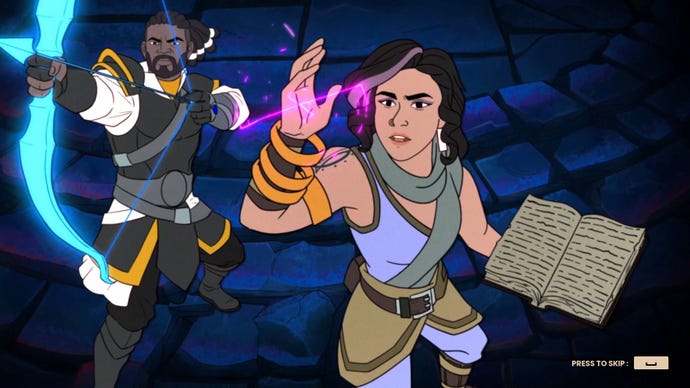
Image credit:Rock Paper Shotgun/Aspyr