HomeHardwareFeaturesMonster Hunter Rise
Monster Hunter Rise: PC requirements, performance and the best settings to useBeast mode
Beast mode
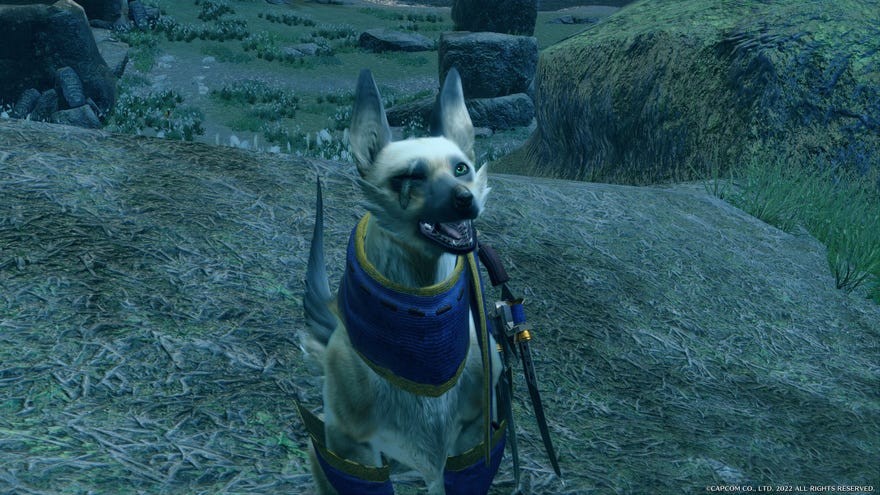
Monster Hunter Riseis about to see a rise in monster hunters, as the PC’s cosiest killing-for-sportRPGis nowavailable on Game Pass. Since this is likely to introduce a few boatloads of curious would-be huntspeople to the world of Palamutes, gunlances, and enchanted dango, now seems like a good time to revisit our guide to Rise’s best settings to use on PC.
This is no PC-melter, and its system requirements aren’t exactly aForspoken-styleshopping list of premium components. The upside, you might say, of Monster Hunter Rise being a Nintendo Switch port, and thus having been designed for something with the horsepower of a Meccano motor.
Monster Hunter Rise: Sunbreak Review | A Delightfully Difficult Expansion That Doesn’t DisappointWatch on YouTube
Monster Hunter Rise: Sunbreak Review | A Delightfully Difficult Expansion That Doesn’t Disappoint

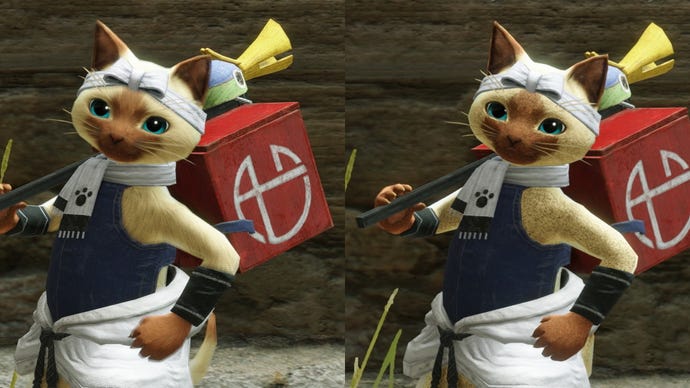
Even so, Capcom have polished up the PC version, so it doeslook significantly better– and there are enough customisable graphics options to let you optimise for even smoother performance. Or, if you’ve got the rig for it, ultrawide and4K monitorsupport awaits as well. There’s even DLSS, which I can confirmno longer makes your pets bald. Progress!
One last note before we begin: this is all based on vanilla Rise, not theSunbreakexpansion, which also released on PC last year but won’t make its way onto Game Pass until sometime in Spring 2023. Sunbreak doesn’t make any real graphical and performance changes, though, so anything here should be applicable to the expansion as well.
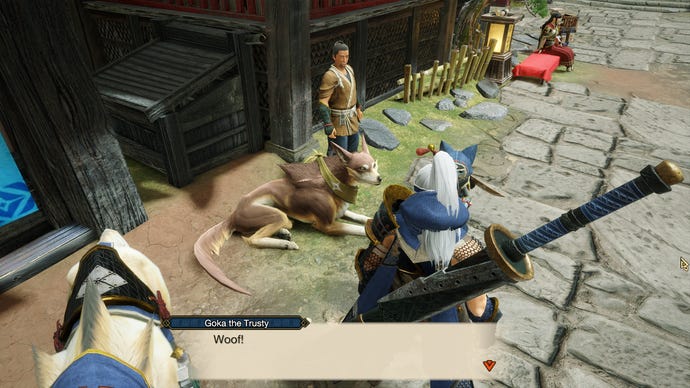
Monster Hunter Rise PC system requirements and performance
I’ve bunged the official PC minimum and recommended specs below. While they do list newer hardware than Monster Hunter World’s requirements, the CPUs and GPUs in Rise’s minimum spec are actually less powerful, so you can definitely expect more easygoing performance demands compared to the previous game. Older kit, like the Nvidia GeForce GTX 760, should be fine as well.
Monster Hunter Rise minimum PC specs
Monster Hunter Rise recommended PC specs
If you’re lucky enough own one of thebest graphics cards, Monster Hunter Rise is such a light touch that you may find your GPU power exceeds what the game can even make use of. For benchmarking all the different PC visual settings, I initially tried my standard testing setup of a GeForce RTX 3070, Intel Core i5-11600K and 16GB of memory, but even at 1440p always ended up averaging between 181fps and 186fps, regardless of which settings were in play. That kind of homogeneity can be a sign of CPU bottlenecking, but here it looked like Rise couldn’t throw enough workloads at the system to trouble it. You could fairly point out that this shows there being a limit to how well Rise can scale with premium hardware, though you’d need a 240Hz monitor to see the differences between such high frame rates.
To make sure my benchmarking was actually useful, then, I swapped out the RTX 3070 for a GTX 1050 Ti, and lowered the display resolution to 1080p. And with that, it was time to see which of the shiny new PC settings had the biggest performance impact.
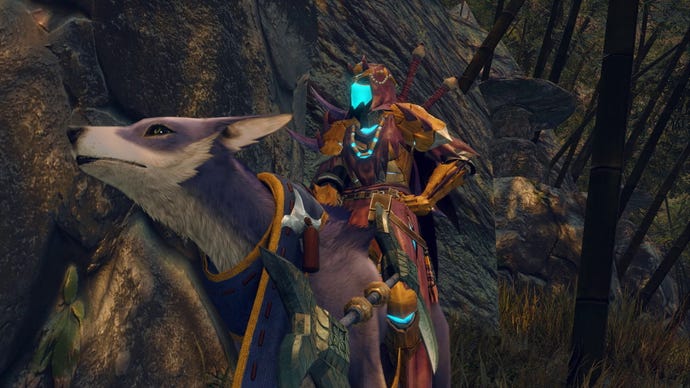
Monster Hunter Rise: best settings guide
For all the effort that’s gone into making Monster Hunter Rise as PC-friendly as possible, it’s quite bizarre in how it splits up its display settings: some can only be changed in the title menu, which isn’t unheard of, but others can only be changed once you’ve loaded into the game proper. I confess, I can’t comprehend the reasoning behind how they’ve been divvied up: why are the Dynamic Shadows and Equipment Shadows toggles exclusive to the title menu, but Shadow Quality is only changeable in-game?!
2560x1440, High quality
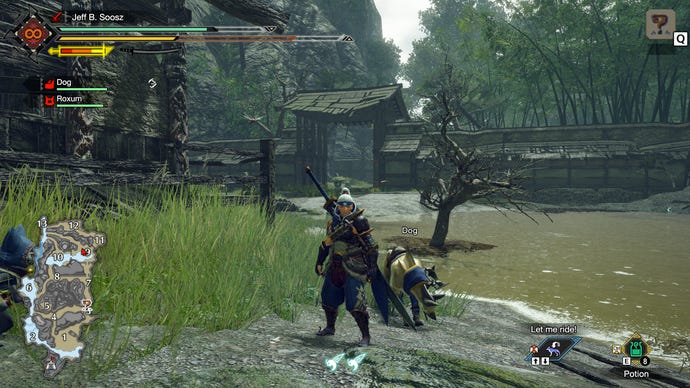
2560x1440, Average quality
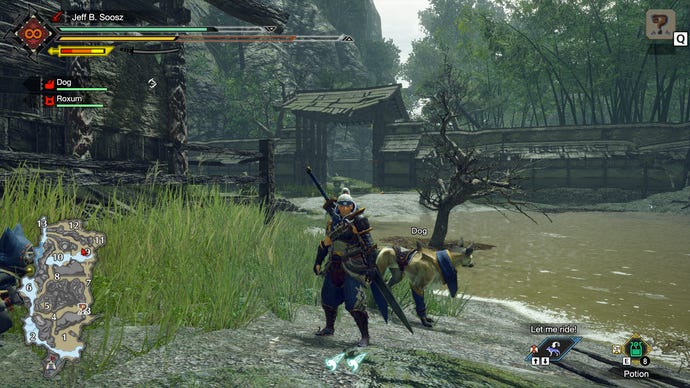
2560x1440, Low quality
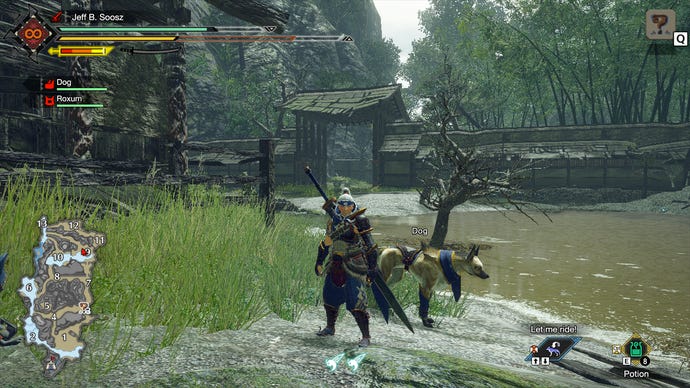
If, though, you do want to perform some fine-tuning rather than slapping everything on High, there’s no shortage of settings to change. First, here are the settings you can only tweak in the title menu:
Equipment Shadows:This determines whether your hunter’s own shadow reflects their outfit and the gear they’re carrying; when turned off, that shadow merely resembles a tiny naked person. Unless you find that amusing, leave this turned on, as switching it off didn’t improve performance for me at all.
Mesh Quality (Level of Detail):Because this only has two settings (Average and High, in blatant disregard for what “average” means) and also affects environmental detail. In practice, this has a remarkably similar effect to the Processing Reduction setting above. Lowering it to average also makes distant hills look bare, with clearly visible pop-in once you get closer, and all for the same measly 1% frame rate gain.
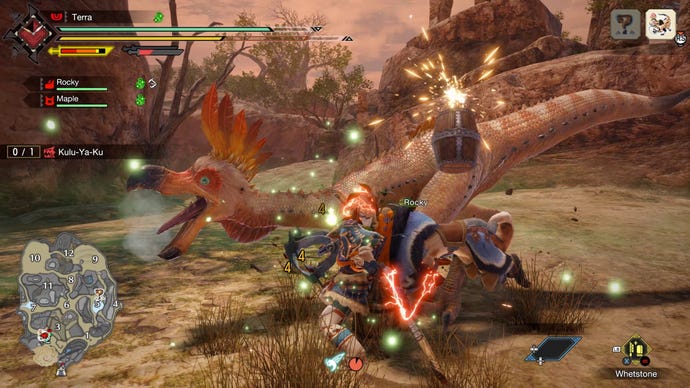
And the rest can only be changed individually once you’re in-game:
High-Resolution Textures:A new addition to the PC version, this sharpens up the textures of just about everything, from character models to minor environmental details. Surprisingly, there was no performance gain at all when I disabled them, so keep them on.
Ambient Occlusion:If you’re not already familiar, ambient occlusion adds a shadowy effect in the corners and crevices where two objects meet. Turning it off granted me a 7% performance boost, which is relatively hefty for Monster Hunter Rise, though be warned that it will make the world look more flatly lit.
Shadow Quality:This seems to cover all shadows, including those under the thumb of the Dynamic and Equipment Shadows settings. Setting this to low makes shadows – especially those of fast-moving objects like yourself, your pets and monsters - look a little blocky and jittery. However, this did give me a big fat 14% performance gain compared to the High setting, so should probably be the first setting you lower when trying to secure more frames.
DLSS:For once, DLSS upscaling is rarely an essential upgrade – it’s only available on Nvidia GeForce RTX graphics cards, and all of those are powerful enough to run Rise no problem. Then again, it can help at the highest of resolutions. On an RTX 3080, running the game at 4K on High quality, 90-110fps becomes 180-190fps with the addition of DLSS’s Quality setting.
What DLSS used to do to fur, before Capcom fixed it. I’m leaving the image here ‘cos it amuses me.
Motion Blur:Nope. Nah. No thank you. Switching this from Off to Default costs performance - 7%, in my case – and running around with the Strong setting is like being drunk.
Lens Distortion:This is like being slightly less drunk, but still a couple of G&Ts in. It’s a fairly rote chromatic aberration effect, which means its perma-blurring around the screen edges is just as ugly as it is in other games.
Film Grain:Another optional aesthetic tweak, this time with no performance hit. It still makes everything slightly darker, mind.
Filters:More of a photo mode aid than a serious visual setting, this lets you add various black and white or sepia filters. There are also some which mimic the visual artefacts of old film, and a “Warring Lands” filter that mutes most colour shades saves for a few highlights. None of these will noticeably help or harm performance.
The Warring Lands filter.
Ultimately there are only a small handful of settings that will visibly enhance performance when lowered, and fewer still where that enhancement is worth the loss in visual quality. The vast majority of gaming PCs will happily cope with the High preset, so it’s honestly fine to just go with that.
