HomeFeatures
Metal Gear Solid was a decent stealth game, but an all time horror gameIt’s like one my Japanese animes, but spookier
It’s like one my Japanese animes, but spookier
Image credit:Konami
Image credit:Konami
METAL GEAR SOLID MASTER COLLECTION Vol 1 | Gameplay and Platforms RevealWatch on YouTube
METAL GEAR SOLID MASTER COLLECTION Vol 1 | Gameplay and Platforms Reveal
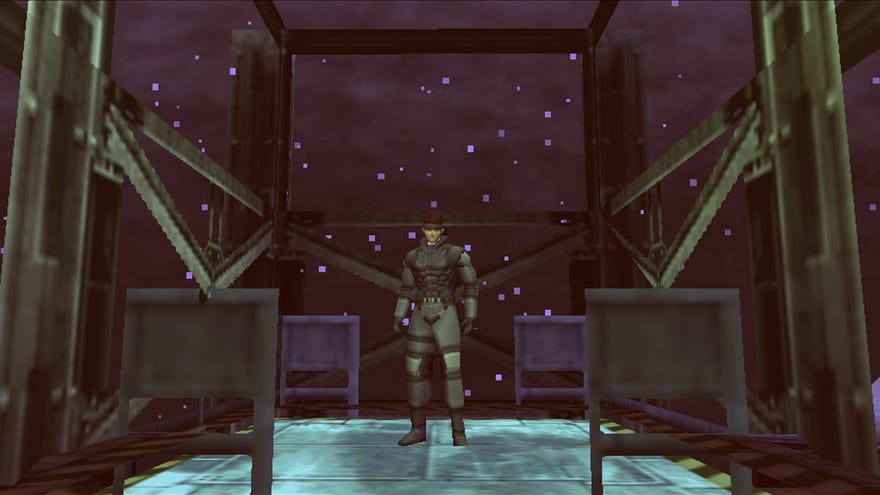
We might best describe MSG1’s tone as “haunted Tom Clancy”. The intro sequence is all spy thriller hustle and bustle peppered with military acronyms, because while there’s plenty of time to pontificate about love and the blooming on the battlefield thereof, these men are far too serious to waste time saying, “SEAL Delivery Vehicle,” or, “On Site Procurement”. So far, soSplinter Cell. But as soon as Solid swims up to the surface and enters the tunnel, things immediately get very odd. The Gaelic opera. The rebirth imagery. The slanted camera angles. The slimy, grey-green environments.
We’ve now got some truly excellentindieartmovements based on the notion that the distinctive unreality of worlds rendered in PS1 polygons are inherently spookier than photorealism, but I strongly believe MGS1 was distinctly ‘off’ for the time, too. “Ew, gross!” exclaims Meryl when Solid takes off Mantis' gas mask, somehow unfazed that literally everyone else in this world also looks like they’ve had their scalp stitched back on with potato tubers. As a critic, I’ve definitely used the phrase, “This remake is like how you remember it when you were a tiny idiot!”, but I don’t think that could ever be true for MSG1, because all the weird jaggies and oddities are part and parcel with the rest of my nostalgia for it. Things like Meryl’s clavicle that looks like a badly stitched up wound, or Baker’s ghoulish non-face. These weren’t blanks I filled in with my tiny 1998 mind until they looked likeCyberpunk 2077or whatever. These were things I remember clearly, and just accepted as part of the game’s whole schtick.
Image credit:Konami
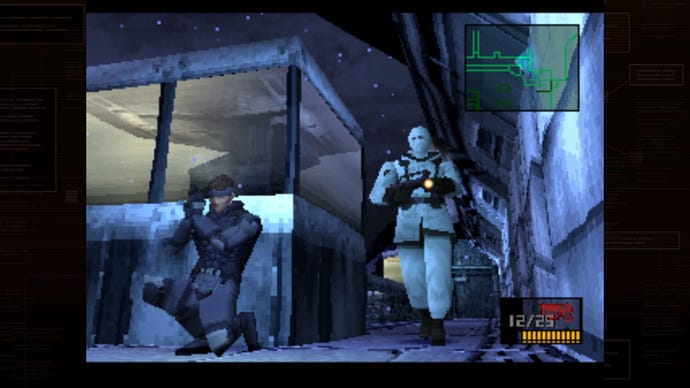
Not for nothing, that tone has more in common with Silent Hill than it doesResident Evil. A creeping, atmospheric, and ultimately tragic brand ofhorror. Years later, MGS4 would send us to the corpse of Shadow Moses island in a deliberate “God, I’m exhausted, aren’t you exhausted?” Kojima play, but even back then, everything just felt so sad and worn out from the get go. MGS4’s Old Snake might be a more deliberate visual metaphor for his creator’s ennui, but there’s plenty here to suggest that this game’s Solid is already a ghost of himself.
It’s interesting, because I think most of us associate MGS1’s Solid as Solid in his prime - it’s this association MGS2 mostly plays off of, after all. My old mate Gary from down the very serious bloke’s pub reckons that this assumption is more meta-textual than textual, though. This is Solid’s most famous and commercially successful outing, so this is the version of him that’s become crystalised in memory. But playing through it again, in context, MGS1 is already set up as the melancholy swansong for an aging 80s video game character with very little junk left in his dummy thicc trunk.
Image credit:Konami
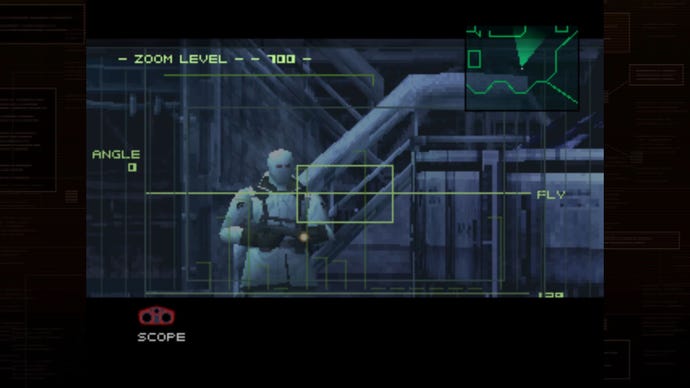
Image credit:Konami
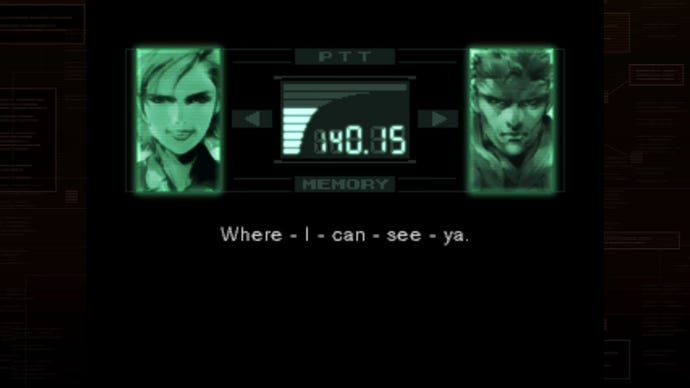
Alongside the ninja, and the squawking clouds that accompany Vulcan Raven, the fight with Psycho Mantis is MGS1’s most overt horror scene, but it’s also the sequence that goes furthest to intentionally undermine its own gravitas with fourth wall breaks, and somehow ends up making the whole thing even freakier in the process. It isn’t scary that Mantis reads my memory card and vibrates my controller (or, did anyway). It’s actually quite cute, and that’s the scary part. Mantis being cute is somehow more threatening than his actual threats. And it’s here the slightly magical unreality of the whole thing starts to come into focus.
Image credit:Konami
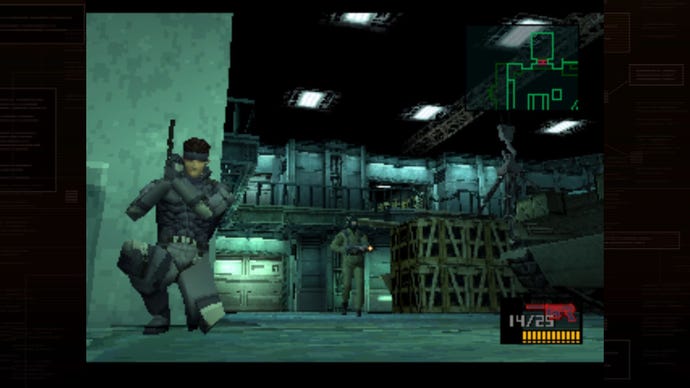
I find the distinction between horror and magical realism an interesting one to try and unpick. I’d normally say it’s to do with optimism and a sense of playfulness, but MGS1 has these qualities already. So let’s try this: magical realism employs dissociation to make us re-assess and re-appreciate the beauty in the mundane. Horror employs dissociation to unmoor us from a place of comfort and disarm us so we become malleable and easily frightened. That’s a messy analysis, all told, but I think it goes some way to explain why so much of MGS1 feels almost somnambulant in the way it carries itself.
