HomeFeatures
Meet the streamers keeping the Irish language alive on TwitchAn bhfuil cead agam dul go dtí an leithreas
An bhfuil cead agam dul go dtí an leithreas
“Tá me just ag smaoineamh: Cad a dhéanfaidh mé leis Miú? Tá Miú leibhéal a dó dhéag anois…”
There’s something wonderfully jarring about hearing the sentence “I’m just thinking: What will I do with Mew? Mew’s level twelve now” spoken in fluent Irish, or a few bars of House of Pain rapped as Gaeilge (in Irish) over a Pokémon livestream. This is the Twitch channel of Úna-Minh Kavanagh, who streams under the handle"Yunitex", one of the only places you can watch video games being played in Irish.
I was fascinated when I first found out about her stream; growing up as a geeky kid in Dublin, Gaeilge (the Irish language) and video games occupied completely different universes. See, Gaeilge is in a weird spot: it’s something I and many other Irish people hold a great deal of pride in, a rich part of our culture that most people study for at least thirteen years in school and sing with gusto during Amhrán na bhFiann, our national anthem… but it’s also something that nobody actually speaks.
Well, according tothe 2016 censusabout 40% of the country claim they can, but outside of the cúpla focal (few words) only around 1.4% of actually speak the language daily outside of education, thanks to the historic suppression of the language under British rule and the Great Famine reducing the Irish-speaking population even further. Even in Gaeltachtaí, majority Irish-speaking regions, only two-thirds of people actually speak Irish.
It’s not all bad: Irish language musical acts like the sometimes controversial hip-hop groupKneecapandColáiste Lurgan, a summer school that belt out covers of pop hits like Old Town Road, have gotten huge traction online, while over 60,000 students currently attend Irish-language schools, according to Department of Education figures. On top of that, the rise in popularity of events like Pop-up Gaeltachtaí keep the social side of the language alive around the country.
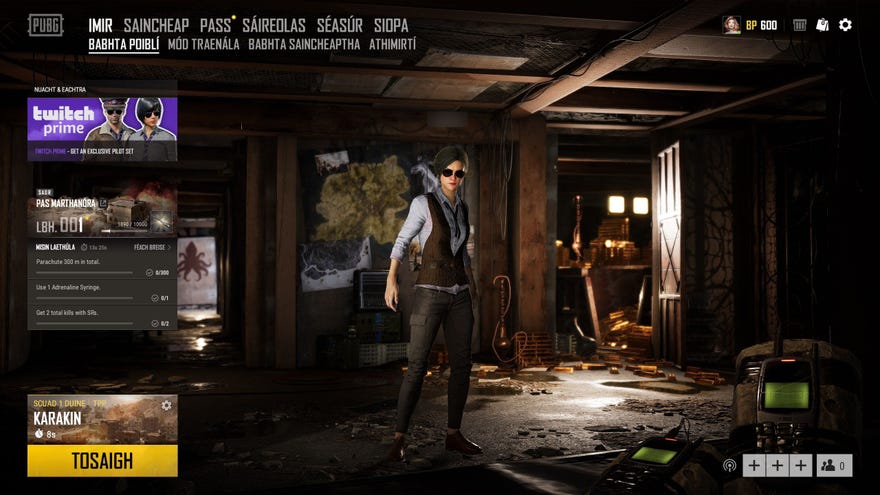
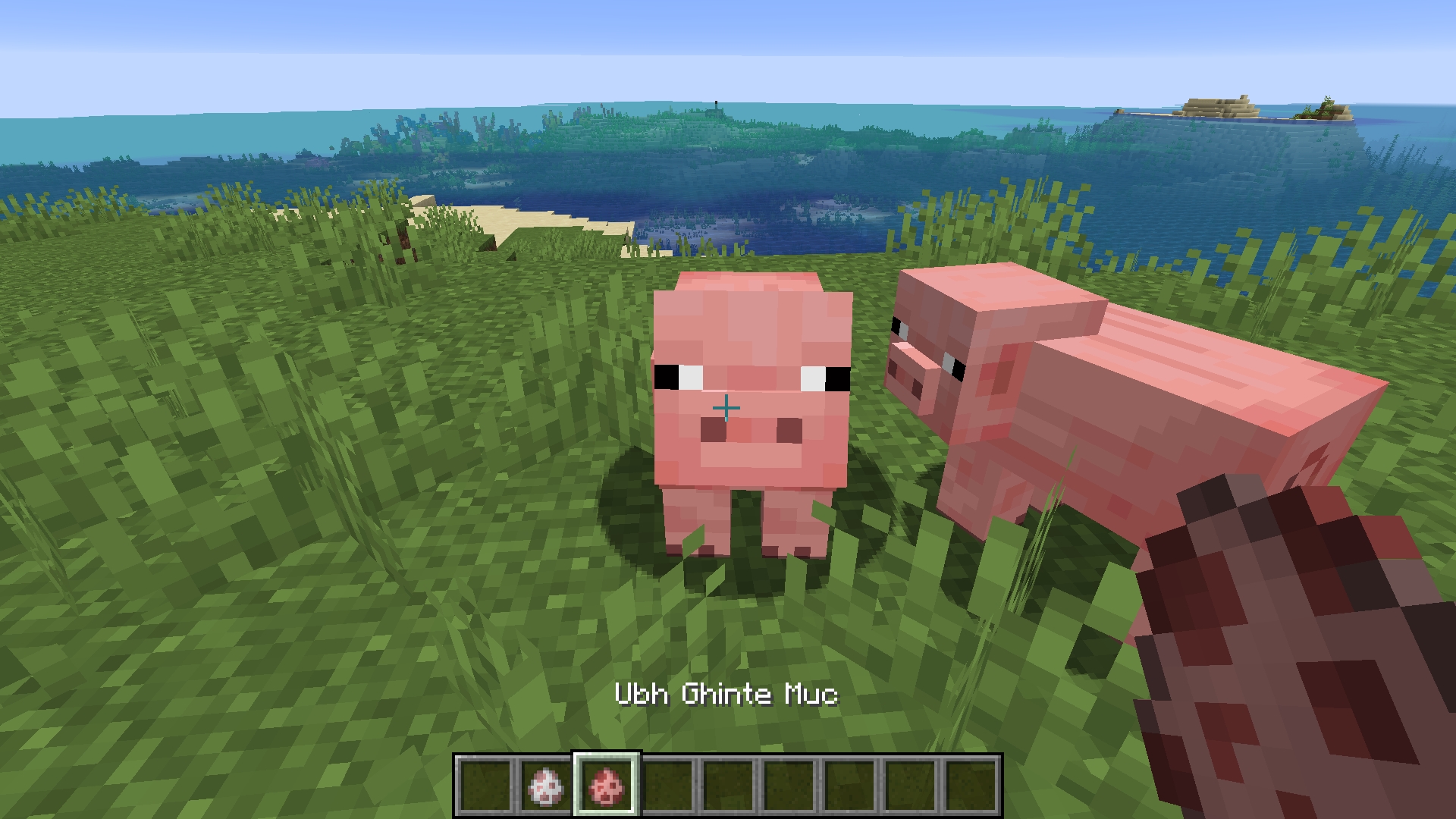
It’s thin on the ground for video games though: localisations like PUBG or Minecraft are the exception, not the rule, and gaming content in Irish is essentially non-existent.
Enter Yunitex, an author, multimedia journalist and blogger who streams bilingually in Irish and English. She included a chapter about her streaming in her bookAnseo, published last year.
This actually reads ‘pig spawn egg’ because Nate had just picked one up for the screenshot.
“[I] quickly discovered there was absolutely no one streaming in Irish… it felt important to give others the chance to hear Irish in an unexpected environment outside of the classroom, and hopefully, give them a fresh perspective on their own pastime,” Yunitex wrote.
“Unfortunately, I’m still the only person who streams regularly as Gaeilge,” she told me. She has a dedicated Irish language stream is every Sunday night.
Yunitex explained how, through Twitch, she can give people the opportunity to listen to an Irish speaker live, interact in the chat and get a response from her in the Irish language in return. “It’s my native language, I use it every day anyway and if it helps other people to enjoy the language and use what they have, that’s all good to me.”
For Yunitex, streaming in Irish is simply something that she loves doing. “My community have been wonderful and have developed the confidence to chat to me in both languages during my streams,” she said. “It humbles me that I can be part of their journey and it feels surreal sometimes when someone says that I reignited their passion for it.”
For me, hearing Irish in the context of, say,Death Strandingis invigorating, a modern context for a language that many people solely associate with classrooms and memorised essays.
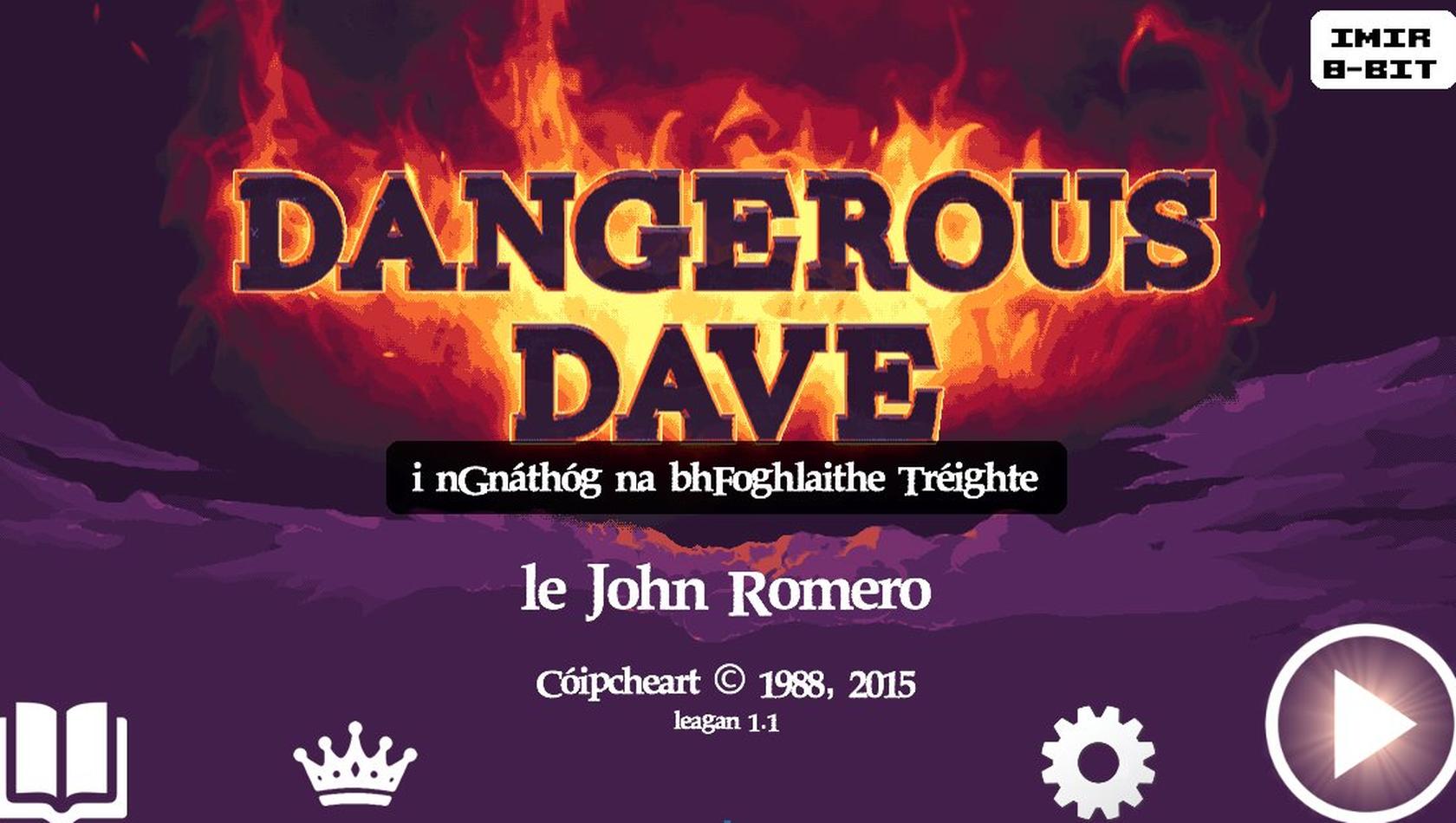
Romero Games is nowvery proudlybased in Galway. Dangerous Dave’s translation came out in 2015.
“[BLOC] felt it was important to show that all hobbies and pastimes can be enjoyed in any language," Ní Thuairisg said. This extends to theCúla4 Youtube channel, which had uploaded gaming and coding videos in the past like the lovely Cluichí Cúla series, where young children talk about Minecraft as Gaeilge with effortless fluency.
Ní Thuairisg described Yunitex as a huge help in their efforts, saying that “the views, chat room and messages afterwards showed that people liked it and wanted more.”
Despite this, though, the channel is sadly currently inactive. BLOC has a small team covering the five platforms that they’re actively involved in, and Ní Thuairisg said that was difficult to give Twitch 100 per cent since they’re not specifically a gaming platform - although she adds that BLOC “would love to get it up and running again in the future”.
He went on to mention the potential pitfalls of streaming in more than one language. “It’s all about integrating all the communities together; you don’t want to lock out or separate the communities because that’s a bad idea. That’s why most people wouldn’t engage in speaking in multiple languages on their stream because it could be detrimental if you don’t do it right.”
Irish generates interest as a minority language, but Yunitex also acknowledged that streaming exclusively in Irish would make it “hard to grow” as a streamer, and Yunitex herself still relies on social media for promotion.
“It would be difficult to entice an audience to a minority language without any prior knowledge of it,” she explained. “It’s much easier for people who stream exclusively in say, Japanese or Spanish to grow because of both population and amount of speakers available.”
Ku: Shroud Of The Morrigan is a small indie game available in Irish

McGiff maintained that Twitch does reward streams that have something unique about them, though, and he’s confident that Irish or bilingual streams could gain traction. “It’s all about trying to integrate yourself into the sub-communities in Ireland that have Irish that engage online.” He believes that “there’s no better way to learn a language [than] if you’re doing something that you love in that language,” pointing to Minecraft as a positive example.
There’s another catch, though: finding someone with the confidence to stream in the first place who also speaks Irish can be difficult. “Having any kind of presence online takes hard work, consistency, time and money so it may be harder for people to commit to their own personal channel,” said Ní Thuairisg.
Yunitex believes that a fear of being judged for your ability to speak Irish may also be a barrier (something that rings true for me personally; trying to speak Irish with more experienced Gaeilgeóirí can be incredibly intimidating) and believes that Irish media could do more to support Irish language gaming.
“There’s a lot of misinformation and myth out there when it comes to games and I think what could be more useful is if the discussion around games was brought into an educational setting,” she said, highlighting teachers that had shown students her videos about playing Fortnite as a positive example.
Overall, though, Kavanagh is optimistic about the future of Irish. “I see more and more people being interested in delving back into the language attending things like the Ciorcal Comhrá (Conversation Circle) and heading to Pop-Up Gaeltachtaí. The future is bright.”
