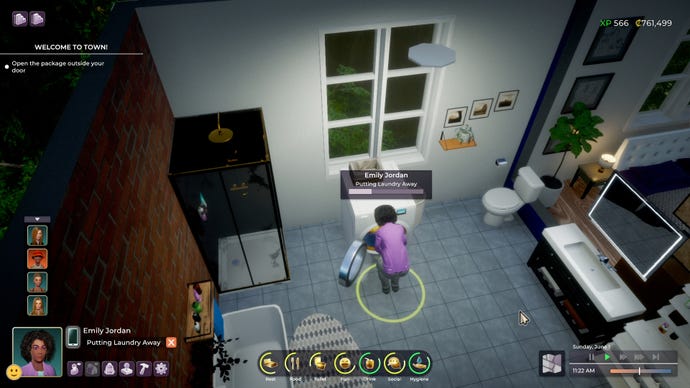
We chat to Paradox Tectonic’s Rod Humble about going open world, getting rid of loading screens and its extensive modding tools
Image credit:Paradox
Image credit:Paradox
Watch on YouTube

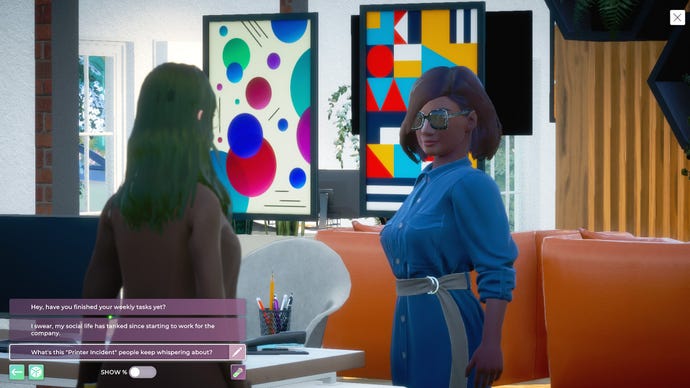
Humble says it took the team “quite a few years” to get their breakthrough, but the end result lends itself to a more immersive and authentic version of your character’s day to day life.
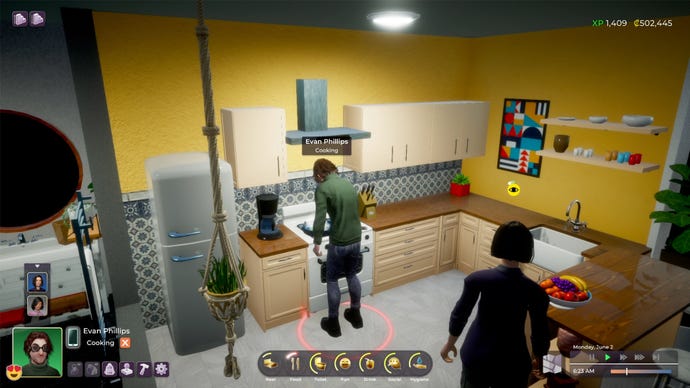
“What happens to the person who works in the restaurant when you go home?” he asks of other life sims. “There’s a loading screen, and typically in games, that person doesn’t exist anymore. In our game, we don’t get that option. That person goes home, and you might live opposite them. And you might be in a fight with that person’s spouse, and you might have relationship troubles with them. They might be bad neighbours, they might be good neighbours. And once you start to get into that way of thinking, everything starts to flow.”
Why do this at all, I ask Humble. “Because I haven’t seen it done before,” he says. “Like, to actually model everybody [so they’re] on the same playing field? That was the hardest bit, and the genesis of what we call internally the principle of equivalency. That is, if you see a non-player character doing something, you can do it and vice-versa. Once you get that, then you can have, ‘Oh, I can replay anyone, anytime, because there’s no different rules’.”
“Yeah, absolutely 100%,” says Humble when I put this question to him. “And that’s part of the delight. I often just leave the game running like a fishbowl, and I’m just looking at this little world. And then I might click on somebody, I’m like, ‘Okay, what does this person do? Oh, they live there; oh, they have this job; oh, they’ve just insulted so and so’. It’s really, really fun.”
I raise an eyebrow at this. When I ask Humble whether giving players such freedom will remove any sense of challenge from the game, he says he’s confident that players will use these tools “appropriately” to tell their own stories.
“What’s been surprising is that players don’t automatically use [these tools],” Humble explains. “Quite often players will reduce them. I’ve seen a lot of players who come in and they’re like, ‘First thing is I don’t want money. I want to be grubbing, work my way up. I really want to work for it.’ Or ‘I want my person to be miserable right now’. So when I say lowering friction, that’s what I mean - it’s when, as game designers, we just say to the player, ‘Hey, it’s okay. Here’s the little fences. But you can just step over the fence any time you want’. And players feel free to be able to tell their stories. It’s their game, so why not, you know, let players do what they wish.”
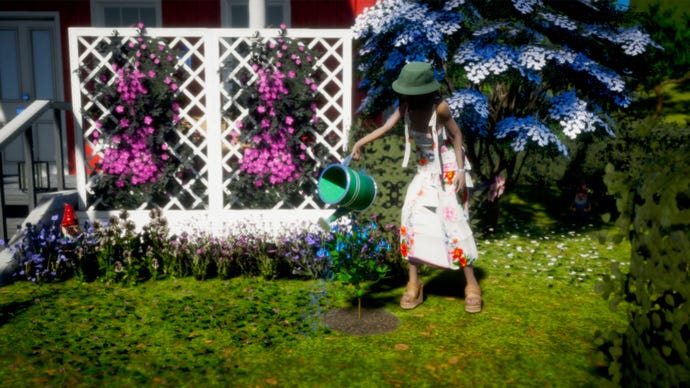
I’m still a little sceptical on this point - if only because I know I’d definitely fall into anti-grub mode the second things got too hard. But I am mildly hopeful that this sense of openness might help rectify another problem that’s been plaguing life sims (and The Sims, specifically) since time immemorial - and that’s the small question of bugs. When I ask Humble how he even begins to QA a game like this, he says it all comes down to his “game design attitude”.
That attitude also extends to a sense of trust between the player base, says Humble. “I think there’s a mistaken assumption that when people hear ‘life sim’, they think ‘casual’, and you and I both know it’s the complete opposite. This player base is one of the most complex and intelligent player bases emotionally as well as in terms of the mods they’re able to create.”
Watch on YouTube

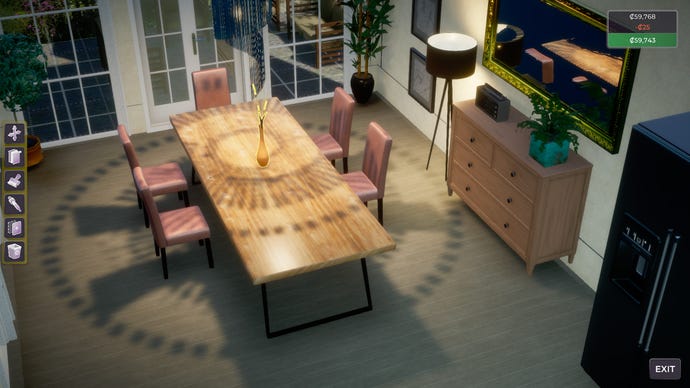
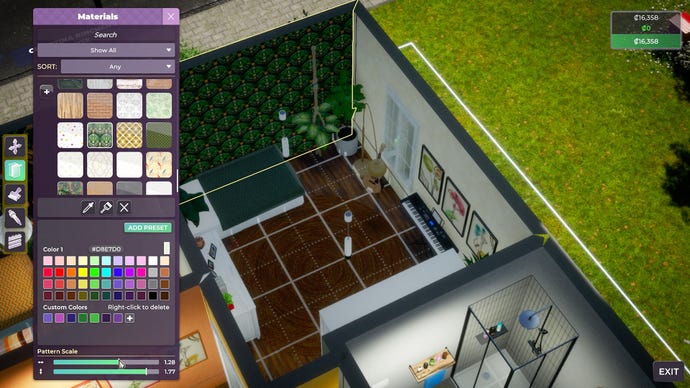
There is one other small deviation from what the player will experience. When a member of Paradox Tectonic create a mod, it will live in the ‘Official’ mod section rather than your own personal one, but everything else is exactly the same. You’ll be able to create mods for pretty much every item in the game, and share and export them. Humble selects a salon as an example. He gives it an icon that will be used on the sat nav mini-map built into your character’s phone, and demonstrates how you can associate individual lots with a certain business. Next comes the side menu, which lets you tinker with all sorts of parameters related to your humans (or whatever you decide to call them, says Humble), lots, locations, and more. In fact, the ‘Others’ tab houses “the majority” of the game’s mod editors, says Humble, and he reels off a list including quests, skills, items, shops, recipe and cooking editors before the whole room breaks into laughter. “We’ve got a whole bunch,” he says, composing himself. But it doesn’t stop there.
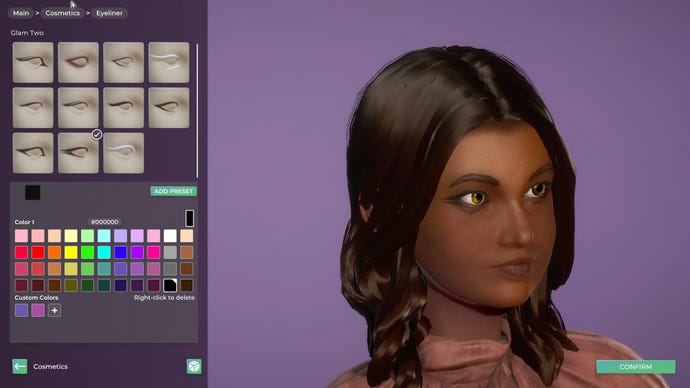
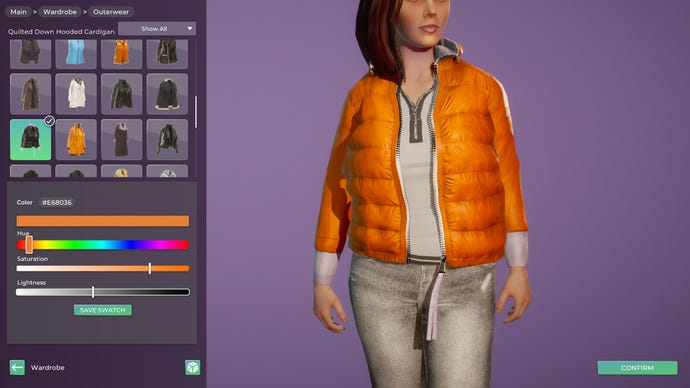
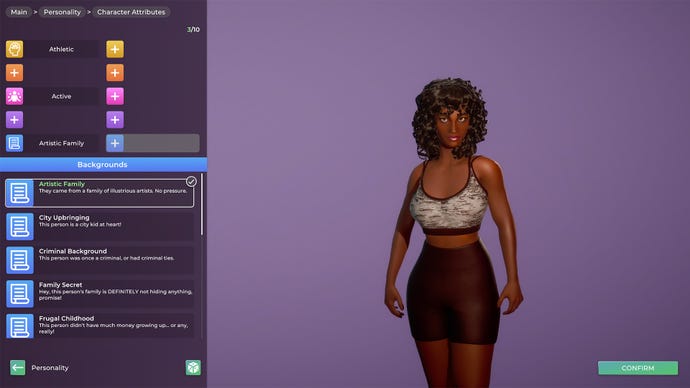
“Some of the most fun ones are, like, I want to make lipsticks - hundreds and hundreds of lipstick swatches - and you can do that. Because every item of clothing in the game is customisable. Lipsticks alone have got two layers of different colours, you can add a preset, and export them and share them with your friends. And that applies to every article of clothing, every article of hair, eyebrow colours, everything! Which is pretty powerful in terms of creativity.”
“Usually, that’s something hitting something else, and making it do something, so we’ve had decades of that.” But he’s hopeful about the next generation of game designers, if only because he believes they’ll take their inspiration from games rather than film like his peers. “That’s why you’ve seen an emphasis on traditional narrative storytelling in games,” he says. But that relationship between authors and players is starting to shift now, he believes, resulting in “real emotional resonance” compared to the “comic book-thinking” we’ve got now in today’s blockbuster space.
“I think that more complex storytelling is inevitable when games are already the biggest grossing entertainment form. But if we want to become even more mainstream, we have to embrace that. It’s no accident that the number one best-selling or category of fiction forever has been romance. Falling in love is not a minority interest. Everybody loves that, and so I think that you’ll see games start to explore real subjects - and I don’t think you’d get a more fun subject to explore than real life. We all relate to it.”