HomeReviewsIron Harvest
Iron Harvest reviewCompany Of Heroes with giant mechs
Company Of Heroes with giant mechs
To see this content please enable targeting cookies.Manage cookie settings
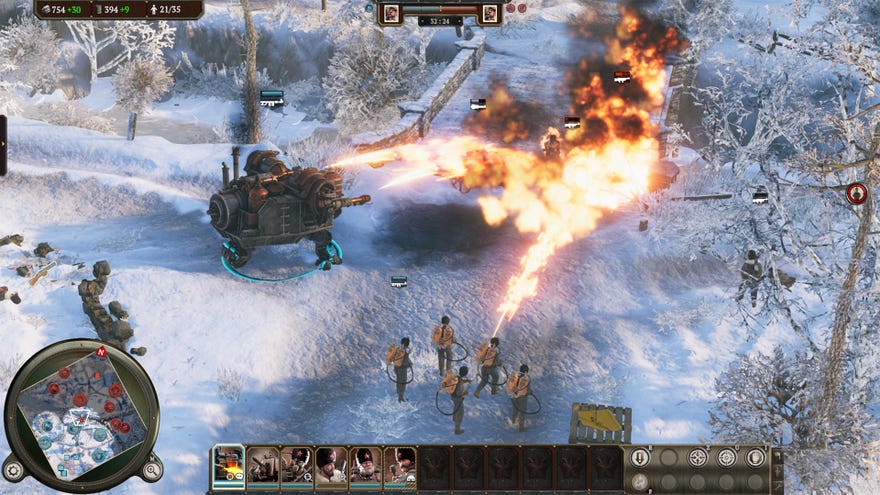
These are very good robots. Not the pristine, precision-engineered war machines of modern science-fiction, with all of their ball bearings and cupholders and heated seats, but noisy, oily, juddering wrecks that stink of WD40 and tremble like nervous metal greyhounds. These are janky, diesel-powered mechs that look like they’re about to rattle themselves to pieces sooner than stroll into battle. Iron Harvest conveys the look and feel of Rozalski’s fantasy universe, tapping into the sense of awe and privilege real Europeans must have felt when they witnessed the first ever tank trundling into their town to obliterate the post office.
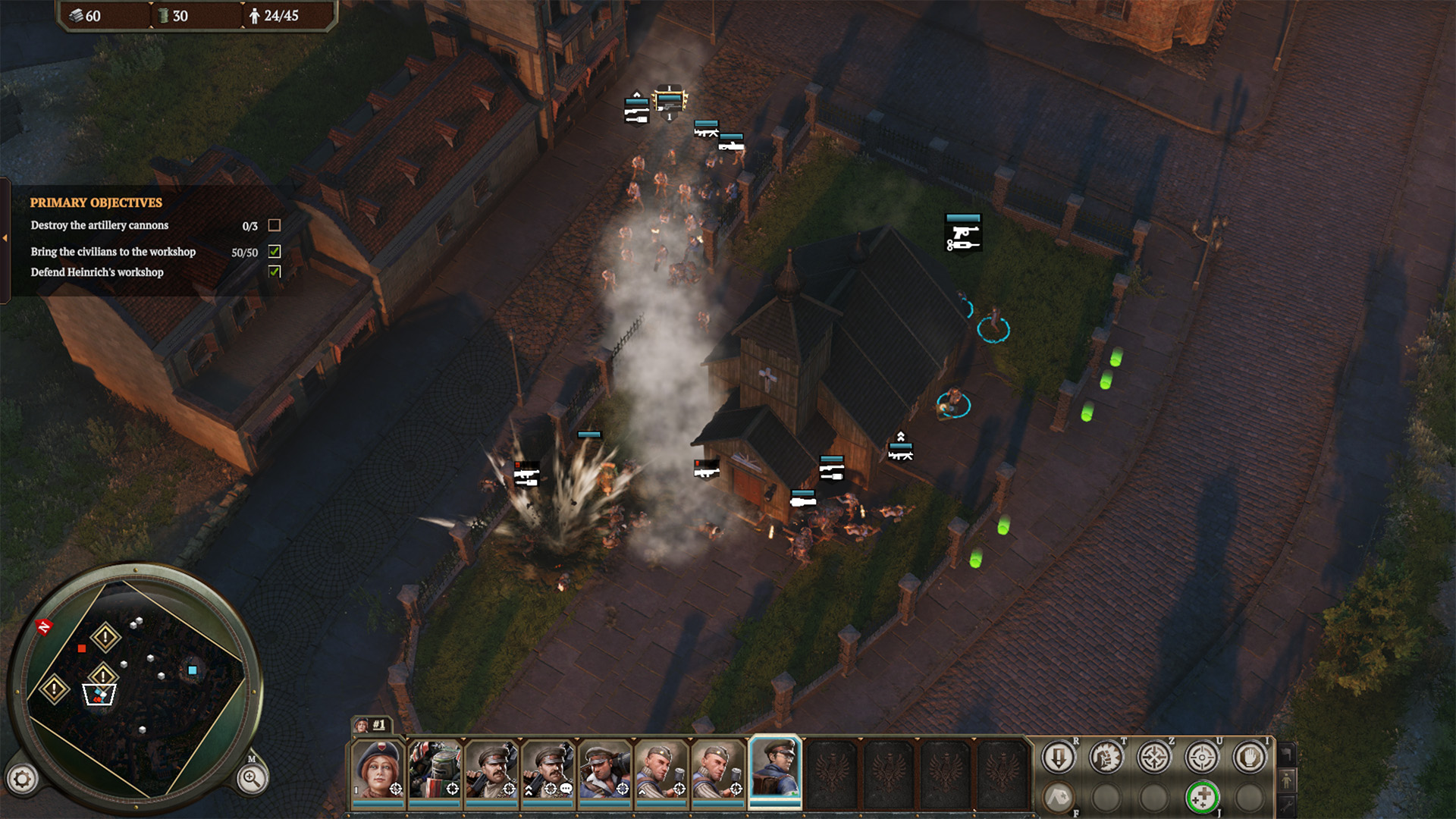
In contrast to the vastness of the machines, the scale of the battles in Iron Harvest feels decidedly personal. A single player campaign focuses first on the story of Anna, the leader of a bunch of Polanian rebels, as she and her best friend, a grizzly bear who can breathe ursine healing gas on injured units, defends her homeland from a Rusviet plot to destabilise the delicate peace treaty between the two nations. Missions vary in scope from chaperoning your hero and a few handfuls of units from one side of the map to the other, using the cover of sandbags, smashed up buildings and fallen logs to navigate around and flank enemy soldiers, to large scale battles in which opposing bases are constructed and resource-generating sites repeatedly change hands.
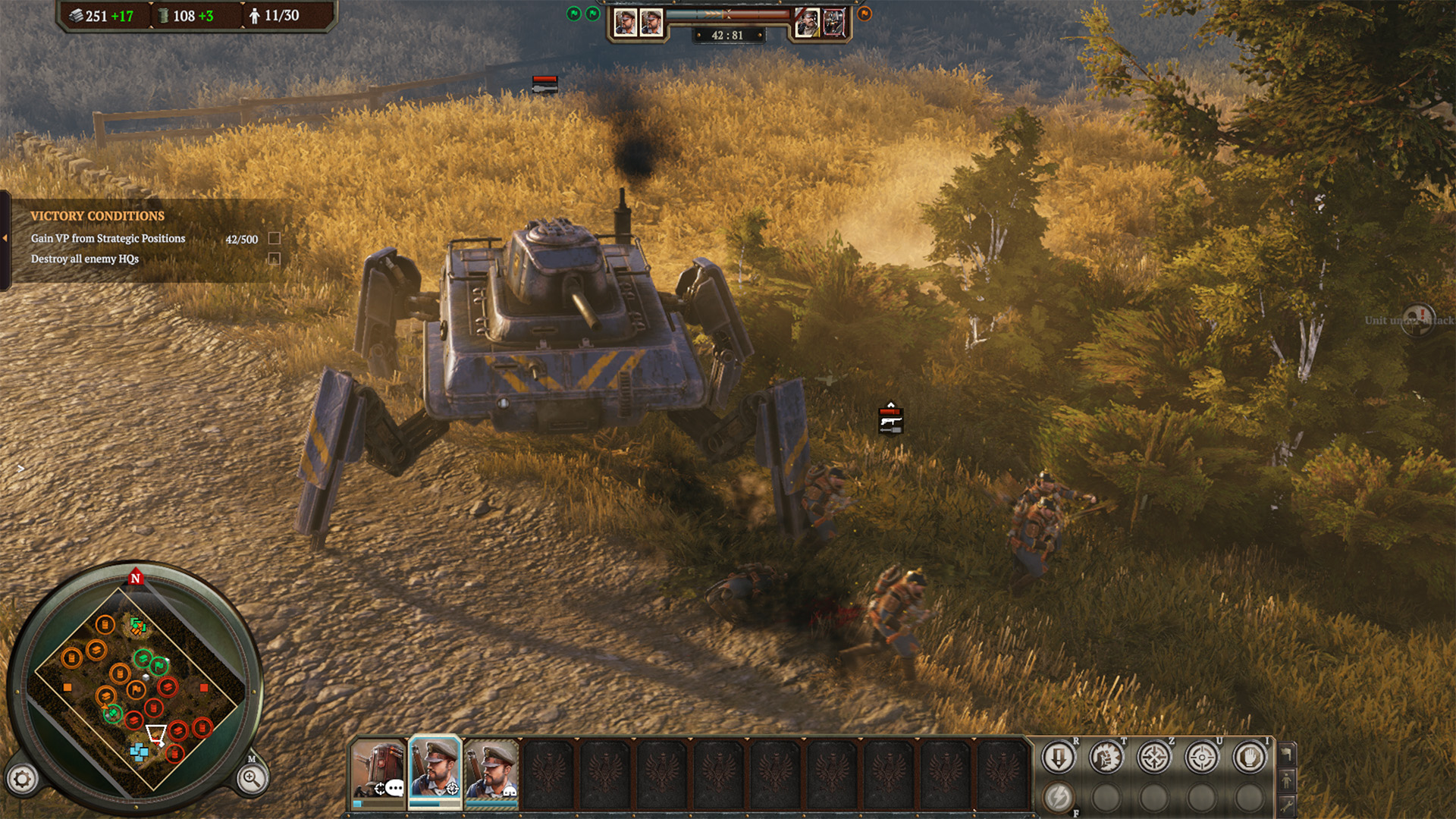
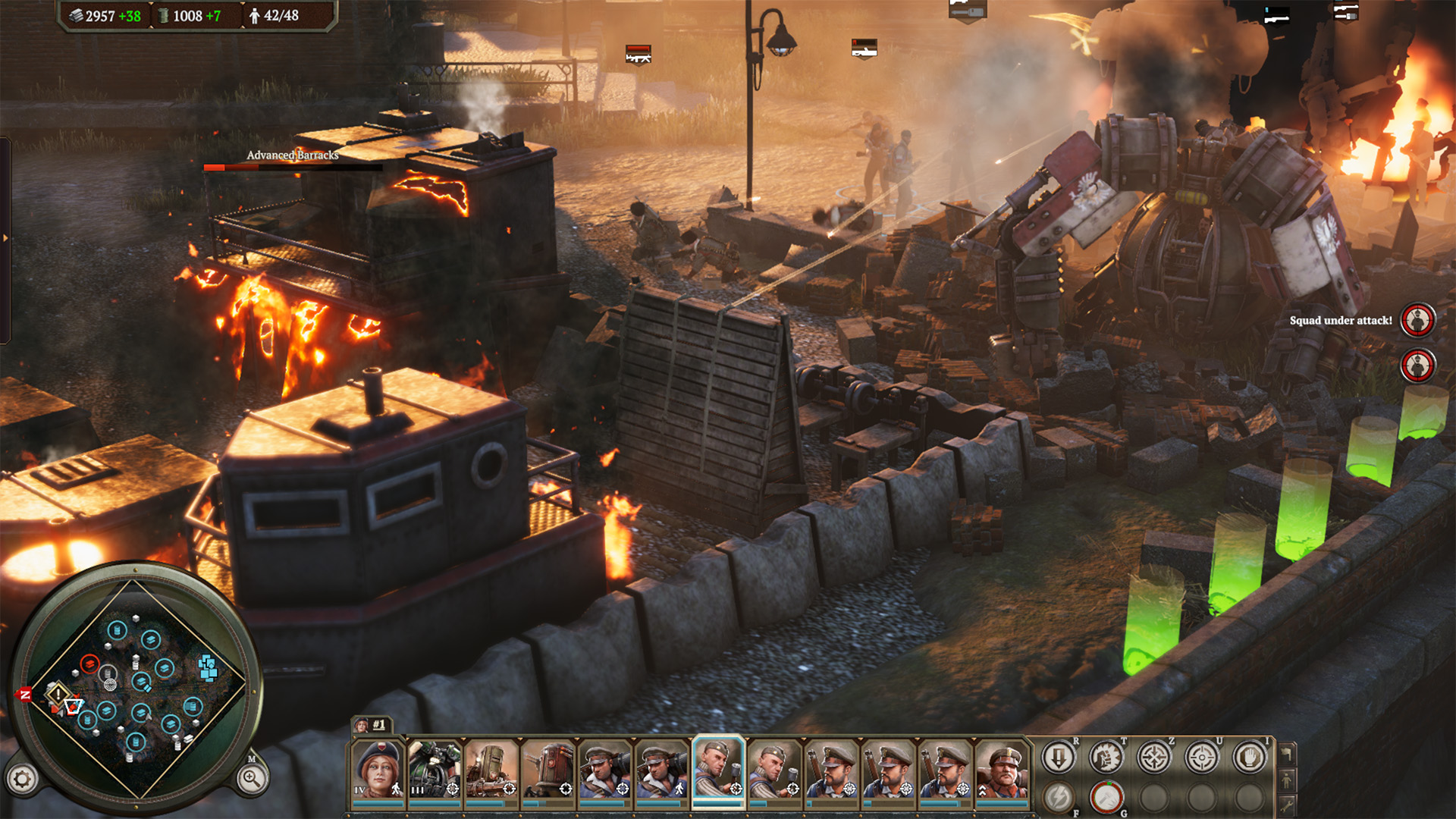
But then there are the superstar units, the building-sized, end-game mechs. The very biggest machines are a spectacle, like IKEA warehouses that have grown a pair of legs, cumbersome and absolutely thrilling to command. Order them to hunker down and they’ll draw in their vast appendages to become impenetrable rocket silos. Order them towards an objective and they’ll take a direct route through any buildings in their path, dispensing with wayfinding to carve a neat furrow of destruction through rows of terraced houses, sending bricks and debris flying for miles.
It’s a shame that Iron Harvest’s tight, top-down perspective doesn’t allow for mechs on the grand scale of Rozalski’s most god-like and horizon-dominating war machines, but a mixture of subtle animation and sound design makes the game’s megamechs seem much larger than they appear on screen. When one is eventually taken out, it sounds like an orchestra being fed into a compactor over the course of thirty, ear-shredding seconds.
Taken with the slowly expanding roster of challenge maps, there’s more than enough single player content here to satisfy the multiplayer-averse and the chronically underskilled. Each mission usually ends with a highly entertaining cutscene too, in which a pantomime villain in a custom-made mech suit leaps out from behind a barn to threaten you and your magic bear before running away again. This is where Iron Harvest deviatesmostfrom Company Of Heroes.


Of course, if that type advantage happens to fall in your favour and your flame-spitting robots are merrily incinerating a platoon of soldiers whose human flesh is predictably weak to fire, that lack of tactical depth won’t concern you quite so much, and you can relish in this game’s realisation of Rozalski’s intriguing and weird alternate history. Iron Harvest is a throwback to one of the last golden ages of the genre, often feeling as old fashioned and crusty as that association entails, but frequently reminding us of the essential appeal of extremely large robots chilling out in timelines where they shouldn’t be.
