HomeHardwareFeatures
Intel Arc Alchemist GPUs: prices, specs, release dates and moreAll the vital details on Intel’s graphics cards, ready for launch this October
All the vital details on Intel’s graphics cards, ready for launch this October
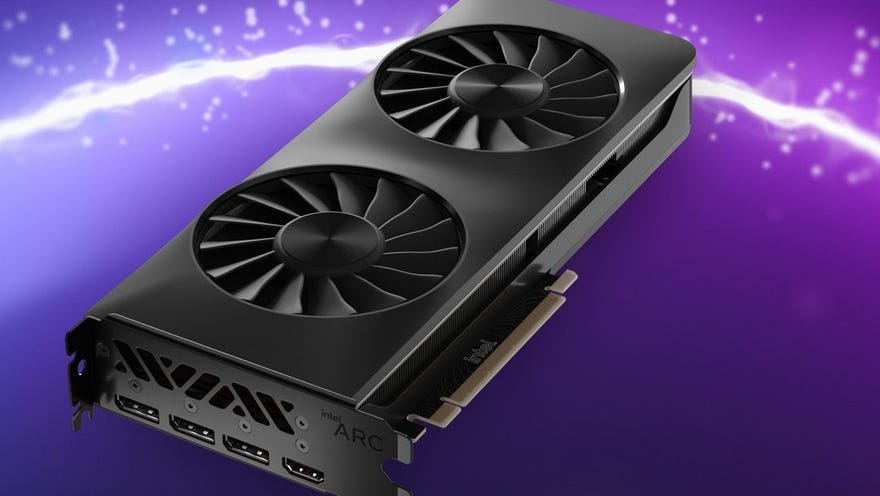
For a good chunk of 2022,Intel Arc Alchemist– the CPU makers’ first attempt at a series of modern gaming graphics cards – looked like it might be in trouble. Long delayed, lacking in spec details, and subject toquickly-deniedrumours of troubled production, the entire Arc Alchemist family was an enigma with DisplayPort sockets. Only very recently, during a live event mainly focused onIntel’s 13th Gen Raptor Lake CPUs, did desktop Arc GPUs get concrete price and release date details.
Intel Arc Graphics Q&A – Desktop Graphics SpecsWatch on YouTube
Intel Arc Graphics Q&A – Desktop Graphics Specs

Now, these are not intended as serious rivals to premium 2022 cards like theNvidia GeForce RTX 4080 and RTX 4090; if Intel GPUs like the Arc A770 and Arc A750 can tangle with thebest graphics cards, it’ll be at the cheaper, more 1080p-minded end of the market. Still, with ray tracing support as well as a performance booster in XeSS upscaling, Intel will feel they have a fighting chance. Here’s everything there is to know about the incoming Arc Alchemist GPUs, including their specs and other potentially useful features.
Intel Arc Alchemist prices
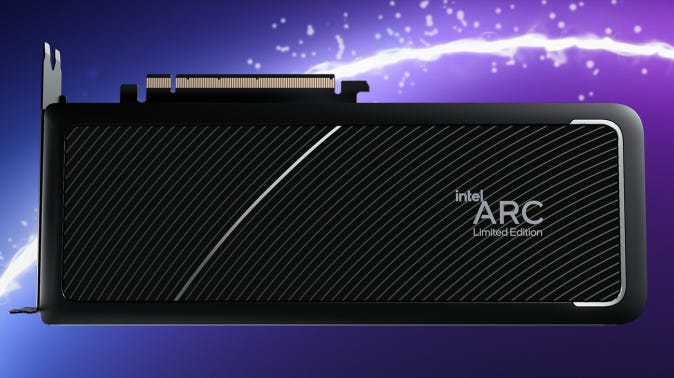
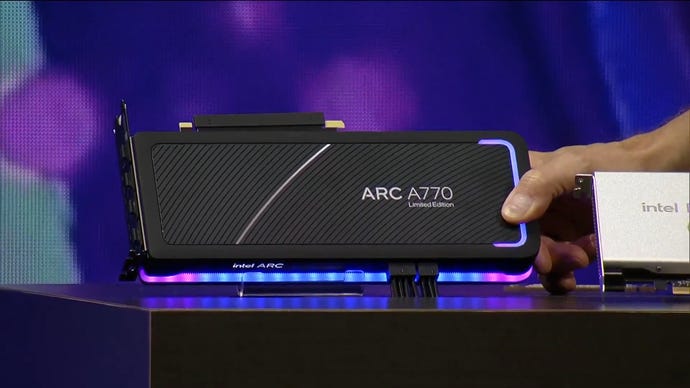
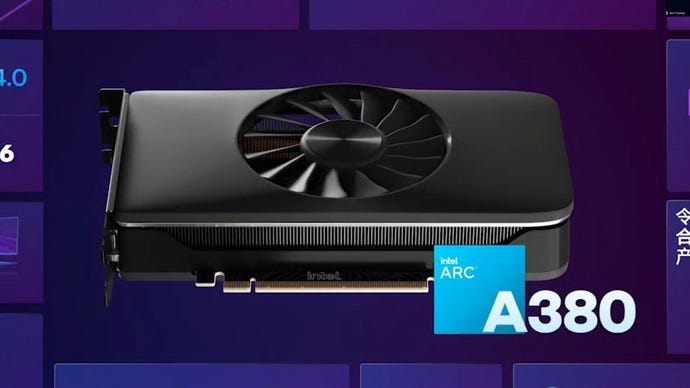
Arc Alchemist, or the Arc A-series (as Intel sometimes calls it), is comprised entirely of entry level, low-end and mid-range GPUs. Five core GPUs have been confirmed: the Arc A770, Arc A750, Arc A580, Arc A380, and Arc A310, with the first two also set for fully Intel-built “Limited Edition” models in addition to the various partner card versions.
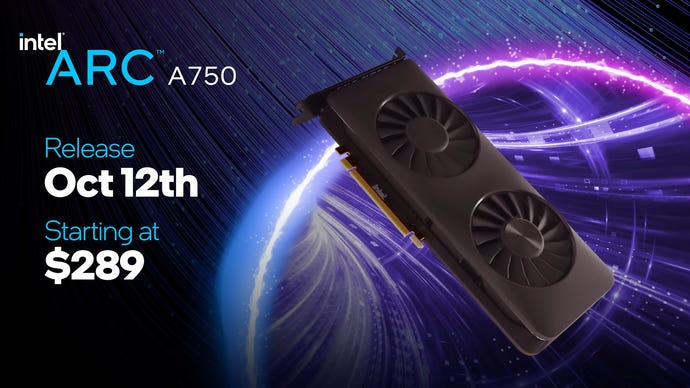
For now, Intel have only confirmed prices for the standard Arc A750, the Arc A770, and the Arc A770 Limited Edition – and only in USD. The Arc A750 will start at $289, with the Arc A770 at $329 and the A770 Limited Edition at $349.
Intel Arc Alchemist release date
Yes! At last! There is one! Specifically, the Arc A750, the Arc A770, and the Arc A770 Limited Edition – i.e. the ones with confirmed prices – will all release on October 12th 2022.
Actually, the A380 is technically out already,but only in China. We might at least glean some clues from its pricing over there: its official price is 1030 Yuan, which is around £125 / $153, not accounting for regional tax differences. Some retailers are also selling it for around 1300 Yuan, which is about £158 / $192.
Intel Arc Alchemist specs and models
Despite the relative lack of pre-release buzz for GPUs besides the A770 and A750, all the confirmed GPUs have had their specs released in full. Here are the headlines:
The Limited Edition variants of the A770 and A750 are akin to Nvidia’s Founders Edition GeForce cards, being built entirely according to Intel’s specifications (including the cooler designs). The A750 Limited Edition appears otherwise identical to the standard version, though the A770 Limited Edition has double the GDDR6 memory of the basic A770. Interestingly, Intel list the “total board power” of both the A770 Limited Edition and A750 Limited Edition as 225W, despite the former having more RAM, ray tracing processors and Xe cores.
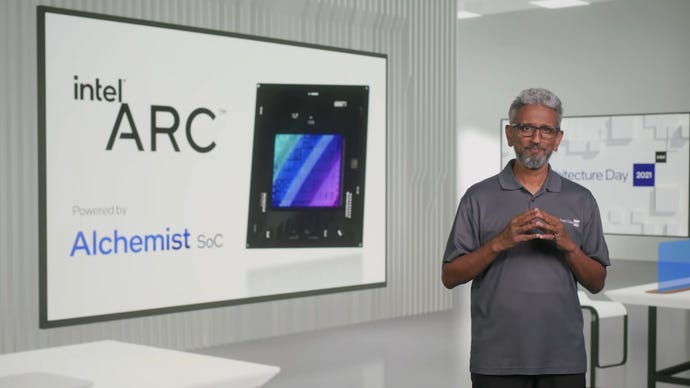
Ah, Xe cores. These are the cornerstones of Arc Alchemist’s architecture and each contain three important tools: a set of 256-bit vector engines, which handle the conventional drawing of on-screen graphics, 192KB of shared L1 cache, and a set of 1024-bit matrix engines. The latter perform machine learning tasks, like the Tensor cores on Nvidia RTX cards, especially in how one such task can be DLSS-style, AI-assisted upscaling. Expect the higher-tier Alchemist cards to have more Xe cores on board than the A380.
Intel Arc Alchemist features
That upscaling feature is calledXeSS (Xe Super Sampling), and works similarly toNvidia DLSS,AMD FSR 2.0, andFSR 2.1. To boost performance, games are rendered at lower-than-native resolution. Then, XeSS pieces the on-screen image together, using data from previous frames, to make it resemble native res – so you get most, if not all of the sharpness, with more frames per second.
Anotherrecent Intel blog postgoes into pretty deep technical detail on XeSS; one interesting detail is that it includes its own anti-aliasing, which replaces native edge-smoothers (like TAA) in the upscaling process. DLSS also does this, whereas FSR simply upscales whatever AA the game was already using.
Intel Arc Graphics | Intel XeSS Technology Deep DiveWatch on YouTube
Intel Arc Graphics | Intel XeSS Technology Deep Dive

Also like DLSS and FSR, XeSS will require games to actively implement support for it. Here are the confirmed takers so far:
Ray tracing support also comes as standard on Arc Alchemist GPUs, though it remains to be seen how they’ll actually perform with such a demanding graphical luxury enabled. It will also be possible to overclock them, so expect board partner models to launch with modest factory overclocks just as their Nvidia and AMD GPUs most often do.
Intel Arc Alchemist performance
In a“performance showcase” video, the A750 Limited Edition was shown running Control at 1440p/High between 56fps and 66fps. The specs of the test PC weren’t given, but we can safely assume it included one of Intel’s 12th Gen Core chips (which include several of thebest gaming CPUson the market).
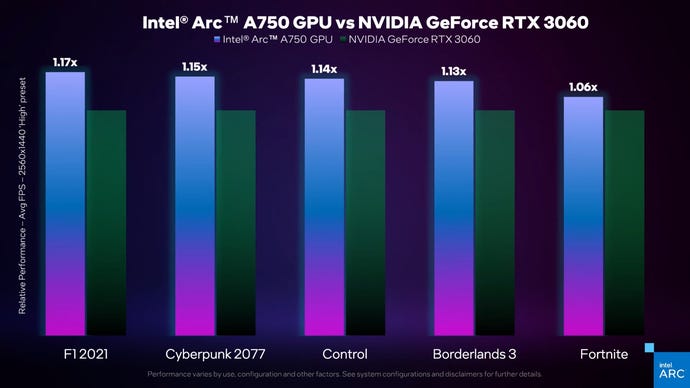
Intel’s video also included a comparison graph showing the A750 Limited Edition narrowly beating theNvidia GeForce RTX 3060across Control, F1 2021,Cyberpunk 2077,Borderlands 3and Fortnite. Again, this shows Intel primarily want to muscle in on the more affordable half of the graphics card market; I wouldn’t expect the A770 to aim much higher than beating the RTX 3060 Ti, either.
As for the A380, Intel haven’t provided review units outside of China, though some Western outlets (with more money than RPS) have managed to import retail models over to test. The word, unfortunately, is decidedly not good.
Hardware Unboxed’s tests alsorevealed the extentto which the A380 relies onResizeable BAR, regularly suffering double-digit framerate drops from those already-underwhelming results after ReBAR was disabled. Performance could improve in time, maybe even before the worldwide release, if Intel do some good work with future drivers – and that goes for the Arc A750 as well. Still, what we’ve seen so far hasn’t been very compelling.
The one piece of unqualified good news seems to be Arc Alchemist’s AV1 video encoder. AV1 could well be the future of how we watch video online, as it can produce a cleaner image than other current formats (like Nvidia’s H.264) even while using less data to stream. GeForce RTX 30 cards, Radeon RX 6000 cards and (naturally) Intel Arc Alchemist cards all have AV1 decoding capabilities but the Alchemist lineup will feature a proper AV1 encoder as well, making it vastly more accessible to video creators.
Unfortunately – for Intel, anyway – these won’t quite be the first GPUs with AV1 encoding, as it will be a standard feature on GeForce RTX 40 series GPUs, the first of which are releasing on October 12th. Arc A-series cards will be a cheaper option, though. If you’d like to know more about AV1,EposVoxhas a good explainer on it, including some hands-on testing with the Arc A380. Just remember that AV1 encoding will mainly only help you if you’re into video editing or streaming - it won’t help with running games normally.
