HomeFeatures
How System Shock 2 made Stephen Kick and Nightdive Studios“Hey, I’ve got this far. Let’s see how far I can take it.”
“Hey, I’ve got this far. Let’s see how far I can take it.”
Image credit:Prime Matter / Rock Paper Shotgun
Image credit:Prime Matter / Rock Paper Shotgun
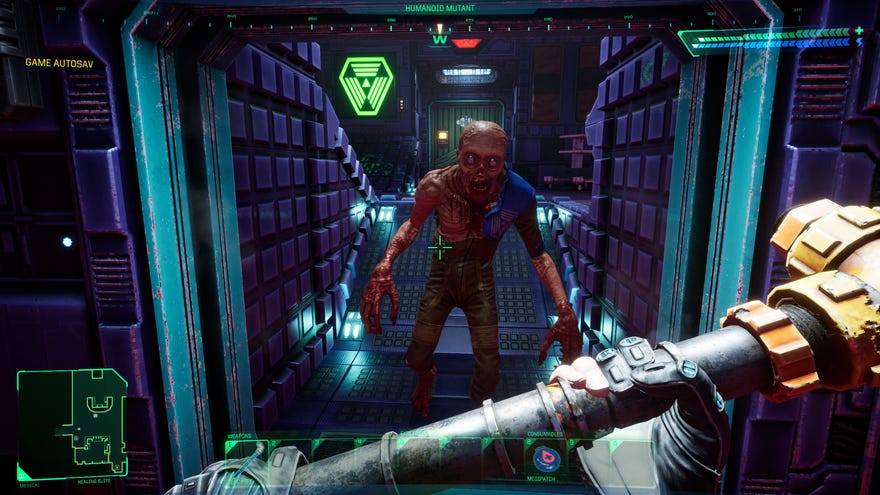
“Oh yeah, we’ve got theSystem ShockIP,” said the insurance company. “What do you want to do with it? Do you want to make a sequel?”
It’s a question you could imagine being posed to Ken Levine, or Warren Spector, or several other notable designers who could reasonably lay claim to the legacy of Looking Glass and Irrational’s legendary immersive sims. Instead, it was asked of Stephen Kick - at the time, a recently unemployed videogame artist holidaying in a Guatemalan hostel. Up until that point, Kick had dedicated his life to creative pursuits. He had no business background, and none of the acumen required to understand contracts or negotiate licensing fees. More to the point, he had no more than $5,000 to his name. Hardly the foundation for a follow-up to two of the most acclaimed PC games of all time.
“I’m in the middle of the jungle on satellite internet,” he recalls now. “It’s not really in my near future, you know?” And yet, finding himself at an existential crossroads, Kick pitched the insurance company on re-releasingSystem Shock 2. And they said yes.
System Shock Remake Coming Soon Trailer | Nightdive StudiosWatch on YouTube
System Shock Remake Coming Soon Trailer | Nightdive Studios

“It was one of those perfect evenings,” Kick recalls. “There was that cold feeling even though it was comfortable next to my computer. And I just remember playing it and just getting totally immersed in it and not stopping for hours and hours and hours.” Back then, Kick had developed a habit of playing games to the accompaniment of CDs on his boombox. He cued up the industrial rock band Filter. “There’s this one song that came on while the Shodan reveal was happening,” he says. “This really ethereal female voice talked about how humanity is a cancer on Earth, and it just gelled so perfectly. I’ll never forget that.”
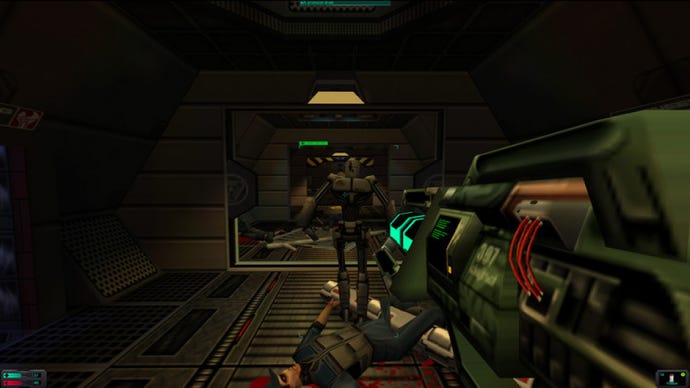
A protocol droid in System Shock 2
“And I just kept getting error messages,” he says. “All the little tricks that I could try to get it to work didn’t work. So I went to GOG.com, because why wouldn’t they have this? It’s one of the best games of all time. And that’s when I discovered that it was their number one wishlisted game.” That second dead end prompted another question: “What happened to the rights? Why can’t they release this?” Kick headed to the Wayback Machine, and looked up old articles from the time that Looking Glass went out of business.
It’s an unlikely story, and the wider games industry initially treated it as such. When Kick approached GOG.com, they were incredulous that a nobody with a newly-registered company had secured the rights to its most-wanted game. “They didn’t believe me,” Kick says. “They actually said in the email that I was full of shit. Because they had been trying to get this game for years. Like, how does this kid just get it? They asked me a bunch of questions, like, ‘Which of your family members works at this insurance company?’” Later, after System Shock 2’s relaunch, Ken Levine’s agent found Kick’s phone number and rang him up out of the blue, demanding to know who he was. “It felt like an interrogation,” he says. “And immediately I was like, ‘Oh my god, what did I just get into?’”
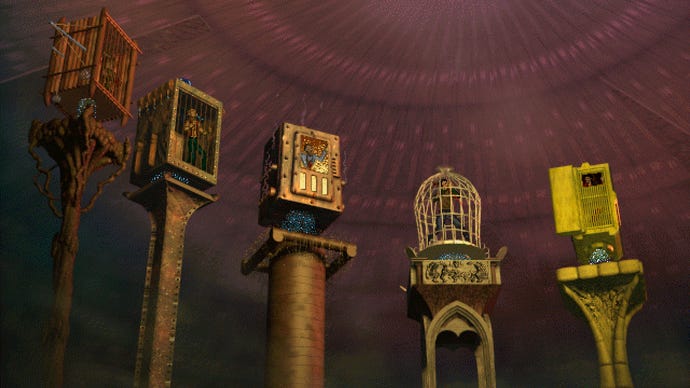
Captives in cages in I Have No Mouth, And I Must Scream
Over time, Nightdive progressed from curios and cult classics - like the campy comic book adventure Noctropolis, and Bad Mojo, which cast you as a cockroach - to collaborations with major publishers, like Turok and Doom 64. Ten years on from that first deal, despite the occasional misstep and iffy launch, Kick and the company are respected players in the games industry. Yet fittingly, they’re still deeply involved with System Shock - having bought the rights from the insurers, and committed to the new remake of the 1994 original.
Nightdive haven’t messed with the narrative structure of the original campaign, but have rewritten some of the lines to create more bonds between characters around Citadel station. They also preserved System Shock’s considered approach to shooting - furnishing you with alternative ammo types, and pushing you to match your weapons to your targets, whether they be mechanical or biological. “We made sure that there were lots of opportunities to experiment and figure out what worked best because of the limited inventory that you’d have,” Kick says. “Knowing you could only carry so much ammo and so many different weapon types, stuff that really makes you think about your choices.”
Image credit:Origin SystemsImage credit:Prime Matter / Rock Paper ShotgunThe CPU cores in System Shock classic (left), and Nu System Shock (aka the remake)
Image credit:Origin Systems
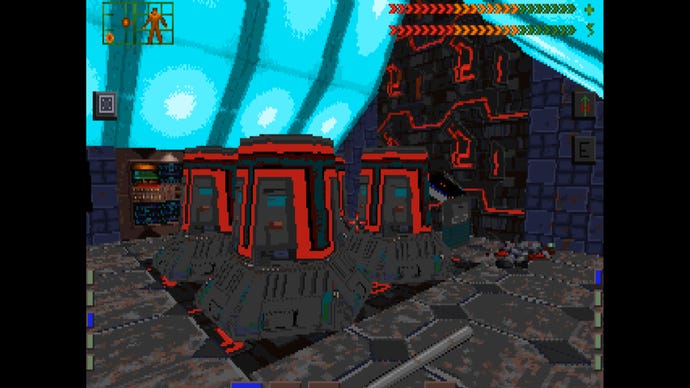
Image credit:Prime Matter / Rock Paper Shotgun
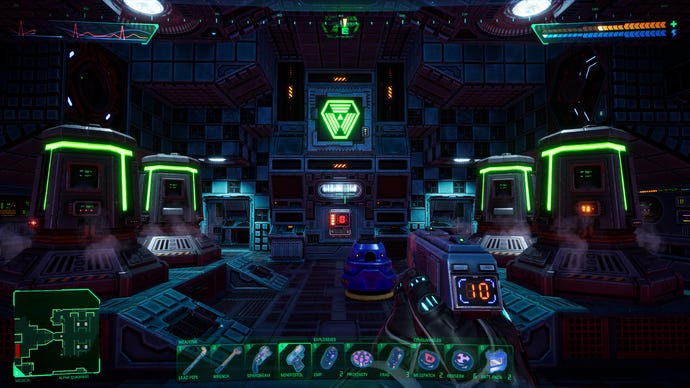
Nightdive have kept, too, the surprisingly forward-thinking difficulty options for System Shock - which allowed you to configure not only combat but puzzles, and even alter the complexity of the story to suit your tastes. It’s a degree of granularity that the wider games industry has only recently begun to adopt. “To be able to change a couple of factors like that before the game starts is gonna just make it more accessible for a lot of people,” Kick says. That said, Nightdive eschewed many of the player safety nets of modern AAA productions. “If you wanted the real System Shock experience, you had to listen to the audio logs,” he says. “You were probably going to need a piece of paper to write down door codes.
