HomeFeaturesJusant
How Jusant tells its history through art instead of dialogueLead designer Sofiane Saheb and art director Edouard Caplain on Jusant’s strange voyage
Lead designer Sofiane Saheb and art director Edouard Caplain on Jusant’s strange voyage
Image credit:Rock Paper Shotgun/Don’t Nod/Don’t Nod
Image credit:Rock Paper Shotgun/Don’t Nod/Don’t Nod
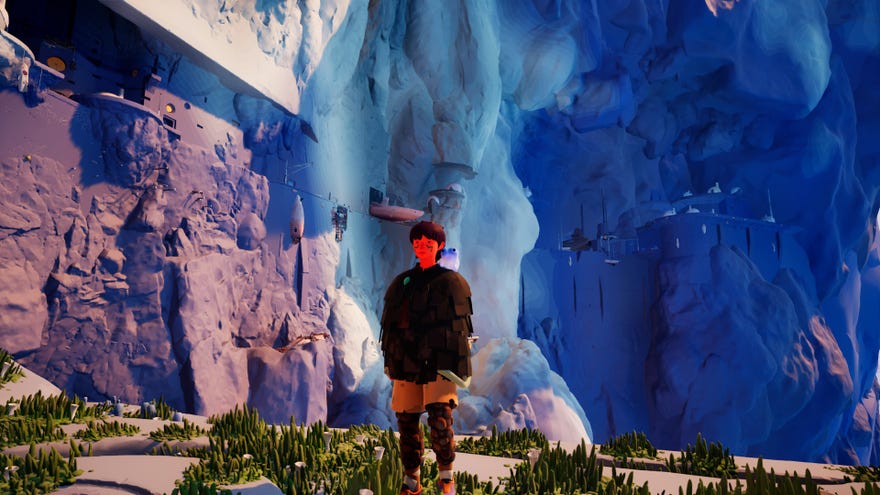
“Moebiusbuilt a world that doesn’t exist, but you can understand it. It’s a realist world. A world you can relate you, but it’s not your world,” says Edouard Caplain, art director forJusant, the meditative tower climbingadventurethat isLife Is Strangestudio Don’t Nod’s latest game. Moebius was the pseudonym of French artist Jean Giraud, and whosesurreal sci-fi and fantasy landscapes, with washes of contrasting colour and impossibly huge structures of soaring rock, have influenced games for years. You can certainly see that influence in Jusant, too: a world you can understand, though it’s quite unlike your own.
RPS slapped on the coveted Bestest Best stickerwhen reviewing ita few weeks back, calling it “a show don’t tell masterpiece”. A sentiment I can get behind as a long-standing proponent of silent games ever since the Evil Within 2 insisted on puncturing its creepy baroque ambience with consistently stupid dialogue. Jusant comes from a team that know how to write a conversation, though. So why the change of pace this time around?
“We quickly realised that not having any NPC or dialogues with another NPC would benefit us to focus on the larger themes of the solitude and melancholy of the tower,” says lead designer Sofiane Saheb, “the voyage, you know?”. Early versions of Jusant, says Saheb, did experiment with both dialogue and NPCs, though no voice over (“We didn’t want the hassle!”). “It felt weird to have a premise of an abandoned tower just to run into someone. Maybe it was a bias we had coming fromLIS2. At the time, it felt natural to have some kind of dialogue. But in the end, having no dialogue serves the story of the game”
Image credit:RPS/Don’t NodImage credit:Rock Paper Shotgun/Don’t Nod/Don’t Nod
Image credit:RPS/Don’t Nod
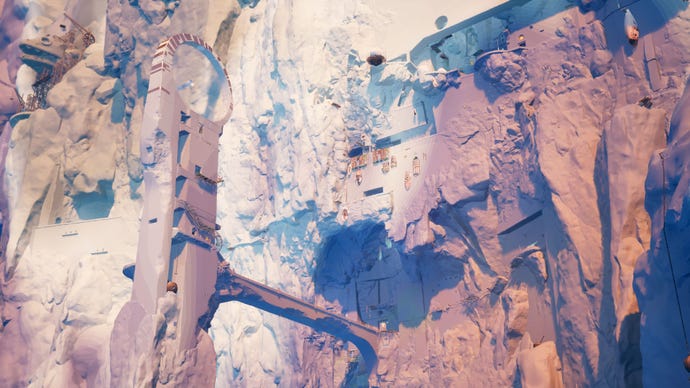
Image credit:Rock Paper Shotgun/Don’t Nod/Don’t Nod
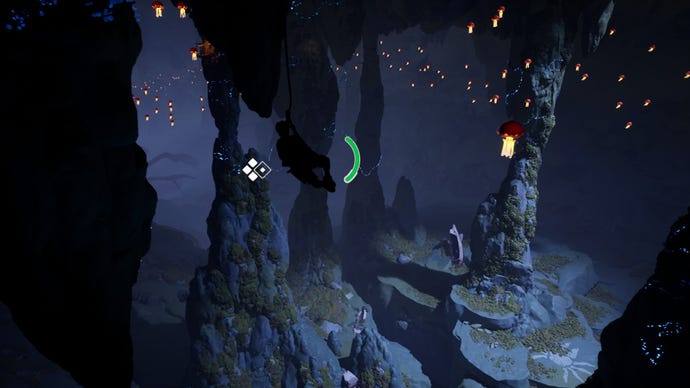
Another departure from traditional design comes in Jusant’s ‘silent sidequests’ - objectives with no log, that might reward nothing more than a quiet moment of contemplative solitude. “There are no written objectives, per se, you can kind of see the objective of the area, but we didn’t want to have markers on the map,” says Sahed. Jusant, he continues, has no “classical rewards”. Instead, “you see the vista. Each biome throws up a new mechanic that I think keeps players interested. It was important to have the visible change, new ways to enjoy the core mechanics”
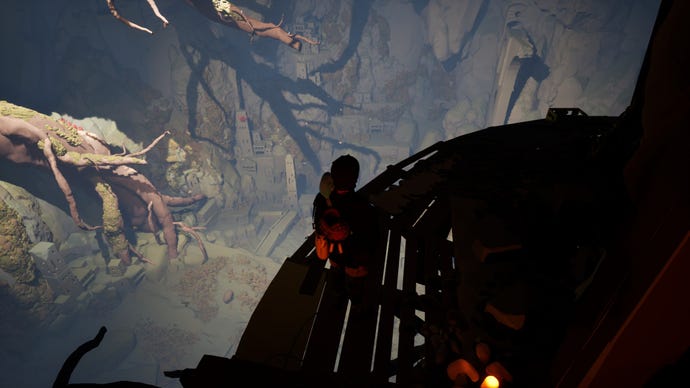
Jusant’s real magic trick, though - and the one that made me first want to speak to the team at Don’t Nod - is its ability to convey vast spans of history in individual snapshots of its imaginary world. Within a single area of Jusant, you might notice new cultures built on top of the old. New architecture uses the foundations of the ancient, then itself is lost to the passage of time underneath blankets of flora and barnacles. The same goes for its fauna, where creatures that used to be pets have become wild, then vital parts of their ecosystems. This environmental storytelling substrata is something Jusant’s team spent a long time getting right.
“I like to use Tomb Raider as an example,” says Caplain, explaining that the Tomb Raider games offer an archeological experience of the past. “What we tried to do in Jusant was that, but, to have a different layer of past. We tried to achieve a look for the very old architecture, then another for the more modern architecture.” Caplain gives the example of the Louvre, imagining future explorers stumbling across the modern glass pyramid in its courtyard set against the older buildings. The team wanted to portray a past civilisation with the time and inclination to create more elaborate structures and art; endeavors that only really flourish once the basic needs of a culture have been met. “Then they fucked up everything. We wanted to show all that in one frame of the image.”
Image credit:Rock Paper Shotgun/Don’t Nod/Don’t Nod
This player-as-archaeologist style of environmental storytelling is one I’ve come to appreciate recently, especially as a long term fan of both Team Ico and FromSoftware Games. While Jusant tells what the team ultimately intended to be an optimistic tale, last year’sElden Ringuses a similar approach to historical substrata to weave a bleaker vision. I still find myself queuing up Elden Ring lore videos to sleep to, and I recently stumbled across the aptly-named Tarnished Archaeologist fascinating deep dives into The Lands Between’s history.
Talking to Caplain and Saheb reveals how many influences, and how much effort, can be involved in making a game like this. As someone whose always taken a “one and done” glance approach to environmental storytelling, this string of serendipitous eye-openers have made me appreciate the work artists put in to these worlds so much more. And for Jusant to convey so much in such a reserved and elegant package makes it a real standout in an already incredible year.
