HomeFeaturesIndika
How historical fantasy Indika channels its Russian creator’s anger against Putin and the Orthodox Church"What is happening in Russia now looks like some kind of crazy experiment."
“What is happening in Russia now looks like some kind of crazy experiment.”
Image credit:11 bit Studios
Image credit:11 bit Studios
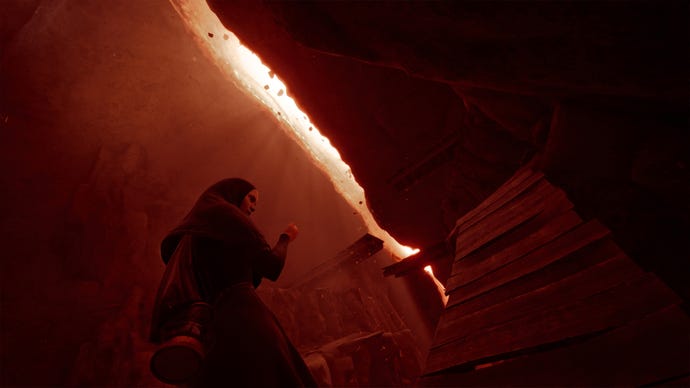
The game’s setting is naturalistic, with motion-captured facial animations and photorealistic buildings and interiors, wrought using Unreal Engine. But it is also a “fairy tale” landscape, in the words of studio co-founder Dmitry Setlov, shot through with phantasmagorical flourishes - monochrome or blood-red filters and apparent hallucinations, to say nothing of the aforesaid creature, a skulking mass of tendrils that puts me in mind of the Shadow from Ursula K Le Guin’s novel A Wizard Of Earthsea.
Image credit:11 bit
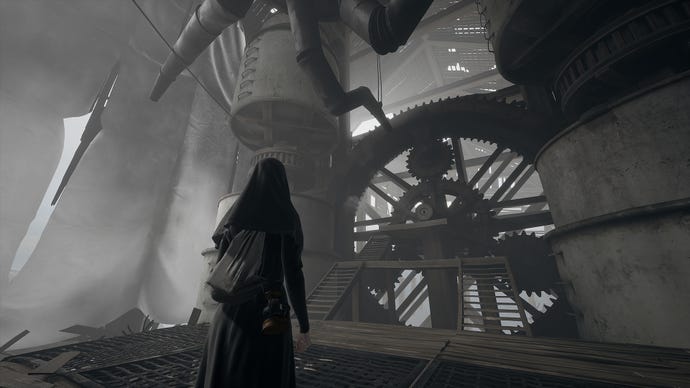
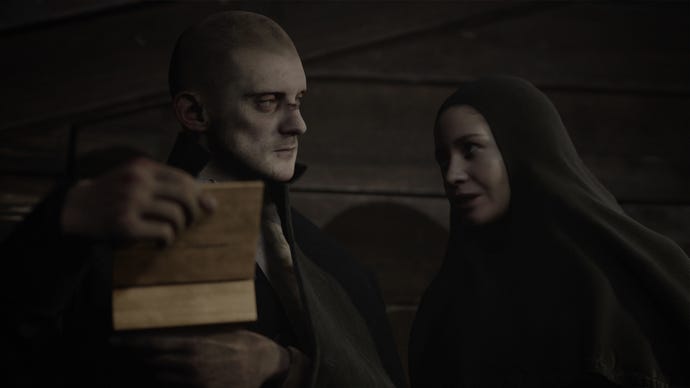
The game’s locations are designed to feel a littletooauthentic - so obsessed with minutiae that they become unearthly. “Although we treat many historical details with great attention, many, on the contrary, are highly artistically processed, exaggerated, and brought to the point of grotesquery,” says Setlov. The mechanics and rhythms of play, meanwhile, are very plot-driven and deliberately stifling. You can expect “a lot of cutscenes” and “tedious walkthroughs with long conversations”, though Setlov adds that there will be “spatial puzzles that can brighten up this activity.”
This oddly jubilant emphasis on stuffiness reflects Setlov’s downbeat appraisal of canonical Russian literature. “If you read Dostoevsky, Tolstoy, Pasternak, you probably noticed that the stories often do not try to captivate the reader with an action-packed plot, prioritizing thoughtful, deep, sometimes verbose reflections,” he says. “We also tried not to make mind-blowing action the basis of the player’s experience. We tried to make the game more mature both in terms of the topics raised and in terms of presentation.”
Indika’s location design, meanwhile, calls upon the developers' background in architecture: Svetlov himself, Odd Meter’s art director and the studio’s chief concept artist are all graduates of the Moscow Architectural Institute, and worked in the field before entering game development. (If you’re keen on architecture yourself, Odd Meter’sFacebook pageis a trove of historical trivia.)
Image credit:11 bit
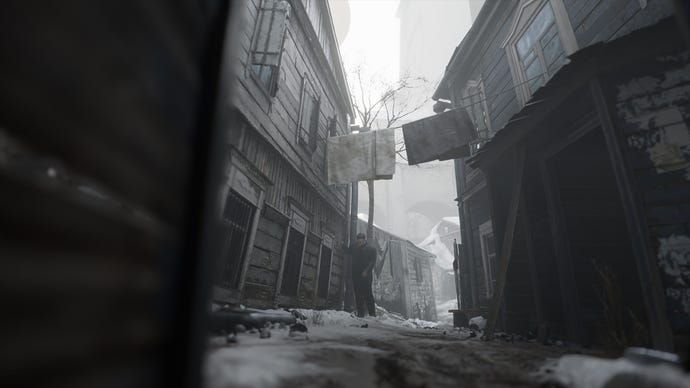
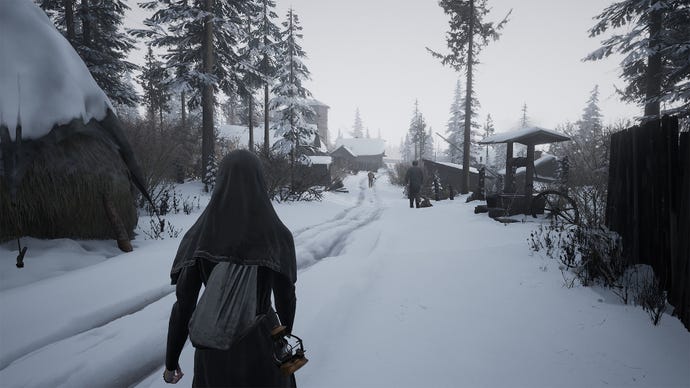
But if Indika’s atmosphere of melancholy and perversity channels anything, it’s Odd Meter’s anger and grief for Russia under Vladimir Putin’s regime. Once based in Moscow, the studio emigrated to neighbouring Kazakhstan during the opening months of the invasion of Ukraine in 2022, with some team members leaving individually while others moved as part of an organised relocation. Putin’s mobilisation of recruits in September 2022 made it important to act swiftly to avoid being called up. Odd Meter team members have also fallen foul of the authorities while taking part in street protests against the government, but Setlov says the studio weren’t seriously concerned about being mass-arrested.
Image credit:11-bit
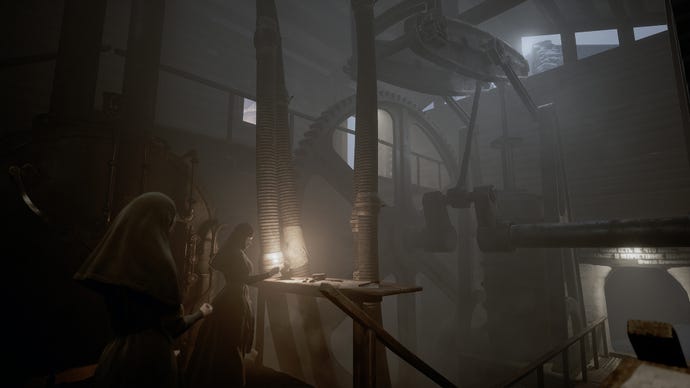
Indika’s portrayal of religion and doubt draws upon Svetlov’s own loss of faith, and his sense of how Putin’s regime has worked hand in glove with the Russian Orthodox Church (if you want context, thisarticle from The Conversationseems to offer a solid overview of Church-State relations in Russia). “I come from a very religious family,” he continues. “As a child, I spent weekends in church, lived with my mother in a monastery, and so on. But at some point, I began to understand that religion achieves goals that are directly opposite to those stated.
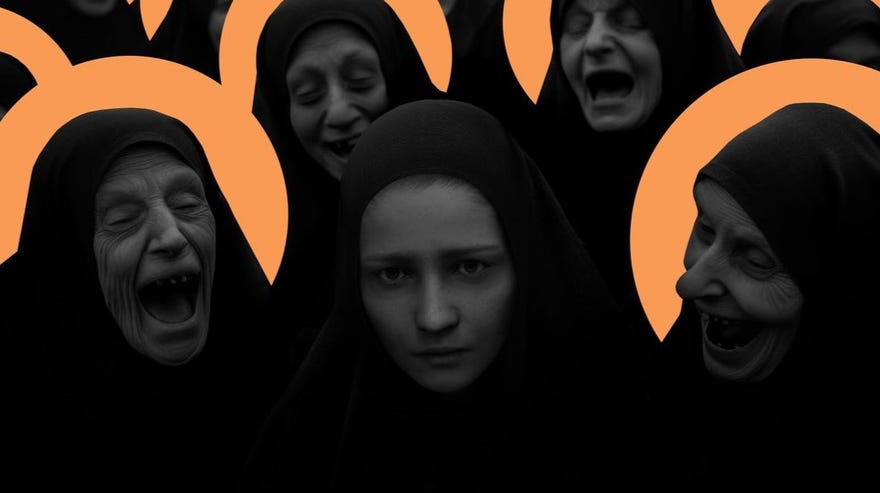
“I see religion as the philosophy of war with its uncompromising nature, while I think peace is always a result of some compromise,” he goes on. “It’s no wonder that religion has now become one of Putin’s propaganda weapons. So no, I’m not a believer. I would say [I’m] a militant non-believer.” This rejection of the Church comes across in one ofthe 2020 announcement trailer’s more farcical moments, when a tiny man clambers from an older nun’s mouth and scurries down a cleric’s arm to disrupt the ceremony of Holy Communion.
INDIKA | Announcement TrailerWatch on YouTube
INDIKA | Announcement Trailer

What can people outside Russia do to support opponents of Putin’s government? Seemingly, very little. “Not many people are protesting in Russia now,” Svetlov says. “At the beginning of the war, the opposition was completely destroyed, most politically active people left. What is happening in Russia now looks like some kind of crazy experiment. 100% of Russian media are now subordinate to the state and broadcast an absolutely parallel reality, in which Ukraine is a country of neo-Nazis who crucify children, and in Russia the vast majority supports the president.” Support might need to come later, Svetlov adds, during the hoped-for period of recovery after the end of Putin’s regime. “When it’s all over, it seems everyone will need long and difficult therapy.”
