HomeFeaturesHardspace: Shipbreaker
How Hardspace: Shipbreaker became the video game union movement’s final frontierLynx to the past
Lynx to the past
Hardspace Shipbreaker Is Our New Space Sim ObsessionWatch on YouTube
Hardspace Shipbreaker Is Our New Space Sim Obsession

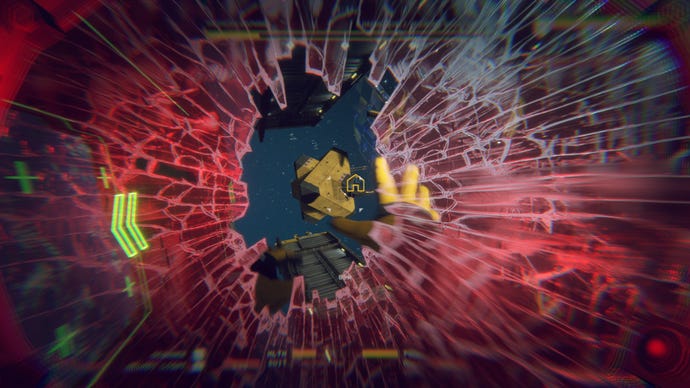
But Blackbird are Lynx, of course, inasmuch as Blackbird are the real architect of Hardspace’sgratifying, but clownishly unsafe zero-G workplace simulation, which gives you 15 minutes to butcher space derelicts and grapple the pieces into hoppers without being incinerated, crushed, electrocuted or blasted into terminal orbit. Whether any aspect of that workplace is “a Blackbird or a Lynx thing” - in other words, how callously Blackbird decide to treat their player in service to a dystopian fiction - is a fascinating, open-ended question, especially now that the story has broached the topic of unionisation.
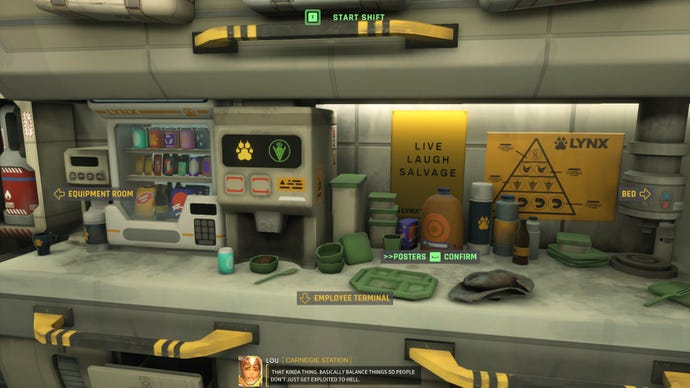
More immediately, Hardspace is designed to rebut the casually demeaning idea of manual labour as ‘unskilled’ next to, say, the brainy business of software development. As Shah says of the situation in India, “‘labor work’ is almost always treated with much lower respect than ‘knowledge work,’ and never enjoys the same compensation or safety standards - physically or financially.”
The game walks a tricky line between rebutting this snobbiness and over-romanticising physical graft. Starship butchery itself is spectacular, and has a palpable mastery curve: the more familiar you are with each class of vessel, the faster and more gracefully you’re able to strip out the choicest pieces, and there’s a fundamental delight to gauging the physics of objects of different densities.
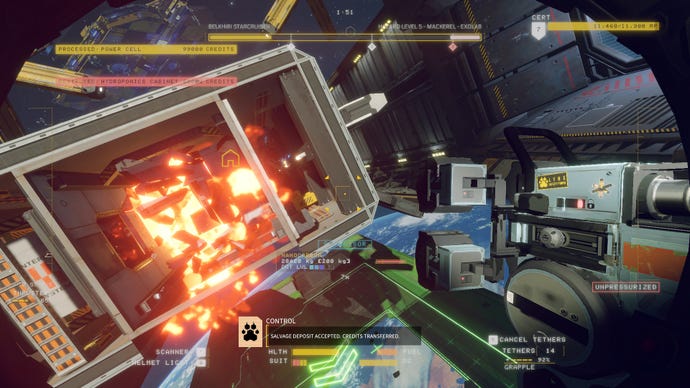
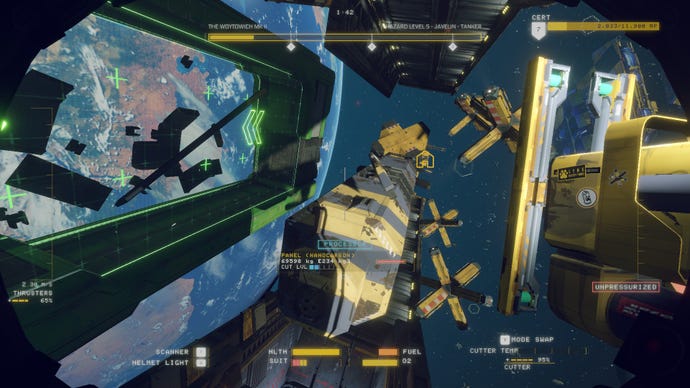
The laser cutter and grappling tool you rent from Lynx are empowering toys, reminiscent both of Airfix models andHalf-Life 2. Melt the yellow-chevroned joints along the spine of a science ship and you can lift away half the hull, as if peeling a banana. They’re also designed to feel worn-down and inadequate, however, needing regular repair and often requiring that you put yourself at risk to harvest the pick of a cruiser’s innards. The starting laser isn’t powerful enough to slash through dense thruster housing, for example, which means that you can’t switch off the fuel lines before disconnecting them from the core. Instead, you must zap the hoses and swoop down the resulting tunnel of flames to shut off the fuel before everything explodes.
The menus themselves are deliberately unwieldy. “Sometimes we would not have iconography in the game, so the player now has to put in more work,” Shah says. “Even the smallest task can be quite labour-intensive. It’s very intentional - there’s not a lot of colour in the user interface, and it’s not slick, sometimes it’s an extra click that you have to go through.”
One bemusing consequence of framing all these aggravations as “Lynx things” is that Blackbird’s on-going quality-of-line enhancements feel vaguely implausible, out of sync. The current Early Access version’s HUD is a huge improvement on the 2020 launch iteration – it’s much easier to monitor your oxygen, fuel and how much of each vessel is left to salvage. All the same, I was rubbing along handily enough with the old interface. From the perspective of a corner-cutting Lynx boss, it’s surely money gone to waste.
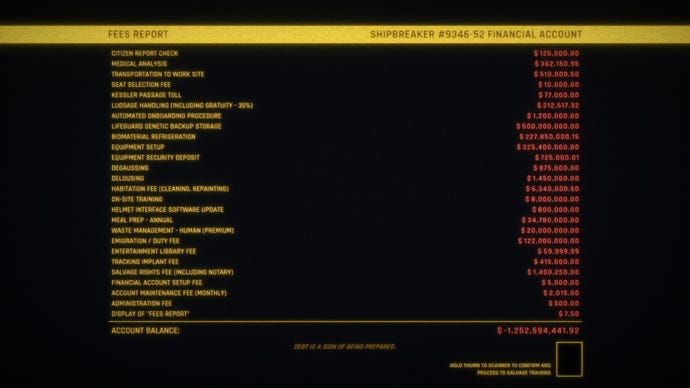
I’m not the only one struggling to distinguish between the game and its fiction. Player feedback to Hardspace routinely blurs the line between views on Blackbird’s design decisions and views on working conditions at Lynx, with many users bringing in their own experiences of employment in transport or heavy industry. Open the Steam forums, and you’ll read truck driverstutting about the lack of regulations for strapping down cargo, and former A&P mechanicslikening the “Lynx token” upgrade systemto the 19th century mining town practice of payment in company credit.
Image credit:Focus Entertainment
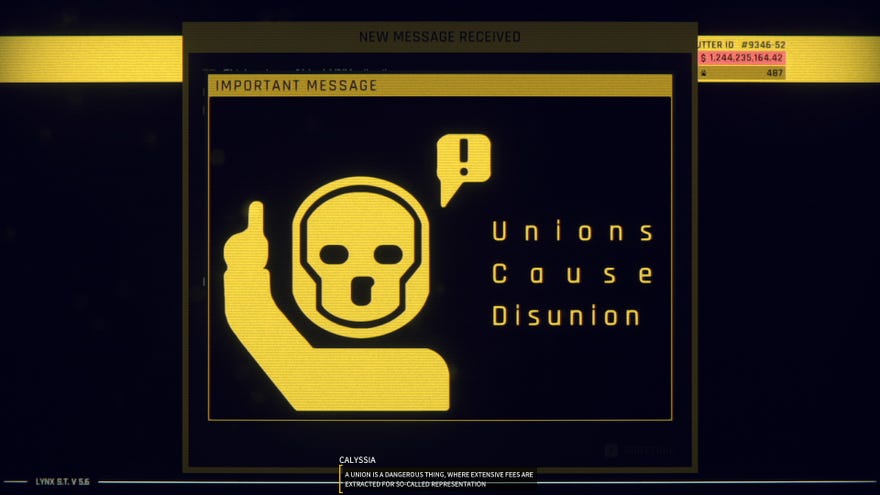
“Unions are obviously a highly divisive political topic here in the west,” Hudson notes. “I think that’s maybe different in other parts of the world - in Europe, I understand it’s more commonplace, just a matter of business, but here [in North America], it’s highly divisive. And that goes back to the struggles of workers in the 40s and 50s, and how governments and corporations created pushback and propaganda about unions to build up this perception that they’re horrible and evil.”
While its leanings are plain, Blackbird has tried to offer a “breadth of perspectives” on unions in the game. “You have several characters who aren’t in support of the union, and they have very good reasons for not being in support of the union.” The character who perhaps encompasses these divisions is Weaver - a former shipbreaker literally reborn as a manager after an accident during the cloning process, who serves as your tutor and supervisor.
Weaver still loves the job, living it vicariously through his teams, which makes him reluctant to cause a fuss with upper management about things like the often-fatal absence of an automated ship decompression system, and tetchy about minor infractions such as shipbreakers making sneaky use of oxygen found aboard some ships, rather than buying Lynx-brand refills. He’s a caring presence, the voice in your ear talking you through each shift, but also, a company man.
Designing Lynx, their technology and their management culture has been part of Blackbird’s own reinvention of themselves as a workplace during the game’s development. “I think the game exists because Blackbird already had a really good stance on the health and wellbeing of its employees,” Hudson says. There are lingering questions here, admittedly: the studio has yet to share the results of an investigation into former lead designer Jennifer Scheurle,who left in November 2021afterallegations of abusive behaviourduring her career at other studios.
“We wouldn’t even make a game like Shipbreaker if that wasn’t already part of the company’s DNA,” Hudson goes on. “But I think working on the game also reinforced back to us that yes, these are our values, and we need to walk the walk, right? We can’t just make a game about labour injustice and not make changes ourselves. So I think that has a really nice positive feedback loop, that has helped precipitate things like the change to a four day week, which has been phenomenal.”
