HomeFeaturesHades
How Hades plays with Greek mythsHell to pay
Hell to pay
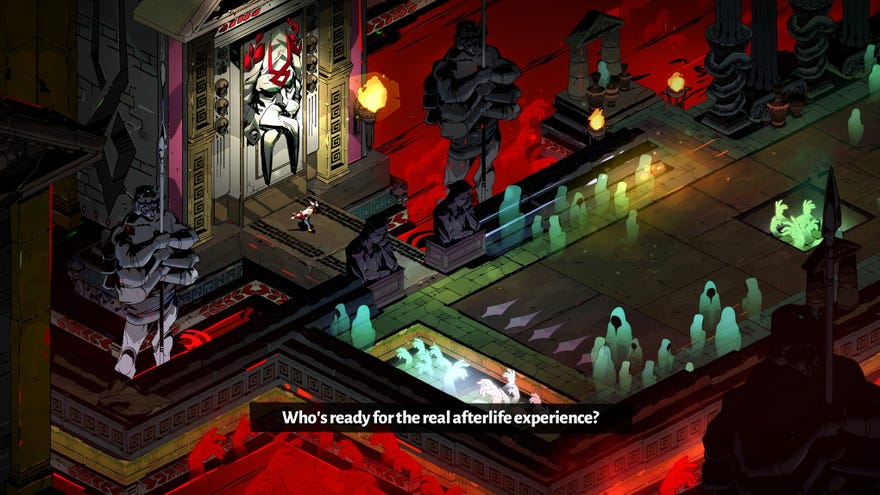
When Supergiant Games started to make Hades, their Roguelike action-RPG, they had plenty of experience making narrative games. AcrossBastion, Transistor andPyre, they’d found they were pretty good at telling stories. But in aRoguelike? And what’s that? They intended to put Hades inEarly Access? Could they ever fit with the kind of rich characterisation and storytelling that made Supergiant’s name?
Hades was founded in the embers of Pyre. This sports-cum-strategy game, which was released in 2017, is wrapped inside a choice-driven visual novel about a bunch of fantasy jocks who have been banished into purgatory and must travel the land to play other crims in the hope of cleansing their souls. It was well received, but I get the sense that Kasavin is a little disappointed with some of the creative decisions he and team made for it.
“Man, we did all that work to create truly branching open-ended storytelling, but Pyre feels like a game that you’d only play once,” he says.
Pyre may as well have been just as linear as Bastion and Transistor. But the studio loved the narrative design they created, so they decided their next game would refine and be in a genre much better suited to it: the endlessly repeatable Roguelike.
“Whatever form the narrative would take, it was meant to make moments of story that’d intersect with the action and help contribute to memorable runs,” says Kasavin.
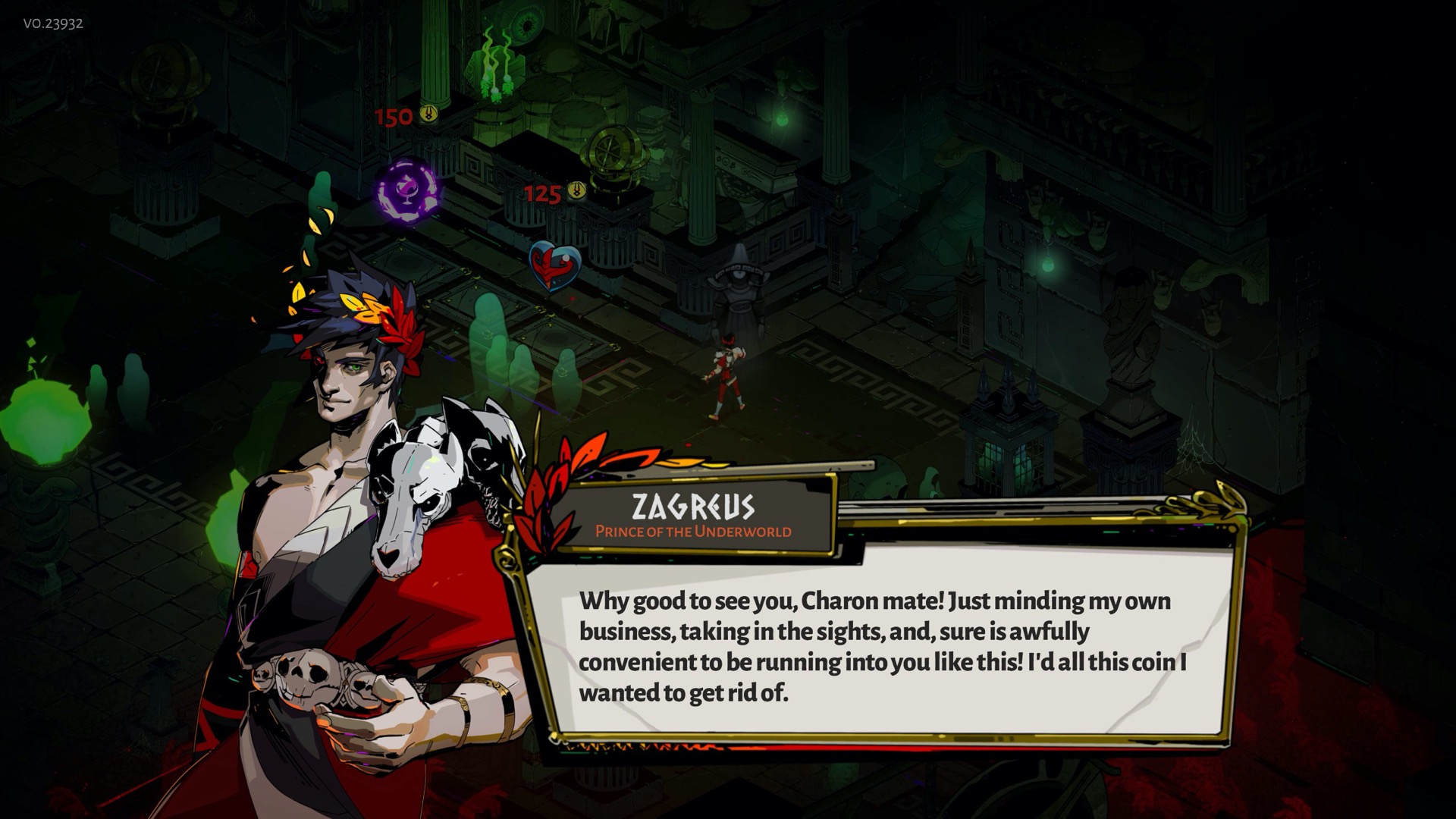
“I ran into this detail that there’s this little-known god called Zagreus who, according to some, is a prototype of Dionysus, but there’s also a shred of evidence that he might be the son of Hades. Like, woah! What’s that about? Then I researched Hades more, and it turns out there are very few stories told about him.”
Zagreus was a perfect subject: the lack of stories about him and his father gave Kasavin space to imagine new ones, and the repeating Roguelike structure slotted neatly into the idea of him running away after a blow-out fight with his dad, then failing and finding himself home again.
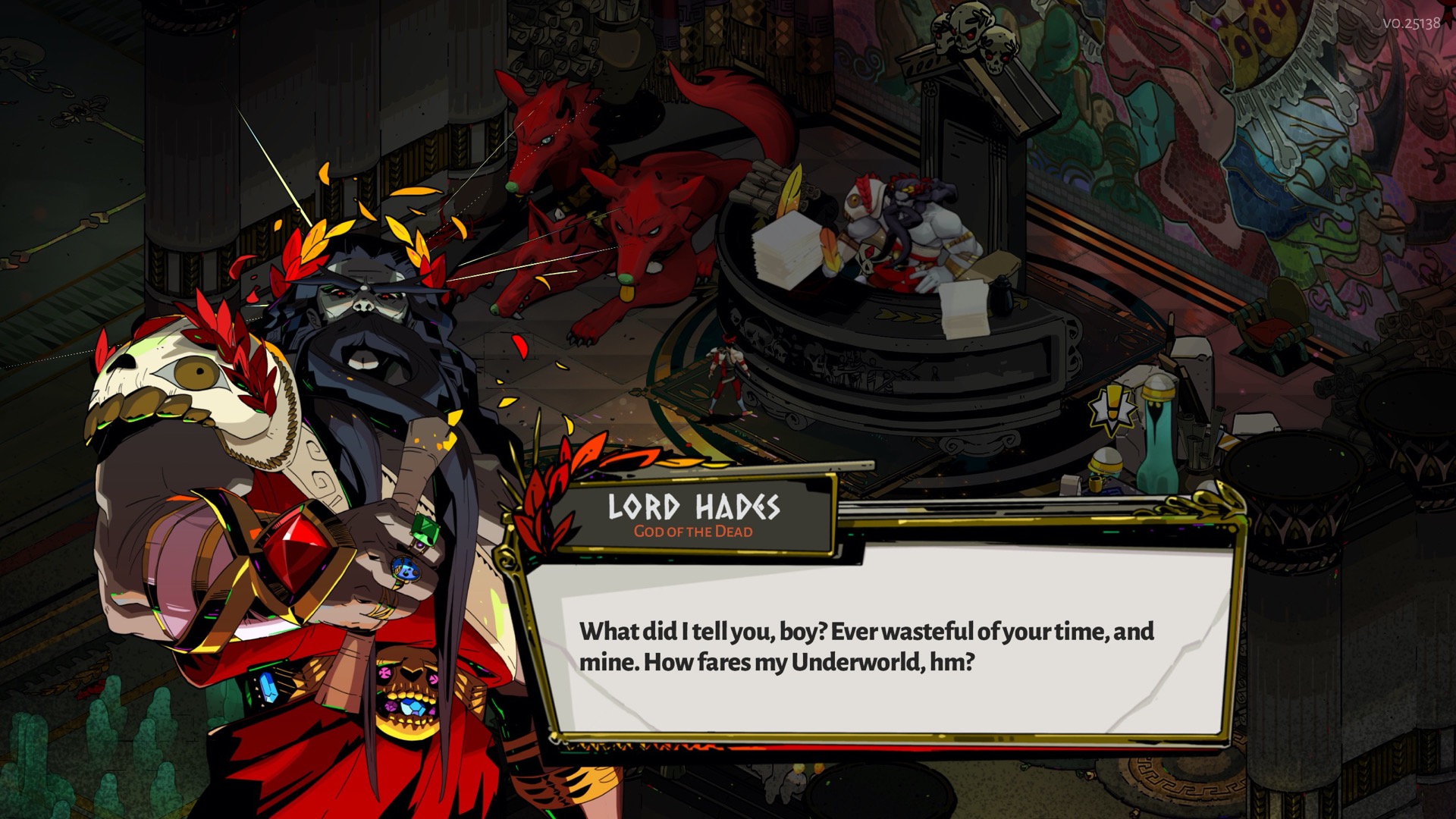
“And it seemed really funny! These slapstick failed attempts to get away, and your dad just makes fun of you and says I told you so. We were interested in that light-hearted tone because I think that the Roguelike experience has a slapstick quality. One moment inSpelunkyor FTL you feel on top of the world, and then you make some bone-headed mistake and throw it all away. You feel clumsy and stupid and you hopefully laugh at yourself.”
From there, the dramatic role of the gods became clear. They’d be a big dysfunctional family unit, fighting and bickering and using their support of Zagreus against each other. “You can think of them as a powerful crime family, because there’s no one who’s going stop them from doing whatever they want,” says Kasavin.
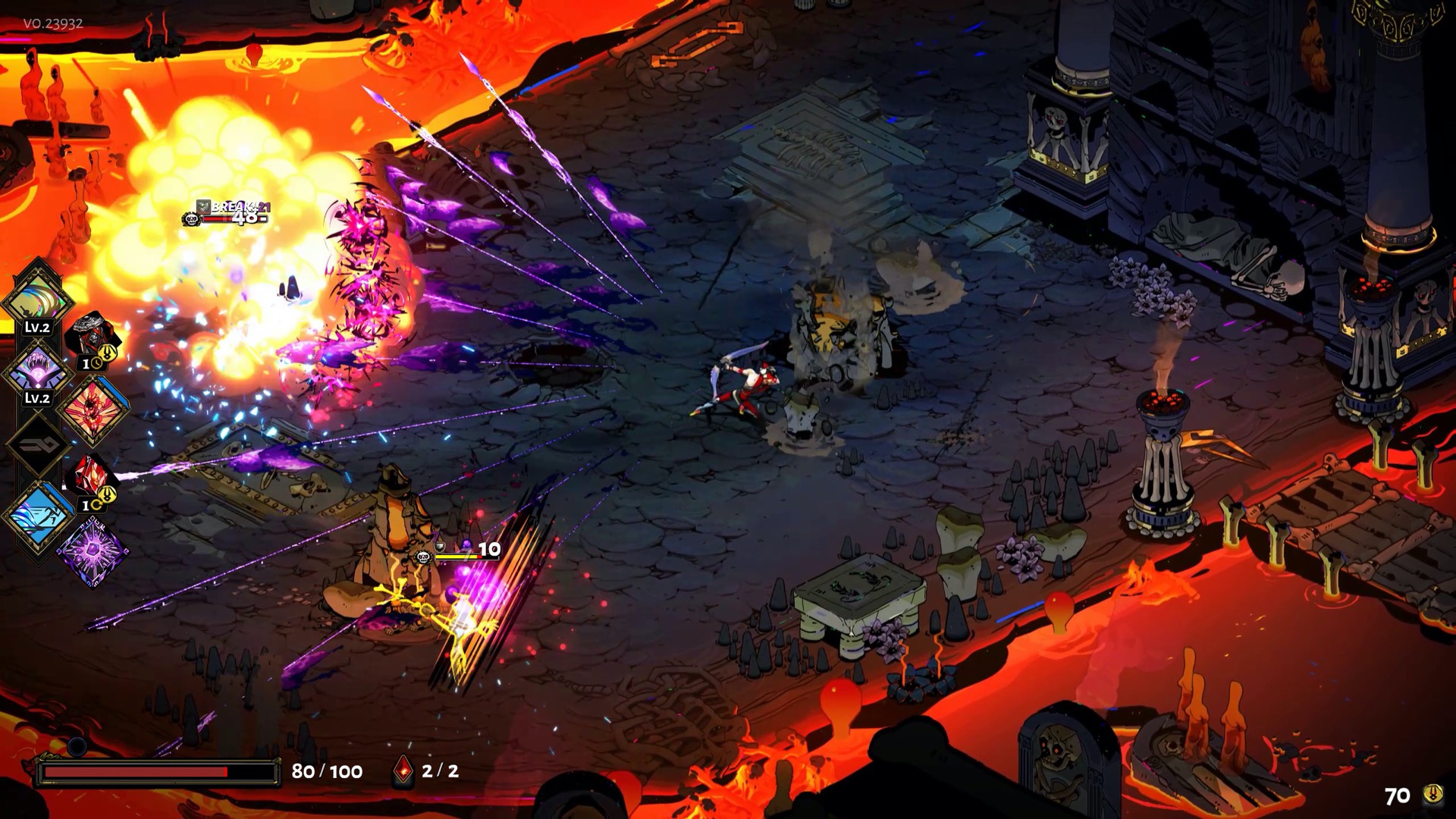
In the mechanics of the game itself, the gods lend Zagreus their powers – boons – for each run through the Underworld. Zeus is about lightning, Poseidon about water. Hermes is about speed, Artemis about ranged attacks. Their iconic nature gives players an intuitive understanding of what they’ll broadly do – “we were drawn to having Hades be more straightforward,” says Kasavin – a reaction to Transistor’s more opaque powers, which required players to work to understand them.
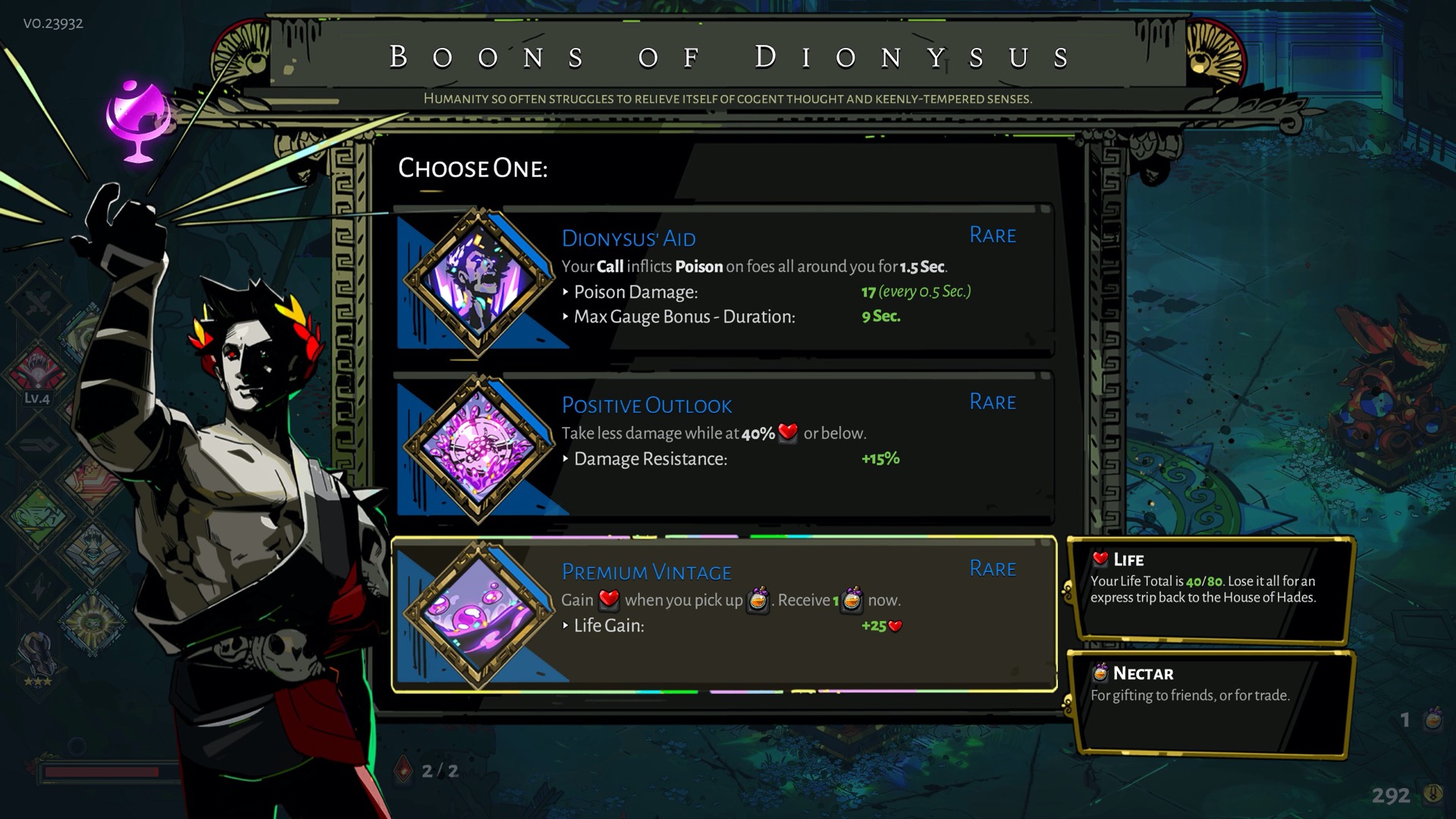
Dionysus’ boozy boons are often about inflicting hangovers on enemies – the ability used to be called poison (as shown in this older build here), since that’s exactly what a hangover does.
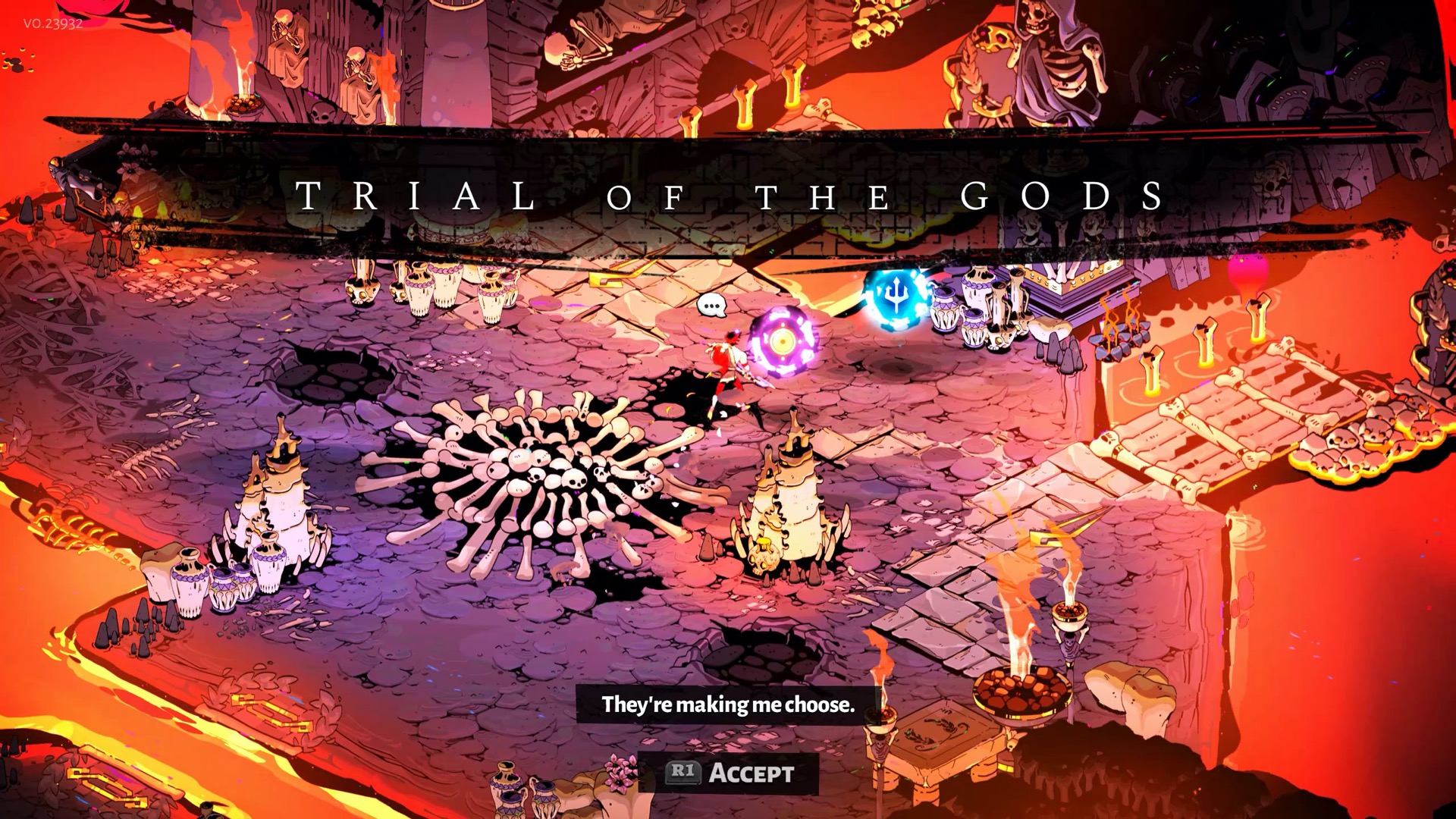
The idea of competition between the gods led to features such as the Trial of the Gods rooms. “We had to find a way to get the gods to interact with each other and express their displeasure with you,” says Kasavin. “They’re fickle, right? They love you one moment, they hate you the next.”
“That, for us, is woah. She’s a mother who’s lost her daughter and she’s mad. She’s past the initial stages of grief and now there’s this bitterness. So she’s like, alright, fine, you took something from me, so you’ll have winter. It felt so clean.”
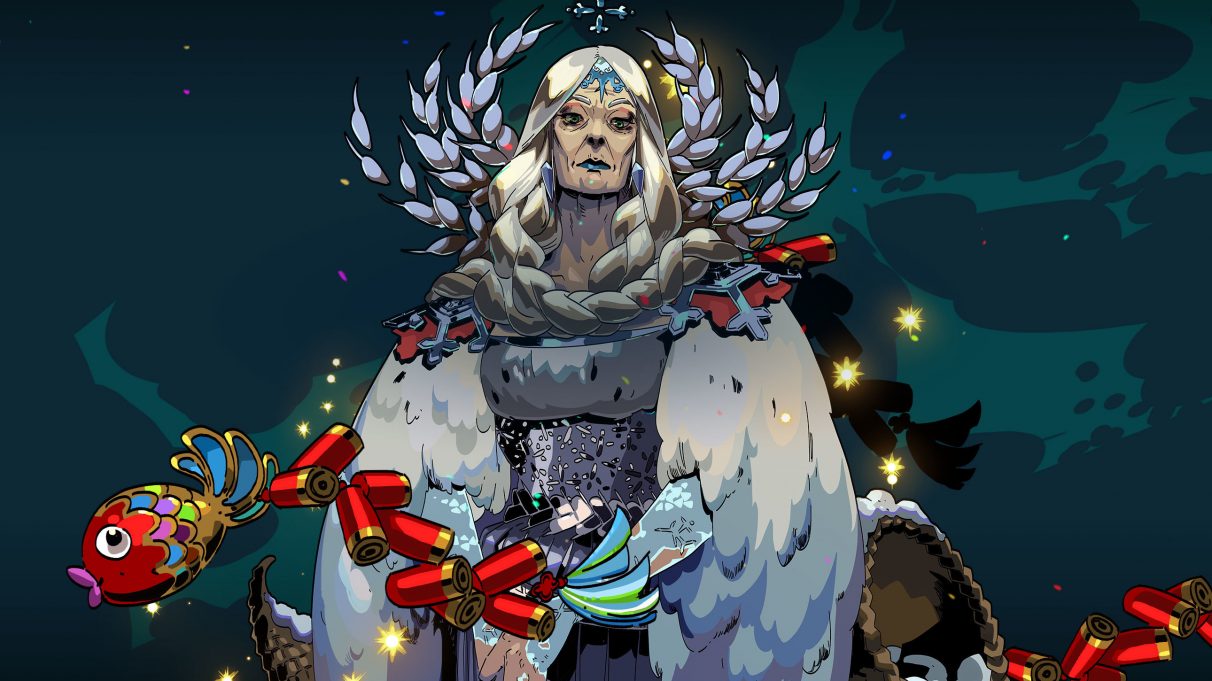
But even then, she nearly didn’t make it into the game. “From a writing standpoint, I’d love for Demeter not to be in the picture, because the story’s complicated enough as it is. But then, months into development, I felt very cowardly about that. Wait a minute. Demeter is important, this is a story about family. And furthermore, it feels shameful that this character hasn’t been rendered in an interesting way, to my knowledge.”
And besides, the bringer of winter presented an opportunity to finally add ice powers. “We’re making a fantasy game and still love Diablo and all that, and we hadn’t found an excuse for freezing powers.”

Aside from the theming, though, the real magic in Hades’ narrative lies in the way it responds to your actions and progressing storylines, despite being set within an endless cycle of dungeon runs.
But Bastion and Transistor are linear games which gave Kasavin lots of control over how they did it. “Hades is completely different. We have no idea, apart from a couple of moments, how things are going to be sequenced and how they unfold for a player.”

So Hades uses a system which looks at what’s happening and sees whether it matches a huge list of events that Kasavin has written – enough that it’ll take tens of hours of play until they repeat. “So, hey, you just found Zeus while you were about to die. We have an event where Zeus is like, ‘Man, you’re in terrible shape, let me see if I can help you.’”
Some events are one-off reactions to situations, some are part of storylines, and the game figures out which to show, but Kasavin has some influence over them because he can weight conversations in importance.
For example, you might run into Eurydice during a run. Then, back at the House of Hades after the run’s over, you might find her husband, Orpheus, who’s trying to rescue her from the Underworld. When you talk to him, the game will play a conversation in which Zagreus says he saw Eurydice and Orpheus asks you to give her a message if you see her again. Then, when you see Eurydice, the next conversation in the chain will play.
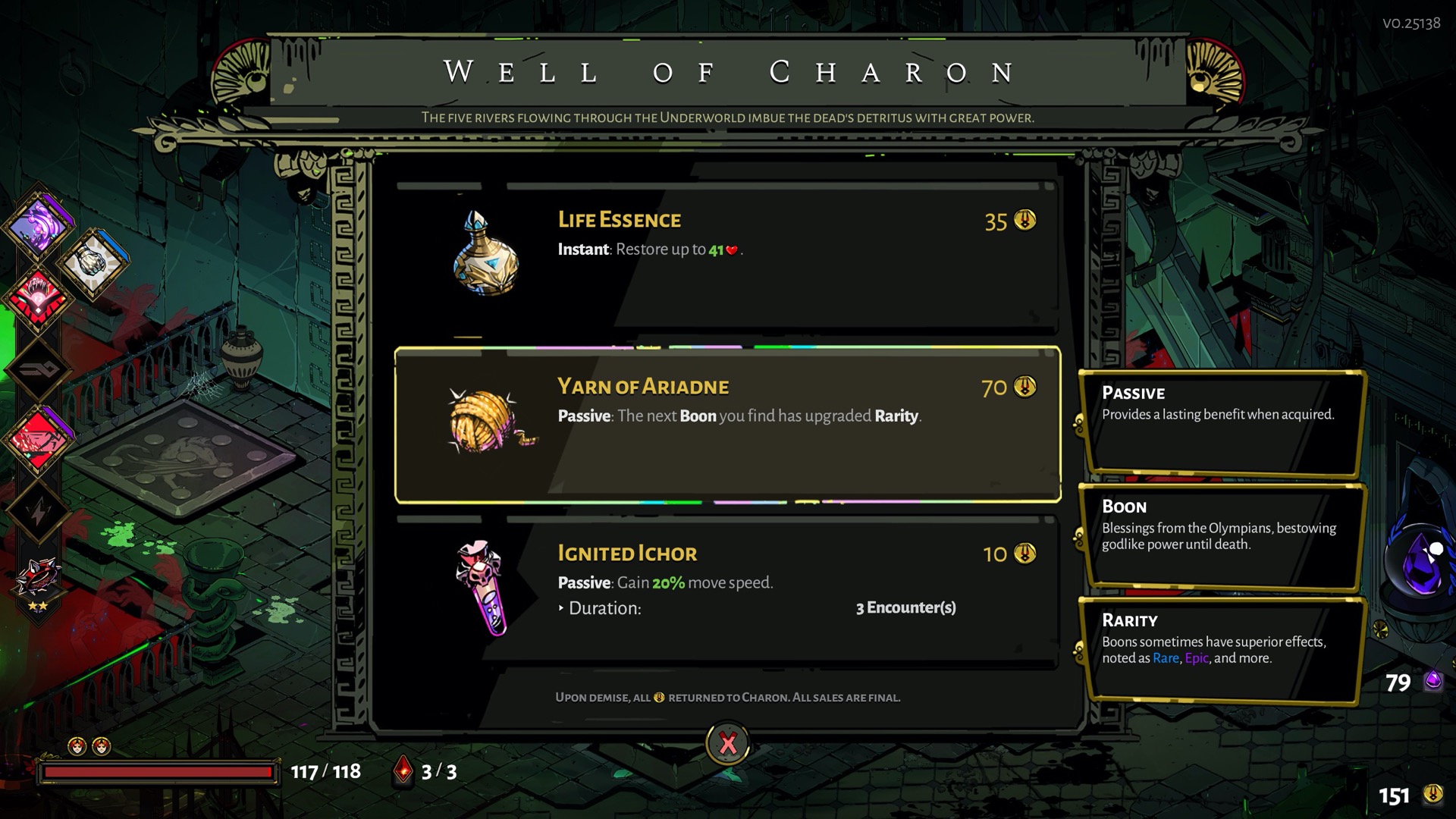
If you buy the Yarn of Ariadne and run into Thesesus, you can bet he’ll have something to say about it.
The story between Orpheus and Eurydice also illustrates the way Hades ties storylines between a run and the downtime after it; the chance to see what’s new back at base and to progress storylines eases the frustration in dying. Will Achilles be back? What happens when I give Megaera this nectar? How’s bad-dad going to mock me now?
“It was an explicit goal of our early development, to take the pain out of dying and having to restart. If the whole game is structured around dying and restarting, then we had to make sure the moment of death isn’t about rage-quitting. You have to be compelled to explore further and feel the time you spent wasn’t a waste of your time.”
It’s exciting to play a game that marries authored storytelling, a strong theme and dynamic interactivity so seamlessly. But Hades’ real success is that when you’re playing, it’s easy to forget just how progressive and clever its narrative design is.
But it seems it’s inevitable that Kasavin would shift from the linear stories that built Supergiant to non-linear ones that make the player the driver. “There are much more efficient and probably better ways to tell linear stories than through games. I’d try to write a book or something,” he says. “But we’re making games, and we have to take advantage of what’s unique about the medium, which is its interactivity.”
