HomeFeaturesDying Light 2 Stay Human
How Dying Light 2 fixes stealth, empowers players, and cribs off The Last of Us IILead game designer Tymon Smektała talks about making stealth essential
Lead game designer Tymon Smektała talks about making stealth essential
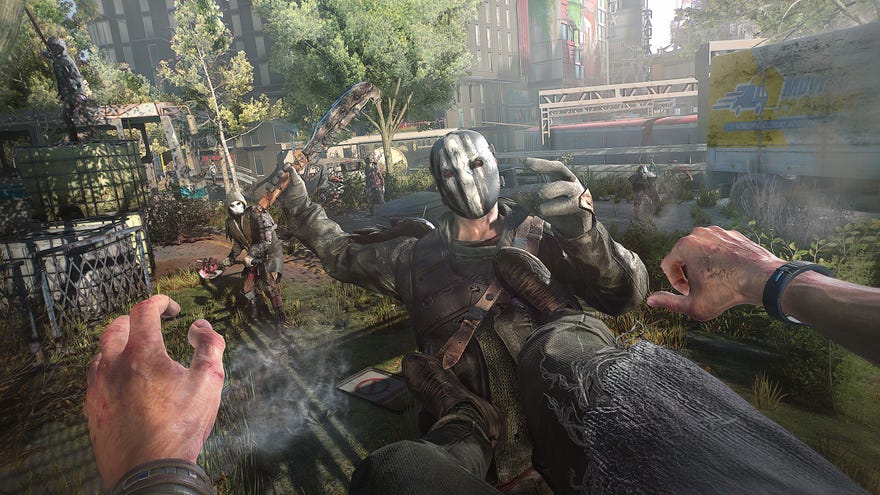
Slipping into a military-controlled ‘dark zone’ to plunder some high-end electrical equipment sounded like an easy job. You could be in and out in minutes, in theory, slinking through the locked-down multi-storey car park with a nice sequence of slides and skids to grab your treasure before vaulting a fence and scampering off. But there’s a problem: the lights are out, down in these concrete depths. The zombies are strong here. Special banshee-like screechers are primed to alert their undead brethren to the presence of any would-be intruders, prompting an unending wave of decaying meat to fling itself at you, all teeth and claws.
So this mission requires more finesse. You need to use all that agility and poise you’ve mastered inDying Light 2’s impressive parkour ‘n’ puching open-world city, sure, but you also need to layer more skills on top of that, cherry-picked from the new toolkit Techland has provided.
Dying Light 2 Stay Human - Decide the Fate of the City - Gameplay TrailerWatch on YouTube
Dying Light 2 Stay Human - Decide the Fate of the City - Gameplay Trailer

“We’ve worked on stealth quite a lot on purpose,” lead game designer Tymon Smektała explains. “InDying Light, we were aiming to create a game where we could put a challenge or a problem in front of you, and you could solve it with the environment. Stealth wasn’t one of the options you could use to solve that, really, in the first game.”
Smektała’s right. Dying Light gave you an array of ways to creatively problem-solve your way out of tricky encounters – parkour, ranged weapons, melee, or that ludicrously overpowered grappling hook spring to mind – but being both deadly and sneaky never seemed viable. If you tried to sidle past some heaving undead behemoth, you were liable to get your skull smashed into the wall. For players like me, that wasn’t ideal. “We really wanted to add another module, another chunk of options, for you to consider when thinking about how to overcome what we’re throwing at you,” continues Smektała. And that’s obvious when you get to grips with stealth in Dying Light 2.
Perhaps the best measure of success for how stealth works in the game comes when you try sneaking against the infected versus trying it against humans. Shambling zombies make for good target practice if you’re a fleet-footed bowman, thanks to their habit of standing around (even if some of them do like to tuck their little heads between their legs when they’re resting, making one-hit kills nigh-impossible). It’s not so hard to sneak into a lair of zombies - but mess up your route and you’ll be in the thick of them, easy prey and incredibly vulnerable.
“The whole mechanic of going inside ‘dark zones’ and trying not to wake [the infected] up… it’s a little bit different, and it’s something we’ve had in Dying Light 2 since the very beginning,” explains Smektała. “But we also knew we wanted to give you the opportunity to interact more with humans, both in combat and in dialogue, so a huge part of our development schedule – in animation, programming, everything – was dedicated to making stealth work against human AI as well as the undead.”
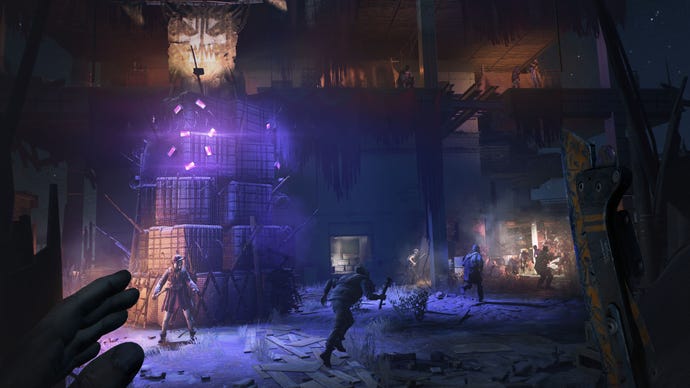
The game’s (much improved, more detailed) sound design plays into this renewed focus on stealth, too. Smektała explains that the first game’s approach to noise was incredibly simple: “make noise, attract virals”. In Dying Light 2, it’s less rudimentary. “There is a whole system related to noises,” he explains, governing how different enemies react to them, how strong those reactions are, and how they’re prioritised when they overlap. It is, he says, difficult to script, but hopefully makes stealth both more rewarding and more viable.
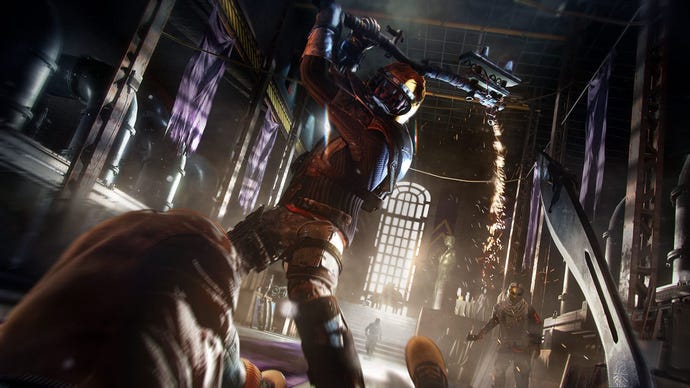
Smektała notes that Dying Light 2 has been designed, very intentionally, with intersecting systems, skills and techniques in mind. The game is built on myriad moving parts that are designed to interact and compliment each other. “It’s a game that rewards players that are creative and experimental, and who find their own solutions and are able to make connections between various game systems,” he explains.
Perhaps my doomed loud attempt at clearing out that damn car park would have been a little more successful if I’d gone in quietly first, used the precision shot skill I’d unlocked with the bow to pick off the more high-priority targets, then gone loud towards the end of the skirmish, hopping off the back of a stunned zombie and slamming my improvised mace into a group, before sprinting off to preserve what little life I had left.
When the full game launches on February 4, 2022 (which it will, Smektała assures me), maybe I’ll get the chance to rectify my errors, and play how Smektała envisions: using stealth as just one tool in my arsenal, and weaving it into everything else the unforgiving city of Villedor has taught me. Eventually clearing out a car park could be as easy in practise as it sounds in theory.
