HomeFeatures
How claymation, an X-COM screenshot and a Justice League tie-in game brought us DiabloBlizzard North’s co-founder David Brevik spills the beans on the making of a classic
Blizzard North’s co-founder David Brevik spills the beans on the making of a classic
Image credit:Blizzard Entertainment
Image credit:Blizzard Entertainment
David Brevik, now the president ofSkystone Games, did not expect to encounter a doppelganger when he arrived at Chicago’sConsumer Electronic Showin the summer of 1994. He’d come to the tech expo withCondor, a studio he’d co-founded only a few months prior, to show off Justice League: Task Force. A humble fighting game in the vein ofStreet Fighter, it was given a small demo booth and placed next to another game that featured a cast of superheroes, a strikingly similar visual style and, much to Brevik’s surprise, the very same name.
Watch on YouTube

At the time, it mattered little to Condor. The studio had only picked up the spandex-clad beat ‘em up to keep their accounts ticking over. “Our dream wasn’t to make these work-for-hire contracts; it was making an original PC game,” Brevik says. “So we would go to the Consumer Electronics Show and pitch different game publishers on our ideas.” That year, their big concept was a gothic roguelike. It would strip back the social elements of the roleplaying genre in favour of action, and bring the spirit of the pre-Windows ASCII dungeon crawlers the team had played in their youth to modern systems. It already had a name -Diablo- but nobody was biting.
“It got rejected many, many times,” Brevik says. “We kept hearing that RPGs were dead, which at the time was kind of true. RPGs were not selling as well as they used to. They were on the decline so people weren’t really willing to take a risk on funding.”
Image credit:Blizzard Entertainment
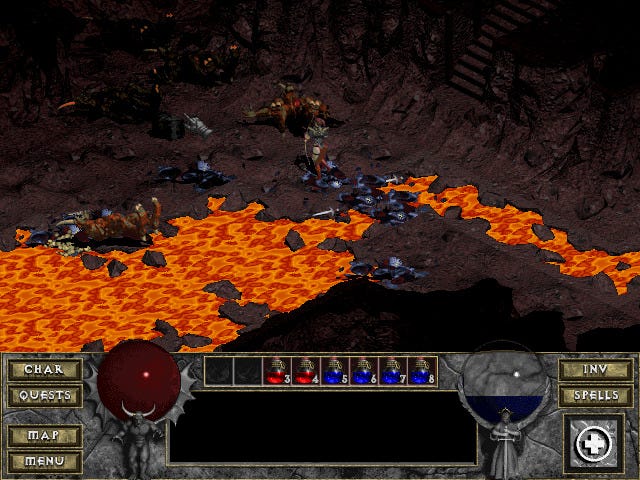
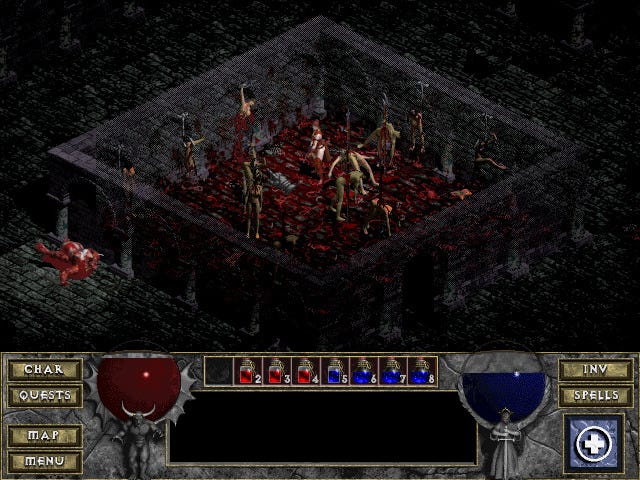
“They loved it,” Brevik says. “We signed the contract within a couple of weeks and started work”. With virtually no negotiation or preparation time, development could begin in earnest nearly instantly. Condor had already put together a comprehensivepitch documentoutlining the game’s core concepts, though what they hadn’t done was give much thought to what it would actually take to make Diablo.
“We were terrible businessmen and didn’t know anything about running a company,” Brevik says. The team was given just $300,000 from Blizzard to make Diablo – a fairly meagre payout even in the mid-’90s given it was supposed to cover 20 employees for two years. “We ended up having to take another work-for-hire job to pay for the development because we had just so miscalculated,” he says. “We were so excited about being able to make our dream game that we were just like, we’ll do whatever it takes. It was really dumb, but it was more about the passion of actually being able to make it.”
Image credit:Blizzard Entertainment
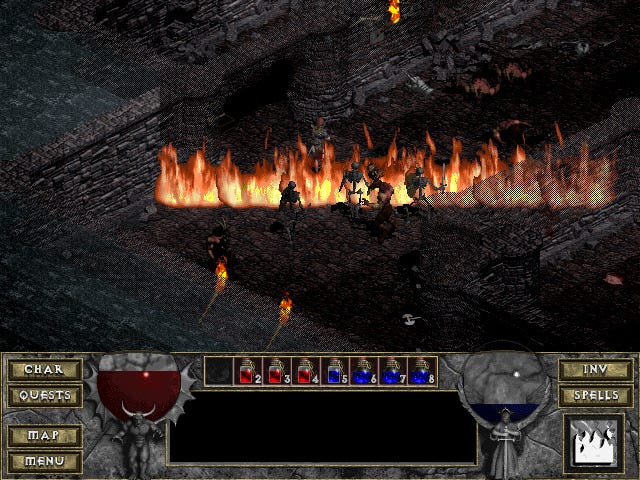
X-COM, Shining Force and other tactics games had already proven isometric perspectives and turn-based combat to be a successful pairing, and Condor hoped Diablo would follow suit. But six months into the project, Blizzard suggested a pivot: keep the perspective but run everything in real time.
“I was not happy about this,” says Brevik. “I was adamant that it would ruin everything about the game.” The roguelikes he’d enjoyed as a younger man were built around turn-based strategising. Merciless in their difficulty, you’d have to meticulously scrutinise every option at your disposal, or risk losing your character, and the hours you’d sunk into them, to permadeath. “When you got yourself into a situation, it was sweaty palms,” Brevik says. “You can’t make those [strategic] decisions in real time. It takes away all the strategy, all the depth of the interesting things that exist in these ASCII roguelikes, which was one of the main things that I was really looking to focus on and capture.”
But the rest of Condor were rather more agreeable. “I brought [Blizzard’s] dumb idea to the other people in the company, and they were like, ‘that’s a great idea’,” Brevik says. The team spent the next several weeks debating the change, until one fateful meeting in the company kitchen brought them to a vote. “Almost everybody raised their hands to change into real time,” Brevik says. “There were a few holdouts – maybe two or three of us – but the great majority wanted to change, so it was like, okay, I’ve been out-voted here, we’ll give it a try.”
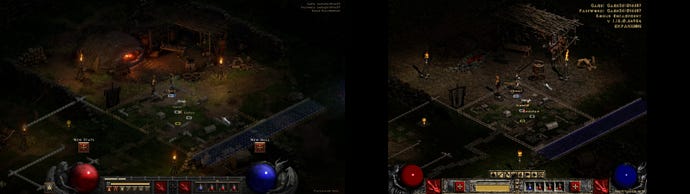
A comparison between the more recent Diablo II Resurrected (on the left) and the original, on the right
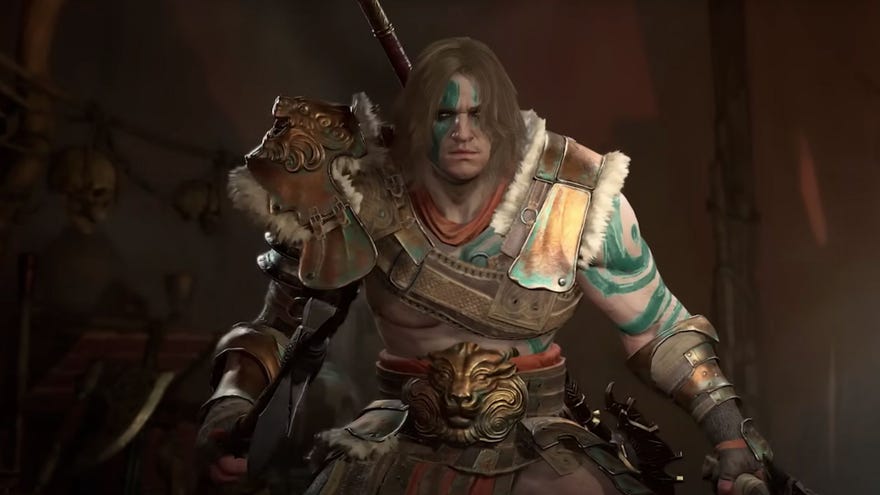
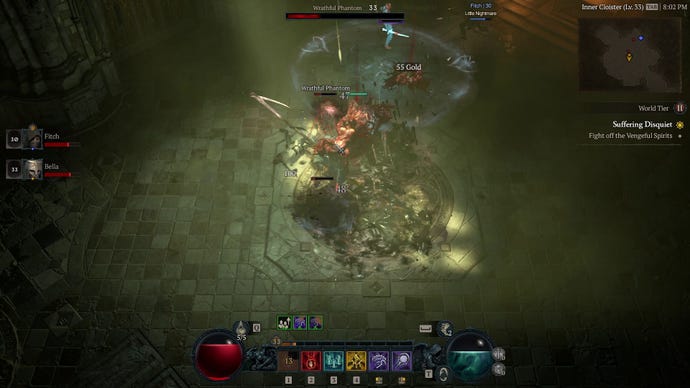
The new, shiny Diablo IV |Image credit:Blizzard, Rock Paper Shotgun
At least one clay model was created and a rig set up to record several frames of animation, but the result didn’t quite live up to expectations. “Every step of the whole thing was a total disaster,” Brevik says. “We’re like, this is just a really bad idea, and it’s much better for us to learn 3D modelling and use that. So within a couple of weeks we had cancelled that idea and decided to just go with pre-rendered stuff.”
Claymation or not, Diablo was an instant hit when it released in December 1996. A million units shipped within its first year of release, an expansion was promptly put into development at another studio, and Blizzard North quickly got to work ona sequelthat would add extra classes, new locations, and a more pronounced narrative. Its monster-mulching template has since become the basis on which so many other action RPGs have been built, and is still recognisable years later inDiablo 4.
“We definitely were aiming high. We were trying to make something new and unique,” Brevik says. “But it wasn’t really scary. We all felt we could do this. Even right off the bat, everything that we were making was very sustainable – we could easily see what we needed to do, where we needed to go, and what the product was going to be.” A modern ASCII roguelike? No, Diablo was something better.
