HomeFeaturesChinatown Detective Agency
How Chinatown Detective Agency is making a cultural impactCreative director Mark Fillon on being polarising, challenging players, and how to portray Asia
Creative director Mark Fillon on being polarising, challenging players, and how to portray Asia
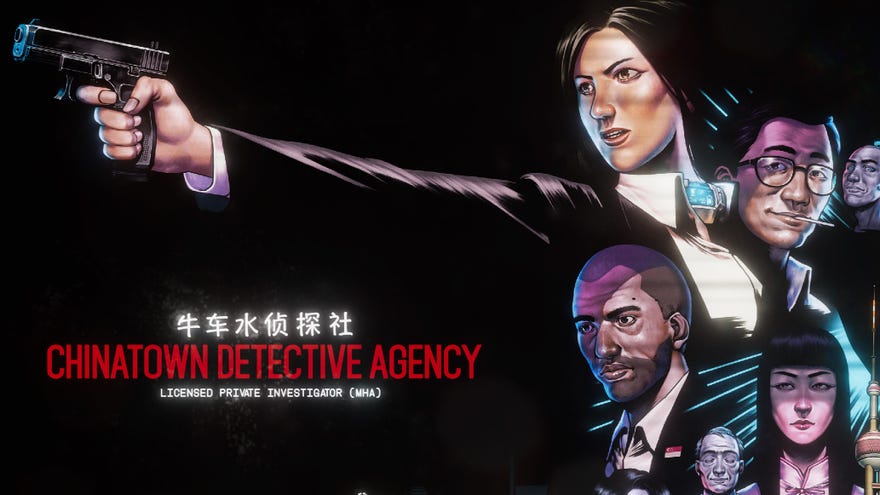
Chinatown Detective Agencyis a point and click adventure game that takes place in Singapore in the year 2037. It follows a young detective named Amira Darma as she starts up her agency to solve cases. While futuristic Singapore has secrets hiding at every corner, the case she ends up working on takes her all over the world. I spoke with Mark Fillon, creative director at General Interactive Co., about the inspiration behind the game’s themes, characters, and scope.
Chinatown Detective Agency started development in 2017 after the release of the studio’s first game Terroir, a winemaking tycoon game. In March 2020, the studio released a free alpha demo of Chinatown Detective Agency onto Itch.io, and successfully crowdfunded the full game on Kickstarter only a month later.
Chinatown Detective Agency - Meet Amira DarmaWatch on YouTube
Chinatown Detective Agency - Meet Amira Darma

The game is reminiscent of the point and click Carmen Sandiego games back in the 1980s, where the titular character would travel throughout the world to catch criminals and solve cases. General Interactive decided to emulate the classic retro pixel art style with Chinatown Detective Agency too, but to fit in with the overall grimier dystopian aesthetic, art director Richardo Juchem and the others wanted to give the art style a dark and edgier feel.
In particular, they used the Unity engine’s new 2D lighting effects to add more depth that normally wouldn’t show in flat pixel art. “That’s a huge difference between the actual game versus what it was two years ago. We’ve refined the art style and went wild experimenting with lighting effects until we found the right tone,” Fillon explains.
A comparison between 2018 (on the left) and 2022

While Chinatown Detective Agency steadily improved over the several years of development, not everything made the final cut. Earlier versions of the game included an Endurance meter where, if her Endurance got too low, Amira would have trouble completing tasks, even requiring food or rest to bounce back. But a good number of demo players found this mechanic confusing and halting, and it’s completely absent from the shipped game. Although the mechanic sounded great on paper, it ended up just bogging down the entire game experience.
“It seems great the first few times, but the novelty wears off really fast – and we had multiple playtesters bring this up,” says Fillon. “So we decided to focus more on the core gameplay and mechanics.”
In Chinatown Detective Agency that core revolves around solving puzzles with factual trivia. For example, in one of the early chapters Amira has to find out a stamp’s country of origin. There’s no in-game resource to figure it out, so players have to take to the real world and use search engines to find information (though, 2022 being what it is, this hadresulted it its own problem).
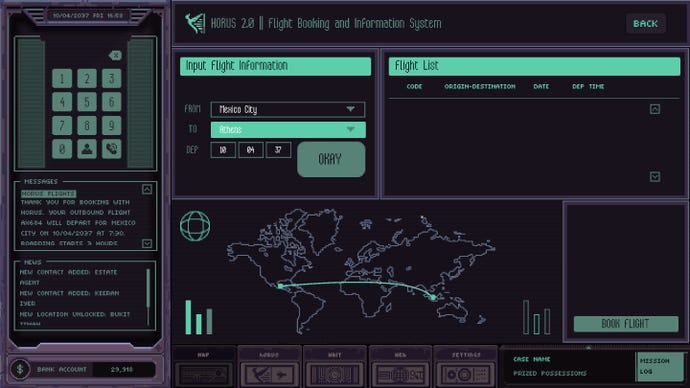
At the start of development, the team decided to deliberately make the puzzles challenging, the kind that they’d want players to step away from the game to think about, do real reading and research, and then come back once they figured out the answer. “We were already taking a bold step in requiring gamers to do research in the real world," Fillon says, “so we thought we should go all the way and put in some puzzles that call for serious analysis and investigation.”
He knew, however, that most players would eventually hit a wall anyway. That’s part of the reason why Mei Ting the librarian exists. Amira meets Mei Ting very early on in the game, and the character is incredibly bubbly and enthusiastic — she’s very curious about how Amira conducts her detective work. Players can call Mei Ting if they get stuck, and she can provide either a hint or straight up tell you the answer. But doing so costs Amira some money - and perhaps the player’s sense of accomplishment.
Fillon also notes that emphasising search engines was done out of accessibility and approachability. Sites like Google are available to a large portion of the game’s audience, and the global population in general. Players in China make up a big chunk of the studio’s player base, and even though Google is banned in the country there are plenty of alternatives (such as Baidu).
He explains that search engines are incredibly powerful technological tools that many people take for granted. “Information has never been as on-demand with such ease in all of human history, which makes a game like Chinatown Detective Agency possible,” Fillon says. “The Carmen Sandiego games came with an actual almanac! These days, your smartphone will do.”
One of the strongest aspects of Chinatown Detective Agency is its cultural authenticity. The game even references the global COVID-19 pandemic in some of the locations’ descriptions, such as the Singapore airport. Fillon says that the team wanted to reference as many real-world events as recently as possible to give the game more plausibility.
A player noticed that the developers snuck in ahypothetical future regarding Australia’s electionsin a character’s email. It references Gina Rinehart, who is Australia’s richest person, as well as executive chairwoman and billionaire magnate of Hancock Prospecting, a coal company. In Chinatown Detective Agency’s world, Rinehart wins the election in 2037 and is sworn in as Australia’s Prime Minister. “It’s incredible how imagining the dark possibilities of the future can often lead to accurate predictions in the real world,” says Fillon.
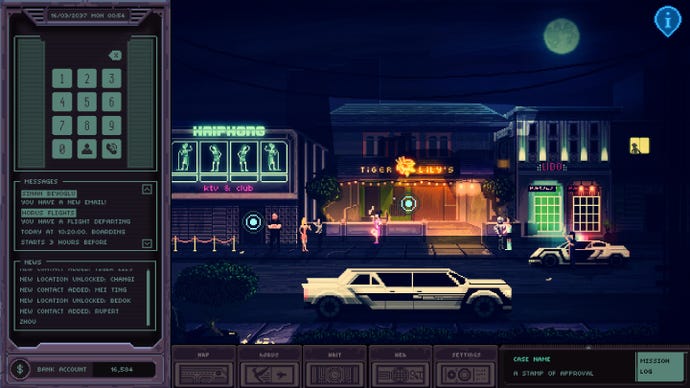
Tiger Lily owns a nightclub and her outward appearance is a deliberate caricature of the “orientalised” media depiction of Asian women: hypersexual and docile. But she flips these stereotypes on their head and uses people’s preconceptions to keep control of a situation. Tiger Lily also has a lot of depth and heart to her character, and is later seen helping out a lawyer and environmental activist fight against a corporation.
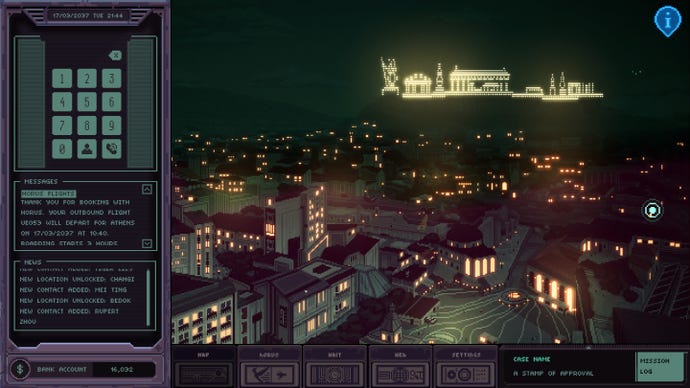
“Getting actors and actresses from the actual countries of the characters in the game was non-negotiable,” Fillon explains. Local Singaporean talent is represented, such as Leonie Koh and Su Ling Chan voicing Amira and Tiger Lily, respectively, as well as Kimberly Tan playing Mei Ting and Ryan Lim as Rupert Zhou.
Getting the right people to bring these characters to life is important. One of the biggest themes of Chinatown Detective Agency is family and where to belong. After all, Amira is single and doesn’t have any children, so she manages to bond with the several characters who hang around her agency. There was the concept of nature vs nurture and how the shadows of our past shape the paths we take later in life.
What makes Chinatown Detective Agency all the more impressive is that despite using thefuturistic dystopian Asian setting, likeCyberpunk 2077orDeus Ex: Human Revolution, the game doesn’t feel orientalising or culturally insensitive. Fillon tells me that Asia and Asians have been depicted as aliens and backdrops in western-dominated media for far too long.
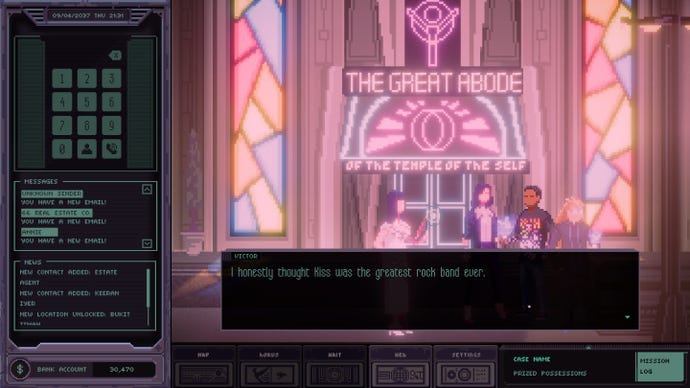
Still, Fillon is proud to be a Southeast Asian game developer – the region is experiencing an incredibly productive and creative period in video game development. “Chinatown Detective Agency is a potentially very polarising game. We certainly don’t aim to please everyone,” he says. “But I think we need some of that daring to really achieve the cultural impact we all dream of with our games.”
