HomeReviewsHero’s Hour
Hero’s Hour review: like eating a fistful of random jelly beansBless this mess
Bless this mess
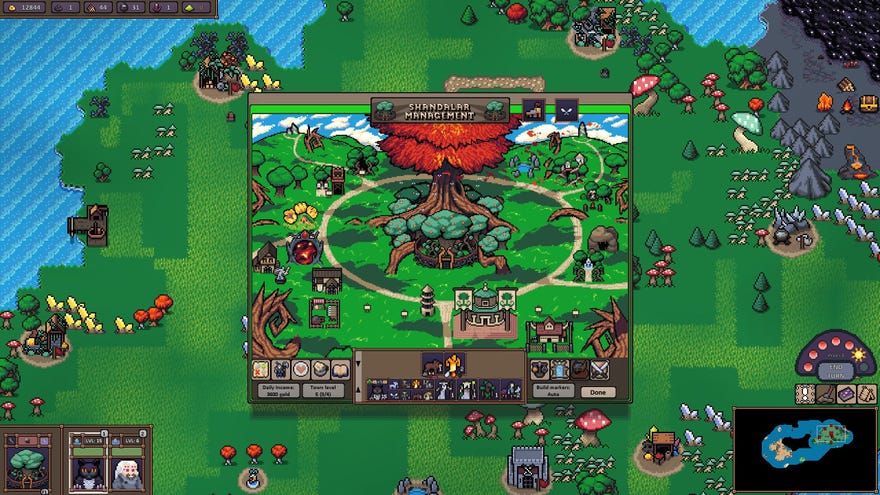
Picture the scene: you are at the beach. It is a real-time strategy beach, where metaphors happen. A lawless-looking child hands you a bucket. When you look into the bucket, you find sand, paint, bread, pottery, chocolate, nails, and several crabs all speaking different languages. Isn’t this fascinating? What the hell is going on? This isHero’s Hour, an untidy RTS sand bucket filled with so many ideas it’s hard to see how this turbulent mix will have any structural integrity at all when you finally up-end the bucket to build a tower. And yet… it sorta does? I don’t know. I’m lost. How do I get off this beach?
Hero’s Hour - trailerWatch on YouTube
Hero’s Hour - trailer
That said, you can cast spells during fights, like a line of burning salt through enemies or area-of-attack fire blasts, or buffing health boons. But the enemy CPU can do the same and every so often you see them pop a spell you’ve not used before. This is bad in the sense that sometimes a flash will occur and men will die or get bounced around and you won’t understand why. Yet in another sense it is good, because a herd of wild boar will sometimes burp into existence behind your lines and that’s just delightful. Painful, but delightful.
Which makes it a pity the UI is so rough. There is tiny text in the unit explanations, everything looks basic, messages and stats are easily missed. The tech trees are painful to decipher. Presentation is sloppy in other places, with the pixels on one unit or building being noticeably bigger than the pixels on another. This is presumably to show some units are just physically bigger than others. But the clash makes everything look like proportions are skewy.
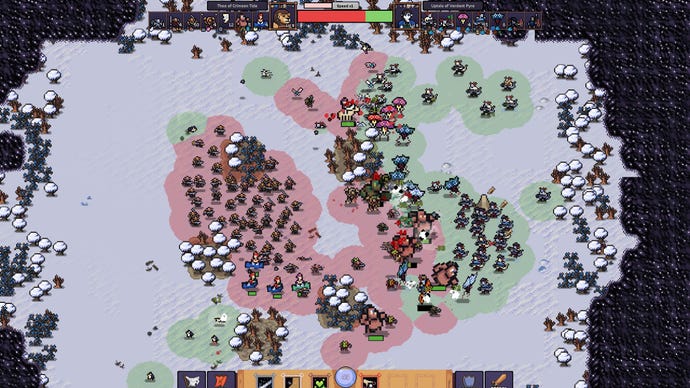
It’s an untidy game. Battles often take on an explosive, deranged rhythm, impossible to read once you go past a certain number of combatants. It also doesn’t easily allow deep micromanagement of troop numbers. If I want eight big ogres on the field and 90 stubborn goblin gunners and 11 hulking golems, there’s no way to get those exact numbers. Instead you have to fiddle around with a drop and drag reserves menu and click on an auto-sort button any time you go over the limit, which just selects a broad variety of troops from across all units to sit on the bench, like some disinterested basketball coach. “Okay, you, you and you, I guess, take a seat.” Really, coach, you want the gigantic Treant to sit this one out? Okay.
If you’re doing badly, you can call in those reserves with a big “SEND REINFORCEMENTS” button that appears. But it would be better if you had more control over which precise units to field in the first place.
As for the enemy’s intelligence, well, that depends. Many standard baddies sit around, waiting for you to come and have a go if you fink yer ‘ard enuff. These are only challenging if you charge in without heeding the “easy” or “moderate” or “nearly impossible” warning hovering over them. However, competing factions are beasts of their own, and seek to expand as you do. Their massive armies will show up on your doorstep while you’re away. They will steal the boat you left unoccupied at the coast and use it to flank you. They aren’t pushovers, and they can easily deliver the classic RTS blow of an irrecoverable, game-busting loss.
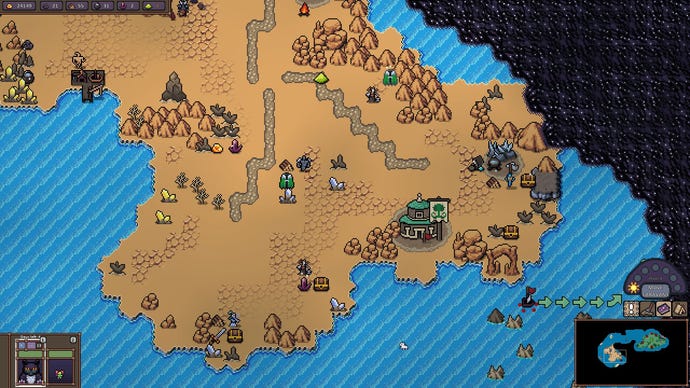
And there’s a lot of helter-skelter stuff in there. You get spells that turn your units into giants, or the enemy into frogs. Spells that invoke the ghosts of fallen units to come fight for you. The auto-scrapping battles lack tactical bite beyond the opening decisions about formation. But the spells are arcane hand grenades that you can throw into battle whenever the auto-biffing is going awry. They’re very cool.
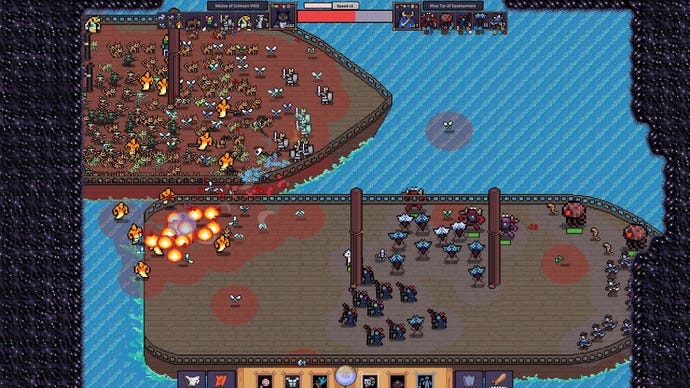
And they’re another example of the surprising magnitude and variety of imagination that’s woven throughout a game which, on first impression, doesn’t seem to be as complex as it is. There are 11 factions in this war. Think about that. The RTS genre is almost always about triads. In Hero’s Hour there is a surplus of weirdoes. Zombie lads, fire idiots, gargoyle gang, dino jerks. There are 177 different unit types. There are over 80 spells, and you can learn a dozen of them in just a few in-game days. If this feels strange to play, it’s partly because it does not adhere at all to the streamlined and sacred idea of rock-paper-scissors combat rules. It is about flavour and bedlam. Fights in Hero’s Hour are less battles than they are riots.
I don’t know what to make of it. It dubs itself an RTS but locks its map movement to turn-based limits. It has an impressive diversity of angry little fighting dudes, yet mostly automates the battles in which they fight. It has a lot of management to do and yet the UI is woeful, all the menus and pop-ups retaining a spartan prototype font. The result is a chaotic, messy, yet characterful take on map control, one that seems built to eliminate worries about whether you’re performing enough actions-per-minute, while keeping other traditions of steamrolling your enemy into submission.
