HomeHardwareNewsHalo Infinite
Halo Infinite’s season 3 ray tracing update is here, and looks kinda underwhelmingSir, polishing this light
Sir, polishing this light

As promisedlast year,Halo Infinite’s season 3 update has arrived with a new ray tracing option for us PC folks. Although it was announced as part of a promo event forAMD’s Radeon RX 7000 GPUs, Infinite’s ray tracing works on anygraphics cardthat can usually handle RT effects; all you need to do is download the update and flick it on in the display settings.
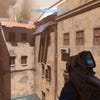
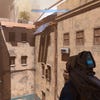
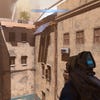
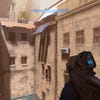
Granted, it’s not the most visually sumptuous form of ray tracing I’ve clapped a visor on. Reflections and global illumination are unchanged, as it’s only sun shadows – shadows cast using a simulated sun as the light source – that get the RT treatment.
Halo Infinite - Season 3 Launch TrailerWatch on YouTube
Halo Infinite - Season 3 Launch Trailer

This can add a bit of extra environmental detail, as you can see in the shots below. Especially with ray traced sun shadows on its High and Medium settings, shadows are more visible where they logically should be, and are better defined without looking unnaturally sharp.
1of4CaptionAttribution
1of4
1of4
1of4
CaptionAttribution
CaptionAttribution
Caption
Attribution
1of4CaptionAttribution
1of4
1of4
1of4
CaptionAttribution




CaptionAttribution
Caption
Attribution
Let’s be honest, though, these are not major enhancements to how Halo Infinite looks. Not every game is going to be aControlor aPortal with RTXwhen it comes to the breadth of RT effects, but you’d be surprised how much work a single sub-setting can do. Just last week I was fiddling aboutDoom Eternal’s ray traced reflections on the Steam Deck, and even with unchanged shadows and lighting, these still made a noticeable difference for the better. Not counting the performance cost, mind.
Halo Infinite’s new sun shadows don’t look bad at all, but they are easy to miss, especially in the boing-boing-blast chaos of multiplayer. And they still have their pound of framerate flesh: at Ultra/1440p but without ray tracing, myRTX 3070-based test rig averaged 115fps in the Bazaar map. With ray tracing, that fell to 95fps, a tax of 17%. Obviously a card like the RTX 3070 can handle that but it could prove difficult to pay if you’re on an older, weaker (but still ray tracing capable) GPU like theRTX 2060. Remember, trace rays at your own risk, and potentially under parental supervision.
